


November 01, 2026 – Spot funds lost $643.3 million in one session as bitcoin steadied near $77,500, yet traders kept adding leveraged long bets.

In Summary
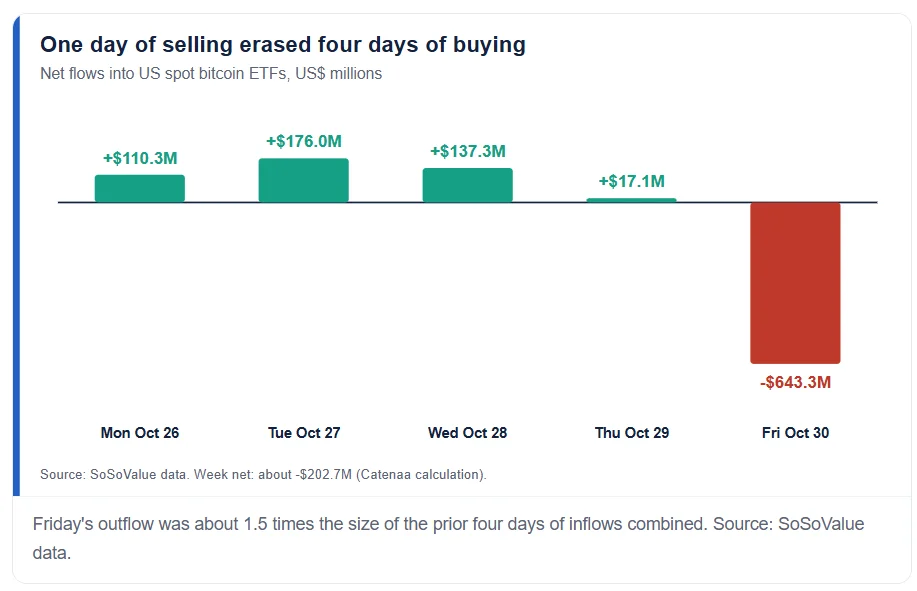
US spot bitcoin ETFs lost $643.3 million on October 30, ending a four-day inflow streak.
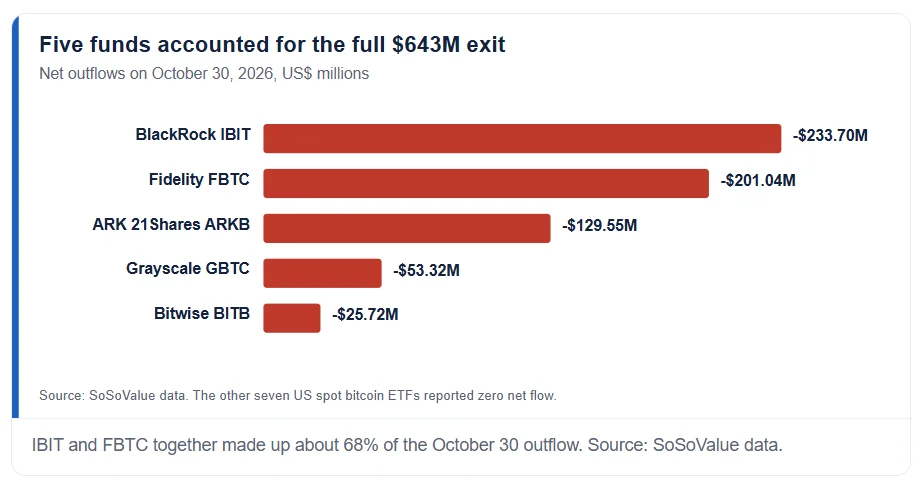
IBIT and FBTC drove about 68% of the exit, with $233.7 million and $201.0 million out.
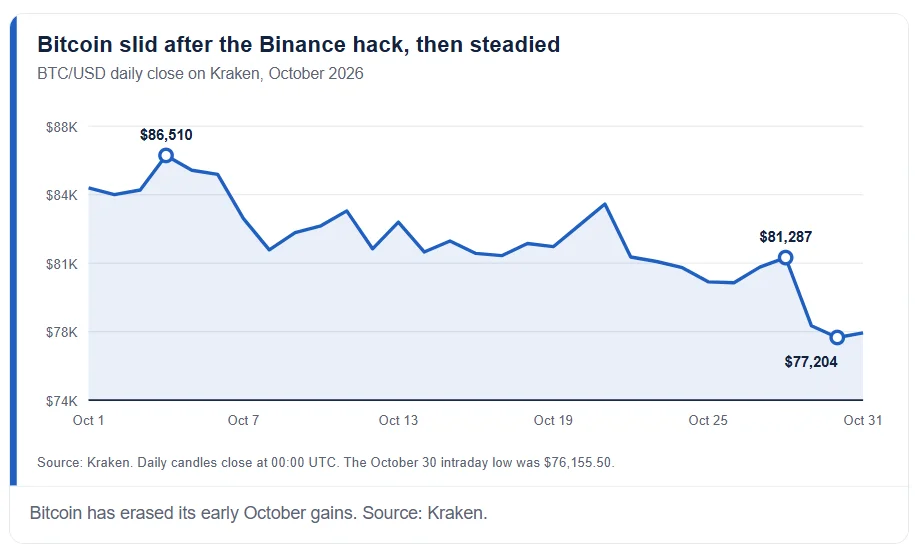
Bitcoin hit $76,155.50 on October 30, its lowest since September 17, before steadying.
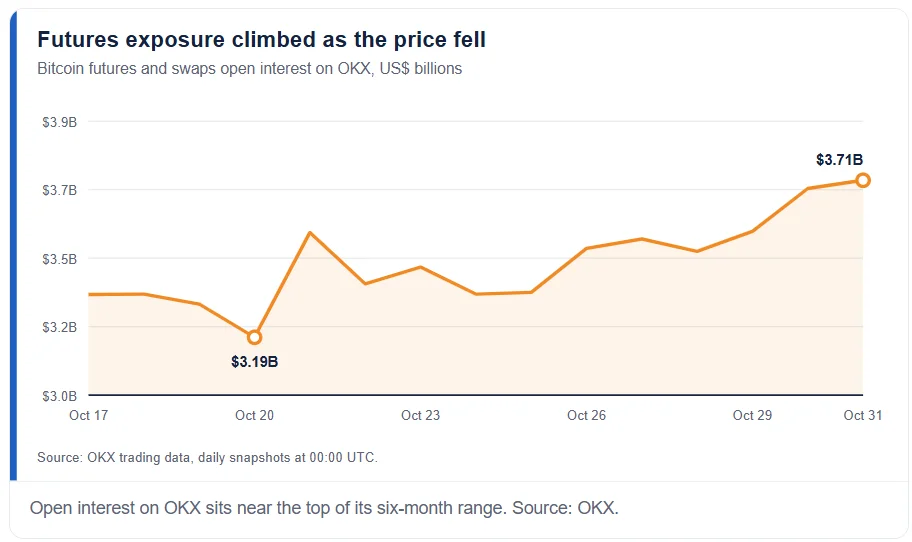
OKX open interest rose 16% to $3.71 billion while funding rates stayed positive.
Bitcoin ETF outflows reached $643.3 million on October 30, ending a four-day inflow run for US spot funds. That is according to SoSoValue data. The selling came one day after a major hack at Binance rattled crypto markets. Meanwhile, bitcoin is trying to steady near $77,500. Yet leverage in futures markets keeps building beneath that recovery.
Bitcoin ETF Outflows Wipe Out the Week’s Gains
The four sessions from October 26 to 29 brought in about $440.7 million. Friday’s exit more than erased that. As a result, the funds closed the week with net outflows of roughly $202.7 million, by Catenaa’s count.
Five funds drove the selling. BlackRock’s IBIT lost $233.7 million, while Fidelity’s FBTC shed $201.0 million. Next came ARK 21Shares’ ARKB, with $129.6 million in redemptions. Grayscale’s GBTC and Bitwise’s BITB lost $53.3 million and $25.7 million. The other seven funds reported no flows.
Even so, the funds remain large despite the latest Bitcoin ETF outflows. Total net assets stood at $98.14 billion, about 6.34% of bitcoin’s market value. IBIT alone held $62.3 billion at the October 30 close, with a net asset value of $43.29 per share. That gives BlackRock’s fund nearly two thirds of the group’s assets. Since launch, the funds have drawn $56.98 billion in net inflows.
Price Steadies After the Binance Shock
The hack hit Binance on the evening of October 29, UTC time. Binance has since said it froze about $3 billion of the stolen funds. Still, bitcoin fell from $81,287 at the October 28 close to $77,800 a day later, Kraken data show.
On October 30, the price touched $76,155.50, its lowest level since September 17. Since then, it has edged back about 2% to near $77,700 early on November 1. The coin now sits roughly 10% below its October 4 close of $86,510.
Leverage Builds Under the Surface
Derivatives tell a less calm story. Open interest measures the value of contracts still open. When it rises as prices fall, traders are adding exposure rather than cutting it. On OKX, open interest in bitcoin futures and swaps rose to $3.71 billion on October 31. That compares with $3.19 billion on October 20, a 16% jump. In coin terms, the gain tops 20%, because prices fell over the same stretch.
Trading activity also spiked as the price slid. OKX handled $15.3 billion in bitcoin contract volume on October 30, its busiest day since August 21. Moreover, funding on its main perpetual swap has stayed positive since October 22. It ended the month at 0.01% every eight hours. In other words, long traders kept paying shorts to hold bullish bets. At that rate, a long position pays roughly 11% a year to stay open.
Options traders lean the same way. On Deribit, open interest covered about 180,300 bitcoin in calls against 120,500 in puts. That leaves a put-to-call ratio near 0.67, exchange data show. At an index price of about $77,710, the call side is worth roughly $14 billion.
What to Watch Next
Rising leverage during fund selling can cut both ways. If spot demand returns, short covering could lift prices fast. However, another wave of fund exits could force crowded longs to sell. A close back above $81,287 would erase the whole post-hack drop. By contrast, a break below $76,155.50 would mark a new low for this selloff. For now, Bitcoin ETF outflows and futures positioning are the two signals to track.