


November 07, 2026 – US spot bitcoin and ether funds shed about $530 million in one session as a tech rout spilled into crypto.

In Summary
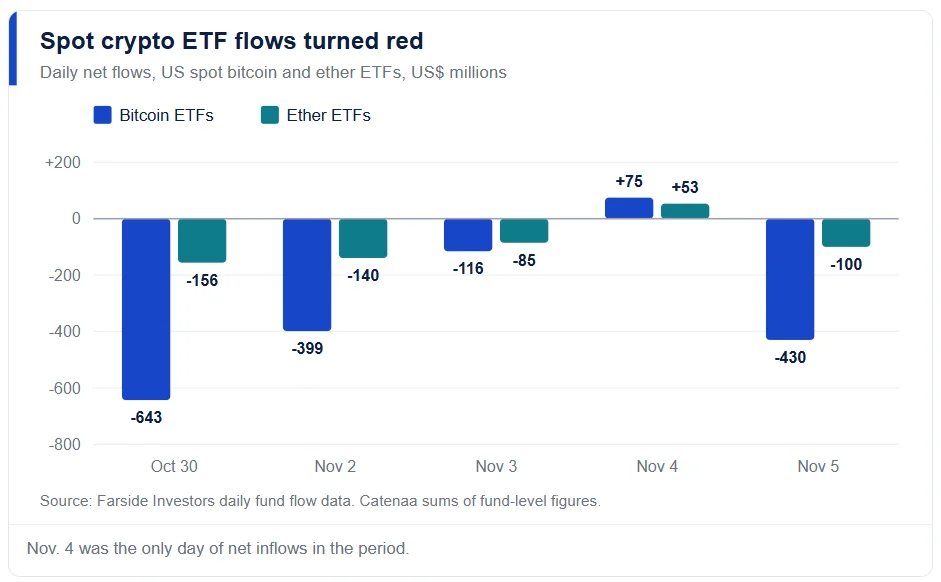
US spot bitcoin ETFs lost $430.2 million on Nov. 5, and ether ETFs lost $99.9 million.
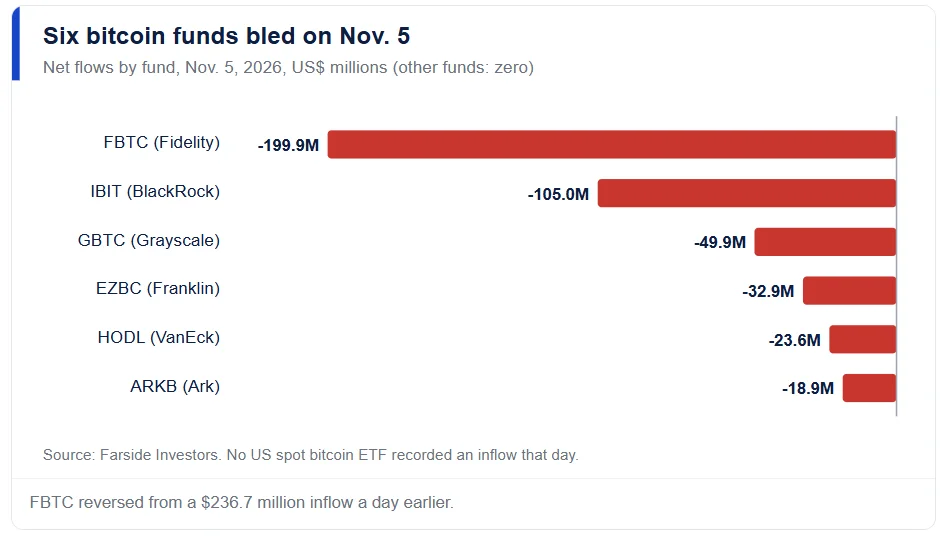
No bitcoin fund saw inflows; Fidelity’s FBTC led exits at $199.9 million.
BlackRock’s IBIT has posted five straight outflows worth about $1.04 billion.
Bitcoin funds have lost $1.51 billion over five sessions and $869.8 million in November.
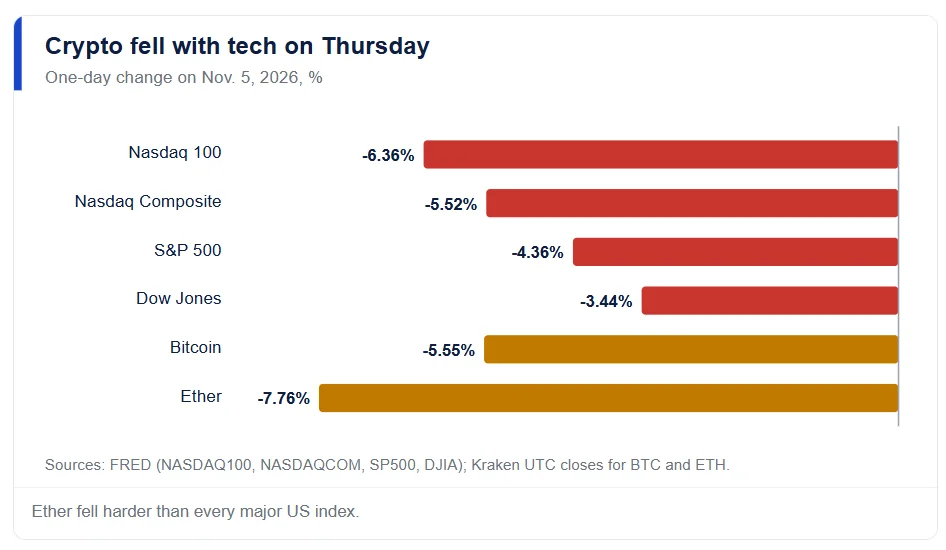
The Nasdaq 100 fell 6.36%, its worst day since March 16, 2020.
Bitcoin ETF outflows reached $430.2 million on Thursday as a steep drop in tech stocks spread to crypto. US spot ether funds lost another $99.9 million, Farside Investors data show. Together, the two groups shed about $530 million in a single session.
No US spot bitcoin fund recorded an inflow on Nov. 5. Six reported outflows, and the rest saw no change. Thursday’s total was the second largest of the past week, behind the $643.2 million that left on Oct. 30.
Fidelity Leads Thursday’s Bitcoin ETF Outflows
Fidelity’s FBTC posted the largest exit at $199.9 million, according to Farside. BlackRock’s IBIT followed with $105 million. Grayscale’s GBTC lost $49.9 million, while Franklin, VanEck and Ark funds shed a combined $75.4 million.
The swing in FBTC stands out. One day earlier, it took in $236.7 million and helped bitcoin funds log a $74.6 million net inflow. By contrast, IBIT has now posted five straight outflows, totaling about $1.04 billion since Oct. 30.
The selling has also spread beyond BlackRock over the week. On Oct. 30, FBTC lost $201 million and Ark’s ARKB shed $129.5 million. Grayscale’s GBTC lost $53.3 million the same day. In other words, investors are trimming across issuers, not just at one fund.
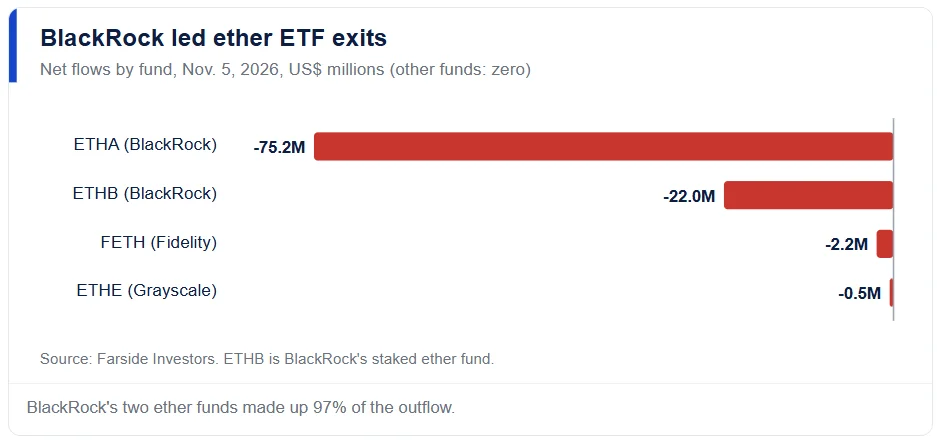
Ether funds told a similar story. BlackRock’s ETHA lost $75.2 million, and its staked ether fund, ETHB, shed $22 million. Fidelity’s FETH and Grayscale’s ETHE added small exits.
In fact, ether funds have posted outflows in five of the last six sessions. Their net loss since Oct. 29 comes to about $533 million, by Catenaa’s count. Only Wednesday broke the streak, with a $53 million inflow.
Wall Street Selloff Sets the Tone
The trigger came from equities. On Thursday, the Nasdaq 100 fell 6.36%, its steepest one-day drop since March 16, 2020, FRED data show. Meanwhile, the S&P 500 lost 4.36%, its worst day since April 2025.
Chip stocks took the brunt. The PHLX Semiconductor Index fell 12.25% that day, according to Nasdaq data.
Crypto followed closely. Bitcoin fell 5.55% to close at $75,980 on Kraken, while ether dropped 7.76% to $2,235. Both had rallied on Wednesday, so the losses erased that rebound within a day.
What the Bitcoin ETF Outflows Signal
The broader trend is weak. Bitcoin ETF outflows totaled a net $1.51 billion over five sessions, from Oct. 30 to Nov. 5. That figure is a Catenaa sum of Farside data. In November so far, they have shed $869.8 million, while ether funds have lost about $272 million.
Friday’s data were still arriving at press time. Excluding BlackRock, bitcoin funds showed net outflows of $8.9 million on Nov. 6. Fidelity’s FBTC took in $42.8 million, which offset exits from Bitwise, Ark and Grayscale. BlackRock’s figures usually post last, so the final total could change.
Bitcoin ETF outflows of this size matter because the funds have been a steady source of demand. Redemptions often force funds to sell bitcoin, which adds supply to the market. That selling also lands while on-chain holders are booking losses.
For now, traders will watch whether flows stabilize as stocks recover. US inflation data on Tuesday, Nov. 10, is the next big test. A return to steady inflows would ease pressure. However, another week of exits could keep bitcoin pinned near $75,000.