

August 22, 2026 – A six-week range gave way on Wednesday. Roughly $3 billion of short liquidations turned a macro-driven bounce into the year’s cleanest squeeze.
In Summary
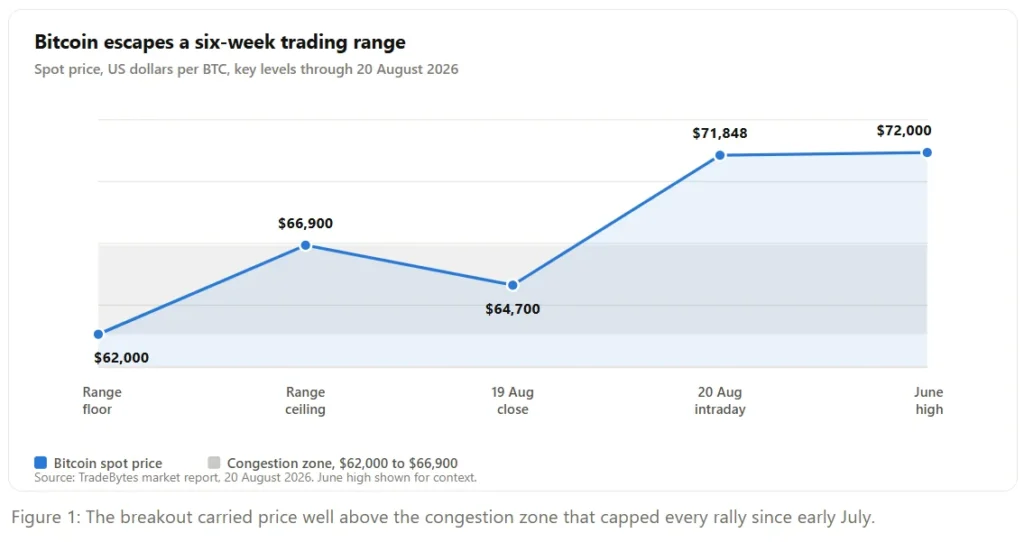
Bitcoin peaked at $71,848.18, an 11% gain, after breaking out of a range capped at $66,900.
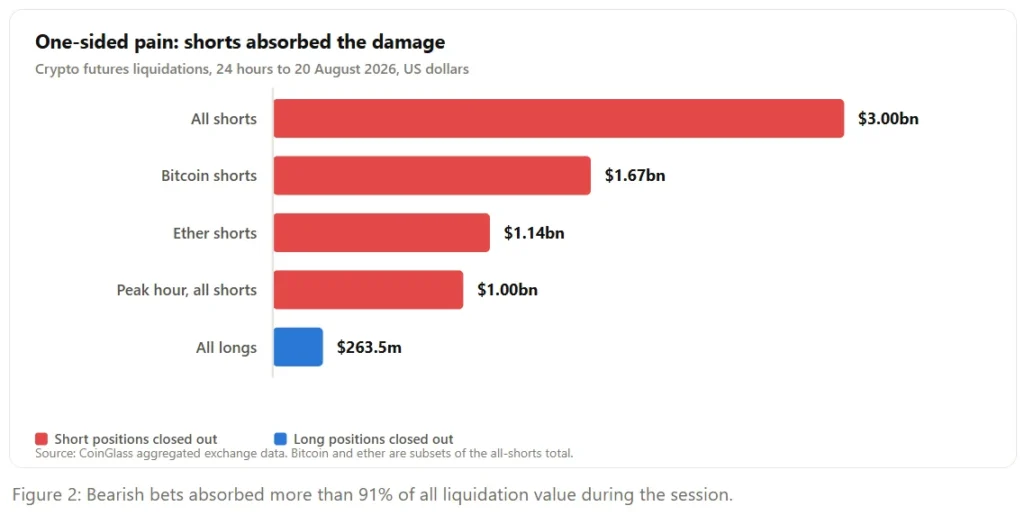
Short liquidations reached about $3 billion in 24 hours, against only $263.5 million on the long side.
The Treasury doubled long-end buyback operations to $4 billion, easing pressure on 30-year yields.
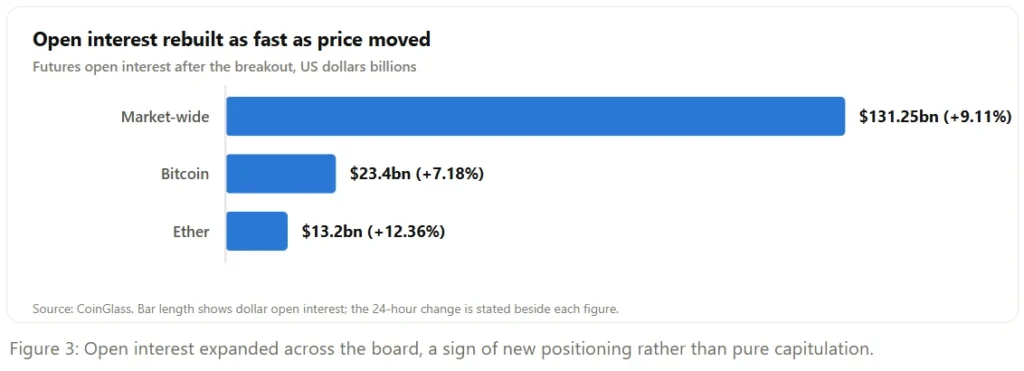
Market-wide futures open interest rose 9.11% to $131.25 billion, so new positions replaced the old ones.
Funding rates near 0.010% suggest leverage has not yet reached extreme levels.
The Bitcoin breakout ends a six-week stalemate
The Bitcoin breakout arrived without warning. Bitcoin had spent most of the summer stuck. Sellers repeatedly defended $66,900, while buyers held firm at $62,000. That standoff ended on Wednesday, and the token ran to an intraday peak of $71,848.18. The 24-hour gain reached roughly 11%.
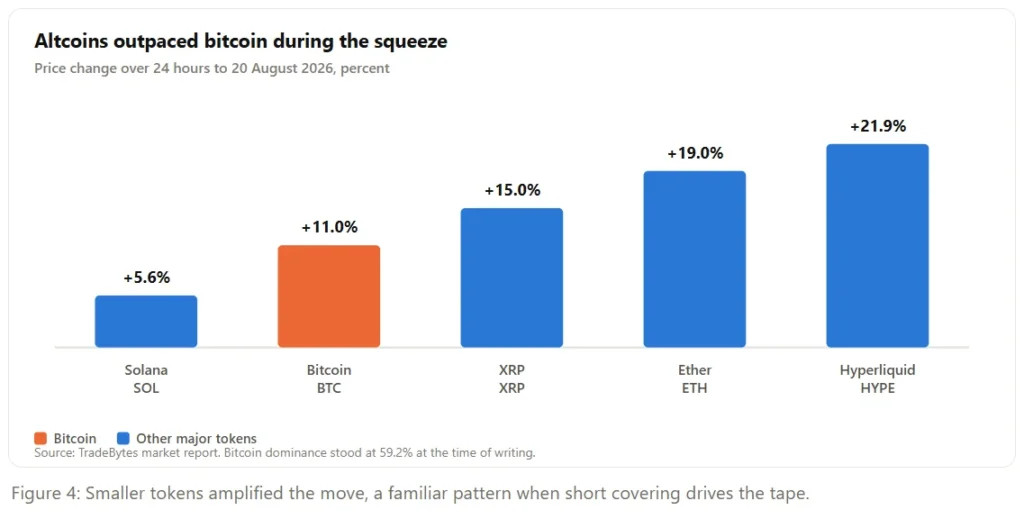
Furthermore, the move was broad. Ether added about 19% and traded near $2,270. XRP rose 15%. Hyperliquid’s HYPE token led the majors with a 21.9% advance. Bitcoin dominance still held at 59.2%, so the rotation stayed orderly.
A Treasury decision lit the fuse
The catalyst came from Washington, not from crypto. On 19 August, the Treasury said it would at least double its long-end buyback operations to $4 billion each. Operations in the 10-to-20-year and 20-to-30-year sectors begin on 9 September.
Long-dated yields eased quickly afterwards, as traders expected. The 30-year bond had recently printed 5.337%, its highest level since 2007. Therefore, the buyback signalled that officials would lean against further pressure. Risk assets responded within hours.
Leverage turned a bounce into a stampede
Naturally, positioning did the rest. Short sellers lost close to $3 billion over 24 hours, while long liquidations totalled just $263.5 million. In one hour alone, more than $1 billion in shorts were closed out.
In particular, bitcoin shorts accounted for $1.67 billion of that total. Ether shorts contributed a further $1.14 billion. Consequently, the long-short ratio on bitcoin slid to 0.835 from about 1.05 on Tuesday.
Open interest rebuilt almost immediately
Forced covering usually shrinks open interest. This time it grew. Market-wide open interest climbed 9.11% to $131.25 billion, which suggests fresh money arrived as the old positions closed.
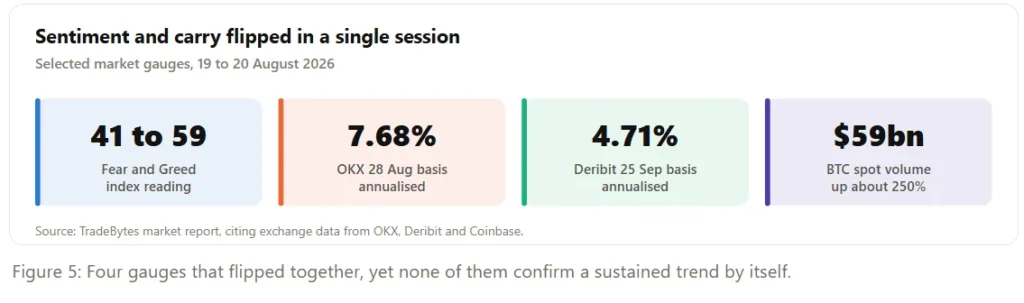
Bitcoin open interest rose 7.18% to $23.4 billion. Ether open interest gained 12.36% to $13.2 billion. Spot turnover in bitcoin reached roughly $59 billion, an increase of about 250% on the prior day.
Funding stayed calm, and that matters
Meanwhile, perpetual funding rates offer a useful stress test. Bitcoin funding sat at 0.0101% and Ether at 0.0103%. Both readings remain close to neutral, so leverage has not yet turned euphoric.
Similarly, the term structure told a similar story. The 28 August OKX contract traded at a 7.68% annualised basis. The 25 September Deribit contract sat at 4.71%. Traders are paying up for immediate exposure, yet they are not committing far out on the curve.
Sentiment swung, although conviction lags
The Coinbase Fear and Greed Index jumped to 59 from 41. In other words, the market moved from fear to greed within a day. Such swings rarely mark a durable regime change on their own.
Spot ETFs added a second bid
Regulated vehicles reinforced the move. US spot bitcoin funds absorbed about $517 million of net inflows on 19 August. That was their largest daily haul in roughly three months. Ether funds took in a further $189 million.
In addition, volume in the largest bitcoin trust ran at about 4.5 times its 30-day average. Institutional demand therefore, arrived alongside the derivatives squeeze, rather than after it. That combination usually gives a breakout more staying power.
Nevertheless, one session proves little. Flows can reverse quickly when yields climb again.
What does the Bitcoin breakout mean next
Looking ahead, three markers now matter. First, the old ceiling at $66,900 becomes the level bulls must defend. Second, the June high near $72,000 caps the immediate upside. Third, funding rates will reveal whether leverage builds dangerously.
Risk management deserves equal attention. Positions built during a squeeze often sit on thin liquidity. Moreover, the same leverage that lifted prices can reverse the tape within minutes.
Meanwhile, the macro driver stays live. Treasury buybacks run through 4 November, and the next guidance arrives at the quarterly refunding meeting. Bitcoin has traded as a duration-sensitive asset all year. That relationship looks unlikely to break soon.