


October 30, 2026 – A single Ethereum transaction drained one of Binance’s hot wallets on Oct. 29. The exchange has suspended deposits and withdrawals, says about $3 billion is frozen, and promises to cover every loss.

In Summary
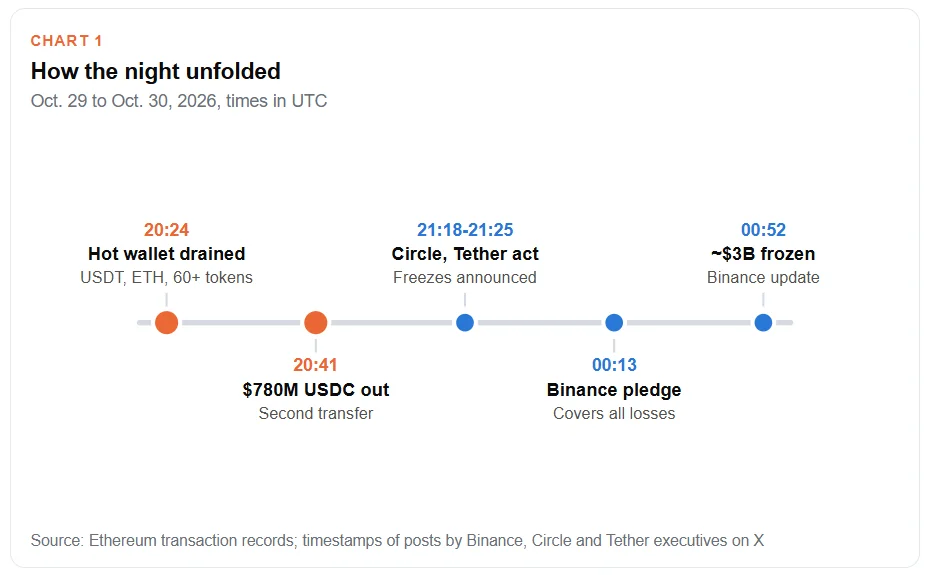
One transaction at 20:24 UTC on Oct. 29 moved $1.62 billion in USDT and 167,464 ETH out of a Binance hot wallet.
A second transfer 17 minutes later took $780 million in USDC from another wallet linked to Binance.
Binance says about $3 billion is now frozen and that it will cover all losses.
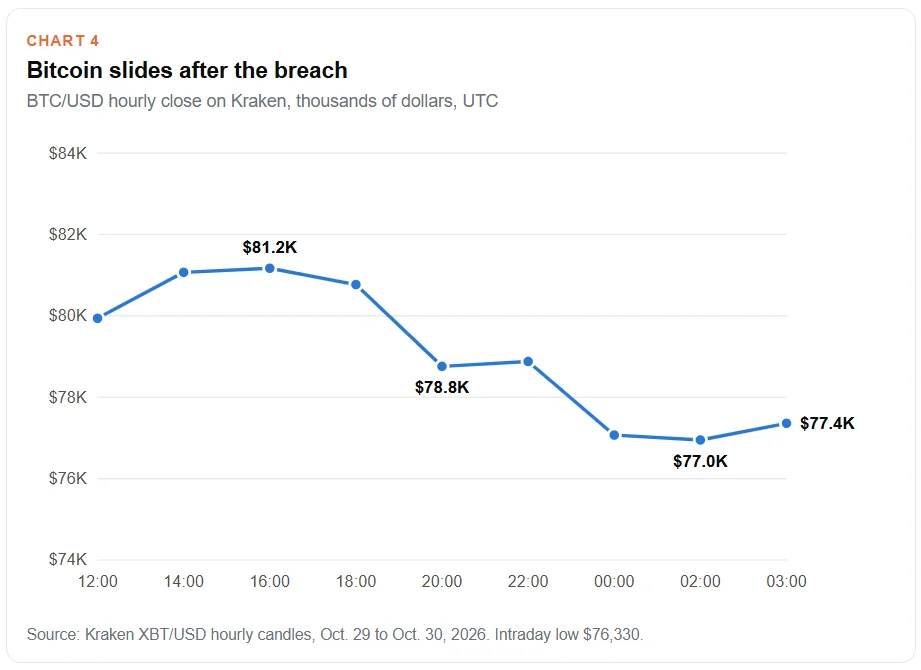
Bitcoin slid about 5.5% to $76,330 on Kraken, its lowest level since Sept. 18.
The Binance hack is shaping up as one of the largest thefts in crypto history. Late on Oct. 29, attackers drained one of the exchange’s main Ethereum hot wallets in seconds. Binance has since suspended all deposits and withdrawals while it investigates.
The exchange says users will not lose money. “Binance will cover all losses,” it said in a post on X. In addition, it said its team is running security checks, freezing funds and working with law enforcement.
What the Binance hack took
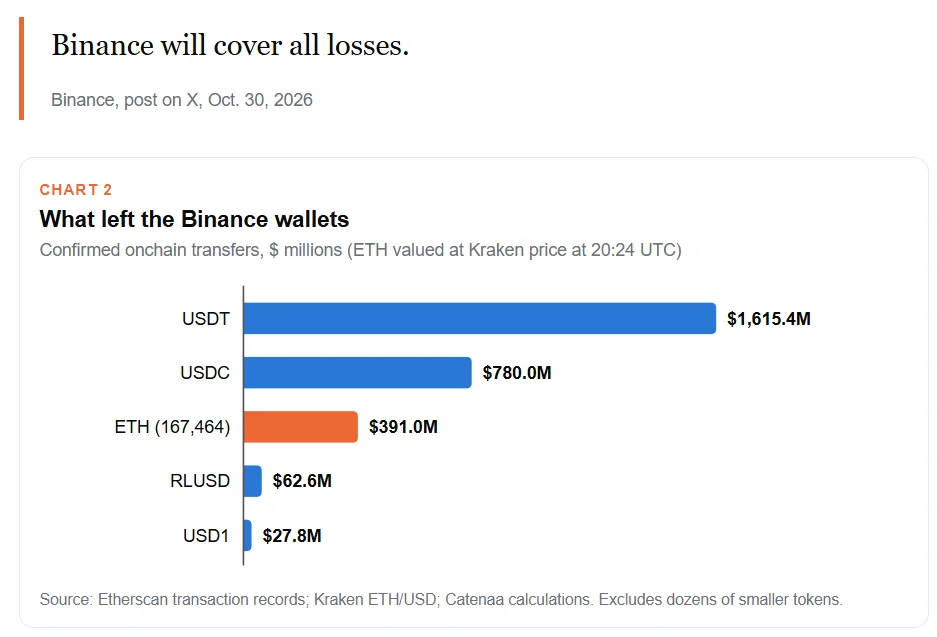
The blockchain record is public. At 20:24 UTC, a single Ethereum transaction moved assets out of a wallet labeled Binance 14. The haul included 1.62 billion USDT and 167,464 ETH. It also swept 62.6 million RLUSD, 27.8 million USD1 and dozens of smaller tokens.
Then, 17 minutes later, a second transfer took 780 million USDC from another wallet linked to Binance. Both transfers went to the same fresh address.
Notably, Binance did not send the first transaction itself. The record shows an outside address triggered it by calling the hot wallet directly. That suggests the attacker gained control over how the wallet executes transfers. Binance has not yet explained how.
At Kraken prices, the ether alone was worth about $391 million. Together with the four stablecoins, the confirmed haul tops $2.8 billion, based on Catenaa calculations. Binance has not yet confirmed a final loss figure.
Stablecoin issuers moved fast
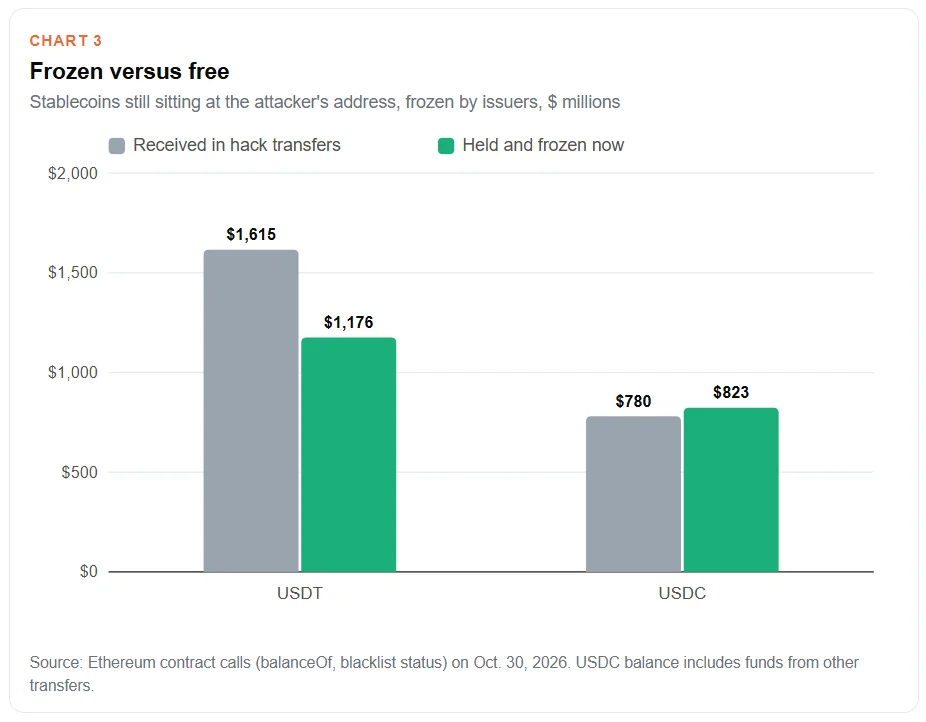
Issuers froze much of the stolen money within about an hour. Onchain data show that both Tether and Circle have now blacklisted the receiving address. It still holds about 1.18 billion USDT and 823 million USDC, which the thief cannot move.
Binance’s own tally has grown through the night. First, it reported $2.54 billion in verified frozen assets. Later, it said “the current verified total frozen amount is around $3 billion.”
However, ether is a different story. Unlike stablecoins, no issuer can freeze native ETH. The receiving address now holds only about 16,500 ETH of the 167,464 ETH it first received. In other words, most of the ether has already moved on.
Who covers the bill?
Binance co-CEO Yi He repeated the pledge. “User funds are safe. Binance will cover all hacking losses,” she wrote on X. She also promised a full post-mortem once the investigation ends. If Binance keeps that promise, the Binance hack tests its own balance sheet, not its users’ wallets.
For context, the previous record exchange theft hit Bybit in February 2025, at about $1.5 billion. This incident appears to be roughly twice that size.
Crypto prices slide
Markets reacted quickly. Bitcoin traded near $80,744 when the 20:00 UTC hour opened. By early Oct. 30, it had dropped to $76,330, according to Kraken data. That was its lowest level since Sept. 18.
Meanwhile, ether fell about 7% from its pre-hack level, while Binance’s BNB token dropped as much as 9%.
What to watch next
Three questions now matter most. First, how much ETH can investigators trace? Second, when will withdrawals restart? Third, what caused the breach?
Until Binance publishes its post-mortem, traders should rely only on official channels. Follow live coverage on Catenaa’s crypto desk.