


October 04, 2026 – Volatility Shares’ VS Trust can now list triple-leveraged funds on bitcoin, ether, gold, silver, oil, and gas. The daily reset is the part investors must understand.

In Summary
The SEC cleared six triple-leveraged VS Trust funds on Cboe BZX, including a 3x bitcoin ETF.
The funds hold CME, COMEX and NYMEX futures, not physical assets, and reset their leverage daily.
The SEC cited existing 2x products and conduct rules such as Regulation Best Interest.
Bitcoin fell 3.2% this year, yet a modelled 3x daily strategy lost 44.4% before fees.
The SEC has cleared a 3x bitcoin ETF for listing on Cboe BZX Exchange, plus five sister funds. Its October 2 approval order also covers triple-leveraged funds on ether, gold, silver, crude oil and natural gas.
Volatility Shares LLC sponsors all six funds through its VS Trust. Each fund seeks three times the daily move of its benchmark, before fees and expenses. Wilmington Trust serves as trustee, while U.S. Bank acts as custodian.
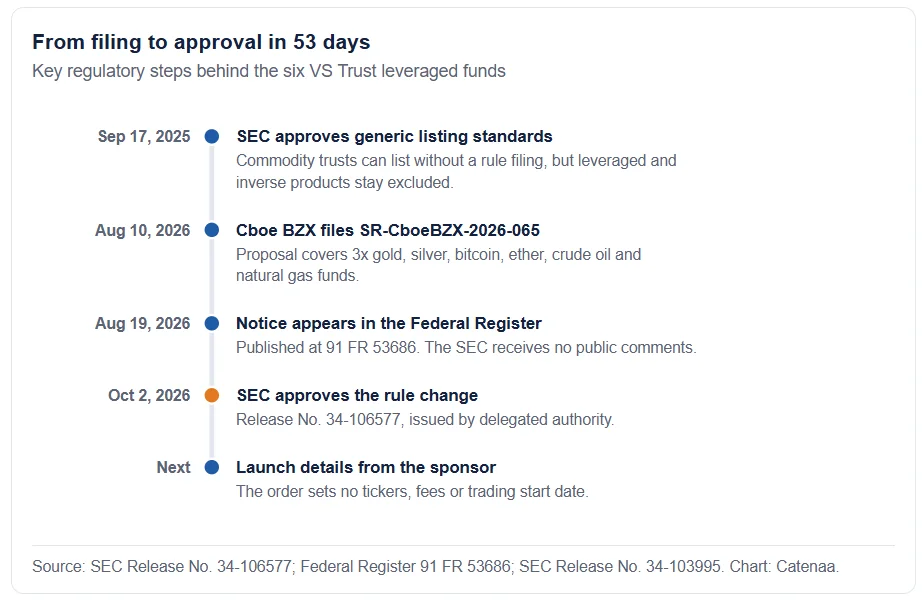
Cboe filed the proposal on August 10. The Federal Register then published the notice on August 19, and nobody submitted a comment. In the end, the review took 53 days from filing to approval. The Division of Trading and Markets issued it under delegated authority.
How the 3x Bitcoin ETF Will Work
None of the funds will hold physical bitcoin, ether, or bullion. Instead, each one buys a mix of first- and second-month futures contracts. Bitcoin and Ether funds use CME futures, while gold and silver funds use COMEX. Meanwhile, the oil and gas funds trade on NYMEX.
Cash and cash equivalents back those positions as collateral. If position limits or margin rules bind, the funds may switch to longer-dated futures. They may also buy other commodity ETPs or listed options.
Each month, the bitcoin and ether funds roll their positions forward over five business days. On each of those days, about 20% of the expiring contracts move to the next month. That roll can add cost whenever later-dated futures trade at a premium.
Transparency rules apply as well. The exchange may halt trading if the intraday indicative value stops updating. It must halt if the net asset value does not reach all traders at once.
So why did Cboe need a special order at all? Generic listing standards, cleared in September 2025, let most commodity trusts list without a rule filing. However, BZX Rule 14.11(e)(4)(F) shuts leveraged and inverse products out of that fast lane.
Why the SEC Said Yes
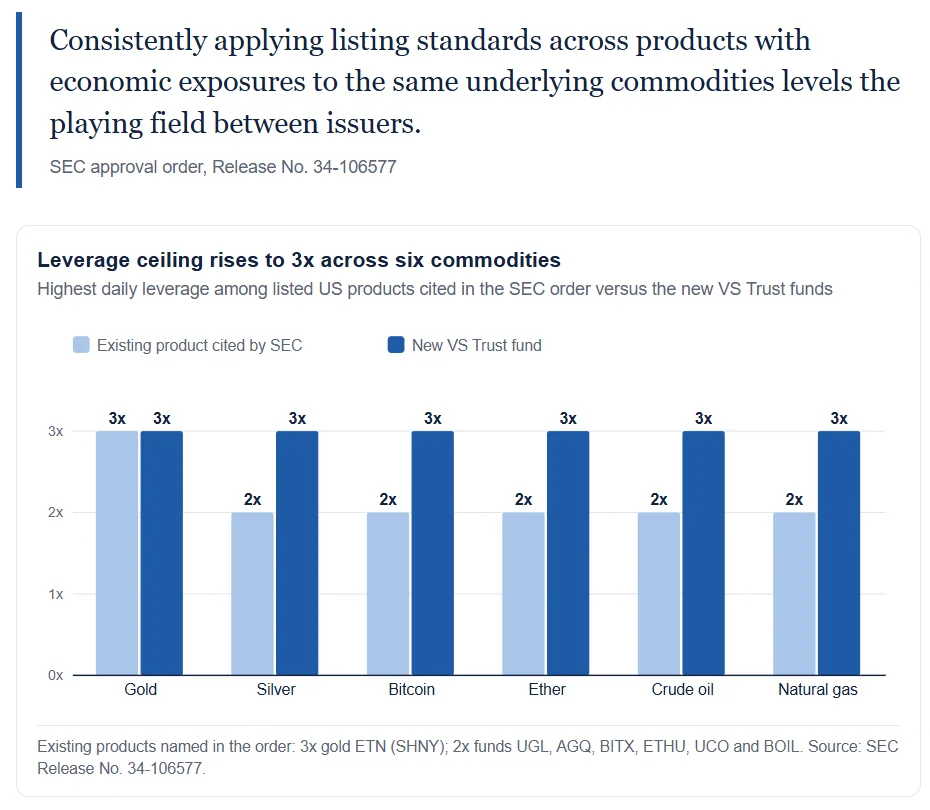
The Commission leaned on precedent. Its order lists leveraged products that already trade on US exchanges, including 2x funds on all six commodities. For example, the list includes Volatility Shares’ own 2x Bitcoin ETF and 2x Ether ETF. It also cites a 3x gold exchange-traded note. Notably, the order names three earlier 3x products on silver, crude oil, and natural gas that no longer trade.
On investor protection, the SEC pointed to existing conduct rules. Regulation Best Interest governs broker recommendations to retail clients. Advisers, in turn, owe clients a fiduciary duty. FINRA also applies tighter sales-practice and margin rules to leveraged products.
Market integrity got attention too. Each underlying asset has had a futures contract on a regulated exchange for at least six months. Cboe can also share surveillance data with those markets through the Intermarket Surveillance Group.
What a 3x Bitcoin ETF Would Have Done in 2026
To test the design, Catenaa applied a simple 3x daily reset to Kraken’s daily bitcoin closes. The model ignores fees, futures roll costs and financing. Even so, the gap it reveals is striking.
Bitcoin slipped 3.2% between December 31 and October 3, from $87,500 to $84,740. Three times that loss would be 9.5%. Yet the daily-reset model lost 44.4% over the same stretch.
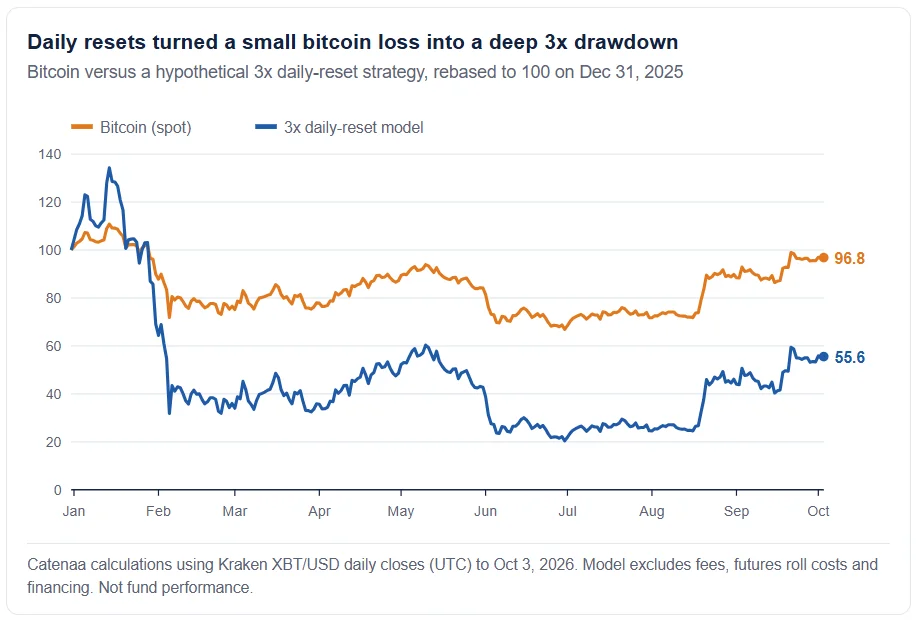
Volatility drag explains the gap. A fall followed by an equal rise leaves a leveraged fund below its starting point. Bitcoin’s annualised volatility ran near 46% this year, so the drag compounded quickly.
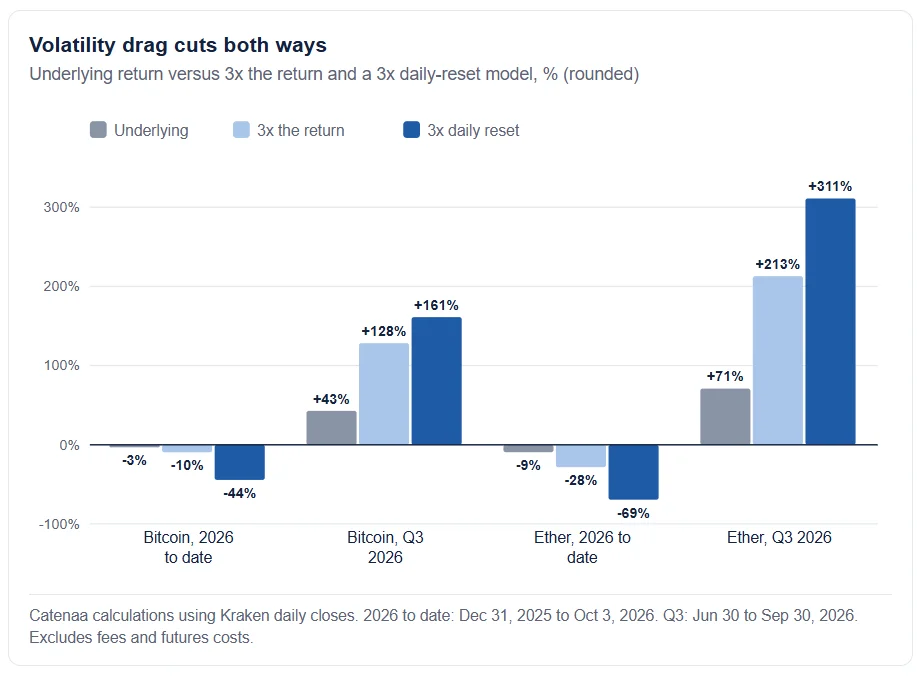
The effect also works in reverse during steady trends. Bitcoin rose 42.8% in the third quarter, while the 3x model gained 161.2%. Similarly, Ether’s 71.0% quarterly rise became 311.0%.
Single sessions carry their own risk. Bitcoin’s worst day of 2026, February 5, brought a 13.9% drop. A 3x fund would have shed roughly 41.7% that day. Moreover, a one-day fall of about 33% would wipe out a 3x fund.
What Comes Next for Traders
The order does not set tickers, fees, or a launch date. Those details should come from the sponsor’s prospectus and the exchange.
Meanwhile, FINRA’s long-standing guidance remains blunt. It says daily-reset funds typically do not suit retail investors who hold them beyond one trading session. That warning carries extra weight at triple leverage.
For active traders, the funds offer exchange-listed leverage without a futures account. Advisers, meanwhile, face a fresh suitability test. Anyone weighing a 3x bitcoin ETF should first model their own holding period. Above all, this year’s numbers show that timing matters as much as direction.