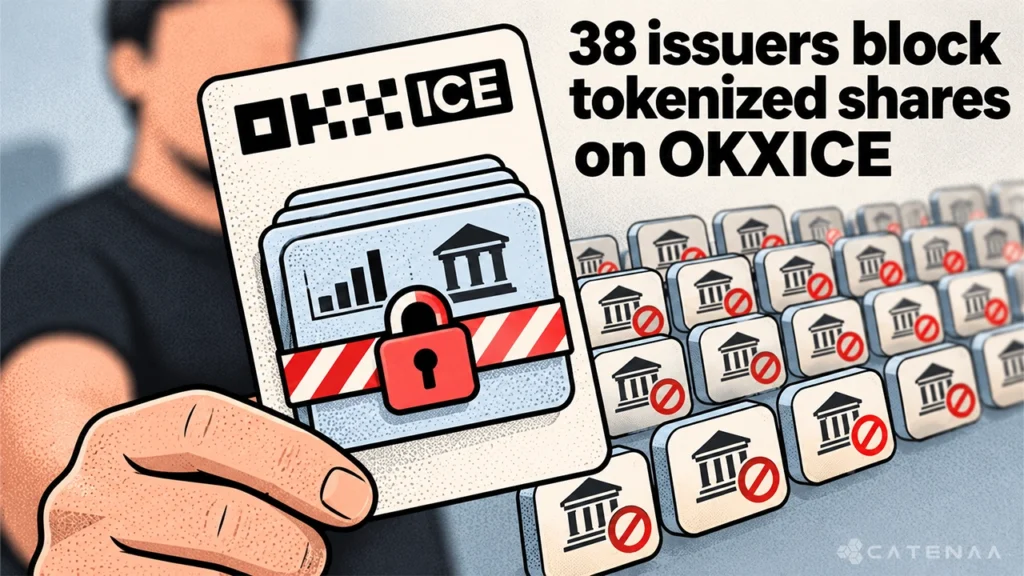


November 02, 2026 – The list of objectors more than doubled in nine days. Big US companies are using a new SEC veto to keep unofficial tokens of their stock off the venue.

In Summary
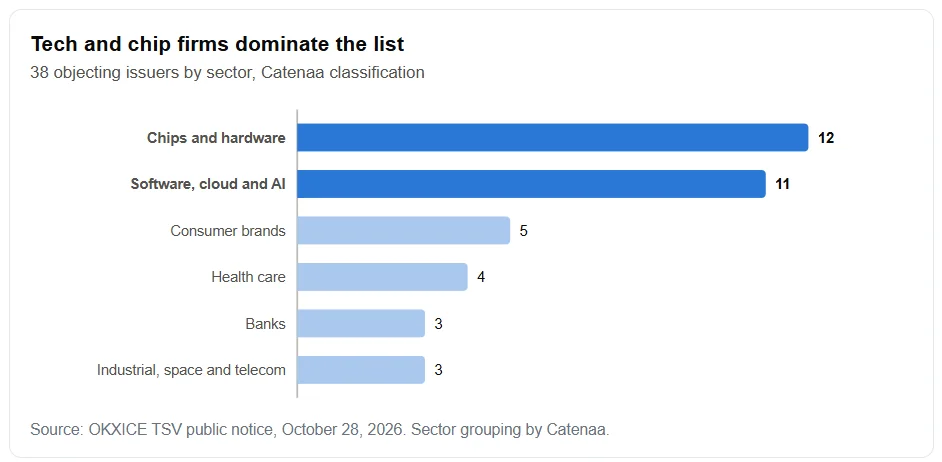
OKXICE’s October 28 notice lists 38 issuers that objected to third-party tokens of their shares.
Walmart, Microsoft, Alphabet, JPMorgan Chase, Goldman Sachs and Eli Lilly are among them.
Under the SEC exemption, an objection filed within 30 calendar days keeps that token off the venue.
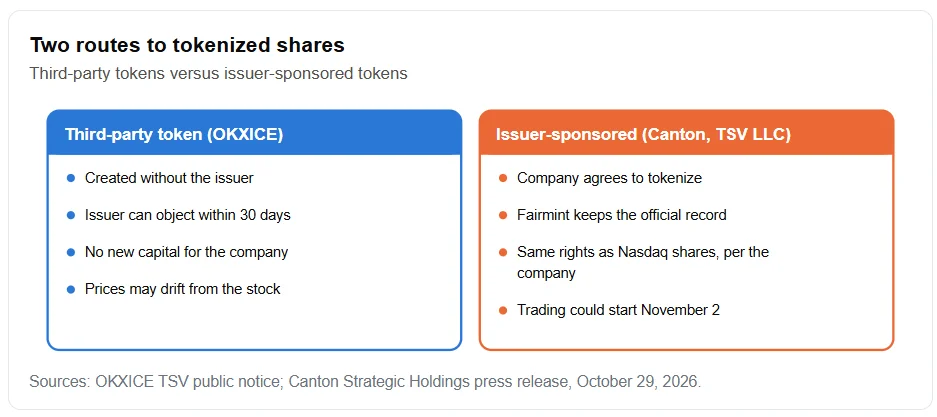
Canton Strategic Holdings is testing the opposite route, with issuer-sponsored tokens that may trade from November 2.
A growing list of large US companies has refused to let OKXICE trade tokenized shares of their stock. The venue’s latest public notice, dated October 28, names 38 issuers that have objected. They include Walmart, Microsoft, Alphabet, JPMorgan Chase and Goldman Sachs.
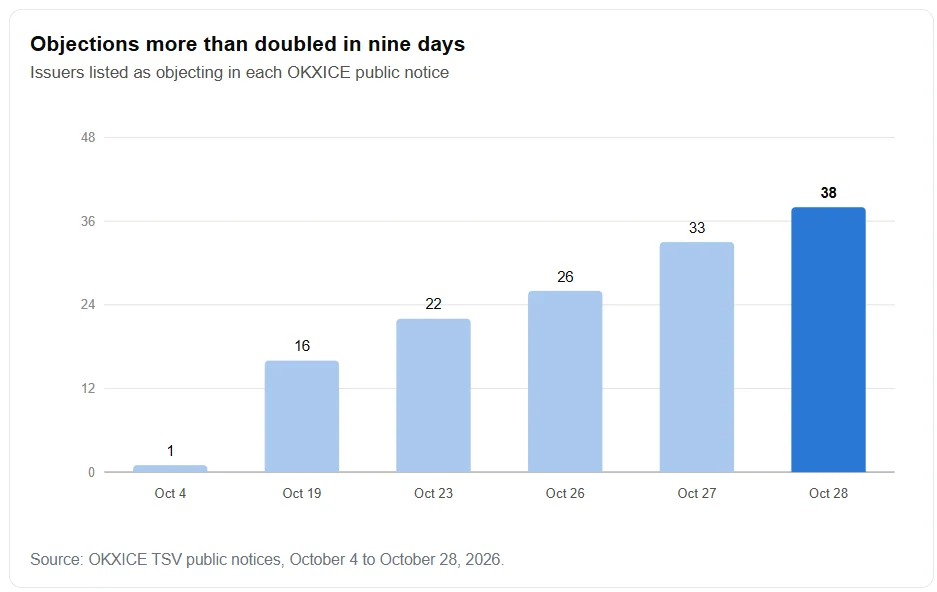
That count has risen fast. Earlier notices listed one objector on October 4 and 16 by October 19. The total then reached 33 on October 27, before adding five more a day later. At this pace, the list may keep growing as more notice windows close. Notably, every objection applies only to OKXICE, not to other venues.
Why issuers can block tokenized shares
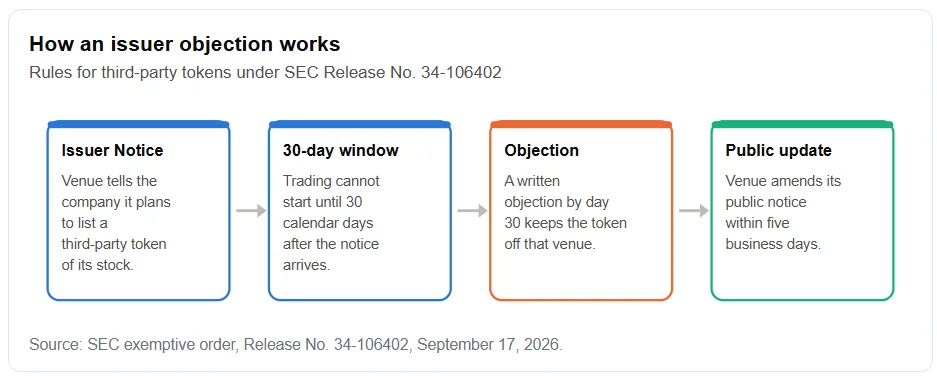
This veto comes from the SEC itself. Its exemptive order of September 17 lets new tokenized securities venues trade tokens of listed stocks. However, if a third party creates the token, the venue must first notify the issuer.
Trading cannot start until 30 calendar days after the issuer receives that notice. If the issuer objects in writing by day 30, the venue cannot list the token. The venue must then update its public notice within five business days. Overall, the relief lasts five years from publication, so these early choices could shape the market for a long time. In addition, SEC staff guidance says a venue cannot operate at all before its own 30-day public notice period ends.
Who is saying no
Objectors span most of the market. Chip and hardware makers form the largest group, with 12 names such as Broadcom, Intel, AMD and Qualcomm. Software, cloud and AI firms add 11 more, including Microsoft, Oracle and Adobe.
Consumer brands are on the list too. Walmart, Coca-Cola and McDonald’s have all objected. So have health firms such as Eli Lilly and UnitedHealth, plus banks like Wells Fargo.
OKXICE is a 50/50 joint venture between Intercontinental Exchange, which owns the NYSE, and OKC USA. It runs permissioned Uniswap v4 pools on the XLayer blockchain. There is no order book, and the venue warns that token prices may drift from the underlying shares. Moreover, a secondary token raises no new capital for the issuer. Instead, fees go to the venue, to liquidity providers and to the blockchain. That leaves companies with risk but no direct reward.
Industry pushes for issuer consent
The securities industry’s trade group wants tighter rules. On October 19, SIFMA urged the SEC to consider affirmative issuer consent, a longer objection period and a universal opt-out. It also backed more time before venues begin trading.
Meanwhile, one company is testing the opposite path. Canton Strategic Holdings said on October 29 that it will offer issuer-sponsored tokens on TSV LLC. Fairmint, an SEC-registered transfer agent, will issue them and keep the official ownership record. Trading could begin as early as November 2.
The split is now clear. Issuers keep control when they sponsor the token. By contrast, unofficial tokens face a growing wall of refusals. That makes issuer consent the main fault line for tokenized shares in the US.