


September 26, 2026 – Onchain funds, credit and property products remain a fraction of DeFi value. New settlement rails and clearer rules could change that.

In Summary
Tokenised real world asset protocols hold about $4.7 billion, across 181 tracked products.
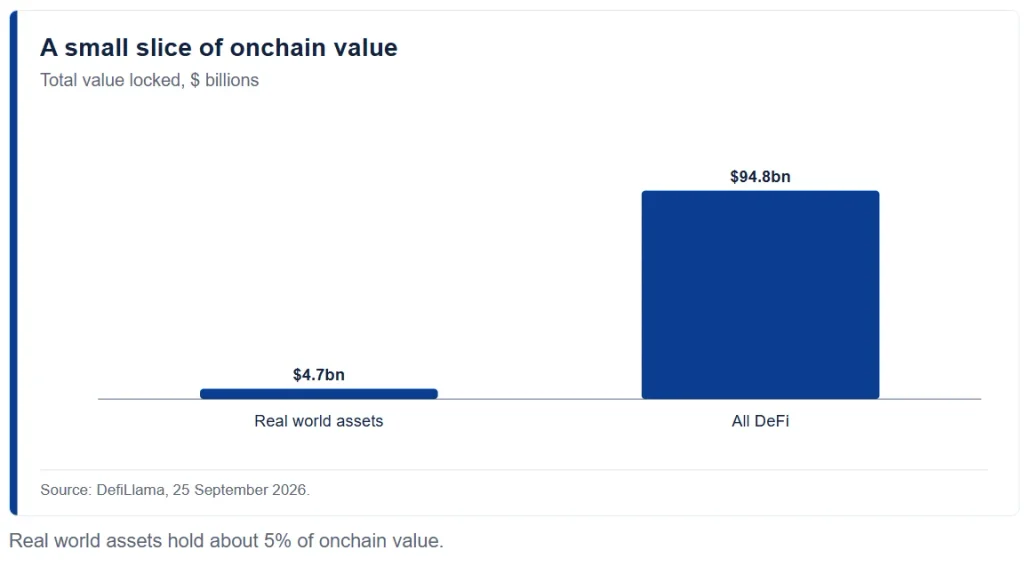
That equals roughly 5% of the $94.8 billion locked across DeFi.
A tokenised Treasury fund leads the category at about $547 million.
The top five protocols account for about 43% of the category’s value.
Regulators in the United States, the euro area and Britain all moved on tokenisation this month.
Tokenised real world assets remain a small corner of finance. Protocols in that category hold about $4.7 billion onchain, DefiLlama data show. The field spans 181 tracked products.
Scale sits far below the rhetoric. Total value locked across all of DeFi stands near $94.8 billion, the same source shows. So real world assets account for roughly 5% of onchain value.
Growth, however, is visible. Several of the largest protocols added value over the past week. Tokenised Treasury products lead that list.
What Sits Inside Tokenised Real World Assets
The mix is broader than many assume. Tokenised Treasury funds hold the largest single positions. Private credit, insurance-linked products and property tokens follow close behind.
Each type carries a different risk. Treasury funds carry almost none beyond the wrapper. Private credit, by contrast, depends on borrowers who may default.
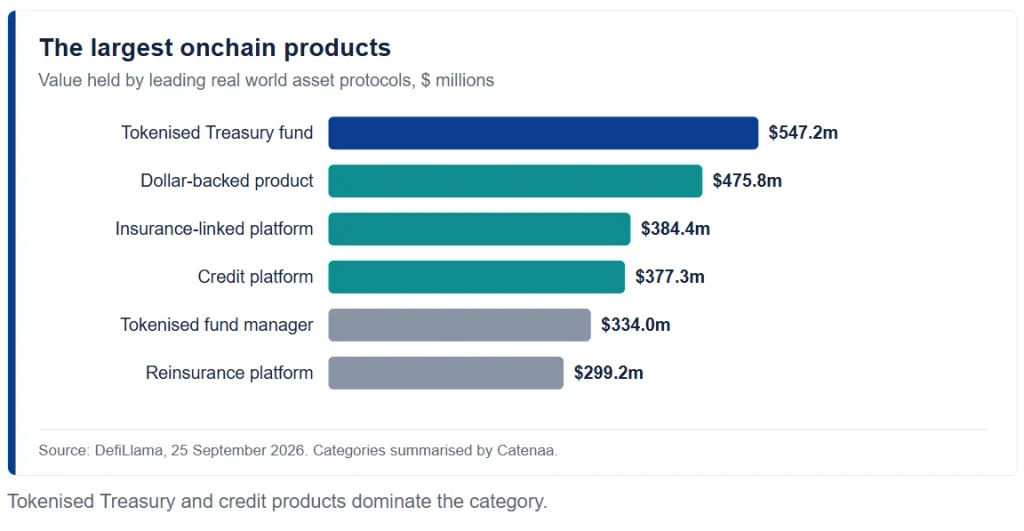
One tokenised Treasury fund holds about $547 million, making it the largest tracked protocol. A dollar-backed product from a stablecoin issuer follows at about $476 million. Two credit platforms sit above $370 million each.
Concentration is heavy at the top. The five largest protocols hold roughly $2.0 billion between them. That equals about 43% of the category.
The long tail looks thin, however. Most of the 181 tracked products hold less than $50 million each. Many will therefore struggle to cover audit and legal costs.
Why Treasuries Lead the Way
Government bills suit tokenisation well. They are simple, liquid and easy to value. Investors therefore accept an onchain wrapper without much analysis.
Utility drives adoption too. A tokenised Treasury fund can sit as collateral, settle in minutes and pay yield. Consequently, that combination beats holding an idle stablecoin.
Trading desks have noticed. Firms that once parked cash in stablecoins now prefer yield-bearing tokens. Moreover, the shift costs them nothing in settlement speed.
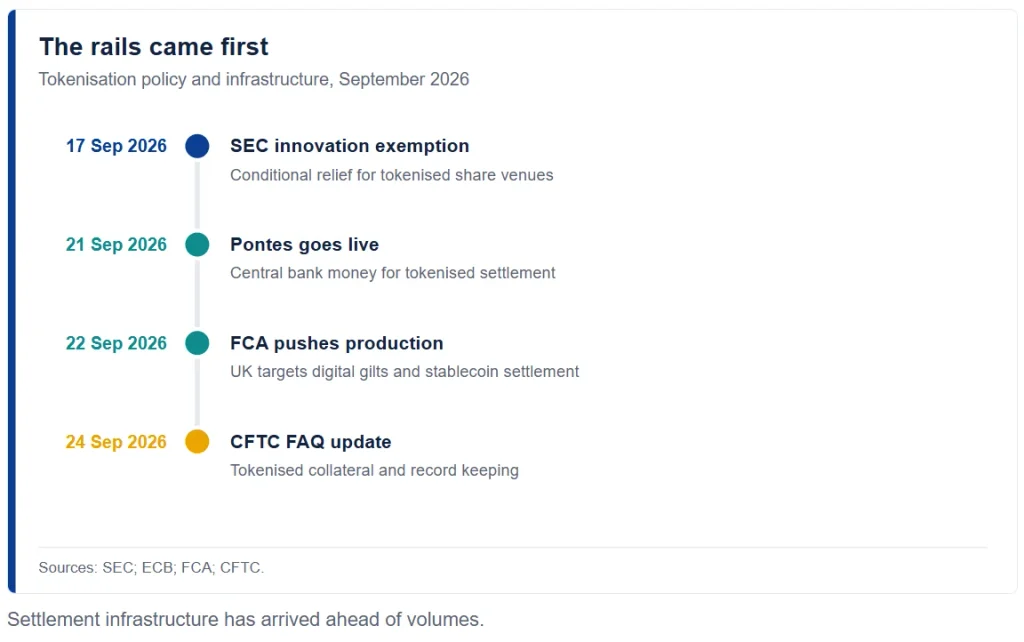
Regulators have noticed. The CFTC updated its crypto FAQs on 24 September, covering tokenised forms of permitted investments. Clearer rules make such products usable in regulated markets, which widens the potential buyer base considerably.
The Infrastructure Is Arriving
Settlement remains the missing piece, and builders are now filling that gap. The Eurosystem launched Pontes on 21 September, allowing tokenised trades to settle in central bank money. Eighteen institutions joined at the start.
Britain is pushing in the same direction. Its markets regulator wants firms to move beyond pilots, the FCA chief executive said. Digital gilt work and stablecoin settlement both feature in that plan.
Those steps address the cash leg. Without reliable settlement money, tokenised assets trade in a closed loop. With it, however, they can connect to mainstream portfolios.
Custody follows the same logic. Large investors need a regulated custodian and clear legal title. Furthermore, auditors need to verify holdings without trusting a screenshot.
Why Growth Stays Slow
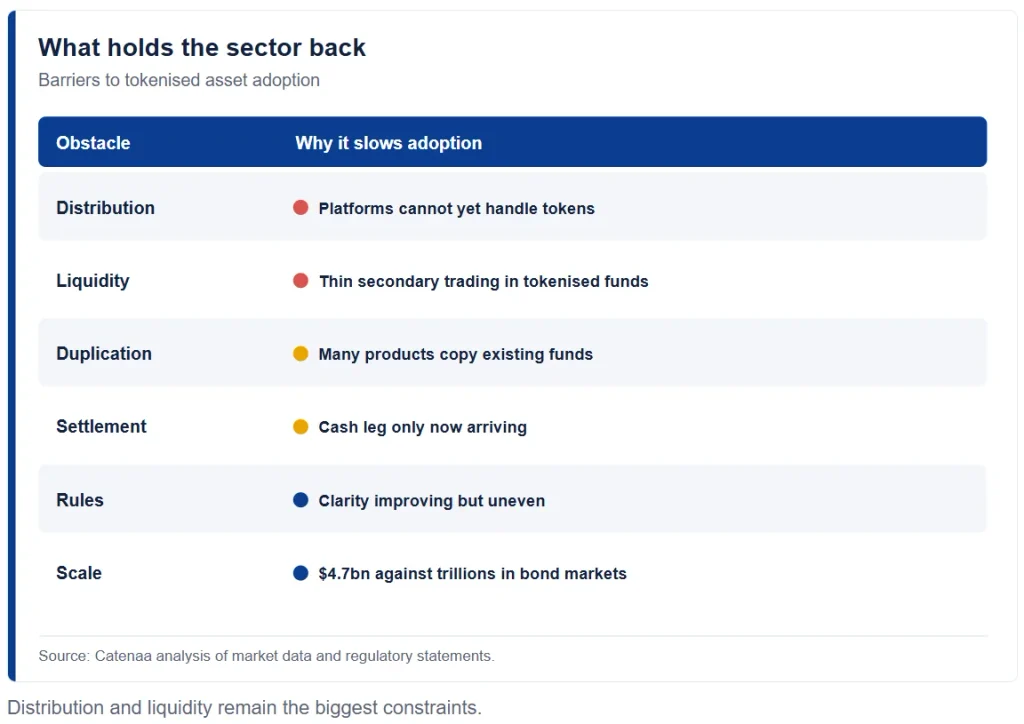
Three obstacles persist. First, distribution. Most asset managers sell through platforms that cannot yet handle tokens.
Second, liquidity. Secondary trading in tokenised funds remains thin, so investors hold to maturity. That limits the appeal for treasurers who need flexibility.
Fees add a further drag. Tokenised wrappers often cost more than the underlying fund. Buyers therefore need a clear operational benefit to justify the premium.
Third, duplication. Many products replicate existing funds with an onchain wrapper. Buyers gain speed but little else, which weakens the sales pitch.
What Would Change the Trajectory
Watch three developments. First, acceptance as margin at a clearing house. That single step would pull large balances onchain, since margin pools run into hundreds of billions.
Second, sovereign issuance. A digital government bond would set pricing habits and attract cautious buyers. Several governments are working toward that, and Britain has said so publicly.
Third, integration with payments. If tokenised funds settle instantly against regulated stablecoins or central bank money, treasurers gain a real cash tool. Therefore, corporate adoption would follow bank adoption.
The Numbers to Remember
Perspective helps here. Tokenised real world assets hold about $4.7 billion, against a global bond market measured in tens of trillions. The share is negligible today.
Yet the growth path matters more than the level. Infrastructure has arrived faster than volumes, which is the normal order. Rails usually precede traffic, as they did with instant payments a decade ago.
For now, treat tokenisation claims with care. Pilots still outnumber products, and marketing outpaces adoption. The data, rather than the announcements, will show when that changes. Watch collateral acceptance first, because money follows utility.