

August 07, 2026 – The Terafab chip factory now has a confirmed Texas site. Its scale could reshape AI hardware supply, but execution risks remain substantial.
In Summary
The first Terafab phase requires more than $16.8 billion and promises 3,000 new jobs.
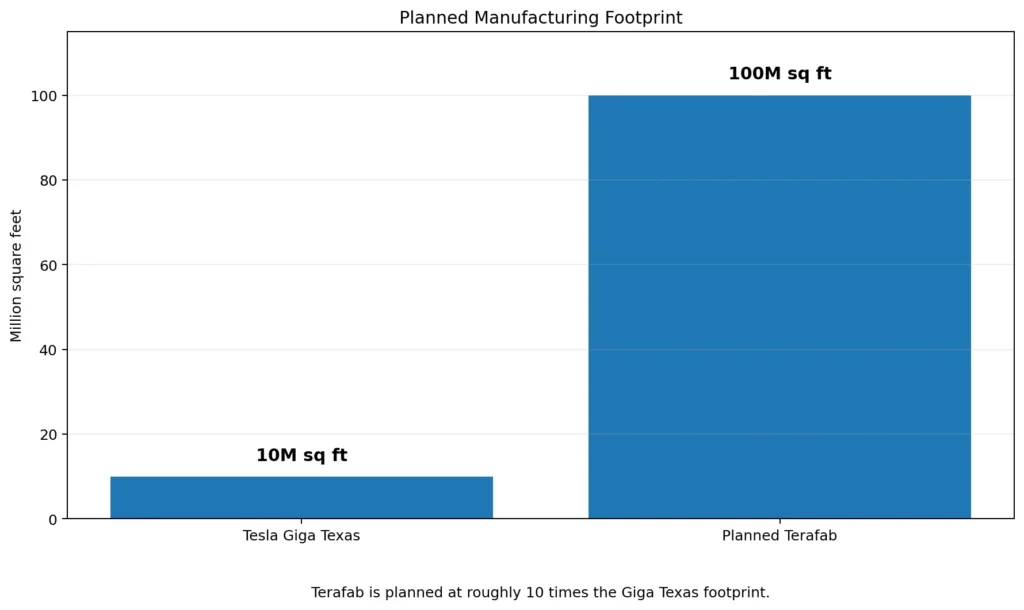
Plans cover 100 million square feet, roughly ten times Tesla’s Texas Gigafactory footprint.
Long-term investment could reach $119 billion, but later phases remain conditional.
Vertical integration may reduce chip bottlenecks for robots, vehicles, and orbital computing.
Texas wins a giant chip investment
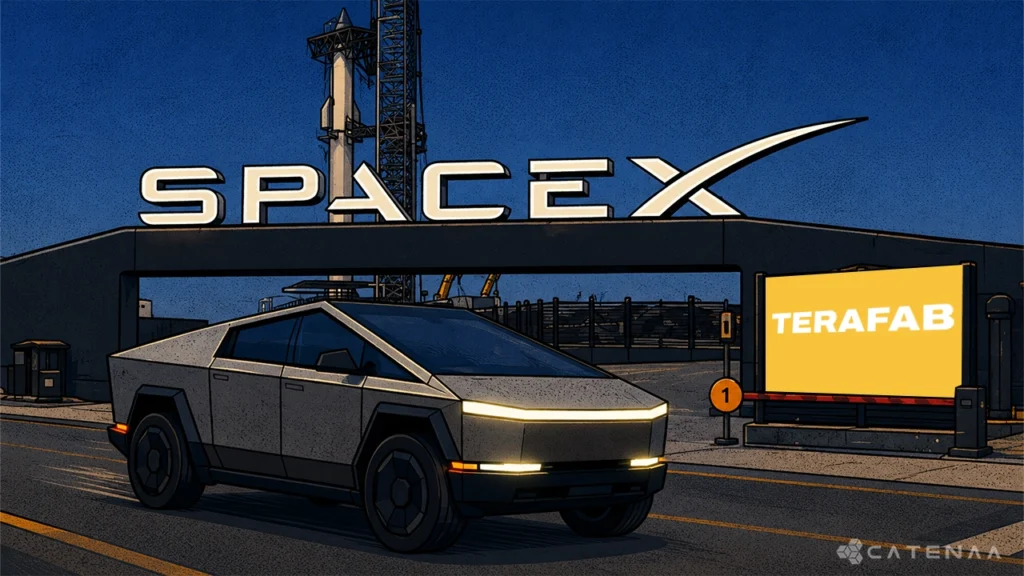
Tesla and SpaceX have selected Grimes County for the first commercial Terafab site. The decision moves the project beyond concept-stage ambition.
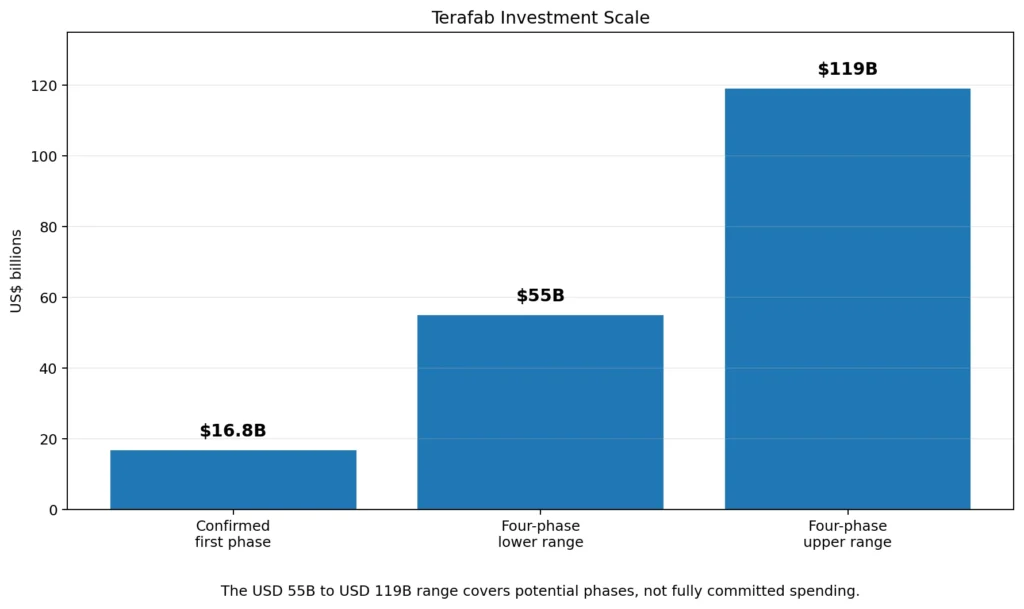
The first phase will exceed $16.8 billion, according to the Texas governor’s office. It should also create 3,000 engineering, technical, and plant jobs.
Texas approved a $30 million performance-based grant for the project. Terafab also qualifies for the state’s JETI incentive program.
However, the first phase represents only part of the proposed buildout. State filings describe four potential phases across two local school districts.
Those Texas incentive filings place the wider capital range between $55 billion and $119 billion. Long-term expansion could exceed that range if demand accelerates.
Therefore, investors should separate committed spending from the project’s upper ambition. The $119 billion figure remains a planning scenario, not secured expenditure.
Why Terafab matters now
AI growth is creating a physical infrastructure race. Software models require chips, power, cooling, packaging capacity, and reliable supply chains.
SpaceX’s prospectus identifies concentrated fabrication capacity as a material risk. The company also expects chip requirements to exceed current availability.
Terafab aims to address that problem through internal production. The project targets one terawatt of annual compute hardware output.
Its official plan compares a 100-million-square-foot complex with Tesla’s 10-million-square-foot Texas Gigafactory. That scale signals a manufacturing campus, not a conventional fab.
The project would produce two broad chip categories. Tesla needs processors for vehicles, autonomy, and Optimus robots.
SpaceX needs radiation-aware chips for satellites and orbital computing. Both companies also want faster hardware iteration and lower dependence on external foundries.
A different semiconductor model
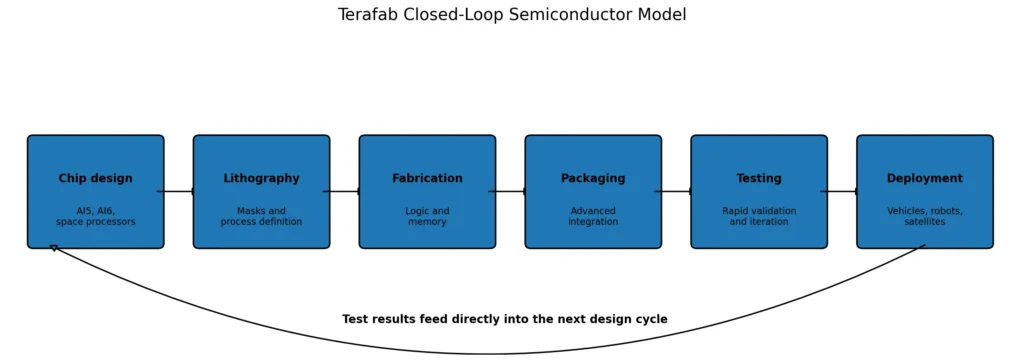
Most chip supply chains divide design, fabrication, packaging, and testing across separate companies. Terafab plans to combine these stages on one campus.
The design includes lithography masks, logic chips, memory, advanced packaging, testing, and deployment. This closed-loop model could shorten development cycles.
Moreover, engineers could test hardware and update designs without crossing several supplier boundaries. That approach may lower delays and coordination costs.
Yet integration does not guarantee competitive yields. Leading-edge fabrication requires precise processes, scarce equipment, skilled labor, and disciplined quality control.
The official filing also mentions sub-2-nanometer process ambitions. That target raises the technical challenge and increases equipment dependence.
Capital capacity supports the strategy
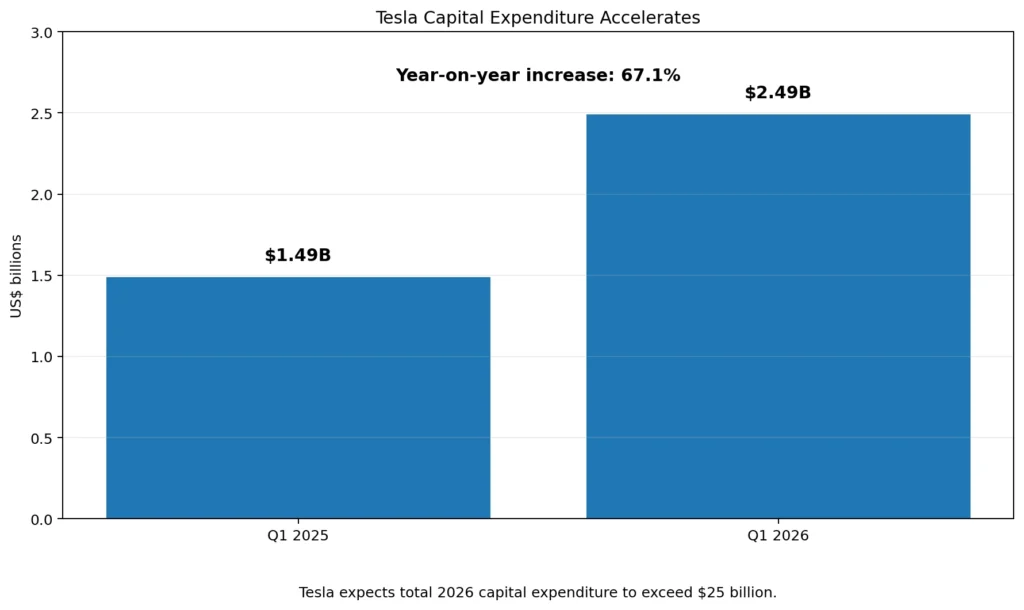
Tesla expects 2026 capital expenditure above $25 billion. It links that spending to AI infrastructure, factories, data centers, and production expansion.
Tesla’s first-quarter capital expenditure rose to $2.49 billion from $1.49 billion one year earlier. The company ended March with $44.74 billion in cash and short-term investments.
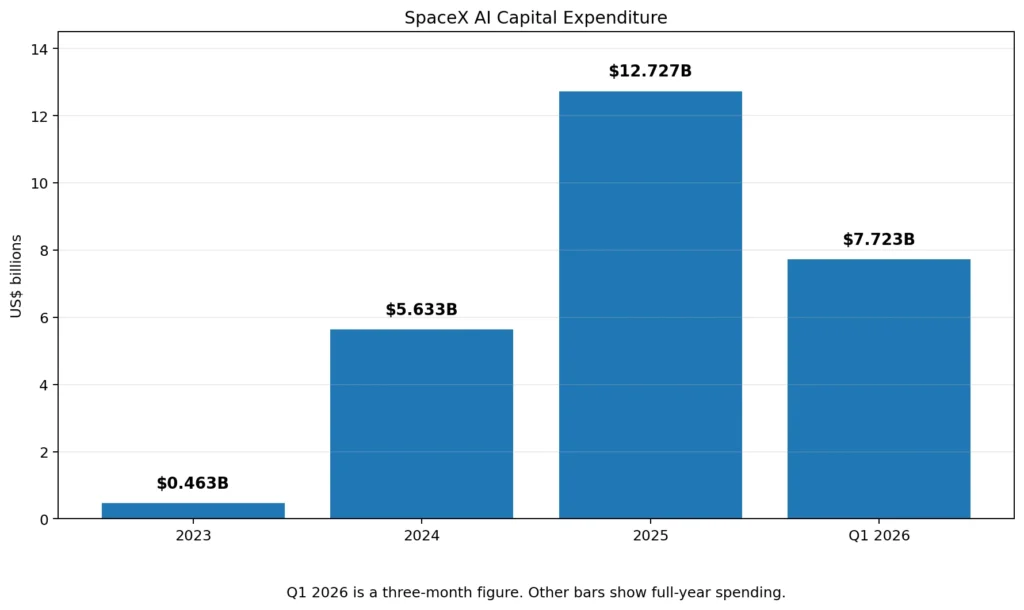
SpaceX is also spending heavily on compute. Its AI capital expenditure reached $12.73 billion during 2025.
That figure rose from $5.63 billion in 2024 and $463 million in 2023. During the first quarter of 2026, AI spending reached $7.72 billion.
These figures show why Terafab fits both companies’ strategies. Compute supply has become a core operating input, rather than a standard procurement category.
The investment case and major risks
Terafab could reduce supplier concentration and improve hardware economics. It may also create a domestic chip ecosystem around Texas.
However, the project faces major execution risks. Construction timelines, water access, grid capacity, equipment delivery, yields, and labor availability could affect returns.
SpaceX also states that Tesla and Intel are not obligated to remain involved. Specific milestones and capital commitments still require separate agreements.
Furthermore, both companies expect to keep buying significant hardware from outside suppliers. Terafab will complement external foundries, rather than replace them soon.
The core investment question is not whether AI chip demand will grow. The question is whether Terafab can reach advanced yields at acceptable costs.
For now, the confirmed site converts an industrial vision into a measurable project. The next signals will include permits, equipment orders, financing, and construction milestones.