


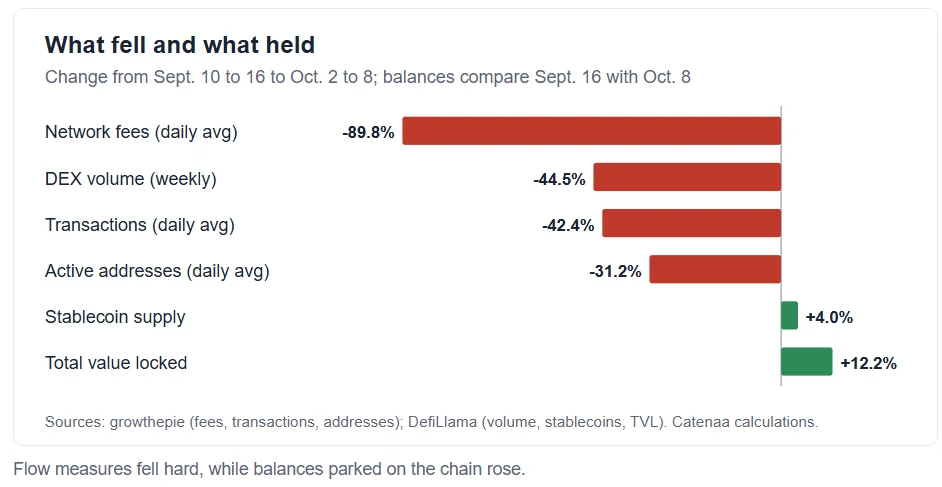
October 13, 2026 – Transactions, active addresses and trading volume have all slid since mid-September. Deposits, however, have stayed near record levels.

In Summary
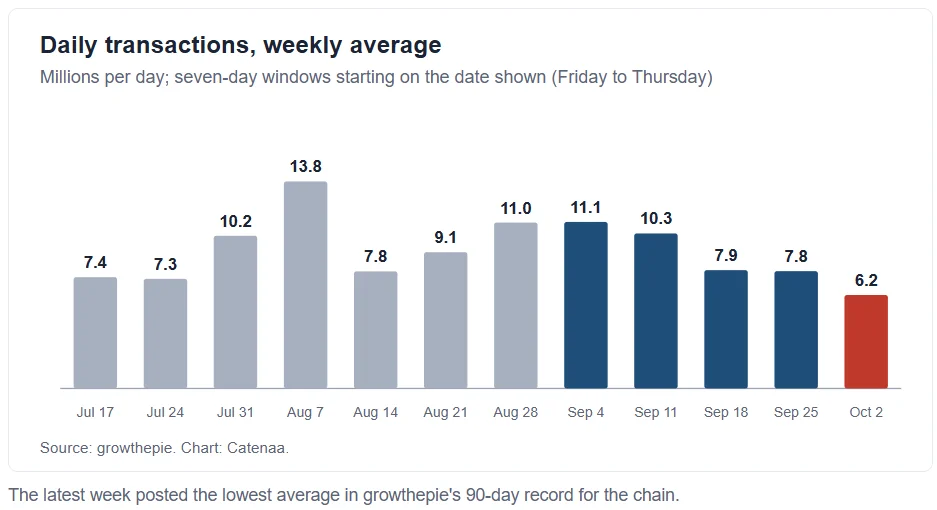
Robinhood Chain averaged 6.21 million daily transactions from Oct. 2 to 8, down 42% from mid-September.
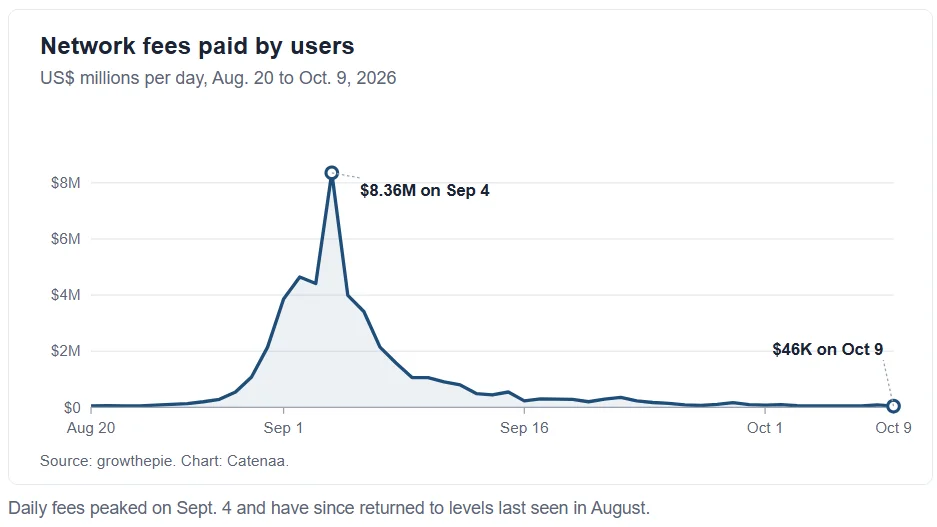
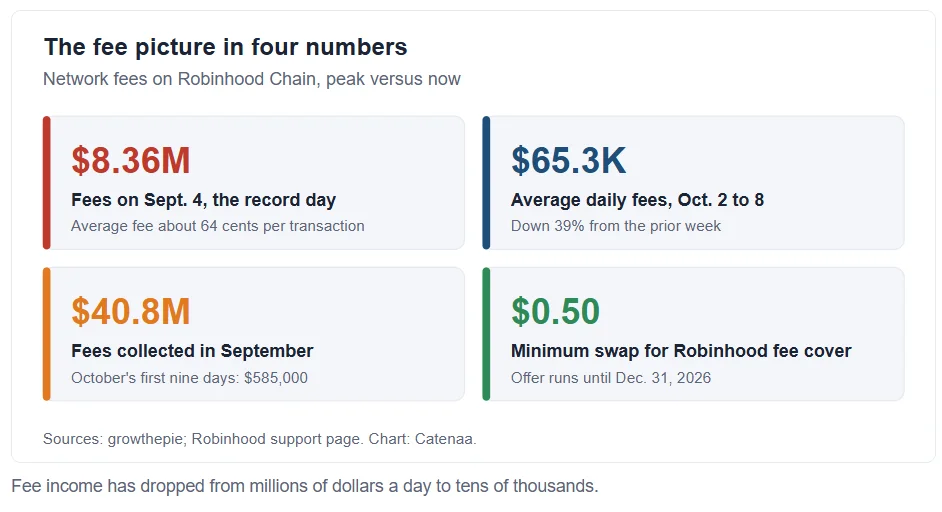
Network fees fell to about $65,300 a day, against a record $8.36 million on Sept. 4.
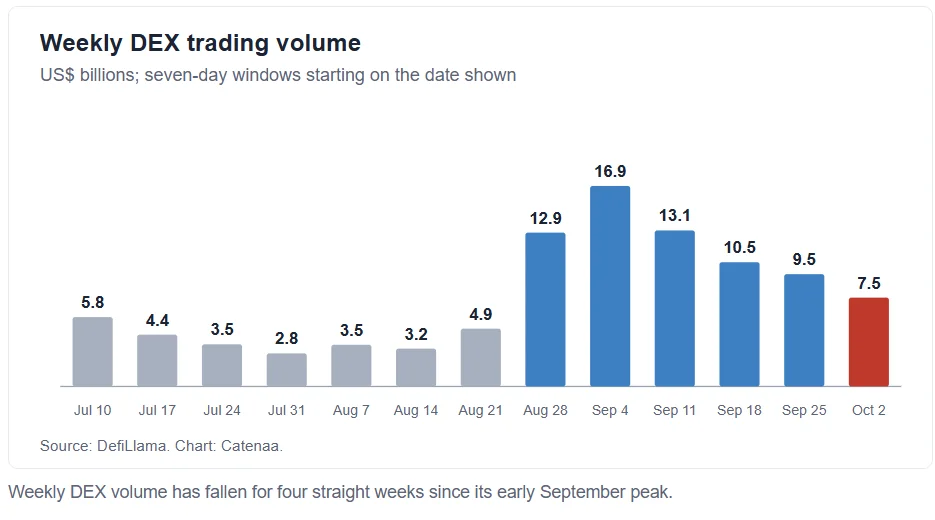
DEX volume dropped 21% week on week to $7.48 billion, per DefiLlama.
Deposits held near $1.05 billion and stablecoin supply rose to about $1.1 billion.
Robinhood covers network fees on eligible wallet swaps above $0.50 until Dec. 31.
Robinhood Chain activity has cooled sharply since its September peak. Daily transactions averaged 6.21 million from Oct. 2 to Oct. 8, according to growthepie data. That is 42% below the 10.78 million average from Sept. 10 to Sept. 16.
The slowdown now spans users, fees and trading. Still, deposits on the network have held steady, which suggests traders are pausing rather than leaving.
Robinhood Chain activity slips across the board
Active addresses averaged 321,600 a day in the latest week, down 31% from mid-September. However, addresses do not equal people. One user can control many wallets, and bots can generate large transaction counts. Even so, the address count slipped again to 265,600 on Oct. 9.
The weakest day so far came on Oct. 3, when the chain processed 4.85 million transactions. That was the lowest daily count in growthepie’s 90-day record for the network. Friday, Oct. 9, brought only a partial rebound to 5.61 million. In fact, the latest weekly average sits below the 7.29 million recorded in late July, weeks after launch.
Fees collapse from a September spike
Network fees tell the starkest story. Users paid about $65,300 a day in fees from Oct. 2 to Oct. 8, down 39% from the prior week. By contrast, fees hit $8.36 million on Sept. 4 alone.
That spike came during a burst of heavy demand for block space. The average fee per transaction reached 64 cents that day, while the median hit 25 cents. On Oct. 9, the median fee fell below half a cent.
In total, the chain collected $40.8 million in network fees in September. October’s first nine days produced just $585,000. At that pace, October fees would reach about $2 million, roughly 95% below September.
Costs barely register by comparison. The chain spent about $27,800 in September to post data and settle on Ethereum, growthepie estimates. That left nearly all of September’s fees as on-chain profit. Since mid-July, users have paid about $51.0 million in network fees.
Trading cools, but money stays put
Trading has slowed as well. Decentralized exchanges on the chain handled $7.48 billion from Oct. 2 to Oct. 8, DefiLlama data show. That marks a 21% drop from the prior week. It also sits 56% below the peak week of Sept. 4 to Sept. 10. The busiest single day came on Sept. 4, when DEX volume reached $3.67 billion. By Oct. 10, daily volume had dropped to about $580 million.
Uniswap dominates what remains, handling roughly four of every five dollars traded over the past week. Fees paid to apps on the chain also fell 37% over the past seven days, to $21.4 million.
Yet capital has not fled. Total value locked in apps on the chain held near $1.05 billion on Oct. 11, per DefiLlama. That sits close to its highest level on record and above $1.02 billion on Sept. 26. Stablecoin supply also edged up to about $1.1 billion. Those idle balances equal roughly 15% of last week’s DEX volume, so cash sits ready if traders return.
Robinhood bets on covered fees
Robinhood is trying to keep users trading. Its support page says it covers network fees on eligible swaps above $0.50 in Robinhood Wallet. The offer runs until Dec. 31, 2026. However, it excludes wallet transfers, bridge exits and trades through the in-app dapp browser. Third-party wallets on the chain do not qualify either. The operator, Robinhood Non-Custodial, may change or end the promotion at any time, the terms state.
So far, the cover has removed cost for wallet traders, yet activity kept sliding into October. That pattern suggests weaker demand, not fees alone, is driving the slowdown.
Robinhood launched the chain’s public mainnet on July 1, built using the Arbitrum platform. It also offers stock tokens through Robinhood Wallet in more than 120 countries, although availability varies.
Robinhood’s own shares have also cooled. Its stock closed at $109.02 on Friday, Nasdaq data show. That leaves it 12.6% below its Sept. 3 close of $124.72, set as chain fees surged.
What to watch next
The next test arrives when the fee offer ends. If traders must pay their own fees in January, Robinhood Chain activity could slip further. Conversely, steady deposits give apps a base to rebuild volume. Stablecoin balances offer another signal, since a sustained exit would show traders leaving rather than waiting. Investors will also watch whether Robinhood discloses chain revenue in its next earnings report.




