

October 04, 2026 – Bank of North Dakota’s dollar-backed token now runs in production on Fiserv’s rails. The test is whether small banks will actually use it.

In Summary
Fiserv’s digital asset platform went live on October 1, with Roughrider Coin as its first production use.
VersaBank issues the coin, Fireblocks supplies infrastructure, and Solana processes the transactions.
More than 90 North Dakota banks and credit unions can reach it through Fiserv’s Commercial Center.
The launch gives Fiserv a growth story while its core bank-tech revenue declines.
The Fiserv stablecoin platform is now live with bank clients. On October 1, Fiserv named its first production use case. It is Roughrider Coin, a dollar-backed token from Bank of North Dakota.
More than 90 participating banks and credit unions in North Dakota will reach the coin through Commercial Center. Banks already use that Fiserv system for traditional interbank money movement. The goal is more efficient money movement across the state’s interbank network.
Fiserv says the platform is live with financial institution clients, in the plural. So far, though, Bank of North Dakota is the only one it has named.
How the Fiserv Stablecoin Setup Works
Several firms share the work. VersaBank, a North American business-to-business digital bank, issues Roughrider Coin. It also handles minting, burning, custody, and reserve management. Fireblocks provides digital asset infrastructure and tokenization services. Meanwhile, the Solana blockchain processes the transactions.
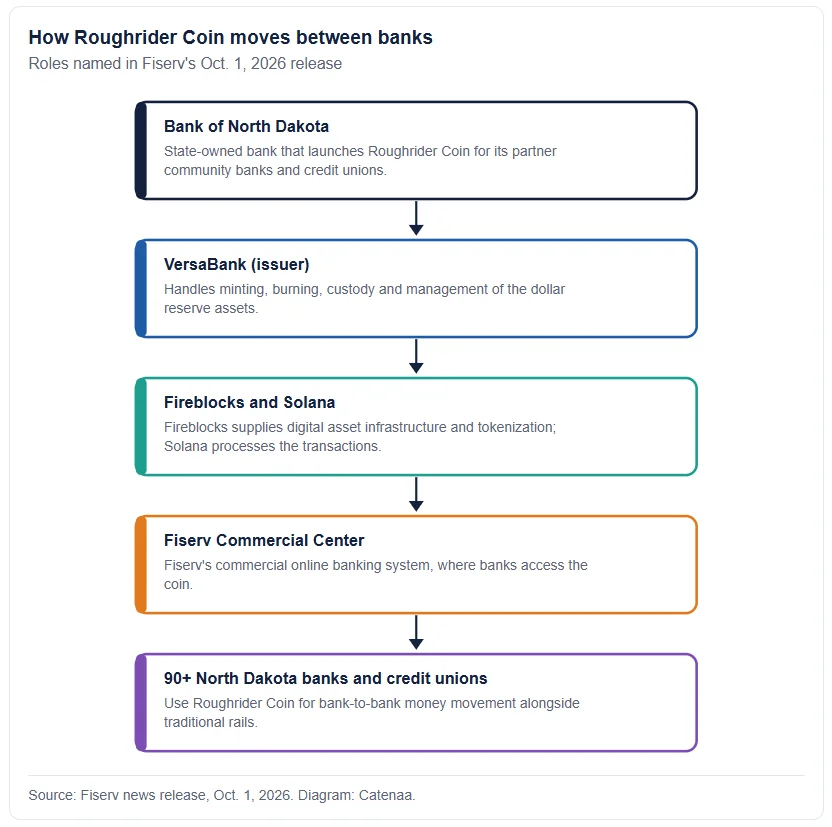
For a small bank, the appeal is simple. Staff can move tokenized dollars inside a system they already use, rather than learning a crypto wallet. Transfers on a public blockchain can also settle around the clock.
Beyond Roughrider, Fiserv says the platform supports stablecoin card issuance and cross-border payments. It also covers programmable commerce and treasury automation. In addition, it supports tokenized deposits and dollar accounts for financial institutions worldwide.

From FIUSD Plan to Production
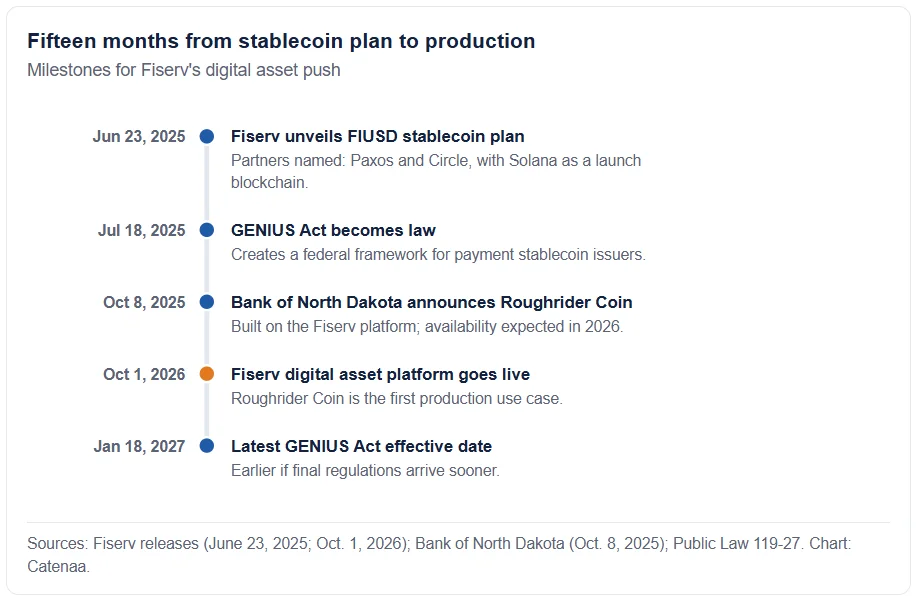
The launch took longer than first signalled. In June 2025, Fiserv unveiled its FIUSD stablecoin and aimed for availability by the end of that year. At the time, Fiserv named Paxos and Circle as infrastructure partners. It also planned to plug FIUSD into its Finxact core and its digital banking apps. Moreover, it promised that FIUSD would work with other leading stablecoins.
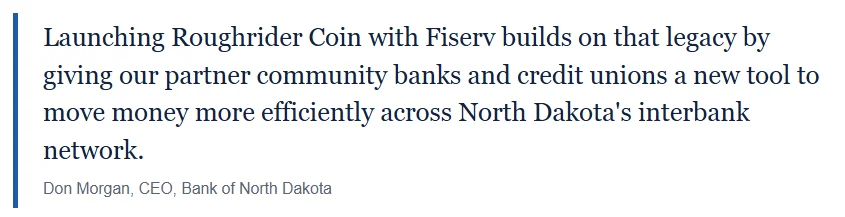
Then, in October 2025, Bank of North Dakota announced Roughrider Coin and expected a 2026 rollout. It described uses including bank-to-bank transfers, global money movement, and merchant payments. Governor Kelly Armstrong called it a cutting-edge approach to a secure and efficient financial system. Chief executive Don Morgan said the coin capitalizes on recent changes in federal law.
In the meantime, the GENIUS Act became law in July 2025 and set federal rules for payment stablecoin issuers. This week’s release, however, names neither FIUSD nor Paxos and Circle. Instead, VersaBank is the named issuer, a sign that the setup has evolved.
Why North Dakota’s Banks Matter
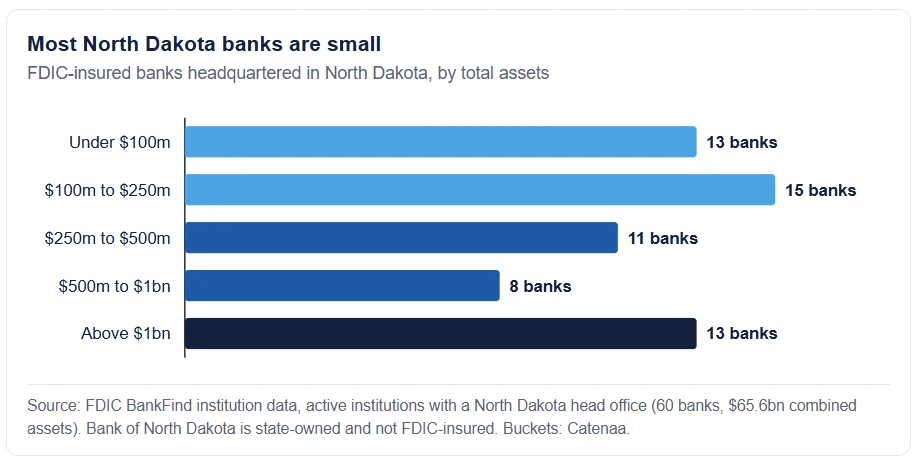
Bank of North Dakota, founded in 1919, is the only state-owned bank in the country. It reported just over $10 billion in assets last year. Its partner network is mostly small lenders, as FDIC data show.
Sixty FDIC-insured banks are based in the state, with combined assets of about $65.6 billion. Their median size is roughly $275 million, and 28 hold less than $250 million. Those banks rarely have budgets for in-house blockchain teams.
Size is also lopsided. The 13 banks above $1 billion hold 81% of those assets, led by Fargo-based Bell Bank at about $15.2 billion. By contrast, the 28 smallest banks hold less than 5% combined.
That is the opening for a core processor. If Roughrider works at this scale, Fiserv gains a template it can sell to other state networks and community banks. A Fiserv stablecoin rollout could then reach far more lenders through software they already license.
What the Launch Means for Fiserv
Fiserv brings real reach. It serves about 10,000 financial institutions and six million merchant locations, and it processes 90 billion transactions a year.
Even so, its core banking units are shrinking. According to its latest quarterly report, second-quarter revenue fell 4% to $5.29 billion. Financial Solutions revenue dropped 8% to $2.36 billion, while operating income fell to $1.02 billion from $1.70 billion. Issuing posted the steepest drop of the three bank-facing lines, down 11% to $784 million.
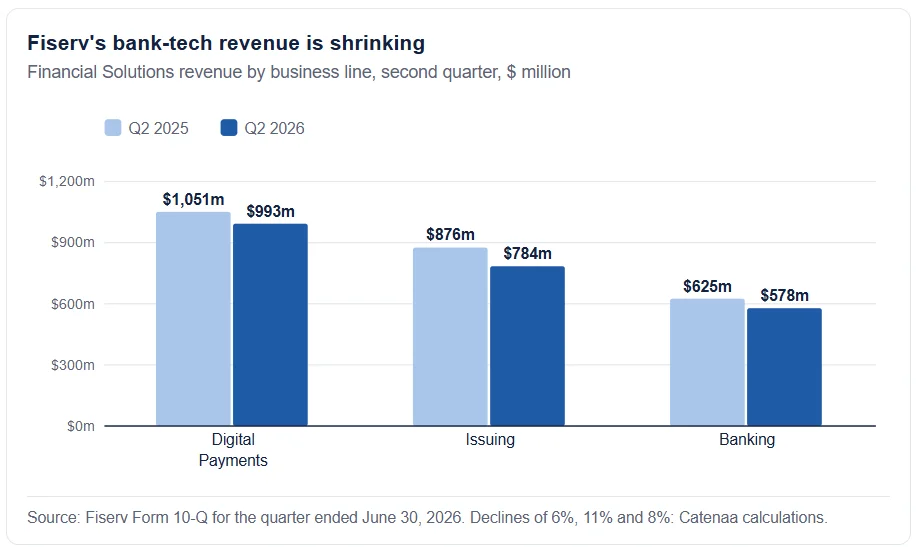
Merchant Solutions held up better, with revenue down 1% to $2.61 billion. Still, the group’s latest filing lists stablecoins among the new platforms it is building for clients.
Against that backdrop, stablecoins give Fiserv a fresh growth story. Sunil Sachdev leads embedded finance and digital assets at the company. He said moving from concept to production helps clients unlock new efficiencies.
Still, one state network is a modest start, and Fiserv has not disclosed any volumes. The next proof point is whether more banks sign up. After that, investors will want to see transaction volume and revenue.