

October 04, 2026 – One product turns incoming dollars into stablecoins. The other lets merchants take stablecoins and receive dollars. Both launch first in the US.

In Summary
Citi and Coinbase expanded their 2025 partnership with two new payment products, launching first in the US.
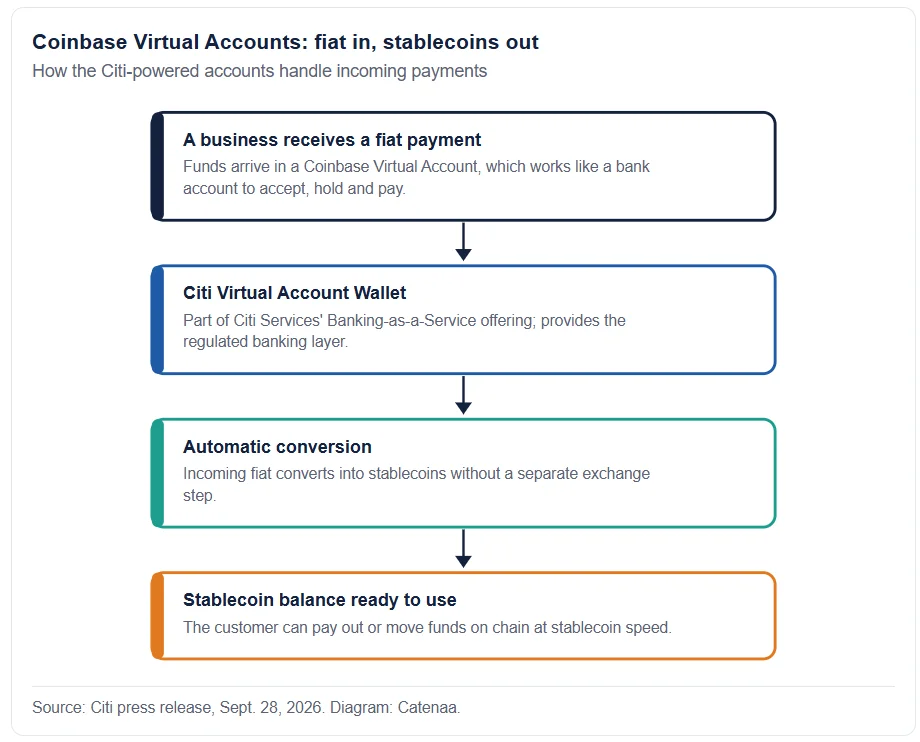
Coinbase Virtual Accounts run on Citi’s Virtual Account Wallet and convert incoming fiat into stablecoins.
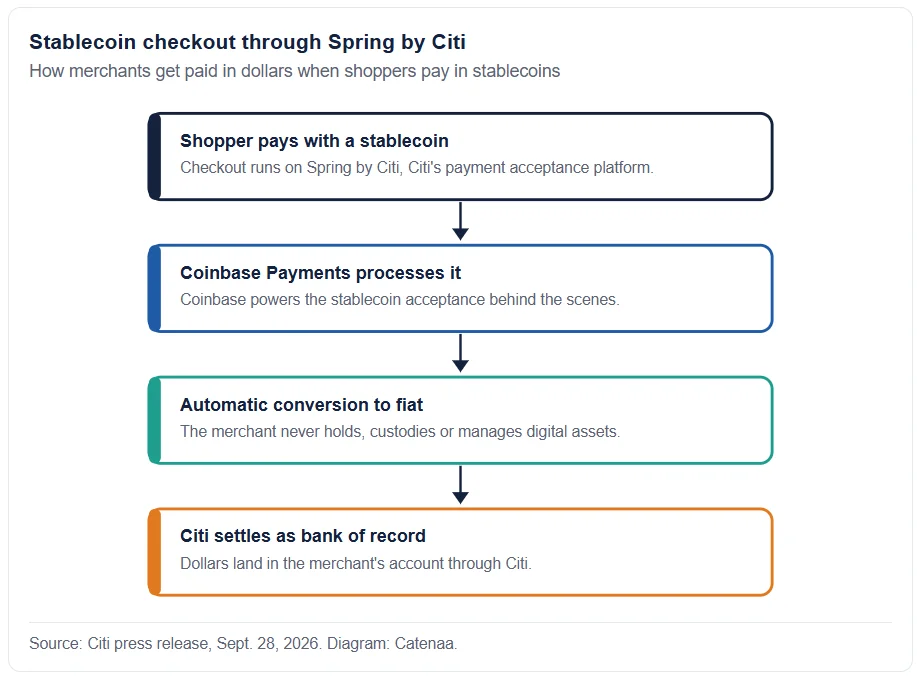
Spring by Citi will let institutional clients accept stablecoins at checkout and settle in dollars.
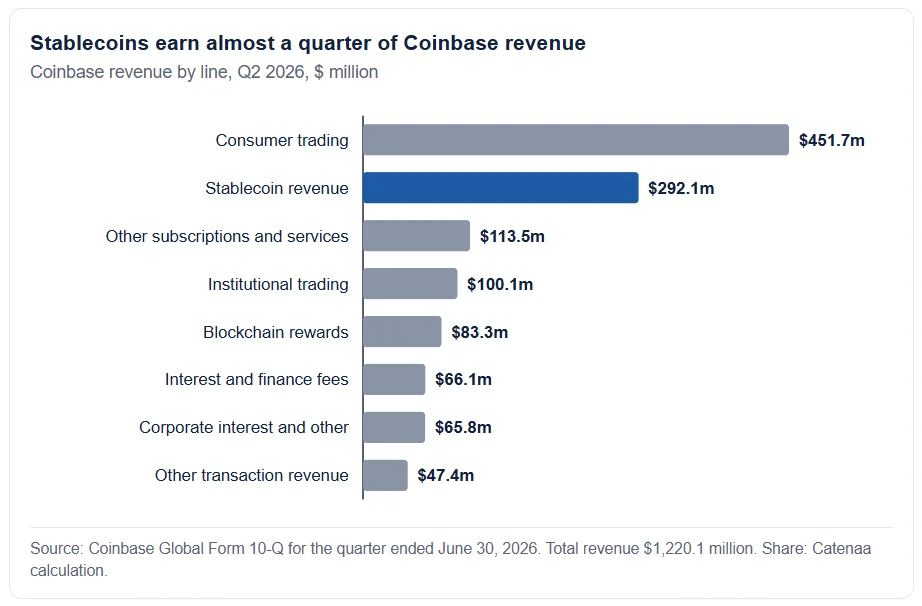
Stablecoins earned Coinbase $292.1 million in Q2, about 24% of total revenue.
Citi and Coinbase have expanded their partnership to link stablecoin and fiat payments for companies and consumers. The two products, announced on September 28, will launch first in the United States.
One turns incoming dollars into stablecoins inside Coinbase. The other lets Citi’s institutional clients accept stablecoins at checkout and still receive dollars. In both cases, users avoid building separate crypto infrastructure. The announcement gave no pricing or firm launch date.
Ashish Bajaj, Citi’s head of Services for North America, framed the aim broadly. He said Citi wants payments infrastructure that works across traditional and digital instruments and networks.
What Citi and Coinbase Are Building
First, Coinbase picked Citi’s Virtual Account Wallet to power Coinbase Virtual Accounts. The wallet sits within Citi Services’ banking-as-a-service offering.
These accounts let Coinbase’s payment customers accept, hold, and pay funds much like a bank account. Incoming fiat converts automatically into stablecoins, a feature Citi calls an industry first. In practice, Citi provides the regulated on- and off-ramps between bank money and digital dollars. Coinbase says its clients have always needed a fast, compliant bridge between fiat and stablecoins.
Stablecoins at the Checkout
Second, Citi will let institutional clients take stablecoin payments through Spring by Citi, its payment acceptance platform. Coinbase Payments powers that acceptance.
The stablecoins convert automatically into fiat, and Citi settles the funds as bank of record. As a result, merchants can serve more than 150 million stablecoin holders without touching digital assets themselves. Their books, meanwhile, stay in dollars, which limits price and custody risk.
Brett Tejpaul, head of Coinbase Institutional, said neither side needs to build or manage a system it does not need. That is the core pitch for both customer groups. He also called Citi the kind of regulated partner the industry needs to move from experiments to everyday commerce.
From Pilot Partnership to Products
The deal builds on an October 2025 tie-up that focused on fiat pay-ins, payouts and on- and off-ramps. At the time, Citi cited more than 300 payment clearing networks across 94 markets. Coinbase said the pairing could simplify and expand access to digital asset payments.
Scale is Citi’s main selling point. The bank says it moves about $6 trillion a day and works in more than 180 countries and jurisdictions. It also banks 90% of top e-commerce companies and 15 of the 20 largest fintechs.
Citi has also linked its Token Services to 24/7 US dollar clearing for round-the-clock cross-border payments. Both firms said they will add more features in the coming months. Citi describes its wider digital asset strategy as production-grade tools for cash, securities and collateral.
What the Deal Means for Each Side
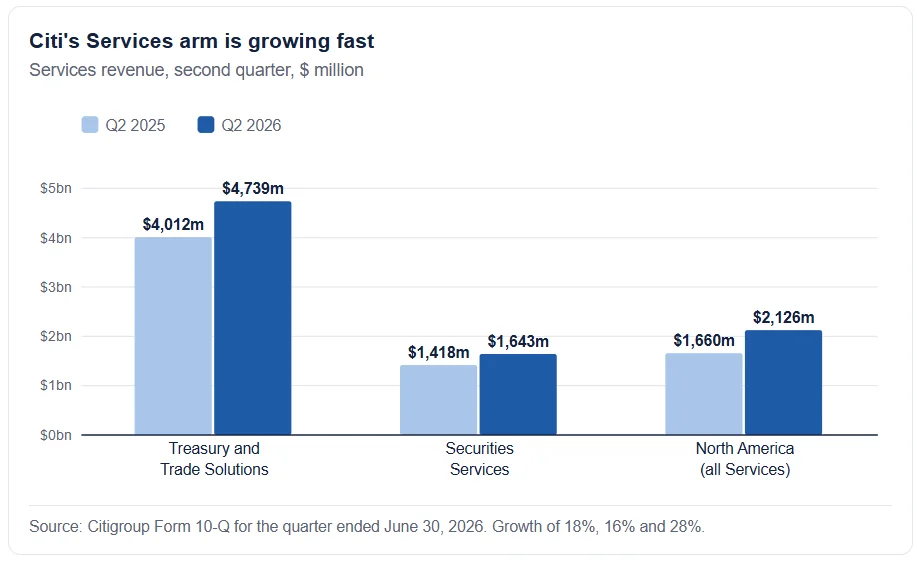
For Citi, payments are a growth engine. Its second-quarter filing shows Services revenue up 18% to $6.38 billion. North American Services revenue jumped 28% to $2.13 billion, while cross-border transaction value rose 13%.
Treasury and Trade Solutions, the unit behind these payment tools, grew revenue 18% to $4.74 billion. Net interest income there rose 20% as average deposits climbed 19%. Stablecoin rails could one day pull those corporate deposits away. So Citi has a clear reason to sit in the middle.
For Coinbase, stablecoins are a key earner. According to its quarterly report, stablecoin revenue reached $292.1 million in the second quarter. That was about 24% of total revenue of $1.22 billion.
Even so, that line fell 5% from a year earlier, because lower interest rates offset higher balances. Customers held $8.87 billion of USDC on the platform at June 30, up 19% in a year.
Meanwhile, trading income weakened. Consumer transaction revenue fell 31% to $451.7 million as consumer spot volume dropped 38%. Payment services that earn steady fees would therefore help Coinbase smooth out crypto market cycles.
The wider market has cooled, though. Total stablecoin supply stands at roughly $310 billion, according to DefiLlama data. That is up only about 1% this year, after a jump of roughly half in 2025. Supply also remains below its May peak. USDC accounts for roughly $74.2 billion of the total.
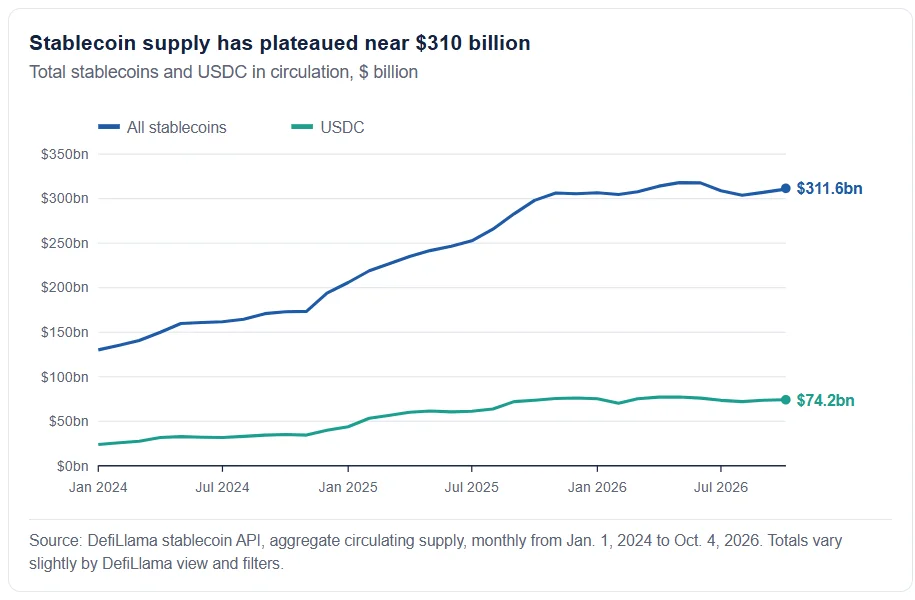
Against that backdrop, real-world payment use could matter more than new token issuance. Citi and Coinbase are betting that seamless checkout and treasury tools will drive the next leg of adoption. Timing helps, too, since the GENIUS Act’s federal stablecoin rules take effect by January 18, 2027.