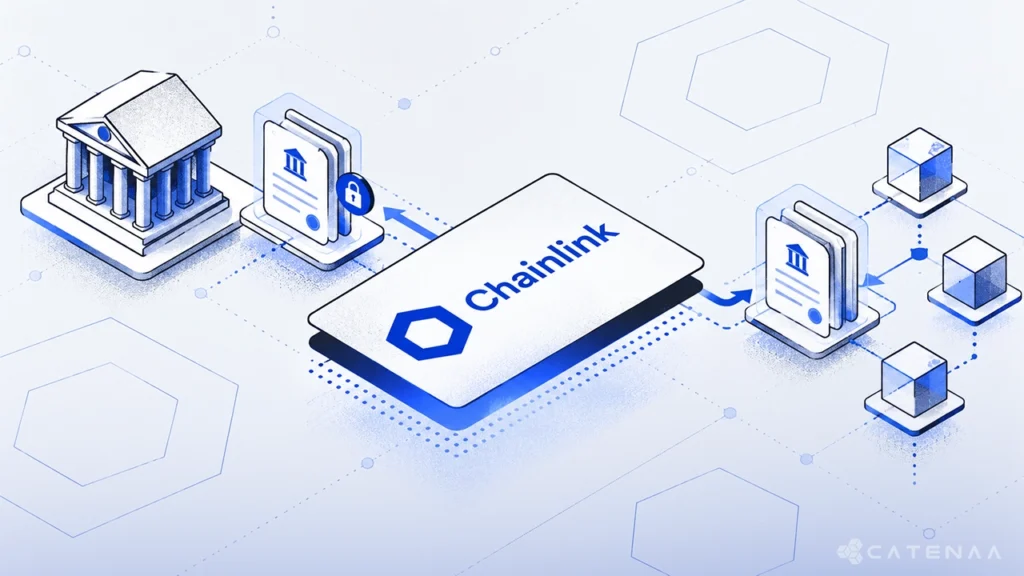


October 02, 2026 – The new platform lets institutions agree repo deals on one network and settle cash and collateral on others. DTCC showcased related work at Sibos.
In Summary
Chainlink launched Fulcrum on 30 September for institutional financing and collateral management across blockchains.
It separates where a repo is agreed from where cash and collateral settle, enabling cross-chain delivery versus delivery.
Fulcrum does not custody assets or act as a counterparty; it uses CRE, CCIP and Data Streams.
Citing Citi, Chainlink says about a quarter of institutional collateral sits idle; LINK nearly doubled in the quarter.

Chainlink has launched Chainlink Fulcrum, a platform that lets big financial institutions run repo deals across different blockchains. The company unveiled it on 30 September, during the week of the Sibos conference.
According to the Chainlink announcement, Fulcrum is the first cross-chain repurchase agreement flow of its kind. It splits the place where parties agree a deal from the places where cash and collateral settle.
That matters because tokenised assets now live on many separate networks. As a result, a bond on one chain cannot easily back a loan on another.
Fulcrum aims to fix that gap. Through one gateway, the two sides can pick assets, set terms and settle across supported chains.
What Chainlink Fulcrum does
A repo is a short-term secured loan. One side hands over bonds or shares for cash. Later, it buys them back at a set price.
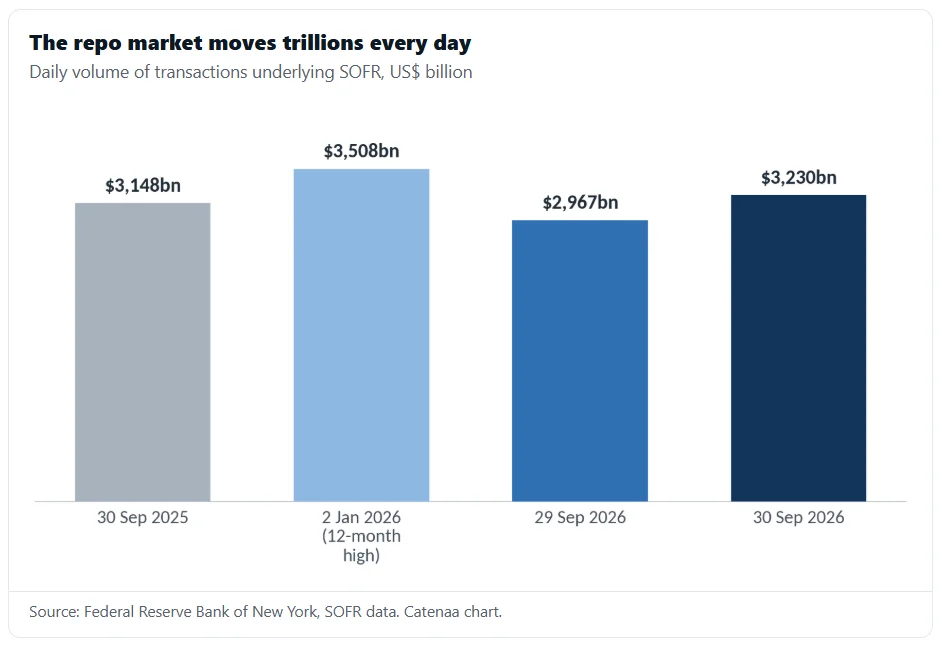
Banks, funds and treasurers use repo every day to manage cash. The market is huge. On 30 September, US repo trades behind the SOFR benchmark totalled about $3.2 trillion, New York Fed data show.
Fulcrum brings that model to tokenised assets. Counterparties agree on the principal, financing rate, eligible collateral, and haircuts on a venue of their choice.
Then the system checks collateral on one network and releases cash on another. Chainlink describes this as cross-chain delivery versus delivery.
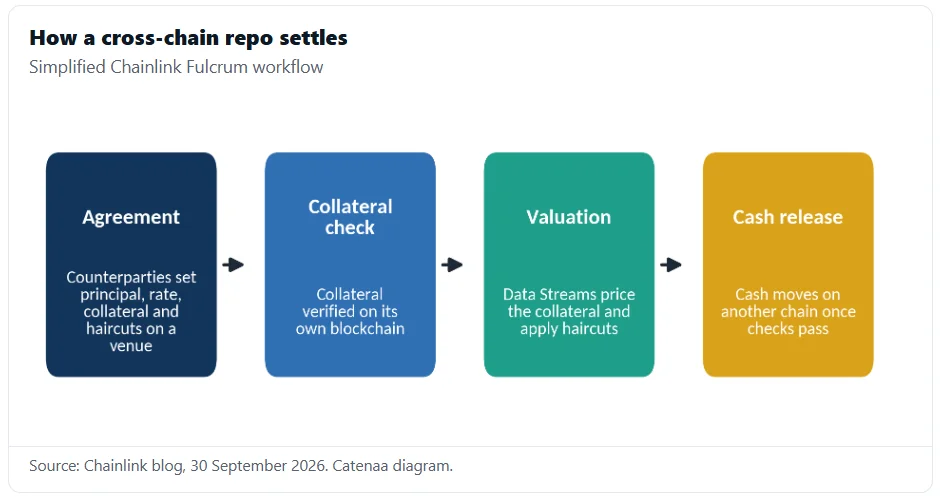
Importantly, Fulcrum does not hold assets itself. It does not act as a counterparty or run a trading venue. Instead, the venues connected to it execute and govern the deals.
Put simply, a bank could pledge a tokenised bond held on one chain. In return, it could receive tokenised cash on a different chain, with both legs linked.
The technology behind it
Several Chainlink tools power the platform. The Chainlink Runtime Environment coordinates each step, from agreement creation to collateral checks and cash release.
Meanwhile, the Cross-Chain Interoperability Protocol links the public and private blockchains involved. It carries the messages and assets each transaction needs.
Chainlink Data Streams supply market prices to value collateral. They also provide agreed haircuts, which reduce the counted value of collateral to reflect risk.
Because the system runs around the clock, it can check collateral coverage throughout the day. It can also trigger margin calls automatically when coverage falls below agreed levels.
Users can also set strict terms. For instance, a lender can ban rehypothecation, which means the borrower cannot reuse the collateral elsewhere.
The idle collateral problem
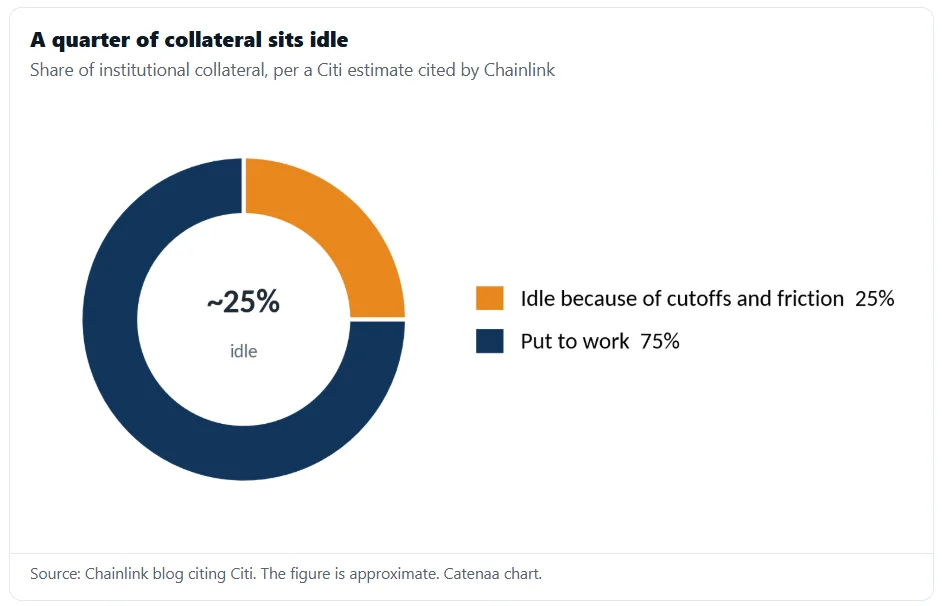
Chainlink points to a large prize. Citing Citi, it says about a quarter of institutional collateral sits idle because of settlement cutoffs and operational friction.
That costs the average tier-one firm roughly $346 million in lost revenue each year, according to the same estimate.
Faster moves could change that. For example, institutions could run intraday repo, including at weekends and on holidays. Traditional markets shut at those times.
Hedge funds could also raise cash against tokenised holdings without selling them. Similarly, insurers and money funds could lend tokenised cash against eligible collateral.
DTCC and the wider push
The launch came with a demonstration involving the Depository Trust and Clearing Corporation. At Sibos, DTCC’s Dan Doney and Chainlink’s Sergey Nazarov presented work on 24/7 collateral management.
According to Chainlink, DTCC’s Collateral AppChain, a shared collateral platform, will use the Chainlink Runtime Environment. Chainlink says it is also linking Fulcrum to several finance platforms due to launch soon.
DTCC runs core plumbing for US securities markets. Its involvement gives the project weight with large banks and asset managers.
Target users range widely. They include banks, prime brokers, custodians, pension funds, insurers, sovereign wealth funds, stablecoin issuers and corporate treasuries.
How LINK is trading
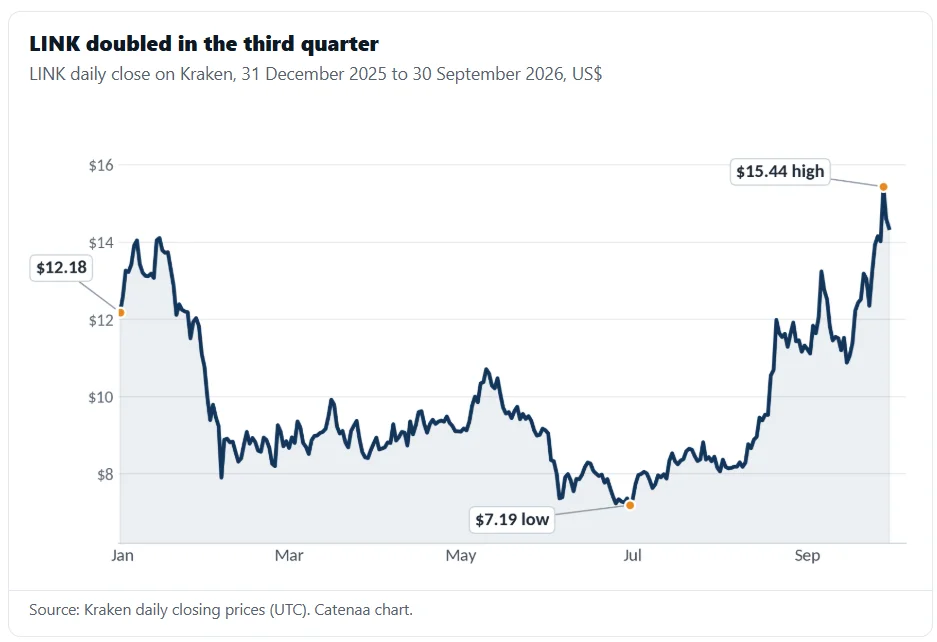
The LINK token has rallied ahead of the news. It closed September at $14.36 on Kraken, roughly double its June low of $7.19.
It touched a 2026 closing high of $15.44 on 28 September. Over the full year, LINK is up about 18%.
Chainlink has not spelled out the link to the token. The blog post does not say how Fulcrum will affect demand for LINK.
Price moves also reflect the wider crypto market. Over the third quarter, Bitcoin rose about 43% and Ether about 71% on Kraken.
However, product launches do not guarantee usage. The real test is whether large institutions move live repo volume onto the platform.
For more on tokenisation and onchain finance, follow our coverage. Chainlink Fulcrum now gives banks a ready-made route for cross-chain financing.