

November 01, 2026 – The blockchain analytics firm says an attacker using AI agents reached its internal tools, as state hackers and AI raise the stakes for crypto security.

In Summary
Chainalysis says a hacker using offensive agentic techniques accessed its systems and internal tools.
Exposed data covers user IDs, full names, emails and role labels, not case files or passwords.
The firm has not said when it found the intrusion or how many clients were affected.
The breach lands as North Korea took 76% of crypto hack losses through April 2026.
Blockchain analytics firm Chainalysis says a hacker using “offensive agentic techniques” got into its systems and internal tools. The Chainalysis breach exposed customer names, email addresses and user IDs. However, the company says it found no sign that the attacker reached investigation data or passwords.
What the Chainalysis Breach Exposed
The firm posted a security notice on October 30. According to that notice, the attacker pulled “non-sensitive” customer data. That covered user IDs, full names, email addresses and role labels for users on client accounts. Chainalysis says it is still matching records to each client and will send each one a breakdown. The notice adds that other tech platforms faced similar attacks in recent weeks.
Several key items appear safe, based on evidence so far. The company found no access to investigation graphs, notes or cases. Transaction and query results also look untouched. Likewise, it saw no theft of clear-text passwords, MFA secrets or session tokens.
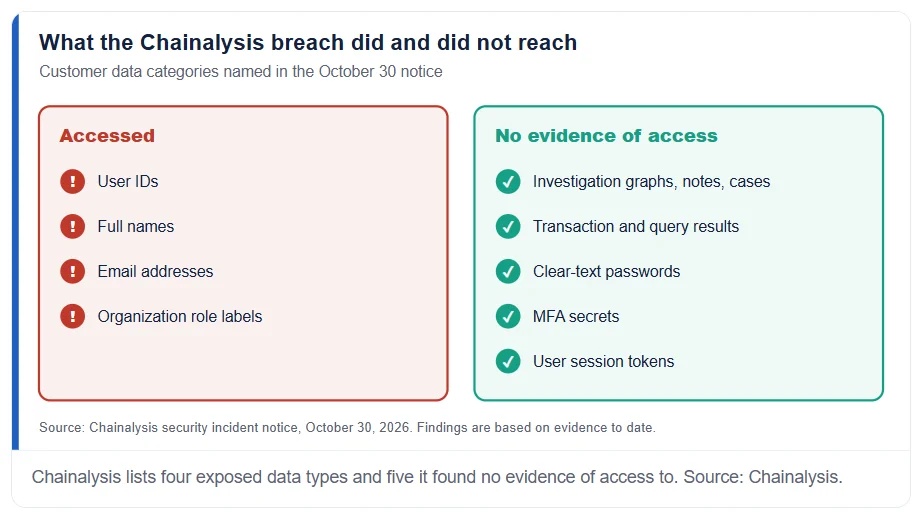
Yet the notice on the Chainalysis breach leaves gaps. It does not say when the firm detected the intrusion or how many clients it affected. Nor does it explain which flaws the attacker used, or how AI agents played a role.
Why Names and Emails Still Matter
Chainalysis sells tools that trace crypto flows to government agencies, exchanges and banks. Its users often work on fraud, sanctions and hack cases. Therefore, a list of their names and roles could fuel targeted phishing. A fake email that names a real colleague is far harder to spot. The firm itself warns clients to watch for unexpected password resets and login prompts. It also urges them to turn on two-factor authentication.
In response, Chainalysis hired outside security experts. It is also using AI language models to help with a broader security review. Meanwhile, it is patching the flaws the attacker used.
AI Agents Join the Attacker’s Toolkit
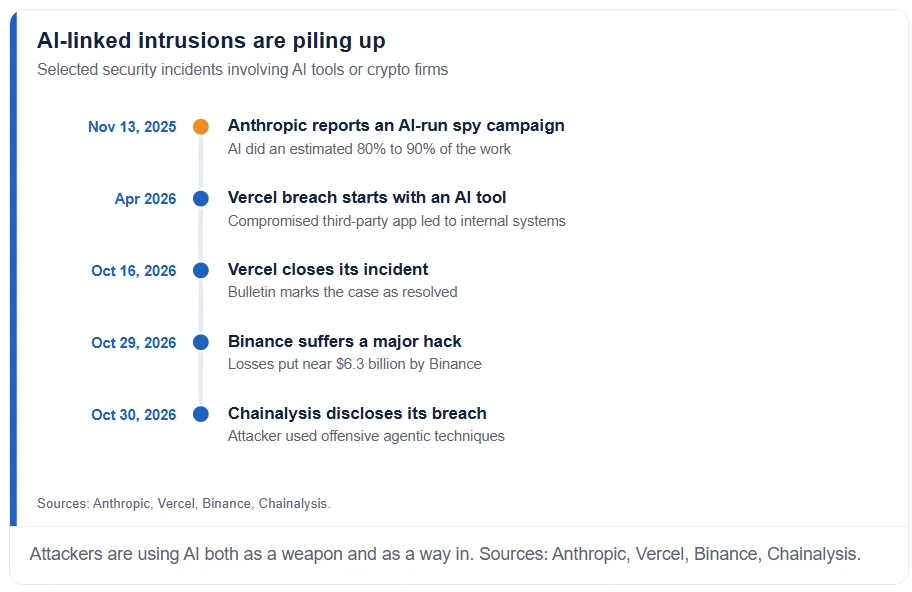
The phrase “agentic techniques” points to a newer threat. In November 2025, Anthropic reported what it called the first documented large-scale cyberattack run mostly by AI. A Chinese state-sponsored group used its coding tool against about 30 targets. AI did an estimated 80% to 90% of the work, while humans stepped in at a few key points. The Chainalysis breach suggests such tactics are now reaching crypto firms too.
Supply chains add another weak spot. In April, web host Vercel disclosed a breach that began with a compromised third-party AI tool used by an employee. From there, the attacker moved into Vercel’s internal systems.
A Busy Month for Crypto Security
The incident comes one day after a major hack at Binance, which Binance says cost about $6.3 billion. Binance has also said it froze about $3 billion of the stolen funds. Chainalysis says its own breach is “not related” to that theft. Even so, it and other tracing firms have linked the Binance attack to North Korea.
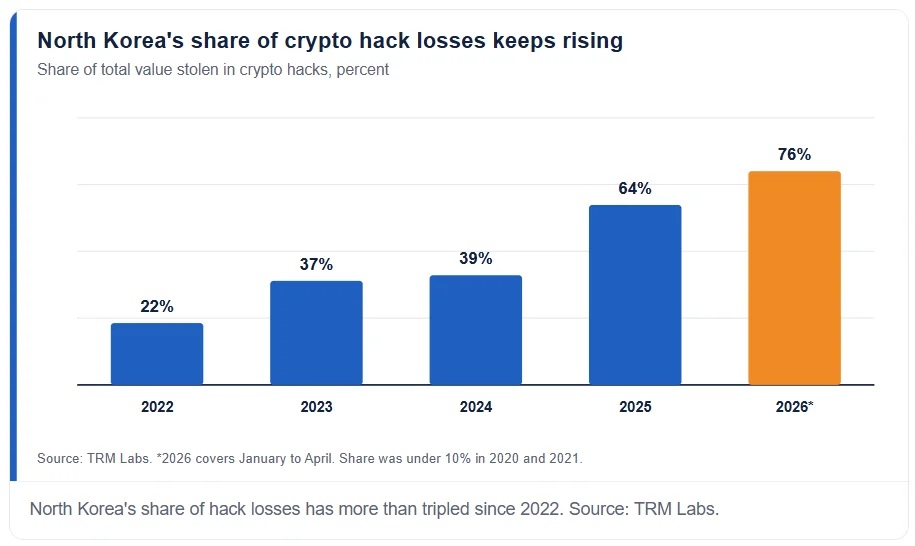
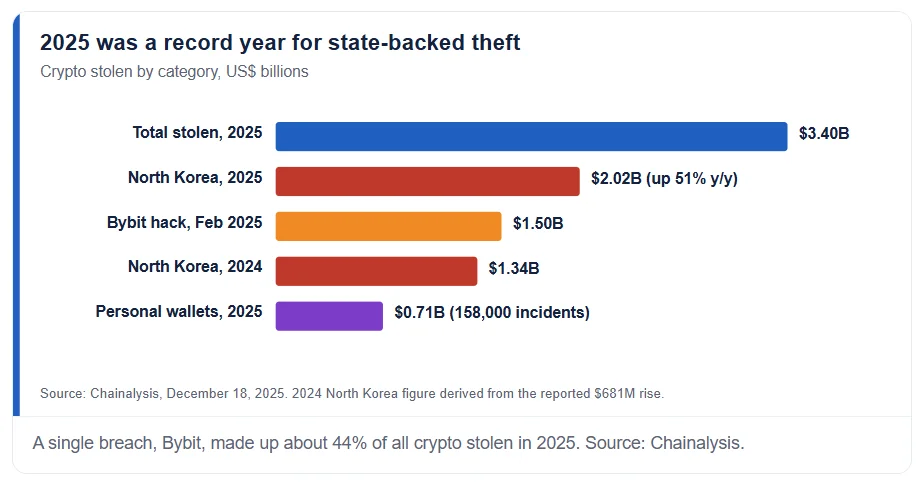
North Korea already dominates crypto theft. Chainalysis estimated that its hackers stole at least $2.02 billion in 2025, out of more than $3.4 billion overall. Meanwhile, TRM Labs put the country’s share of hack losses at 64% in 2025. Through April 2026, that share rose to 76%.
For crypto firms, the lesson is plain. Even a company that tracks hackers can become a target. As AI tools mature, such attacks may also get cheaper to run. Until Chainalysis shares more detail, its clients should treat any unexpected login request with suspicion.