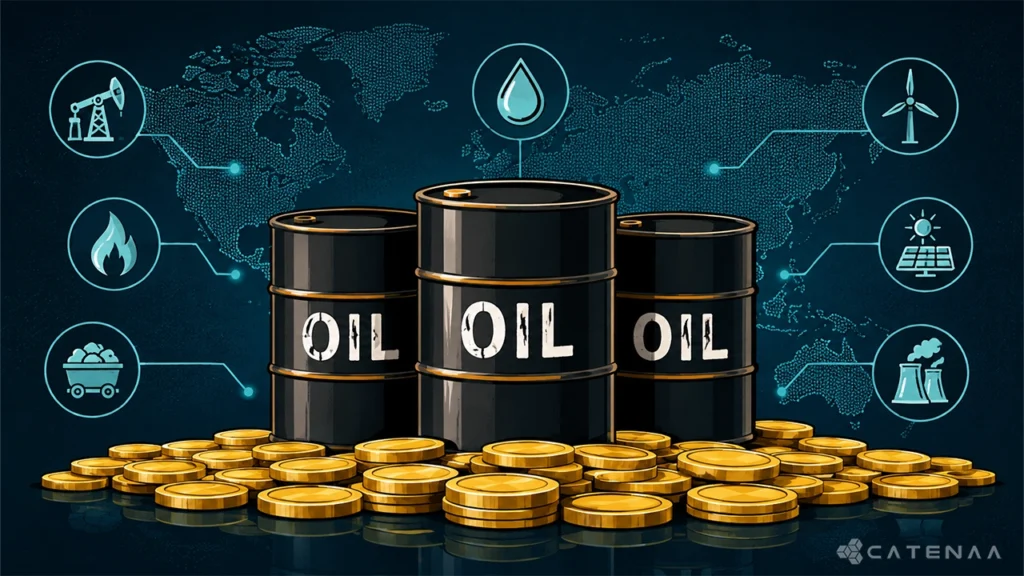


Catenaa, Friday, October 30, 2026- Exxon CEO says fuel-supply disruption could take “well through next year” to move closer to normal, depending on supply restoration.
ExxonMobil CEO Darren Woods told investors that because many variables are affecting fuel supply, it is hard to say how the restoration will unfold.
“I think the first thing that’s ultimately going to have to happen is the world’s capacity has to get back to where it was prior to these conflicts,” he said.
Woods identified reopening the Strait of Hormuz and restoring damaged Middle Eastern refining facilities as essential steps toward stabilizing global fuel supplies. He said sustained production and exports from the region would be necessary to ease the shortage.
“That’s going to be a critical piece of the equation,” Woods said.
Moreover, he said a third of the fuel shortage out there is simply the inability to get clean products out of the Middle East and onto world markets.
He said that the impact of Ukrainians bombing Russian refineries is significant as well.
“Russia, we estimate, and kind of see roughly about half of Russia’s refining capacity has been taken offline,” he said.
According to him, this has made Russia, a country that used to be a net exporter of refined products, a net importer, and that’s a material impact on global balances.
Woods said rebuilding the refineries would take time even after the conflict ends. He estimated that bringing them back online could provide slightly more than a third of the capacity needed to restore market balance.
“My view is that’s going to be a lot longer to come online, because two things have to happen: stop the hostilities and then start the repairs,” Woods said.
According to him, the third area of opportunity is that China has capacity it could bring online and run at a slightly higher rate to put more exports out there, which is the other piece of the equation that can help bring markets back into balance.