

Bulls charge, bears maul, and pigs get slaughtered. Here is what the market’s zoo really teaches everyday investors.
In Summary
Bulls signal rising, optimistic markets. Bears signal falling, fearful ones.
A 20% move from a recent peak or low marks the usual threshold.
Since 1872, bull markets have run longer and moved further than bears.
Most market animals reflect two core emotions: fear and greed.
Black swans prove that resilience matters more than prediction.
A Jungle With Its Own Language
Turn on any financial news channel. Within minutes, you will hear about bulls, bears, or a black swan. Traders rarely speak in plain numbers alone. Instead, they reach for animals. These metaphors sound colorful, yet they carry real meaning. Each creature captures a mood, a risk appetite, or a trading style. Therefore, learning the zoo helps you read the market’s emotions. It also helps you spot your own habits before they cost you money.
Animals stick because they are visual and memorable. You can picture a charging bull without an economics degree. That simple image does real work. As a result, this vocabulary has survived for roughly three centuries.
Consider a simple example. During a boom, a bullish trader buys more shares and expects further gains. During a slump, a bearish trader sells early or bets on further falls. The same headline can push these two in opposite directions. Understanding the label, therefore, tells you a lot about the person using it.
The Bull and the Bear: Wall Street’s Great Rivals
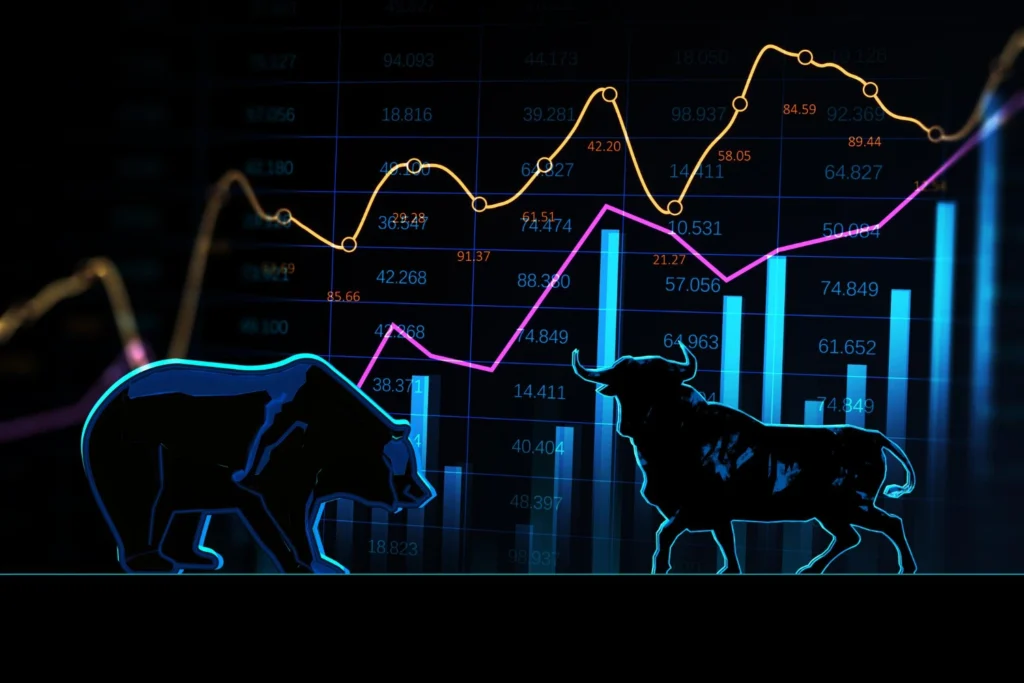
Two animals dominate the conversation. A bull market means rising prices and high optimism. A bear market means the opposite, with falling prices and spreading fear. Most analysts share a common yardstick. A bear market usually refers to a decline of 20% or more from a recent peak. A bull market describes a sustained climb, often a 20% gain from a recent low.
Where the names came from
The story is older than Wall Street itself. According to Merriam-Webster, the bear came first. An old proverb warned against selling a bear’s skin before catching the bear. By the 1700s, London traders who sold borrowed stock became known as bearskin jobbers. Soon people shortened the label to bear. These sellers profited when prices dropped.
The bull arrived later as the natural opposite. Many people also point to how each animal fights. A bull thrusts its horns upward, much like a rising market. A bear swipes its paws downward, much like a falling one. That vivid contrast explains why the images stuck.
What the data reveals
History quietly favors the optimists. Since 1872, the United States has recorded 26 bull markets and 26 bear markets. However, the two are not mirror images. Bull markets have lasted a median of 42 months. Bear markets have lasted a median of only 19 months. Gains also tend to outweigh losses. A typical bull rose about 87%, while a typical bear fell about 33%.
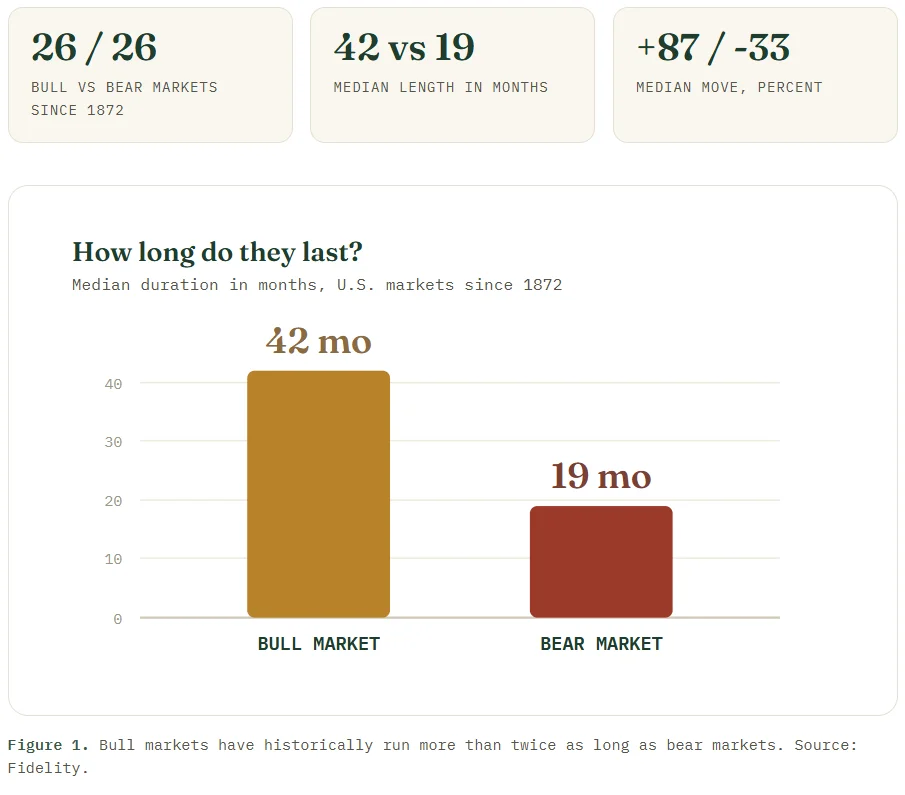
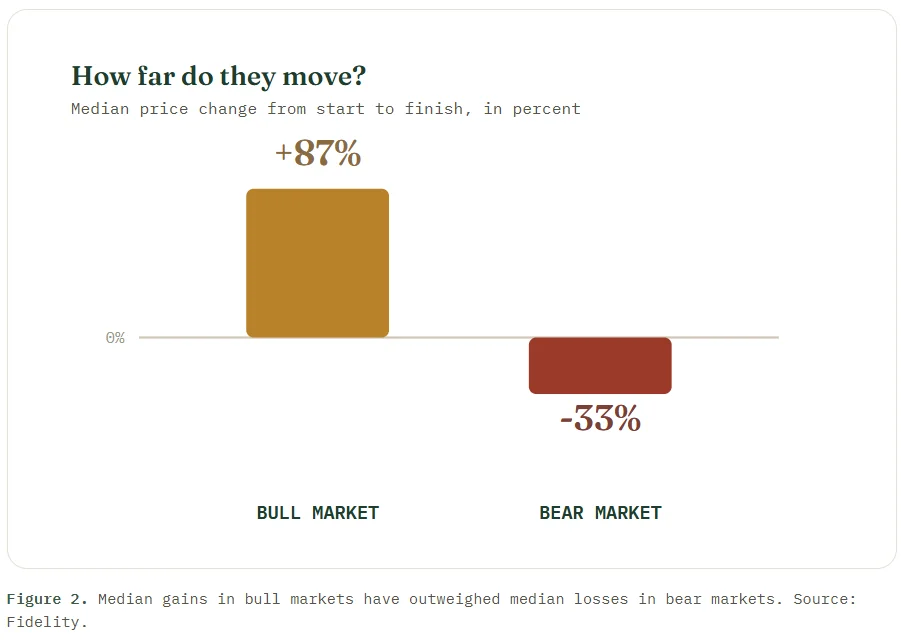
Why the gap? Stock prices tend to drift upward over long stretches of time. Company earnings grow, and economies expand. Patience, therefore, has usually rewarded long-term investors.
Recent cycles show the pattern clearly. The longest bull market on record ran from March 2009 to March 2020. It ended only when the COVID-19 pandemic struck. The 2007 to 2009 bear market was punishing by comparison. During that crash, the S&P 500 lost roughly half its value.
How a market cycle unfolds
Markets rarely move in a straight line. Instead, they travel through emotional stages. Optimism slowly builds into confidence. Confidence can then tip into euphoria when caution nearly disappears. Reality eventually returns, and prices start to slide. Near the bottom, frightened investors often sell all at once. Analysts call that painful moment capitulation. After the fear peaks, bargain hunters return, and a fresh bull market can begin. Recognizing these stages helps you stay calm when the headlines turn loud.
Betting on the bull or the bear
Each camp trades differently. Bulls buy and hold, expecting prices to climb. Bears sometimes use short selling, which means selling borrowed shares first. They then aim to buy those shares back later at a lower price. This tactic can pay off in a downturn. However, it carries a steep risk if prices rise instead. Many long-term investors skip such bets entirely. Instead, they invest steadily through every cycle, a habit called dollar-cost averaging. Timing the market perfectly is nearly impossible. Steady investing helps sidestep that trap.
The Supporting Cast: A Field Guide
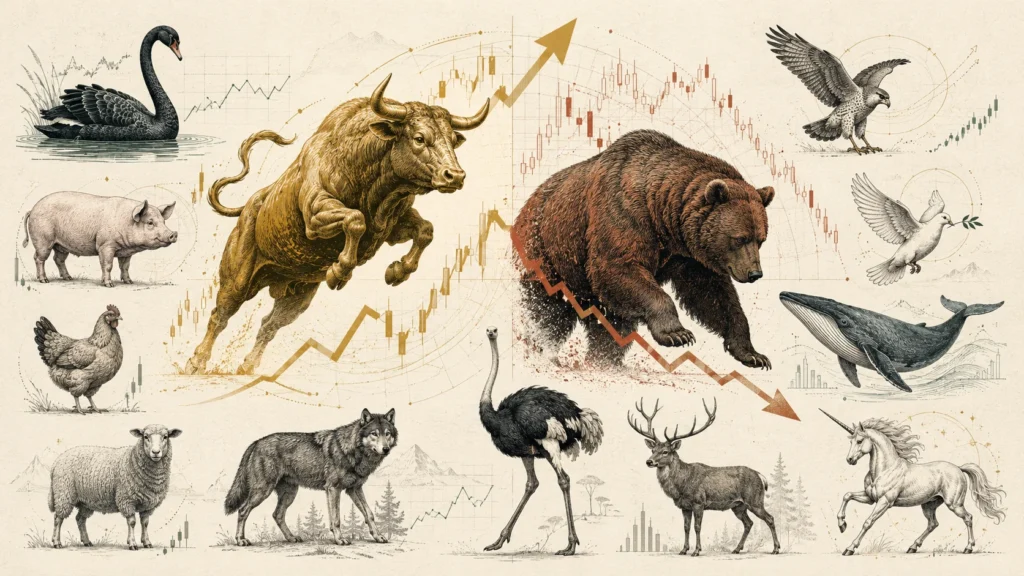
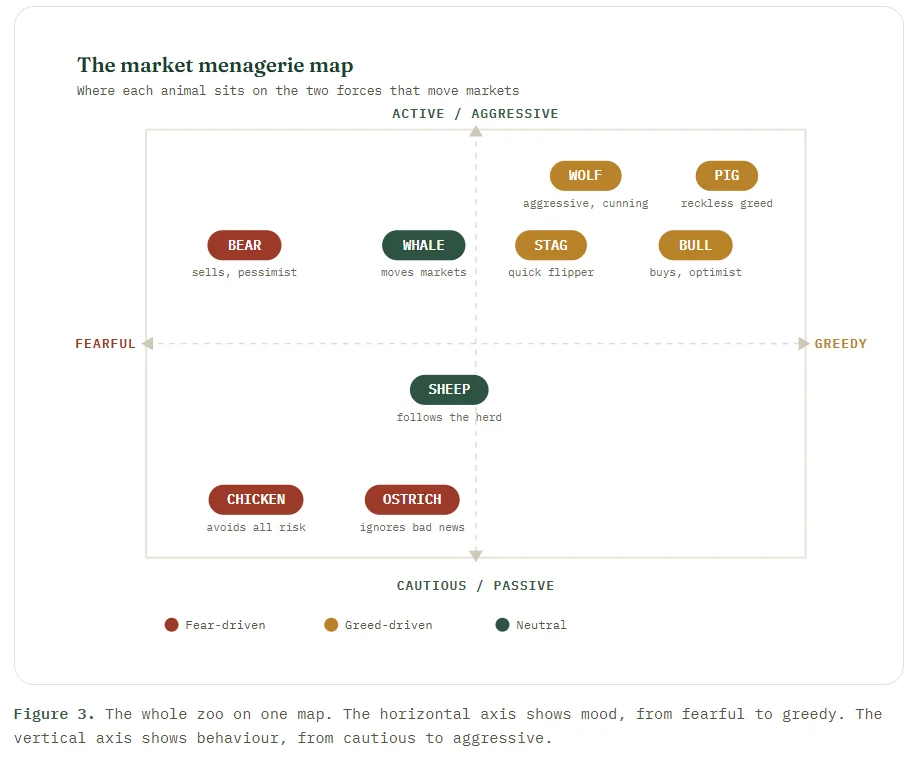
The zoo does not end with bulls and bears. A whole cast of animals describes how investors behave. Each label is a quick shortcut for a habit you can learn to spot. Most of them map onto two powerful emotions, namely fear and greed.
The pig and the chicken
Pigs are greedy. They chase big, fast gains and often skip their research. Picture an investor who bets the rent money on one hot tip. That is textbook pig behavior. A famous trading saying warns that bulls and bears make money, but pigs get slaughtered. The lesson stays simple. Greed without discipline usually ends in pain.
Chickens sit at the far end. Fear rules their choices. These investors dodge risk almost entirely. Consequently, they often miss strong opportunities and hide in ultra-safe assets.
The sheep and the wolf
Sheep follow the herd. They copy whatever the crowd does and rarely form their own view. For instance, many sheep pile into a rally only after prices have already soared. Because of this, they tend to arrive late and exit late. Herd behavior can inflate bubbles and deepen crashes.
Wolves behave nothing like sheep. They are aggressive, cunning, and well-informed. Some wolves even cross ethical lines. Jordan Belfort, the so-called Wolf of Wall Street, became infamous for securities fraud.
The ostrich, the stag, and the lame duck
Ostriches bury their heads in the sand (myth). They ignore bad news and simply hope the trouble passes. Stags behave very differently. These nimble speculators chase brand-new stock listings, known as IPOs. Then they sell within hours for a quick listing gain. A stag rarely cares about a Company’s long-term story. Lame ducks, by contrast, are traders who default after heavy losses. That colourful term dates back to the 18th-century London exchange.
New animals in the zoo
The menagerie keeps growing with the markets. Whales are giant players, such as large funds or very wealthy individuals. Their orders can be so big that a single trade moves the price. Unicorns are private startups worth more than one billion dollars. A dead cat bounce describes a brief recovery inside a longer decline. Each new term adds fresh colour to an old tradition.
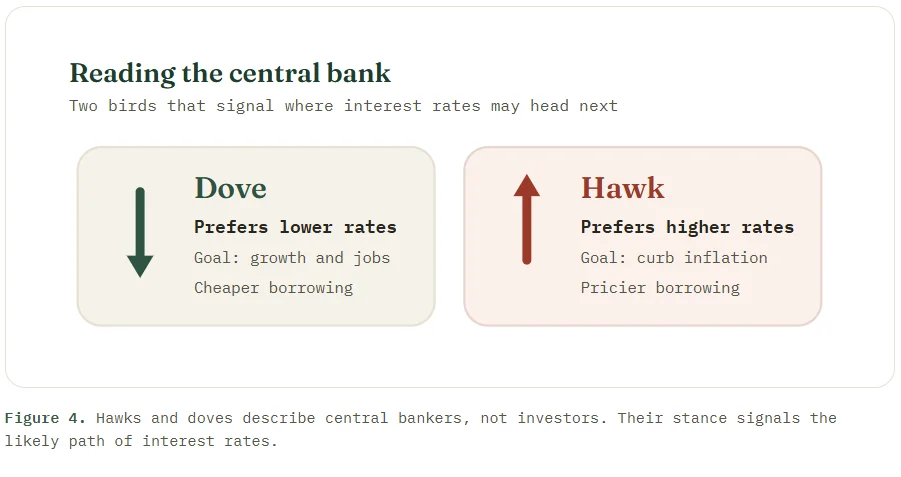
Central banks bring their own animals, too. Hawks favor higher interest rates to fight inflation. Doves prefer lower rates to boost growth and jobs. Investors follow this hawk and dove debate very closely. Its outcome shapes borrowing costs across the whole economy.
The Black Swan: When the Unthinkable Lands
Some events break every rule in the zoo. Writer Nassim Nicholas Taleb popularized the term “black swan” in his 2007 book The Black Swan (or The Black Swan: The Impact of the Highly Improbable).
A black swan carries three traits. First, it is a rare outlier. Second, it delivers extreme impact. Third, people call it obvious only in hindsight.
The name itself tells a story. For centuries, Europeans assumed every swan was white. Then explorers discovered black swans in Australia. The 2008 financial crisis fits the pattern well. Its full danger became clear mostly after the collapse.
Experts sometimes debate the label, too. Some argue that scientists had long warned about a global pandemic. By that logic, the shock was foreseeable, even if the timing was not. Taleb also argues that standard risk models miss such events. Many models assume calm, bell-shaped odds. Real markets, though, produce wild extremes more often than the math predicts. The lesson is humble but vital. You cannot forecast every shock, yet you can build a portfolio that survives one.
What the Menagerie Really Teaches
These metaphors offer far more than playful slang. Together, they sketch a map of market psychology. Fear and greed drive most of the behavior on display. Bulls and pigs lean toward greed. Bears and chickens lean toward fear. Sheep, meanwhile, hand their judgment to the crowd.
Optimism can also curdle into overconfidence. Economist Alan Greenspan once called that mood irrational exuberance. Skilled investors watch these patterns in other people. More importantly, they watch for the same patterns in themselves.
Discipline turns these lessons into daily habits. Set clear rules before you invest, not during a panic. Spread your money across different assets to soften the impact of any single blow. Keep some cash ready for surprises. These steps will not erase risk. Yet they help you act like a patient investor rather than a startled chicken. So the next time markets swing sharply, pause and ask one question. Which animal am I acting like right now? An honest answer may protect your money better than any forecast.