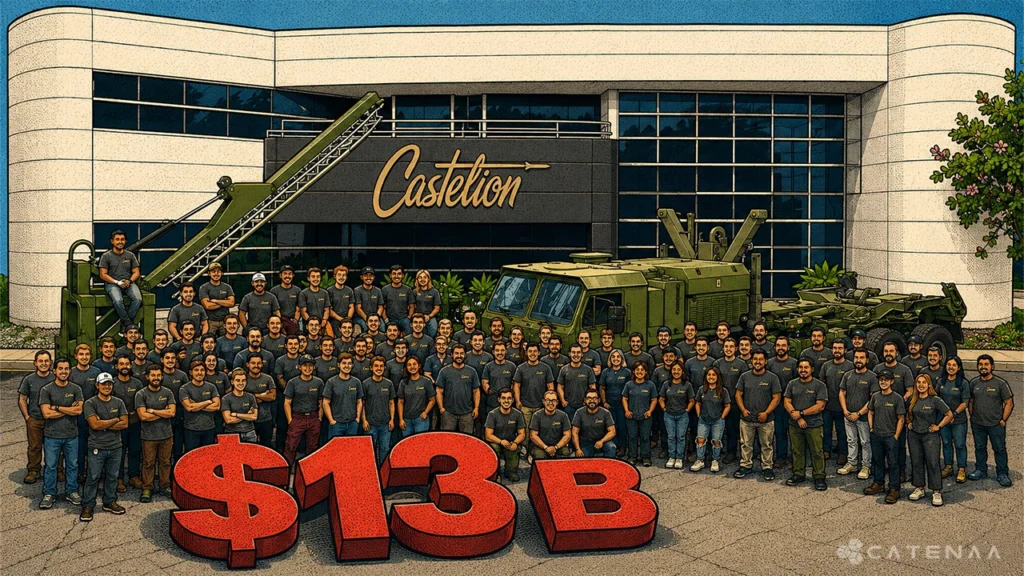


August 24, 2026 – A $1 billion Series C for a hypersonic missile maker topped the week. AI inference hardware and satellite builders followed close behind.
In Summary
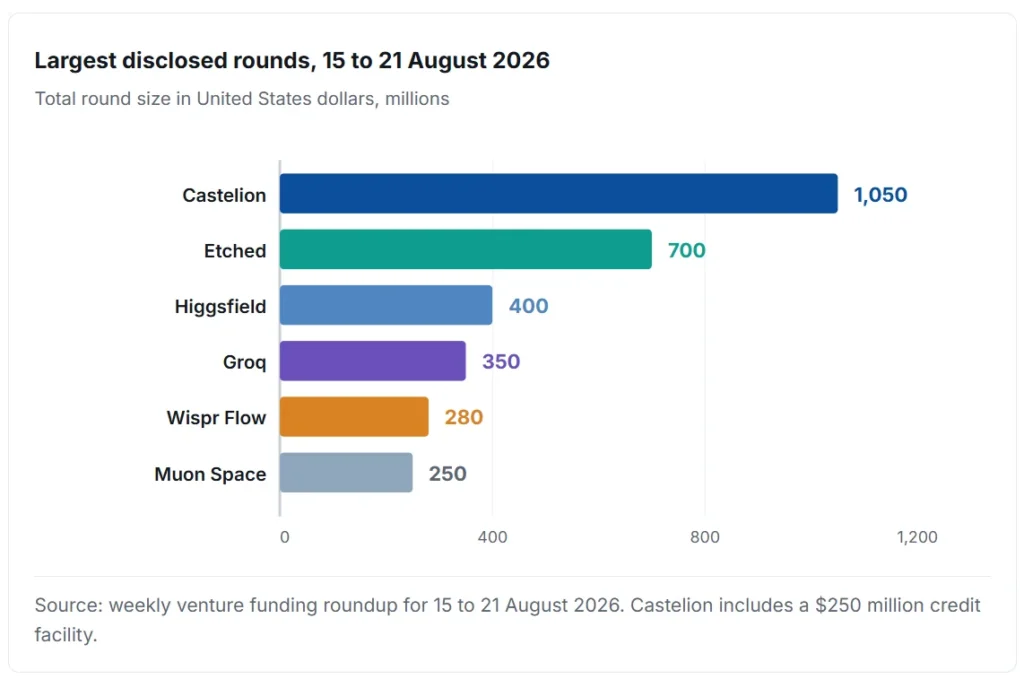
Castelion raised $1 billion, split between $800 million in equity and a $250 million facility.
The round values the hypersonic missile maker at $13 billion.
JPMorganChase, Andreessen Horowitz, and Carlyle co-led the financing.
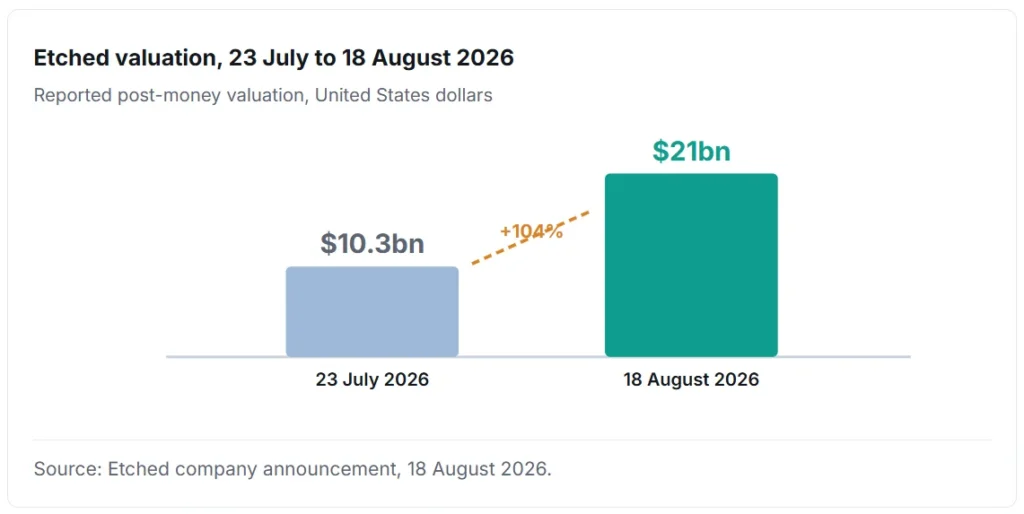
Etched raised $700 million at $21 billion, doubling its valuation within a month.
Defence systems and AI compute captured most of the large cheques written last week.
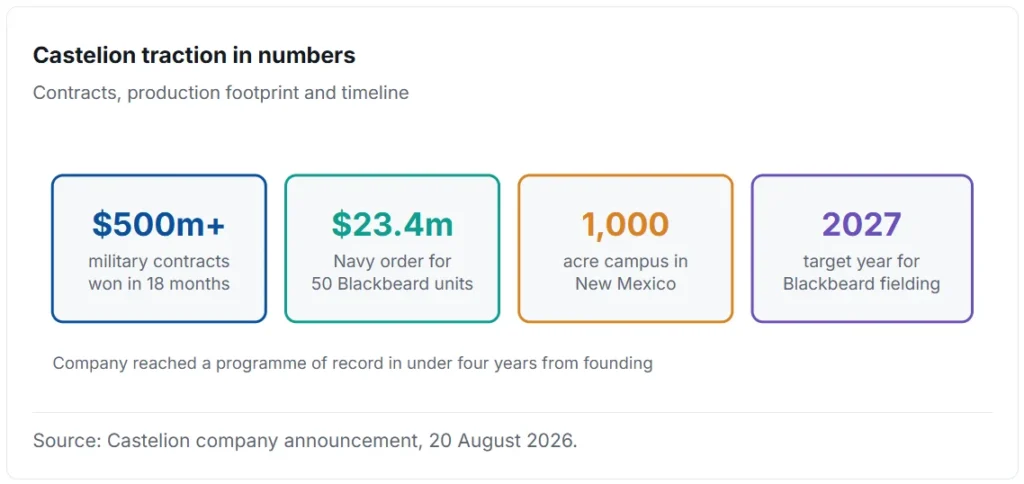
Venture capital wrote its biggest cheques of the week for weapons and compute. Castelion led the table with a $1 billion Series C. The round values the missile maker at $13 billion. Etched followed with $700 million at a $21 billion valuation.
Together, those two deals absorbed more than half the week’s disclosed capital. What is more, the pattern held down the entire list. Satellites, chips and defence software dominated.
Inside the Castelion round
The structure separates growth equity from working capital. Investors committed $800 million of equity. A further $250 million arrived as a revolving credit facility. That split lets the company fund production without diluting the founders further.
JPMorganChase Strategic Investment Group, Andreessen Horowitz and Carlyle co-led the raise. Lightspeed Venture Partners, Lavrock Ventures, Altimeter and General Catalyst joined. Interlagos Capital and T. Rowe Price Associates also took part.
Contracts, not concepts
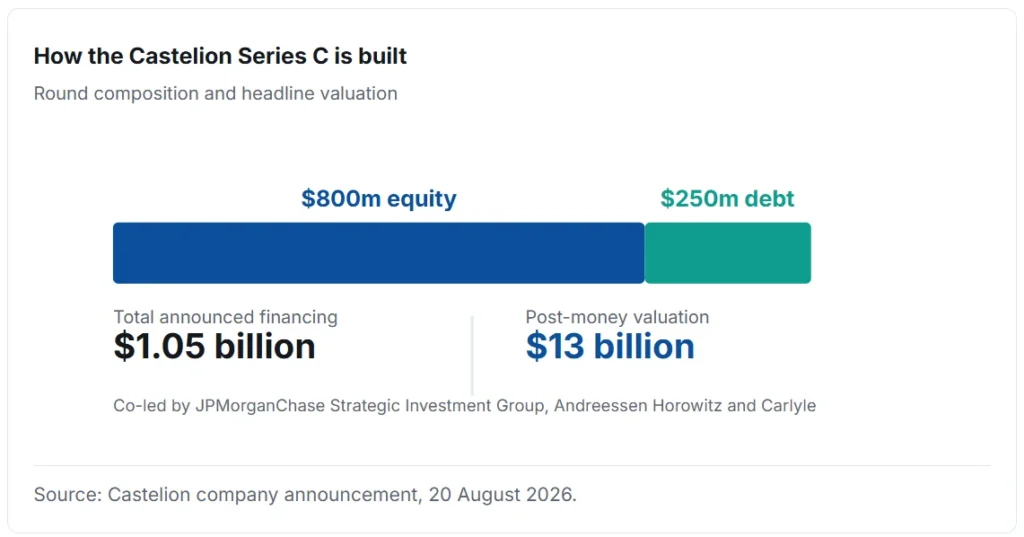
Castelion has moved past the demo stage. It has secured more than $500 million of United States military contracts in eighteen months. A Navy order worth $23.4 million covers 50 Blackbeard missiles. The company also holds a framework agreement with the Department of War.
Blackbeard is a low-cost hypersonic strike weapon. Fielding is targeted for 2027. Meanwhile, longer-range and defensive systems remain in development.

Making the weapons at scale is the core bet. Project Ranger spans a 1,000-acre campus in Sandoval County, New Mexico. Operations also run across Texas and California, with headquarters in Torrance.
Etched doubles in a month
The second headline round belonged to inference hardware. Etched raised $700 million led by Jane Street. Its valuation reached $21 billion. Only a month earlier, a $300 million Series C priced the company at $10.3 billion.
Delivery drove the new price. Etched shipped its first rack to Jane Street, which now runs it in production. The company also reports more than $1 billion of additional customer contracts.
Where the rest of the money went
Beyond the two leaders, the list is capital-intensive. Higgsfield secured $400 million at a $5.4 billion valuation, led by DST Global. Groq drew $350 million, with Nvidia joining the round. Muon Space added $250 million for satellite constellations.
Software still showed up, though at smaller scale. Wispr Flow raised $280 million at a $2 billion valuation. Rillet closed $100 million and crossed the $1 billion mark. Velaura AI raised $110 million for compute infrastructure.
Investors frame it as a national capability bet
Backers describe the Castelion thesis in strategic terms. Chief executive Bryon Hargis argued that deterrence depends on producing capable systems at scale and at affordable prices. Todd Combs of JPMorganChase pointed to speed, agility and manufacturing capacity as the core gap.
What the week signals
Two themes now pull the largest private capital. Physical defence production is the first. Inference economics is the second. Both promise signed revenue rather than hoped-for demand curves.
Buyers should still weigh the risk of poor delivery. Missile work demands testing, sign-off and deep supply chains. Chip start-ups face brutal rivalry on cost per token. Even so, cheque sizes suggest limited patience for waiting on the sidelines.




