

August 31, 2026 – No filing confirms the transaction yet. If it completes, the purchase would be the largest in Aon’s history and would arrive as commercial premium rates keep falling.
In Summary
The reported price is about $17 billion, including debt, and remains unconfirmed.
KKR and CDPQ bought USI for $4.3 billion in 2017.
USI generated $2.89 billion of US brokerage revenue in 2025.
Aon reported $17.18 billion of revenue for the full year 2025.
The deal would exceed the $13 billion NFP purchase completed in 2024.
Global commercial insurance rates have now fallen for eight straight quarters.
Aon is close to buying USI Insurance Services from KKR, weekend reports say. The price under discussion is about $17 billion, debt included.
Nothing is confirmed. No filing has appeared, neither firm has spoken, and KKR declined to comment. So readers should treat the figure as reported, not settled.
Why the number matters
If the deal lands at that level, it becomes the largest Aon has ever done. Indeed, the current record is only two years old.
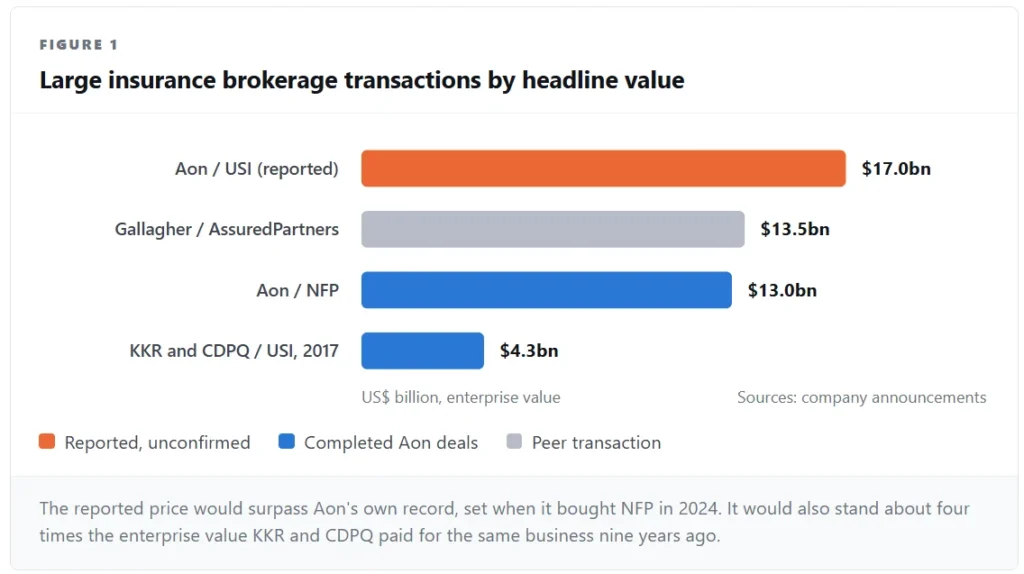
Aon closed its purchase of NFP in April 2024 at a $13.0 billion value. It paid $7.0 billion in cash and debt, plus $6.0 billion in shares. A $17 billion deal would be 31% bigger.
Rivals have moved too. Gallagher bought AssuredPartners for $13.45 billion, closing in August 2025. So the top of the market is consolidating fast. Scale now decides who wins the largest accounts.
What KKR built
USI looks very different after nine years in private hands. KKR and the Canadian investor CDPQ bought it for $4.3 billion in 2017 from Onex.
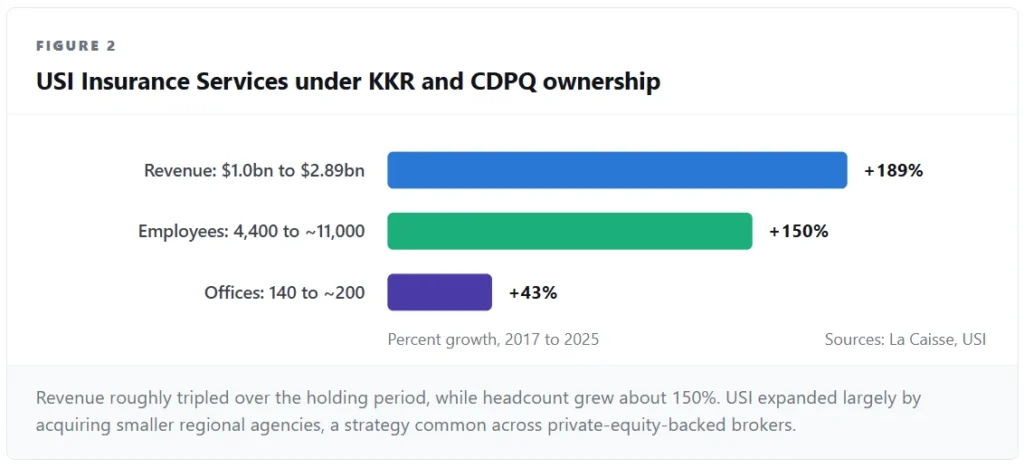
Back then, USI ran 140 offices with 4,400 staff. Revenue was just above $1 billion. Today it runs about 200 offices with close to 11,000 people. US brokerage revenue hit $2.89 billion in 2025. That ranks it tenth in the country.
KKR raised its stake in September 2023. It put in more than $1 billion of fresh equity and became the largest single holder. But CDPQ kept a slice. So KKR would not be the only seller.
The holding still pays well. KKR’s latest filing shows $85.3 million in dividends from USI in the first half of 2026. It also booked gains on the holding’s value. So the asset was not a drag on returns.
The strategic logic
USI sells mostly to mid-sized US employers. Benefits make up 44.8% of its book. Retail property and casualty follows at 43.8%. Personal lines and wholesale make up the rest. So the book is split almost evenly between benefits and general coverage.
Aon has long served large global clients instead. So buying USI would push it further down-market. That is the same logic it used for NFP.
Cross-selling is the prize. Big brokers want to place more lines with each client. Yet these deals often stumble on culture. Local agents value their independence highly. Therefore, retention of staff is the number to watch.
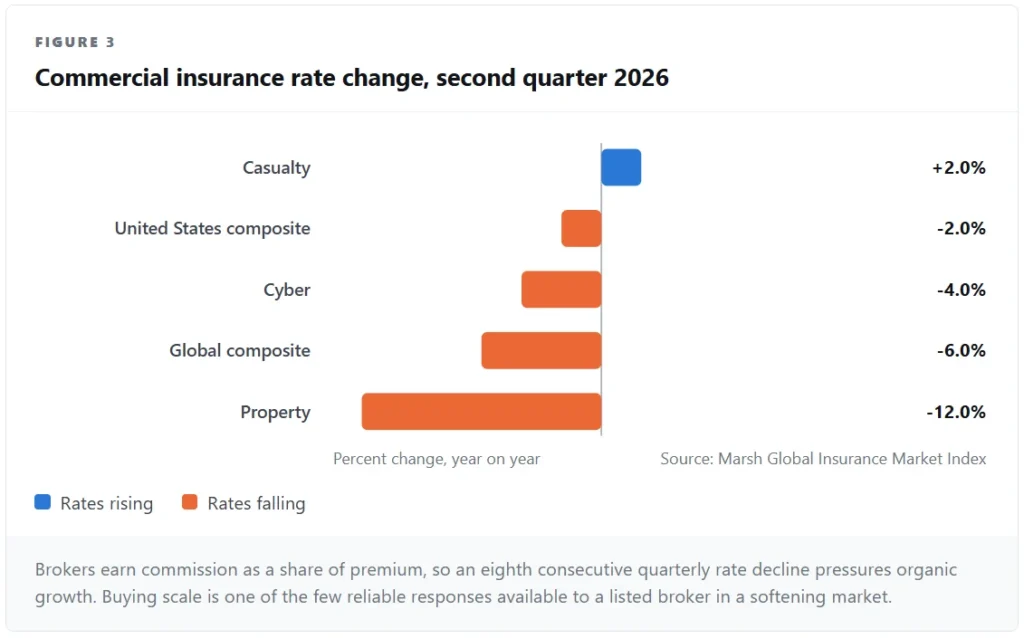
The global composite rate fell 6% in the second quarter. That was the eighth drop in a row. Property led the fall at 12%, while casualty rose 2%.
US brokers report a milder slide. A trade survey put all accounts down 2.0%. Still, the direction is the same. Buying scale is one of the few answers left. Cost savings can also lift margins for a while. But they rarely replace lost growth for long.
What the market will judge
Three tests will decide how investors react. First, the price against USI’s earnings. Second, the funding mix. Third, the retention of USI producers after completion.
Can Aon afford it?
The balance sheet is still healing from the last deal. Total debt stood at $14.97 billion on 30 June. At the end of 2024, it was $17.02 billion.
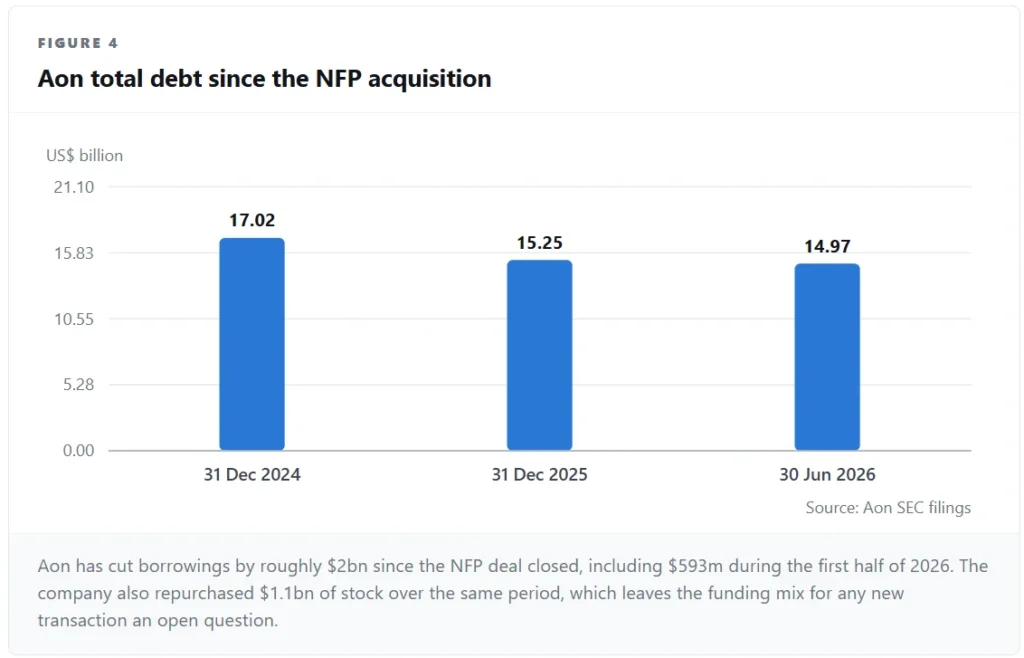
Trading is solid, though. Aon reported 5% organic growth and a 28.9% adjusted margin in the second quarter. Free cash flow was $483 million. Moreover, the group cut debt by $593 million in the first half.
On the numbers disclosed, $17 billion is about 5.9 times USI’s 2025 broking revenue. USI does not publish profit, however. So a reliable earnings multiple cannot be worked out from public files. Readers should be wary of any figure that claims otherwise.
What comes next
Reports suggest news could land as early as Monday. Aon shares closed at $355.40 on Friday, valuing the group near $75 billion.
Funding mix is the key question. A cash deal would lift debt sharply. An equity deal would dilute holders instead. Until a filing appears, both stay open. Watch also for the treatment of CDPQ’s minority stake. Its exit terms would reveal much about the price.