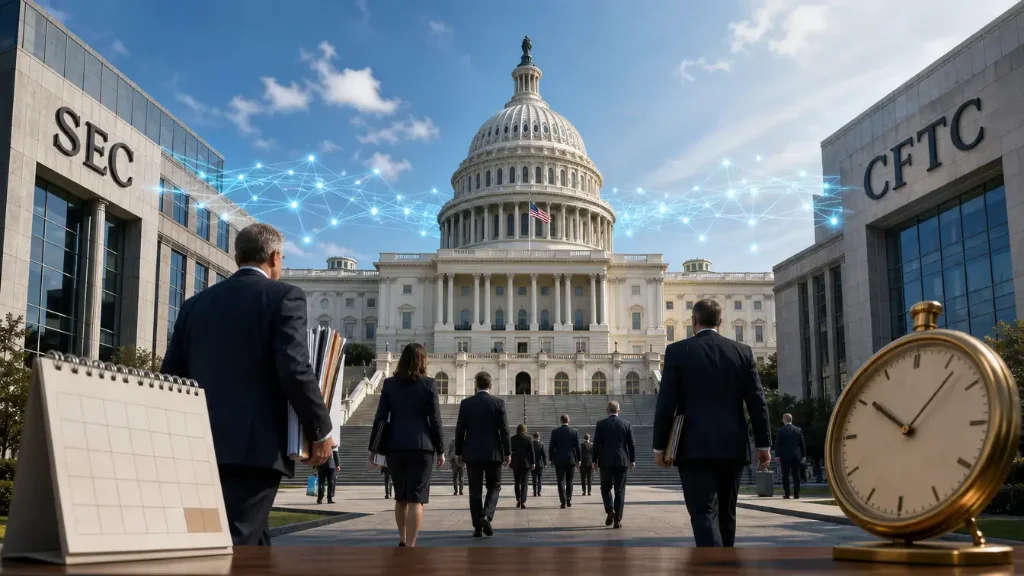


Catenaa, Wednesday, July 29, 2026- The US Senate is entering a critical two-week window to advance the Digital Asset Market Clarity Act, with lawmakers working to resolve key differences over ethics provisions before Congress begins its August recess.
The revised draft of the legislation, released last week, combines proposals developed by the Senate Banking and Agriculture Committees while introducing new ethics provisions aimed at senior government officials. However, bipartisan negotiations continue, leaving the bill’s path to passage uncertain.
Senate leaders are expected to decide within days whether to begin formal consideration of the legislation.
The next major procedural step is a motion to proceed, which could be introduced this week. If the motion secures the required 60 votes, the Senate would formally begin debating the bill and move toward consideration of amendments.
Lawmakers would then need to approve cloture motions before holding a final vote on passage, with supporters hoping to complete the process before the Senate adjourns for its summer recess on Aug. 7.
Congressional observers say the timeline leaves little room for delays, with agreements on the remaining contentious issues likely needed before the end of this week to keep the legislation on schedule.
Although the revised draft introduces ethics provisions for senior government officials, the issue remains the principal obstacle to bipartisan agreement.
The proposal would prohibit senior officials from sponsoring or issuing cryptocurrencies while requiring certain officeholders to divest digital asset businesses or place them into blind trusts within a specified period.
Democratic lawmakers have argued the provisions do not go far enough, saying they would not adequately address President Donald Trump’s cryptocurrency interests or provide sufficient enforcement mechanisms.
Supporters of the bill, including Sen. Cynthia Lummis, have argued the proposal establishes one of the broadest ethics frameworks ever negotiated for senior federal officials while applying to a wide range of government leaders and federal judges.
Despite the political disagreements, many participants in the cryptocurrency industry remain optimistic that the legislation can still pass before lawmakers leave Washington.
Supporters say the CLARITY Act would establish long-awaited regulatory certainty by clearly defining the responsibilities of the Securities and Exchange Commission and the Commodity Futures Trading Commission, while introducing investor protections and regulatory standards for digital asset markets.
At the same time, some Republican lawmakers have also expressed reservations about portions of the legislation, indicating negotiations could continue until shortly before any Senate vote.
The legislation must also compete for limited Senate floor time.
Before the August recess, lawmakers are expected to consider executive nominations, sanctions legislation involving Russia and Iran and other priority measures, making scheduling an additional challenge for supporters of the crypto bill.
The next two weeks could determine whether Congress delivers its first comprehensive federal framework for digital asset markets this year or postpones consideration until lawmakers return from their summer break.
While both parties have expressed support for establishing clearer rules for the digital asset industry, negotiations over ethics provisions continue to be the biggest hurdle to securing the bipartisan backing needed for Senate approval.
The Digital Asset Market CLARITY Act is designed to create a comprehensive regulatory framework for cryptocurrencies in the United States by dividing oversight between the SEC and the CFTC. The legislation also addresses customer protection, market structure, stablecoins, decentralized finance, anti-money laundering measures, disclosure requirements and bankruptcy treatment for digital assets. If enacted, it would represent one of the most significant overhauls of US digital asset regulation to date, providing long-sought legal certainty for the cryptocurrency industry while establishing clearer responsibilities for federal regulators.