


August 26, 2026 – One fund, four lenders and a fire sale at a discount. The SEC subpoenas now landing on Wall Street desks target the hours around the margin calls.

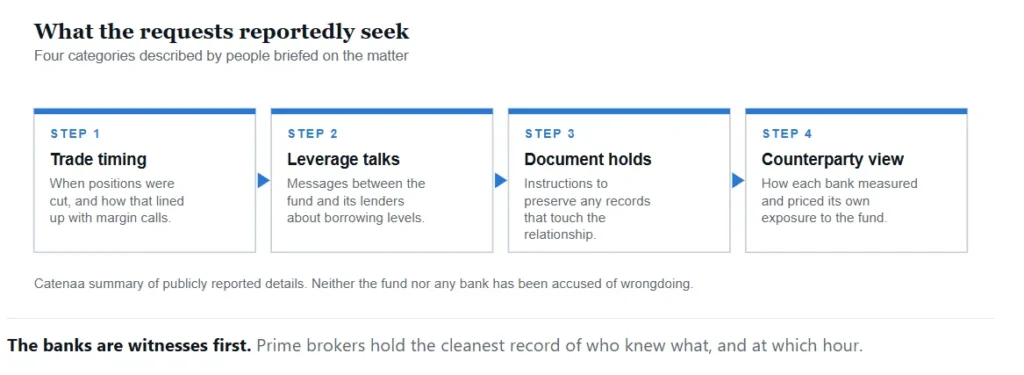
US regulators want the paper trail behind a hedge fund near miss. The SEC subpoenas went to several large Wall Street banks this week. Moreover, they seek details on trading and borrowing at the AI fund Situational Awareness.
People briefed on the matter described the requests on Monday. Staff asked for the timing of trades. Additionally, they sought messages between the fund and its lenders about borrowing.
In Summary
The SEC has asked major banks for records on trades and leverage at Situational Awareness.
Reported recipients include four of the largest US prime brokers.
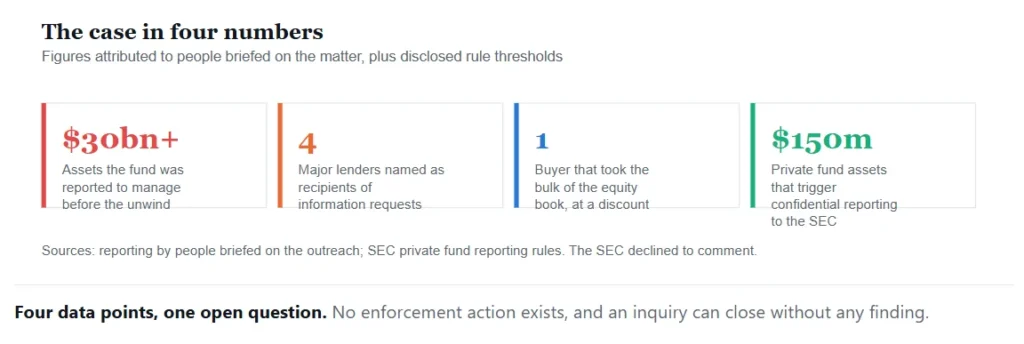
The fund managed more than $30bn and borrowed heavily on top of that base.
It sold most of its public equity book to a rival at a discount last month.
No wrongdoing has been alleged, and the inquiry may close without any action.
What triggered the SEC subpoenas
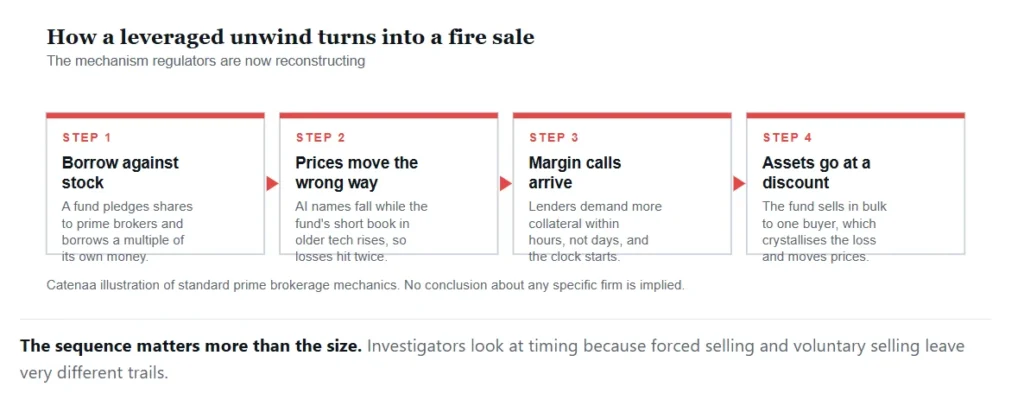
The trouble started with a rotation, not a crash. Shares in high-flying AI names slipped last month. At the same time, older tech stocks rallied. Such a split proves costly for anyone caught on both sides.
That mix hurt twice over. Managers held the AI winners and shorted the laggards. So both sides of the book moved against it at once. Losses stacked up fast.
Borrowed money, then turned a bad month into a crisis. Margin calls followed within days. In the end, the fund sold most of its listed stock book to one rival buyer at a discount.
Why the banks got the requests
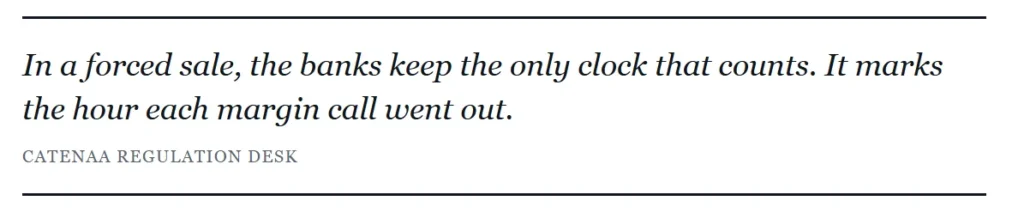
The lending banks sit at the centre of any unwind. They set margin terms, they hold the pledged stock, and they log every call. Therefore, their files answer questions the fund’s own records cannot.
Four large lenders are featured in the accounts. Between them, they fund a big share of US hedge fund trading. Meanwhile, the requests reportedly told each bank to keep all related files.
None of this implies fault. An inquiry does not mean a firm sits at the heart of a case. In fact, many such reviews end with no action at all. So far, nobody has faced a charge.
The fund itself struck a calm tone. It said watchdogs would, of course, look at funds with big gains or sharp falls. Furthermore, it promised to help fully with any request.
The systemic backdrop
Watchdogs have flagged this exact risk for two years. Indeed, the Federal Reserve’s Financial Stability Report put hedge fund leverage near all-time highs. Crucially, it also found that borrowing sits with a small number of very large funds.
The same report set out why that matters. High debt can spill over when a fund loses funding. Additionally, dealers noted growing repo loans to hedge fund clients.
Data on the pattern sits in plain sight. For example, the Treasury’s Hedge Fund Monitor puts out borrowing and lending charts each quarter. Readers can track gross to net asset ratios there for free.
What the SEC already sees
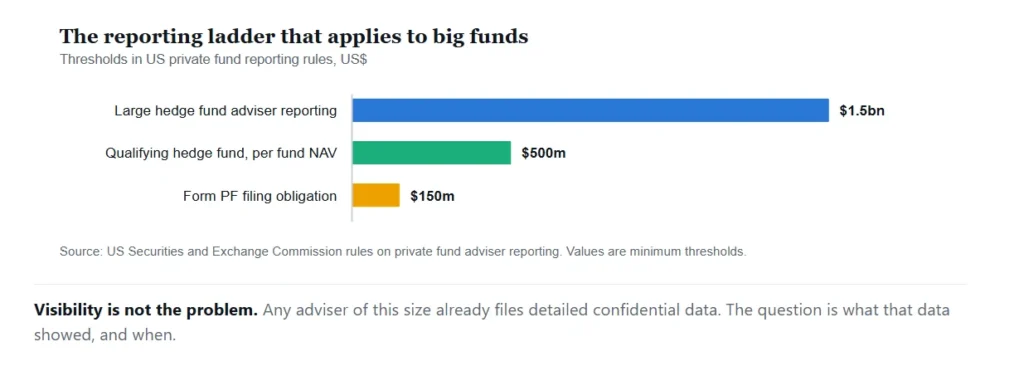
Large managers do not work in the dark. Any adviser with at least $150m in private fund assets files Form PF. Meanwhile, bigger firms file far more detail and file it each quarter.
The rules tightened three years ago. Notably, in 2023, the SEC changed Form PF to add event reporting. So certain stress events must now reach the watchdog within days.
Sign-up data is public too. Anyone can look up a manager through the Investment Adviser Public Disclosure site. Even so, the law keeps position-level detail private.
Why this matters beyond one fund
Size is the real story here. A single fund can now hold enough of one theme to move it. Therefore, an unwind stops being a private loss and becomes a market event.
Crypto buyers should pay heed as well. Token prices have tracked AI shares closely through 2026. As a result, a debt shock in one market spills into the other within hours.
Bank risk adds a second channel. Lending income has grown fast, and so has the credit behind it. However, the Fed’s own review still calls the banking system sound and well-funded. In short, the strain sits outside the banks.
What to watch next
Timing offers the first clue. Hold notices on files usually arrive early in a review. So months may pass before anything becomes public.
New rules offer the second clue. Any finding on margin practice could shape the next round of private fund reporting. Above all, watch whether the review widens from the fund to its lenders. That shift would change the stakes.




