

August 22, 2026 – Industry chiefs and regulators met at the White House on Thursday. A Senate procedural vote on 15 September now decides the bill’s fate.
In Summary
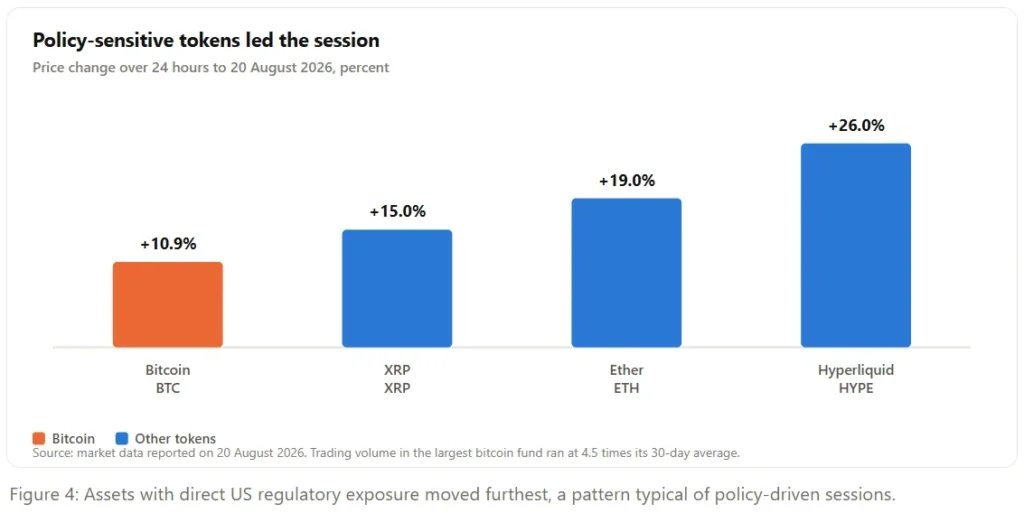
Bitcoin traded past $71,000, a gain of almost 11%, after a White House crypto summit.
The Digital Asset Market Clarity Act would move digital commodities to the derivatives regulator.
A Senate procedural vote is set for 15 September and requires 60 votes to advance.
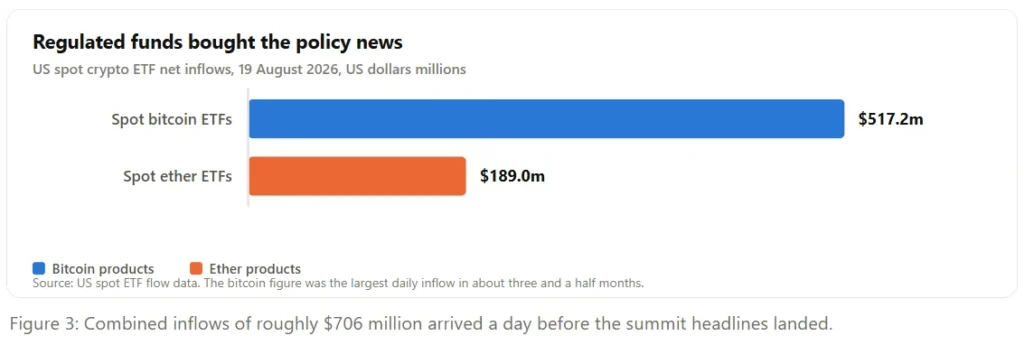
US spot bitcoin ETFs drew $517.2 million on 19 August, with ether funds adding $189 million.
Analysts credit the Treasury buyback decision as much as the summit for the price move.
A summit, the Clarity Act and a 10% day
Crypto executives met the President at the White House on Thursday. The Clarity Act dominated the discussion. Hours later, bitcoin traded past $71,000. The token closed the session by almost 11%.
Notably, attendance told its own story. Coinbase, Ripple, Robinhood, Kraken, and Intercontinental Exchange all sent chief executives. Regulators joined too, including the chairs of the securities and derivatives agencies.
The agenda centred on one bill. Lawmakers must decide how the United States regulates digital assets, and time is short.
What the Clarity Act would actually do
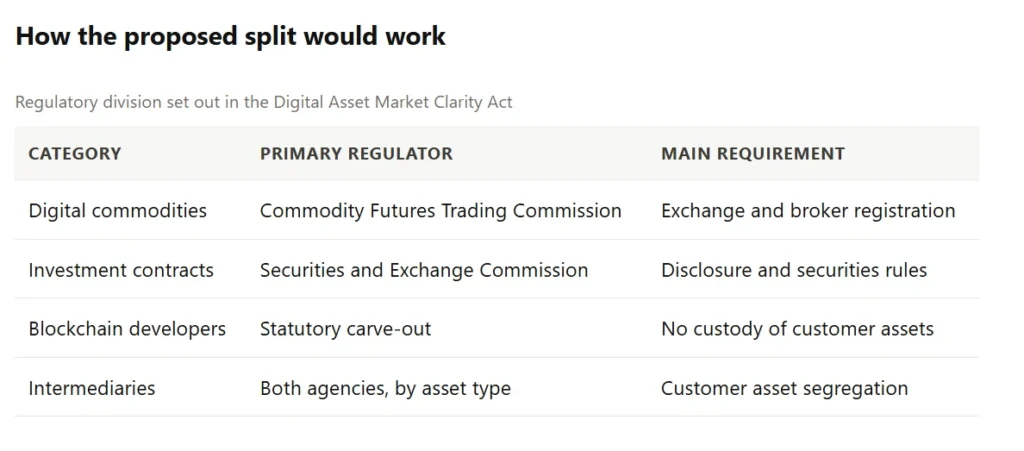
The Digital Asset Market Clarity Act draws a line between two asset types. Digital commodities would fall to the derivatives regulator. Securities and investment contracts would stay with the securities regulator.
Furthermore, the bill creates registration rules for exchanges, brokers, and dealers. Furthermore, it offers protections for developers who write blockchain code without holding customer funds.
Meanwhile, industry has pushed for this split for years. Firms argue that enforcement actions replaced rulemaking, which left builders guessing.
Critics see the split differently. They warn that many tokens could be labelled commodities to escape stricter rules. That debate has slowed the bill since it left the House.
The vote maths remains hard
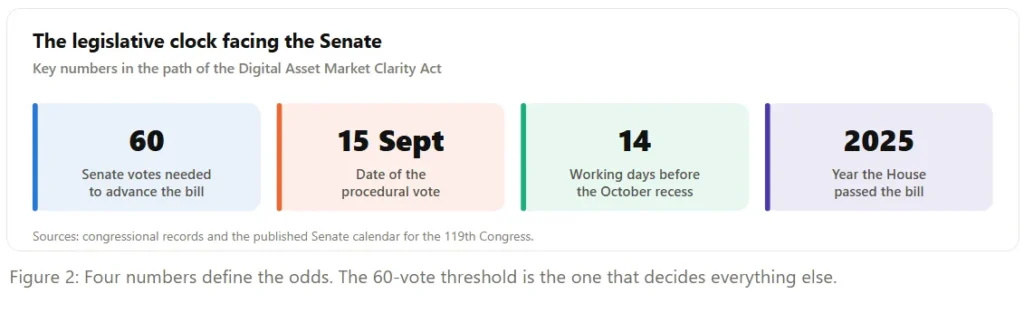
In the Senate, a procedural vote is set for 15 September. Sixty senators must agree before the bill can advance. Republicans, therefore, need Democratic support.
Senators return from recess on 14 September, which leaves little slack. Only 14 working days remain before the October election break. Consequently, any delay pushes the bill toward next year.
Why some lawmakers still object
Nevertheless, opposition rests on three arguments. Critics say anti-money-laundering safeguards remain too weak. They also want tougher ethics language, and they dispute how state and federal enforcement should interact.
Moreover, ethics concerns have grown sharper this year. Democrats point to large crypto-linked gains reported by the President’s family. Supporters counter that the industry needs rules regardless of politics.
Money followed the headlines
As usual, regulated funds moved first. US spot bitcoin ETFs took in about $517.2 million on 19 August. That marked their strongest day in roughly three and a half months. Ether funds added $189 million.
In addition, trading volume confirmed the interest. The largest bitcoin trust traded at about 4.5 times its 30-day average. Meanwhile, tokens tied closely to US policy outperformed.
Macro still does the heavy lifting
Even so, policy was not the only driver. The Treasury said on 19 August that it would at least double long-end bond buybacks. Long-dated yields fell, and risk assets rallied together.
Several analysts credited that move rather than the summit. Bitcoin has tracked long-term yields closely throughout 2026. Therefore, separating the two catalysts is difficult.
The distinction matters for what comes next. Rate relief can fade within weeks. A statute, by contrast, would reshape the market for years.
What to watch before 15 September
Looking ahead, three signals matter now. First, whether any Senate Democrats publicly back the bill. Second, whether ethics language is amended. Third, whether the vote slips again.
Traders should also watch fund flows. Sustained ETF demand would suggest real conviction. A quick reversal would mark this week as another headline trade.
Either way, the deadline is real. Congress has little room left in the 2026 calendar.
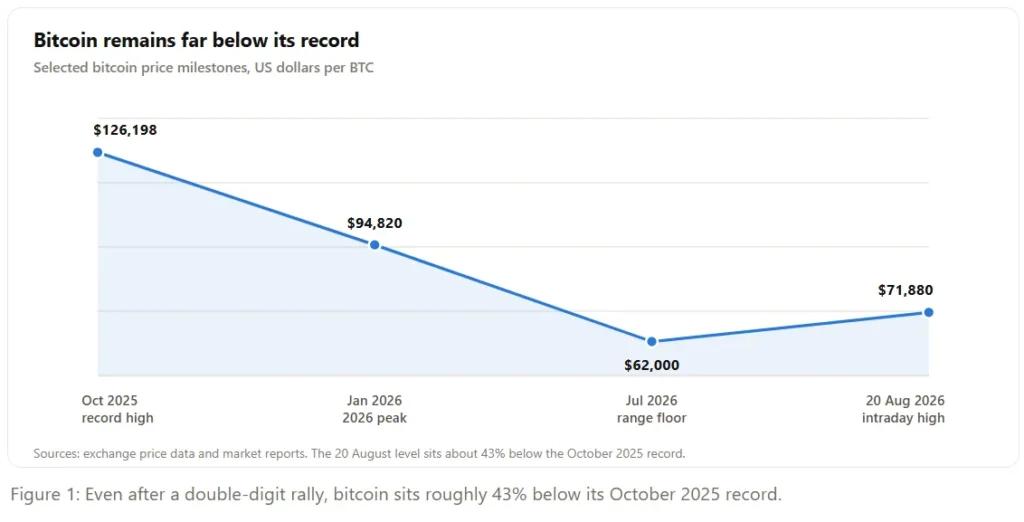
Investors should keep the price context in view. Bitcoin remains far below the record it set in October 2025. A single strong session does not undo that gap.
Rules alone will not lift prices either. They simply lower one long-standing source of doubt for large allocators.




