

September 17, 2026 – A key crypto market structure bill failed to clear a 60-vote hurdle on 15 September. Every Democrat who voted said no, and four Republicans joined them.

In Summary
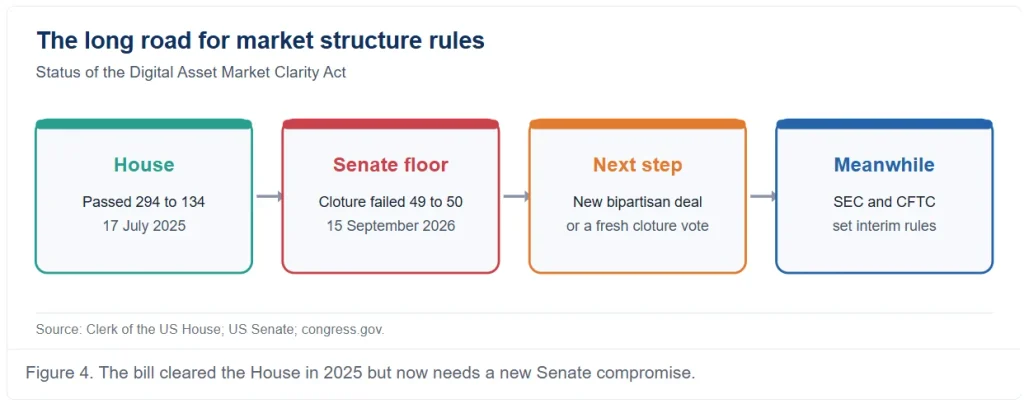
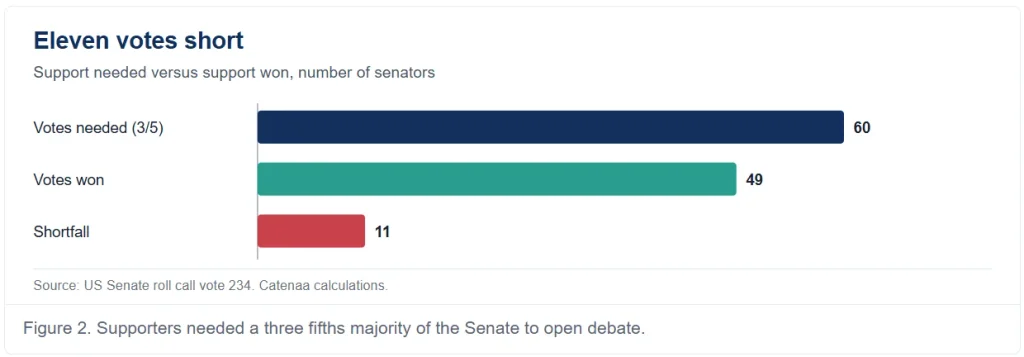
The Senate rejected cloture on the CLARITY Act by 49 votes to 50.
No Democrat voted yes, and four Republicans voted no.
The House passed the same bill 294 to 134 in July 2025.
Chairman Tim Scott urged the SEC and CFTC to write interim rules.
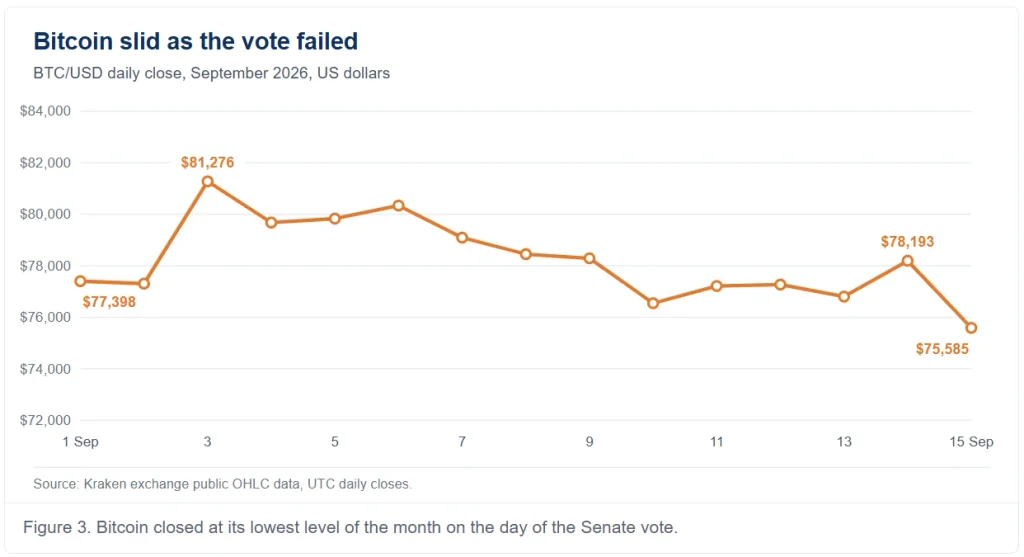
Bitcoin fell 3.3% on the day to close at $75,585.
The CLARITY Act, the crypto industry’s top legislative goal, stalled in the US Senate on Tuesday. A procedural vote to open debate failed 49 to 50. The bill needed 60 votes to move forward, so it fell 11 short.
The result leaves digital asset firms without a federal market structure law for now. Senate action has lagged since the House passed the bill 14 months ago. Moreover, the defeat hit sentiment in a week already crowded with central bank risk.
How the CLARITY Act vote broke down
The official Senate roll call shows a sharp party split. Forty-nine Republicans voted to proceed. However, four Republicans voted no: Susan Collins, Josh Hawley, Jerry Moran and Thom Tillis. Notably, Tillis sits on the Senate Banking Committee, which handles crypto legislation.
Not one Democrat backed the motion. All 44 Democrats who voted opposed it, and both independents joined them. One Democrat did not vote. As a result, the tally landed one vote short of even a simple majority.
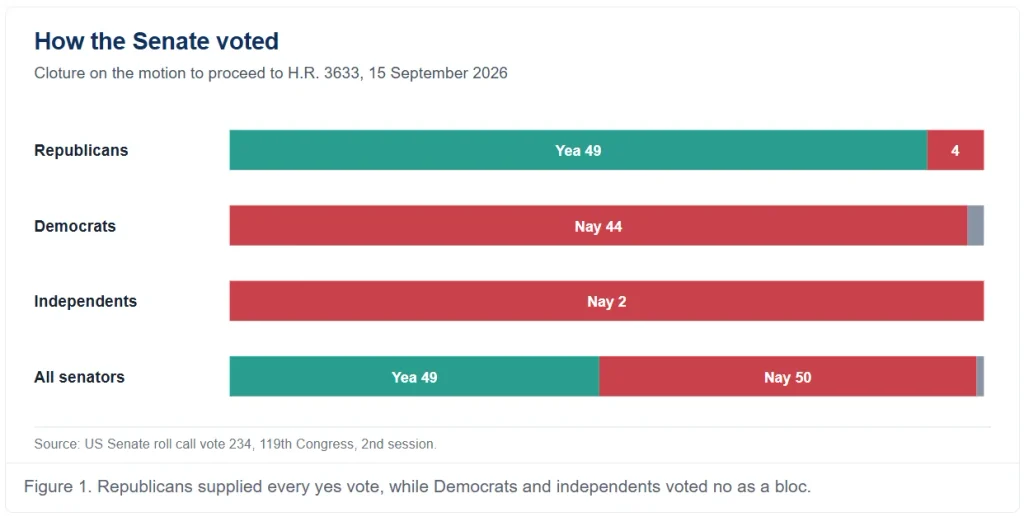
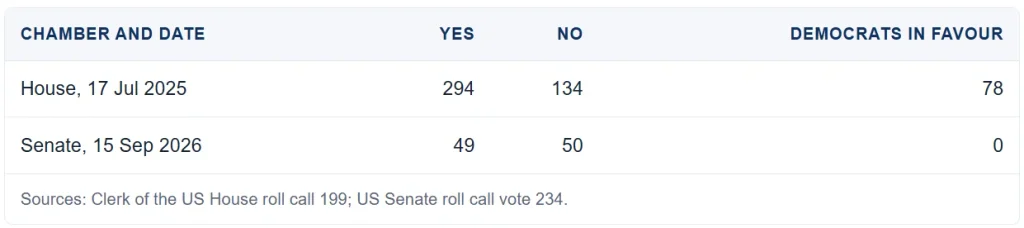
That outcome contrasts sharply with the House. In July 2025, the chamber passed the bill 294 to 134. All 216 voting Republicans supported it, and 78 Democrats joined them. In other words, the Senate lost the bipartisan backing the bill once enjoyed.
What the bill would do
The bill text on congress.gov sets up a regulatory system for digital commodities. It splits oversight between the SEC and the CFTC. It also bars Federal Reserve banks from offering certain products directly to individuals.
In addition, the bill would ban the use of a central bank digital currency for monetary policy. Supporters say clear rules would keep crypto firms and jobs in the United States. Critics say the draft still leaves gaps on ethics and illicit finance.
The stakes run high for the industry. Exchanges, token issuers and brokers have long asked which agency oversees which asset. Without a statute, the answer rests on agency guidance and court rulings. Those can shift whenever leadership changes.
Both sides dig in
Senate Banking Committee Chairman Tim Scott blamed Democrats for the defeat. In a statement after the vote, he said Republicans had moved the ball forward. He then urged regulators to act while Congress stays stuck.

Ranking Member Elizabeth Warren argued the opposite case. In floor remarks before the vote, she said the bill poses risks to families, the economy and national security. She also called for crypto rules that stop political self-dealing. Furthermore, she said she wants a bipartisan bill, just not this version.
Her objections centre on ethics. Warren tied her opposition to crypto ventures linked to the president’s family. She said those ventures earned $1.4 billion in 2025 alone.
Bitcoin slips as traders price the delay
Markets reacted quickly. Bitcoin closed at $75,585 on 15 September, according to Kraken exchange data. That marked a 3.3% drop from $78,193 a day earlier. The coin also touched an intraday low near $74,891.
The slide extends a weak run for September. Bitcoin closed at $81,276 on 3 September, so it now trades about 7% lower. Still, the vote was not the only driver. Traders also braced for rate decisions from the Fed, the Bank of England and the Bank of Japan.
What the delay means for investors
For now, the direct impact on holders looks limited. Spot bitcoin and ether funds keep trading, and current exchange rules still apply. However, the bill would have created clearer paths for new token listings and custody.
Uncertainty also weighs on business plans. Firms weighing a US listing or a new product may wait for firmer rules. Similarly, banks exploring crypto custody may slow their timelines until the legal picture settles.
On the other hand, stablecoins already have a federal framework. The GENIUS Act became law in July 2025. As a result, dollar tokens keep a clear rulebook even without a broader market structure law.
What comes next for crypto rules
The Senate can hold another cloture vote if leaders strike a new deal. Yet time is short before the midterm campaign fills the calendar. Therefore, the odds of a law this year look slimmer than they did a week ago.
Meanwhile, regulators can still move on their own. The SEC and the CFTC already hold broad powers over securities and commodities. So the next rules for exchanges and tokens may come from agencies rather than Congress.