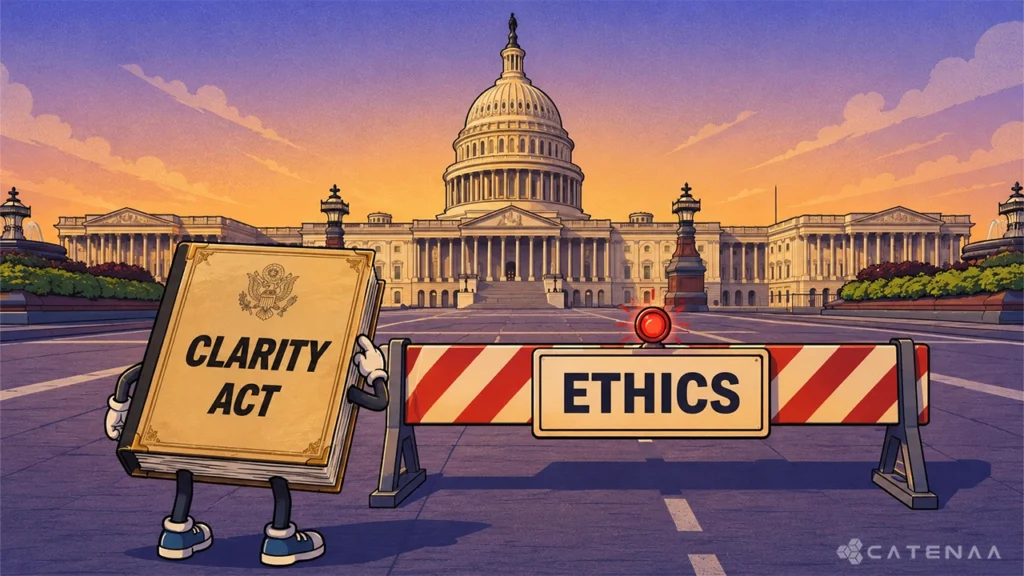


July 23, 2026 – Senate Democrats say the CLARITY Act’s new rules still leave enforcement gaps and conflict risks.
In Summary
The bill likely needs 60 Senate votes, making Democratic support essential.
The ethics title uses DOJ-only enforcement and expires in January 2029.
Supporters cite stronger financial crime controls, but conflict concerns remain.
The Senate’s crypto market structure push now faces a sharper political test. Democratic negotiators say the revised ethics language still leaves major conflicts unresolved. Their objections could decide whether the CLARITY Act reaches the 60 votes usually needed to end Senate debate.
A vote problem, not only an ethics fight
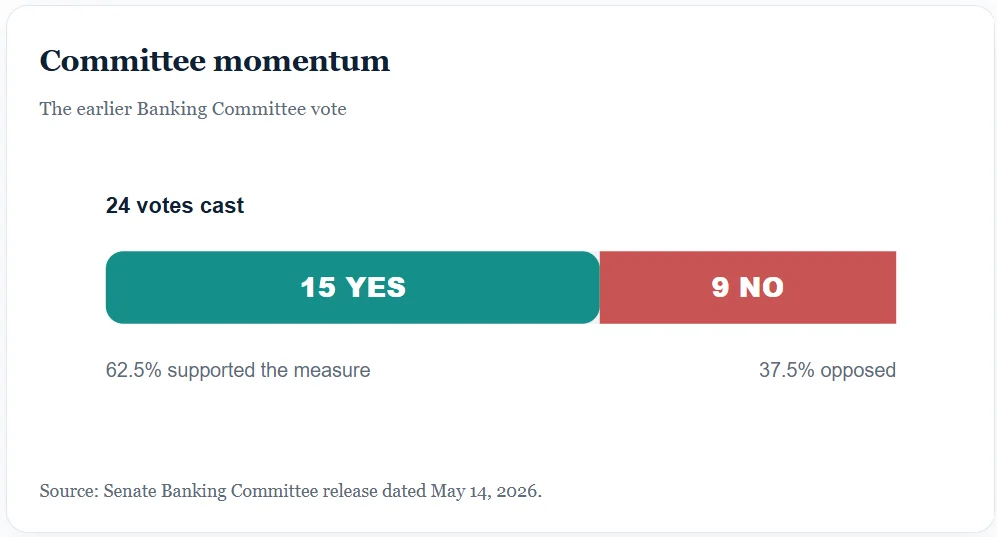
The dispute is no longer a narrow drafting exercise. It now threatens the coalition needed for final passage. An earlier version cleared the Senate Banking Committee by a 15 to 9 vote. That result showed momentum, but it did not guarantee a filibuster-proof majority.
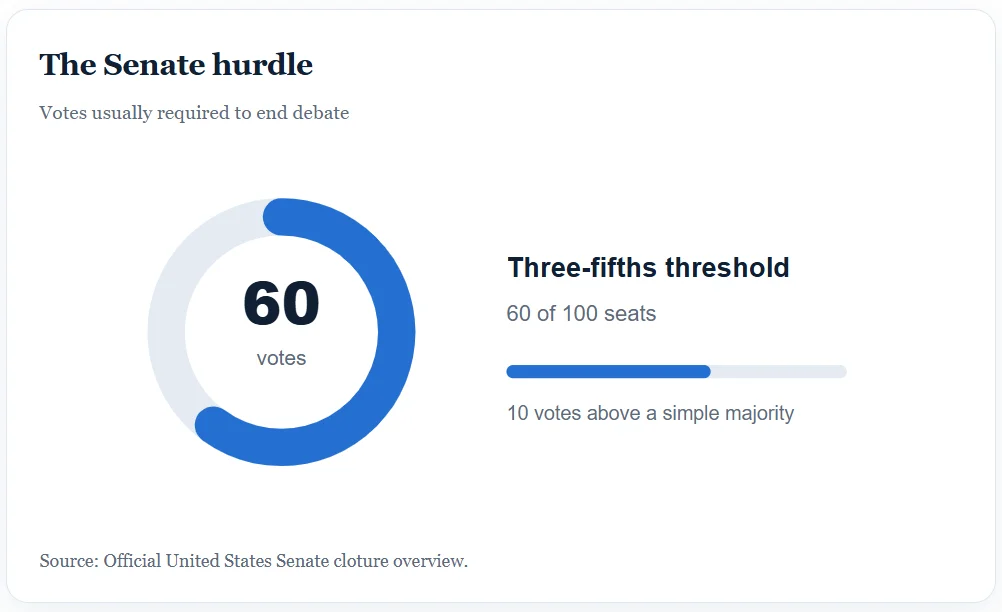
Under Senate rules, cloture usually requires three-fifths of all senators, or 60 votes. Therefore, even a strong Republican bloc may still need Democratic support.
What the draft actually blocks
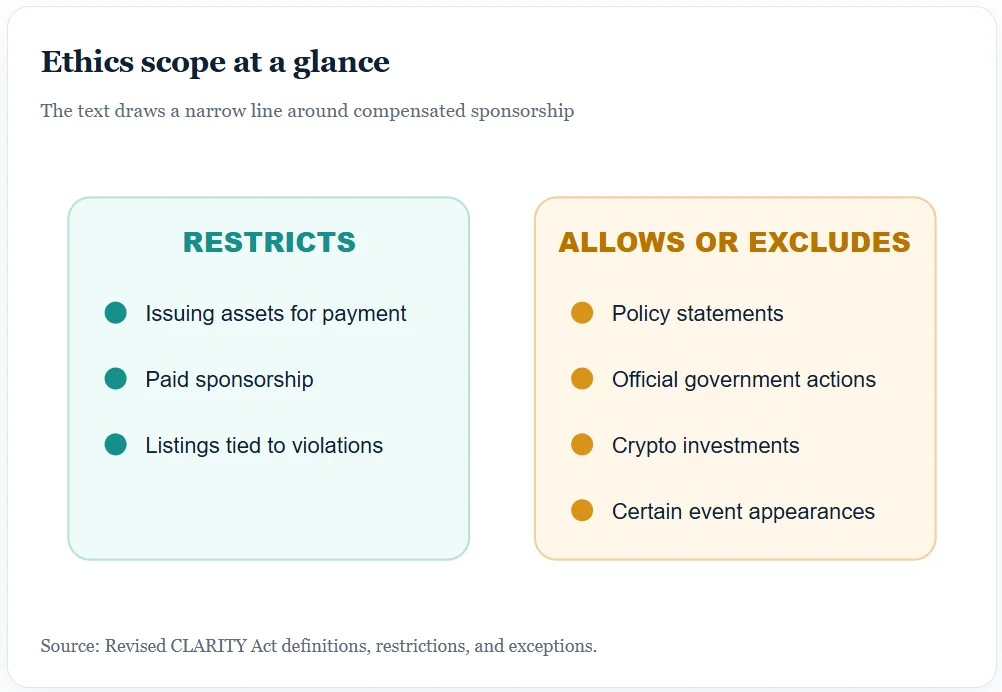
The revised 616-page bill does add a dedicated ethics division. It would bar covered federal officials and their spouses from issuing or sponsoring digital assets for compensation. The text also restricts intermediaries from listing assets that violate this rule.
Furthermore, it requires disclosure when covered individuals receive more than $1,000 from digital asset sales. Those provisions respond directly to concerns about officials monetizing their public visibility.
Where Democrats see loopholes
However, the bill separates sponsorship from broader political activity. Officials may still discuss digital assets, promote government policy, and take official actions affecting the sector. They may also hold digital assets as investments under existing disclosure and conflict rules.
The draft excludes general encouragement and appearances at paid or organized events from its sponsorship definition. Critics argue these exceptions could preserve valuable promotional channels without triggering the core ban.
Enforcement becomes the flashpoint
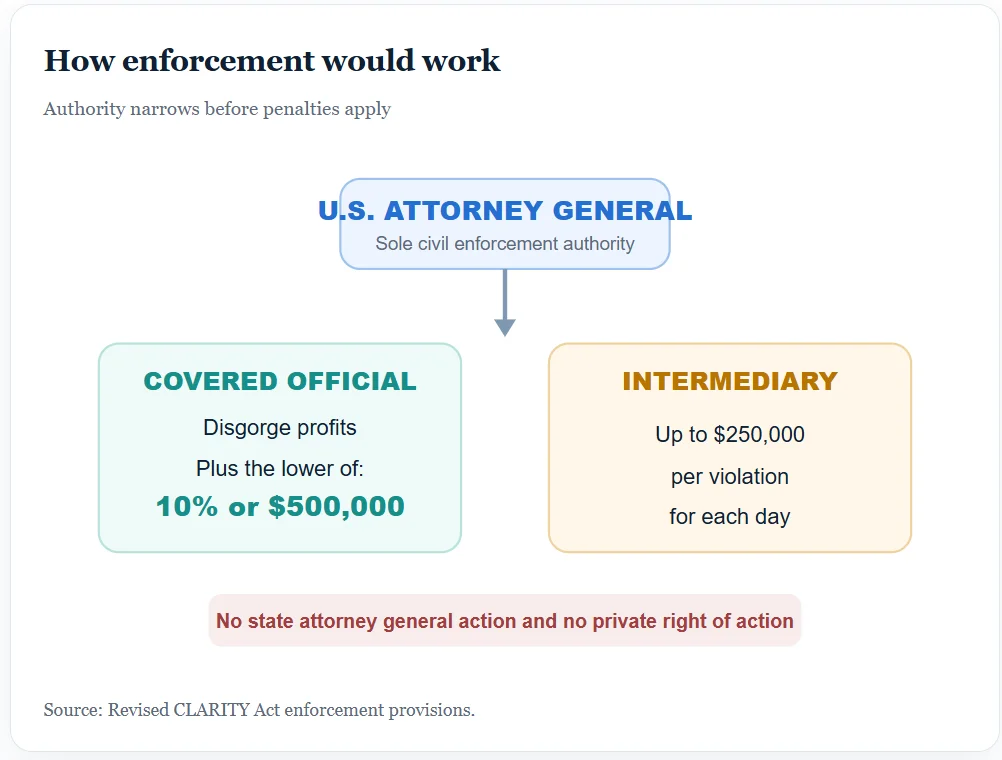
Enforcement creates another flashpoint. Only the United States Attorney General could bring a civil action under the ethics section. State attorneys general would receive no independent authority. Private parties would also lack a direct right to sue.
For covered officials, the penalty includes profit disgorgement and an additional financial sanction. That sanction equals 10% of related consideration or $500,000, whichever is lower. Intermediaries could face penalties of up to $250,000 for each violation, per day.
A short window could weaken deterrence
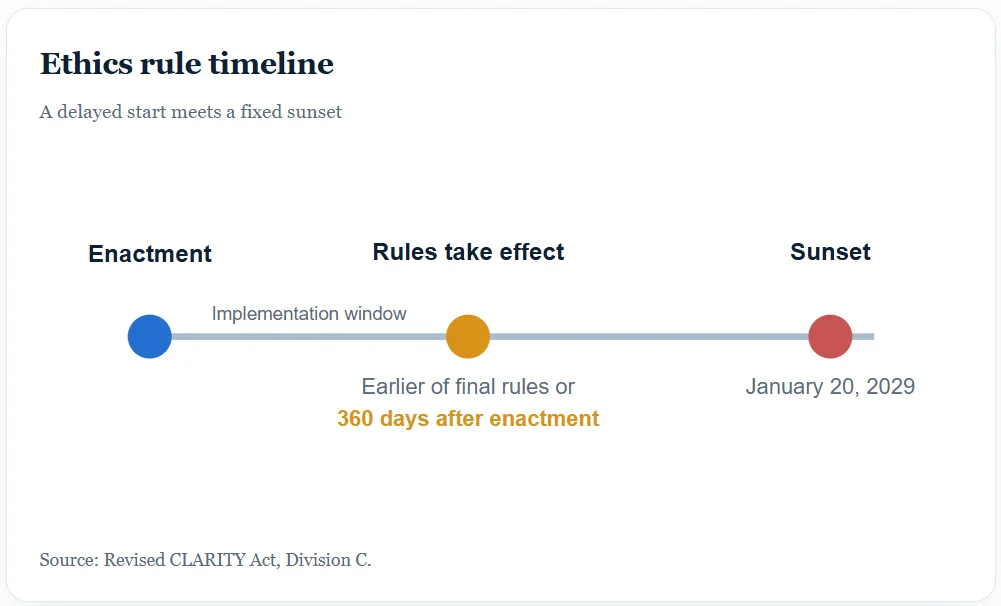
Timing may weaken the deterrent effect. The ethics provisions would start after implementing rules, or 360 days after enactment. Yet the division would sunset at noon on January 20, 2029. The text also blocks liability after sunset for earlier conduct.
Consequently, delayed rulemaking could compress the practical enforcement window. That design gives opponents a simple argument: strong language matters less when enforcement arrives late and expires quickly.
Personal wealth drives the political risk
Democratic staff have also challenged the bill’s treatment of personal crypto wealth. Senate Banking Committee minority staff estimated that President Donald Trump earned over $1.4 billion from crypto-related activities in 2025.
The estimate remains a partisan staff calculation, not an audited public finding. Still, it explains why ethics language has become central to negotiations. Lawmakers now want rules that address both direct token issuance and indirect financial exposure.
The supporters’ case
Supporters counter that the broader bill targets real market risks. Committee leaders say it would extend anti-money laundering duties to brokers, dealers, and exchanges.
They also highlight customer identification, suspicious activity monitoring, sanctions compliance, and fraud controls for crypto kiosks. Those protections could improve market integrity if regulators receive enough resources and clear authority. However, consumer safeguards cannot fully answer conflict-of-interest concerns involving public officials.
Why markets should care
For crypto businesses, the stalemate carries direct costs. Exchanges, broker-dealers, and token issuers still face overlapping federal approaches. Clear jurisdiction could reduce legal uncertainty and improve compliance planning.
Yet weak ethics rules could undermine confidence in the entire framework. Institutional investors often value predictable governance as much as permissive regulation. Therefore, a durable bill must protect market access without appearing to protect political insiders.
That balance will influence capital formation, enforcement credibility, and public acceptance. Further delay may leave agencies and courts shaping policy through fragmented decisions. Companies would then keep spending heavily on legal interpretation instead of product development.
What happens next
The next drafting round must solve three linked problems. First, negotiators need a broader definition of financial interest. Second, enforcement must appear independent, durable, and timely. Third, the bill needs enough bipartisan confidence to survive a 60-vote threshold.
The CLARITY Act can still advance, but its ethics title now carries the heaviest political risk. Without stronger guardrails, market structure reform may remain stuck between regulatory urgency and public trust.