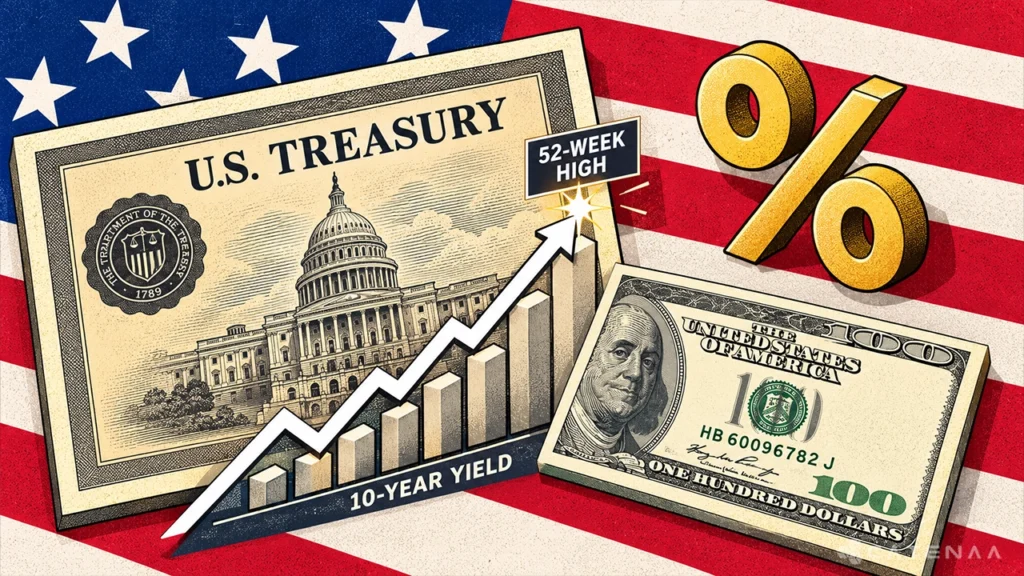


September 12, 2026 – Diesel jumped 24.1% in a single month. Bond markets answered by pricing a Federal Reserve rate rise next week.
In Summary
US producer prices rose 5.4% in the year to August 2026.
Diesel jumped 24.1% in a single month, lifting the whole index.
The 10-year Treasury yield closed near 4.95%, a 52-week high.
Futures now imply roughly a two-in-three chance of a Fed hike.
August consumer prices land on Friday and settle the argument.

American producer prices climbed far faster than Wall Street expected. The Bureau of Labor Statistics said the final demand index rose 0.4% in August. Over twelve months, the gain reached 5.4%. Forecasters had looked for about 5.1%. Consequently, the miss reset expectations across every asset class.
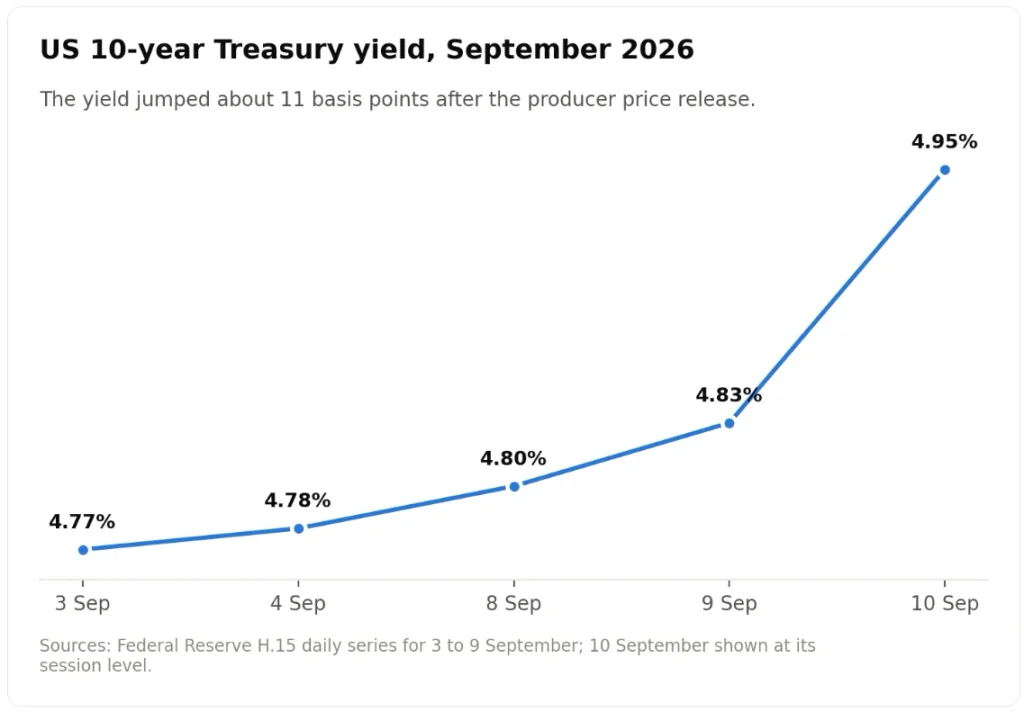
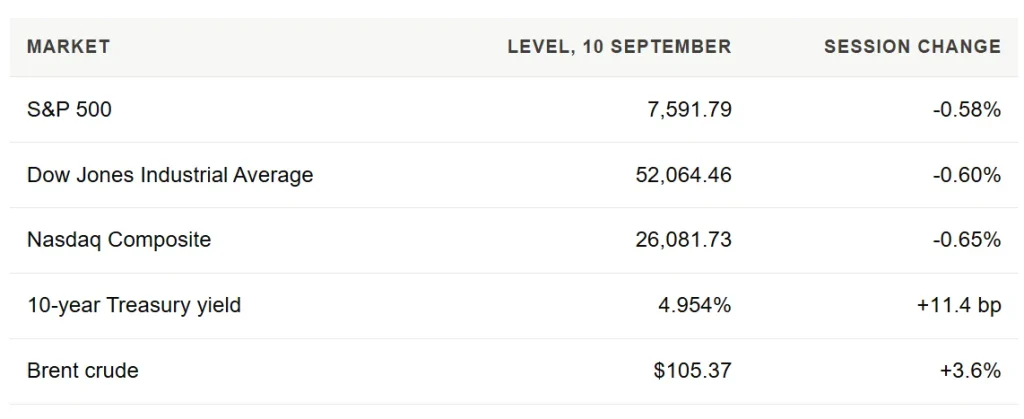
Bond markets reacted at once, and heavily. The 10-year Treasury yield rose roughly 11 basis points to about 4.95%. That level marks a 52-week high. Meanwhile, equities slid for a fourth straight session. Moreover, the odds of a September rate rise jumped above 60%. Traders had entered the week expecting no change at all.
Fuel did nearly all the work
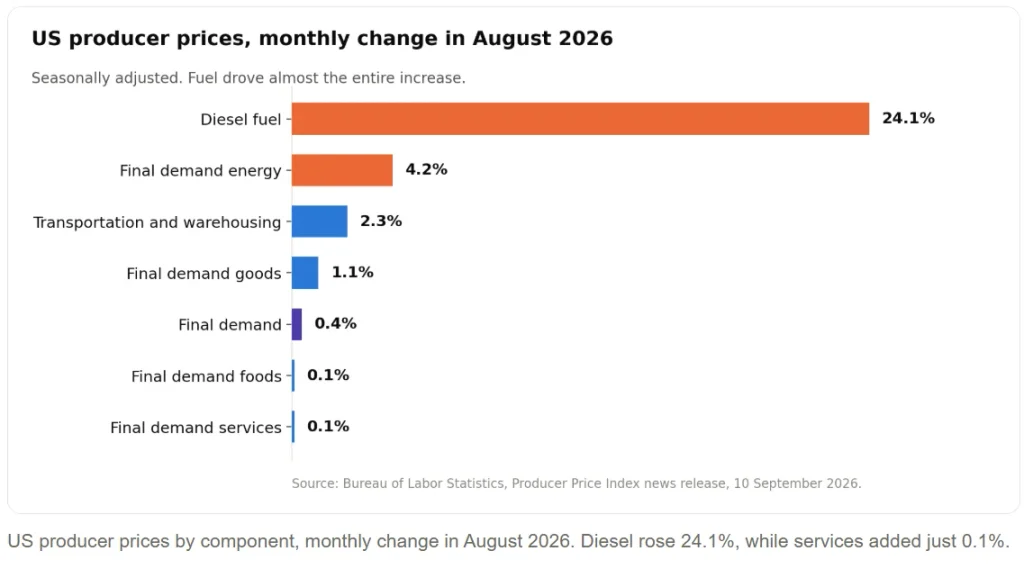
Look inside the report, however, and the story narrows. Final demand for goods rose 1.1% in August. By contrast, services managed only 0.1%. Energy prices jumped 4.2%, while diesel surged 24.1%. Transport and warehousing services added 2.3%. Freight costs therefore feed straight into next month’s goods prices.
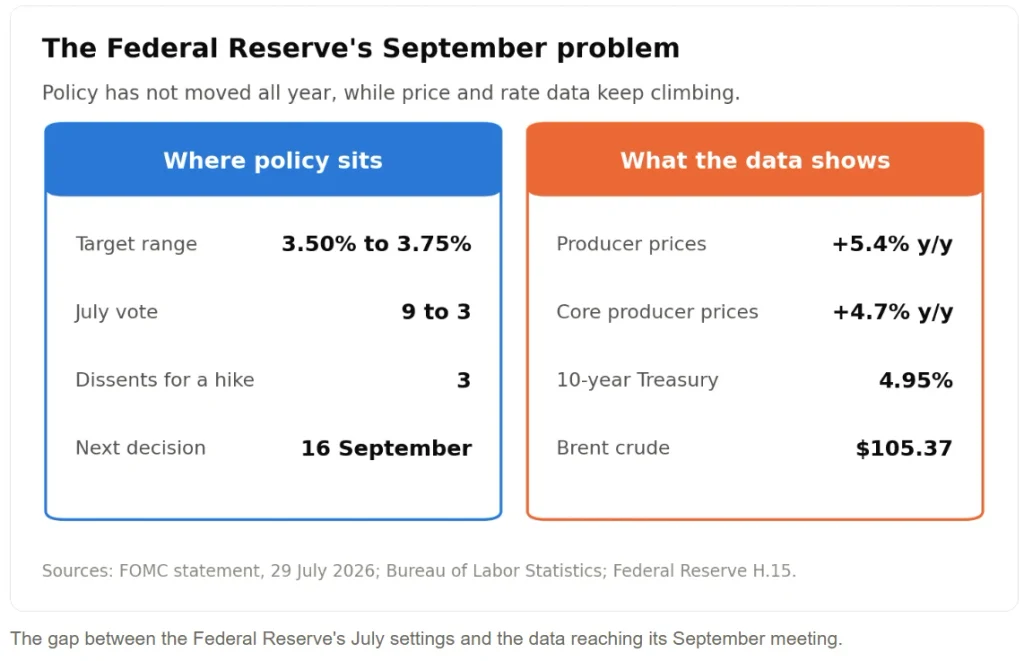
Food prices barely moved, rising 0.1%. Core producer prices, which strip out food, energy, and trade, rose 0.3% on the month. Their annual pace hit 4.7%. Therefore, the underlying trend still runs more than twice the Fed’s target.
July had looked much calmer. Producer prices were flat that month, with a 4.7% annual rate. One fuel shock has since added seven tenths of a point to the yearly figure. In other words, a single supply event reset the whole series.
The oil market sets the terms
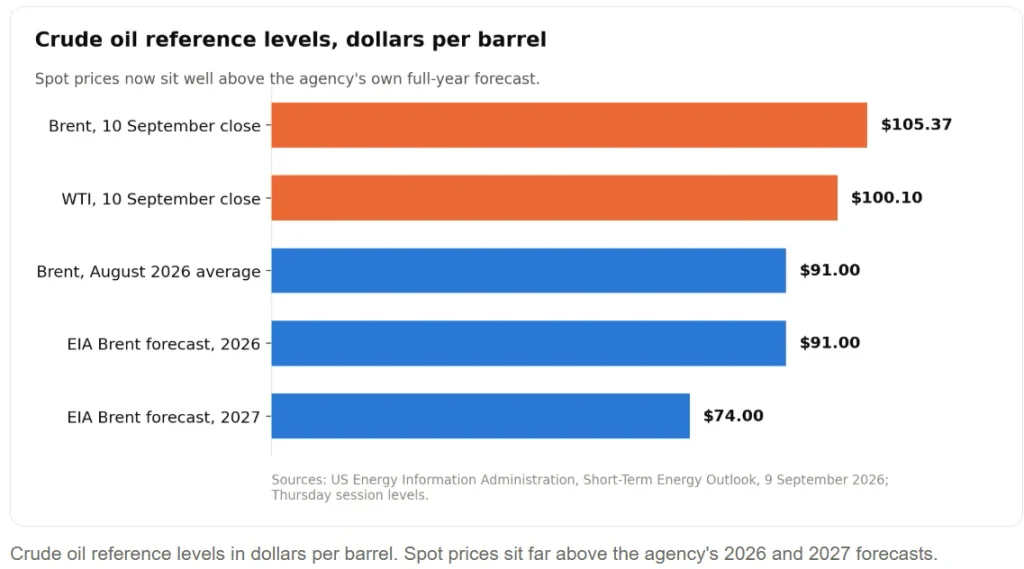
Crude is clearly the source of the pressure. Brent closed near $105.37 on Thursday, up about 3.6%. WTI settled just above $100, gaining roughly 4.2%. Both moves followed fresh strikes around the Strait of Hormuz. Traders consequently rebuilt the risk premium they had shed in July.
The Energy Information Administration published its latest outlook one day earlier. Brent averaged $91 a barrel in August, the agency said. Global stocks have fallen by about 400 million barrels this year. Analysts there expect Middle East export limits to last into 2027. Until supply normalises, the agency sees little relief.
That forecast now looks optimistic. Spot Brent trades roughly 16% above the agency’s full-year estimate of $91. Should the gap persist, every downstream price index will keep climbing. Refiners, hauliers, and airlines all pass the cost forward.
Yields break out
Treasury yields had already drifted higher all week. The 10-year note traded at 4.77% on 3 September. It reached 4.80% by Tuesday and 4.83% on Wednesday, according to Federal Reserve daily data. Thursday then delivered the break. Since the data landed before the open, the move built through the session.
Longer maturities moved as well. The 30-year bond had already reached 5.25% earlier in the week. Rising real yields hurt gold, which fell about 0.75% to $4,427 an ounce. Equity investors read the same signal and sold. Likewise, rate-sensitive technology names led the decline.
A hike is suddenly live
Policy has not moved at all this year. At its July meeting the committee held the target range at 3.50% to 3.75%. Three members dissented because each preferred an immediate increase. Beth Hammack, Neel Kashkari, and Lorie Logan voted against the majority. Their case rested on supply shocks in energy.
That minority now looks considerably stronger. Futures priced a 62% chance of a quarter-point rise before the producer data. Afterwards, the figure climbed toward 70%, although pricing stayed volatile. The committee meets on 15 and 16 September and will publish fresh projections.
Even so, officials face an awkward mix. The July statement noted that job gains have kept pace with the workforce. That wording gives no cover for easing. Energy shocks, meanwhile, lift headline prices beyond the Fed’s control. Raising rates cannot cut the price of crude. Policymakers nonetheless fear that expectations will drift if they wait.
Friday decides it
Consumer price data then arrives on Friday morning. Economists expect a 0.4% monthly rise and a 3.4% annual rate. Core inflation should hold near 2.4%. Any upside surprise would therefore make a hike hard to avoid. A soft print, however, would hand the doves one more month.
Three signals, therefore, matter for investors. First, watch the gasoline and airline components inside the report. Second, track the 30-year yield because it prices long-run inflation risk. Third, follow the dollar, since higher US rates pull capital away from emerging markets. Asian currencies already carry that strain.
Borrowers should prepare for either outcome. Mortgage rates track the 10-year note closely. Meanwhile, corporate issuers with 2027 maturities face a costlier refinancing window. In short, the cheap money of early 2026 has gone.
Emerging markets carry the sharpest risk. Oil importers such as India, Turkey and Sri Lanka pay twice over. Their fuel bills rise, and their dollar funding costs rise alongside. As a result, central banks there may tighten before their own data demand it.