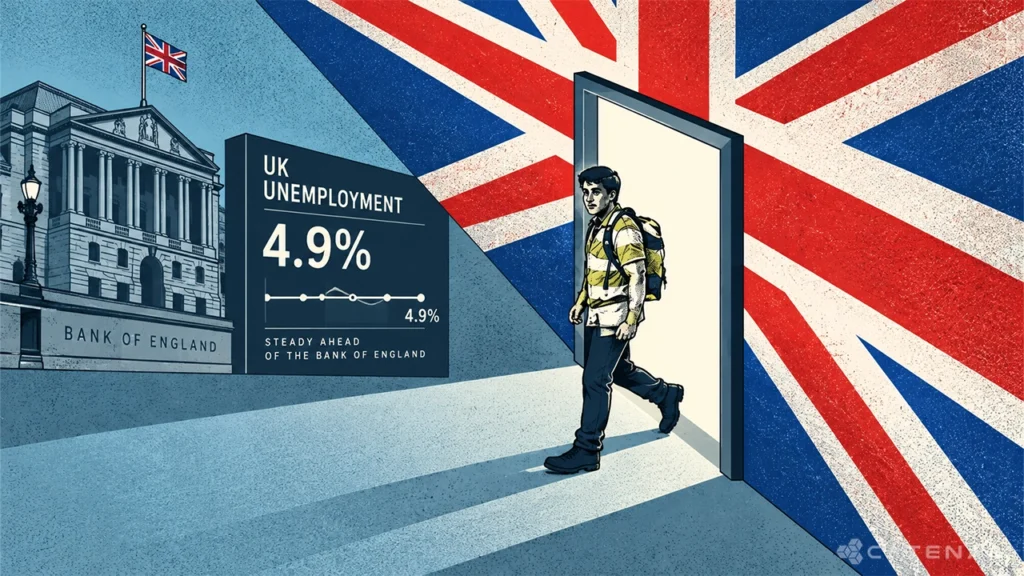


September 17, 2026 – Jobless numbers steadied, but payrolls and vacancies fell again. With pay still beating inflation, the Bank of England faces a close vote on Thursday.

In Summary
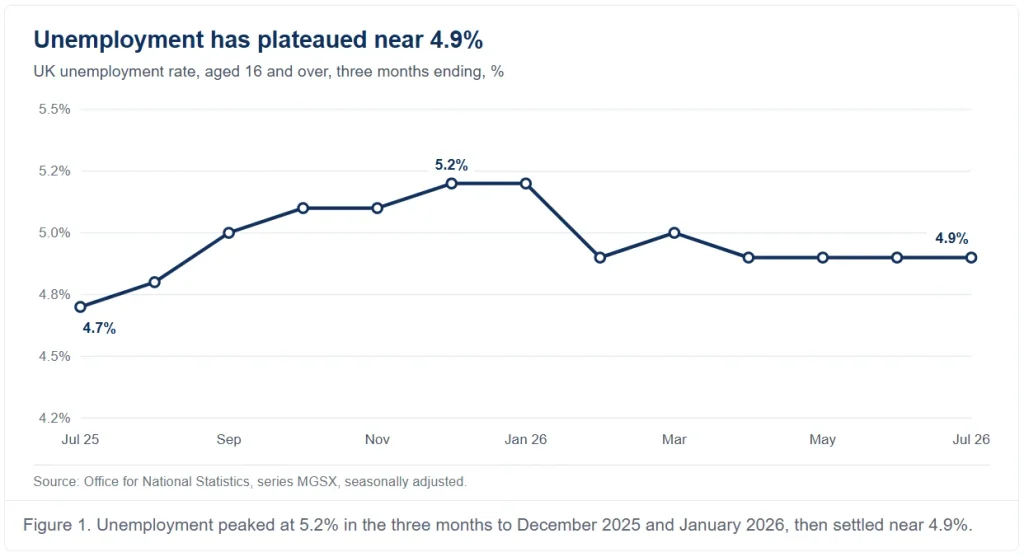
The UK unemployment rate held at 4.9% in the three months to July.
Payrolled employees fell by 101,000 over the year, and vacancies slipped to 702,000.
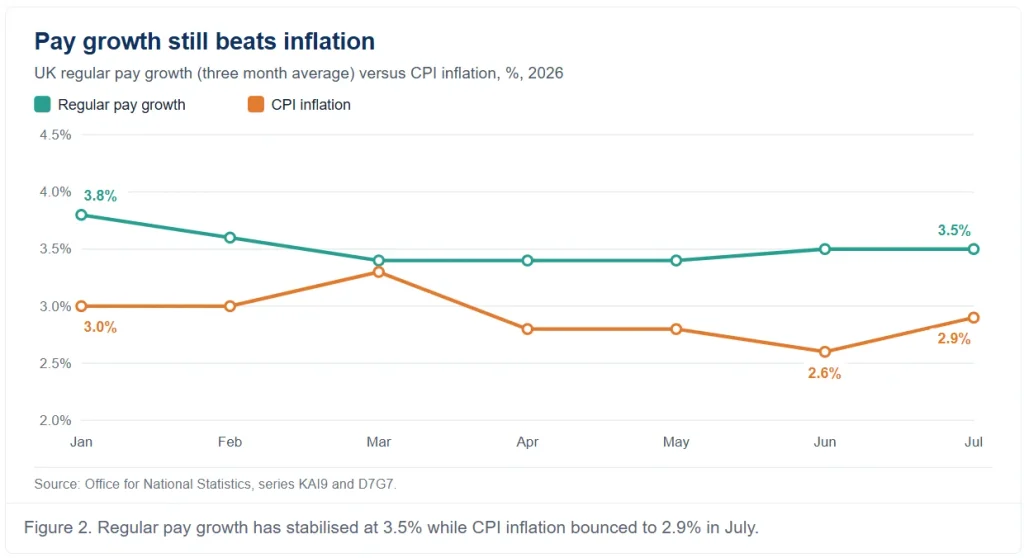
Regular pay grew 3.5%, still above July CPI inflation of 2.9%.
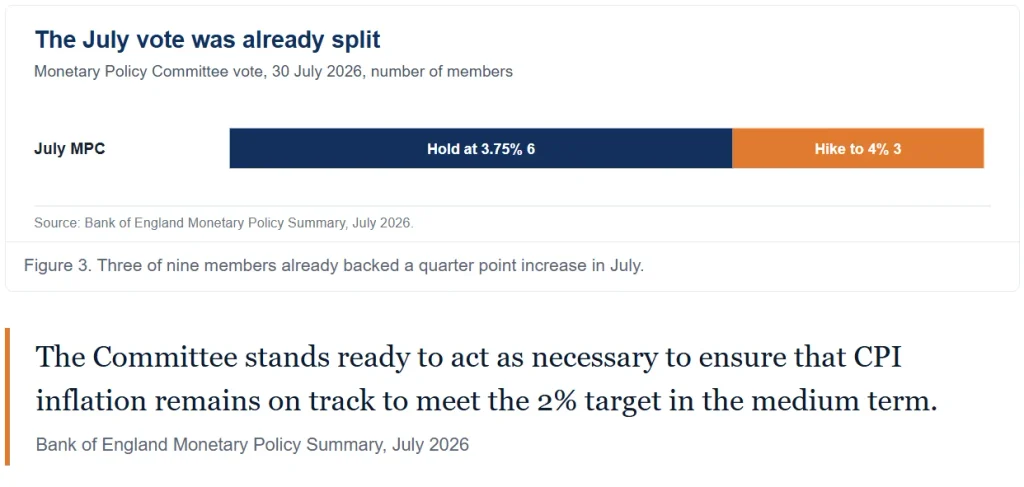
Three of nine MPC members voted for a hike to 4% in July.
The Bank of England announces its decision on 17 September, with the next one on 5 November.
The UK unemployment rate held at 4.9% in the three months to July, official data showed on Tuesday. However, payrolls kept shrinking and vacancies slipped again. The mixed picture lands two days before a finely balanced Bank of England decision.
Pay growth also stayed firm enough to worry policymakers. As a result, Thursday’s meeting could deliver the first UK rate rise since 2023.
What the UK unemployment rate data show
The Office for National Statistics put unemployment at 4.9% for May to July. That is 0.2 points higher than a year earlier. Meanwhile, the employment rate for people aged 16 to 64 stood at 75.1%.
The jobless rate has hovered at or near 4.9% since the start of 2026. It peaked at 5.2% around the turn of the year. So the labour market has stopped weakening, at least on this measure.
The economic inactivity rate fell 0.1 points on the year to 20.9%. In other words, slightly more people now work or look for work. Yet hiring has not kept pace with that extra supply, which helps explain the higher jobless rate.
Payrolls tell a weaker story
Tax data paint a softer picture. Payroll figures come from tax records rather than a household survey. That gives them a large sample and makes them a useful cross-check. Payrolled employees fell by 101,000 over the year, a drop of 0.3%. Over the latest quarter, they fell by 39,000.
The early estimate for August looks worse. It shows 30.2 million payrolled employees, down 145,000 on the year. In addition, vacancies fell by 8,000 to 702,000 in the June to August period.
Claimant count data point the same way. The provisional August figure reached 1.692 million. Taken together, these numbers suggest firms remain cautious about hiring.
Wages keep outpacing prices
Regular pay, which excludes bonuses, grew 3.5% a year in May to July. Total pay rose 3.9%, helped by bonuses, which often swing from month to month. After adjusting for CPIH inflation, real regular pay grew 0.6%, while real total pay rose 0.9%.
Pay growth has cooled sharply from 4.8% a year ago. Still, it remains above CPI inflation, which stood at 2.9% in July. For rate setters, that gap matters because wage costs feed into services prices.
Real pay gains help households rebuild spending power after the energy shock. However, they can also keep services inflation sticky. That is why the Bank watches wage data so closely.
A split Bank of England faces a tough call
The Monetary Policy Committee held Bank Rate at 3.75% on 30 July. Six members voted to hold, including Governor Andrew Bailey and Deputy Governor Sarah Breeden. Yet three members, Megan Greene, Catherine Mann and Huw Pill, wanted a rise to 4%.
The minutes warned that energy prices had stayed volatile and above pre-conflict levels. Members also said risks to energy prices remained skewed to the upside. On the other hand, they found little evidence so far of second-round effects on wages and prices.
The three hawks took a risk management view. They noted that inflation has run above target for five years. Therefore, they preferred to act early rather than wait for proof of lasting damage.
From six cuts to a possible hike
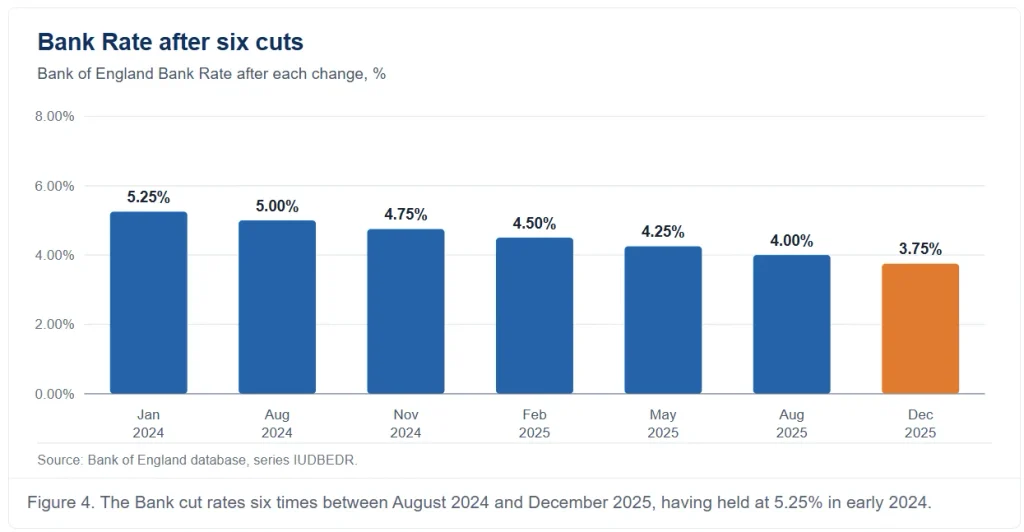
Bank Rate has fallen a long way. The official rate history shows six cuts, from 5.25% in 2024 to 3.75% in December 2025. Since then, the Bank has held steady.
A rise on Thursday would reverse that trend for the first time since 2023. Moreover, it would follow a quarter-point hike by the European Central Bank last week. Across the Atlantic, the Federal Reserve also decides on Wednesday.
What to watch next
First, August inflation data arrive at 7:00 a.m. UK time on Wednesday. A jump in energy costs could tip more members toward a hike. Second, the Bank announces its decision on Thursday, 17 September, according to its meeting calendar. Its next meeting after that falls on 5 November.
For households, a hike would push up variable mortgage and loan rates. Savers, by contrast, would earn more. Meanwhile, sterling traders will watch the vote split as closely as the decision itself. A narrow majority either way would signal a live debate heading into November. Finally, the next official labour market release arrives on 20 October, just before that meeting.