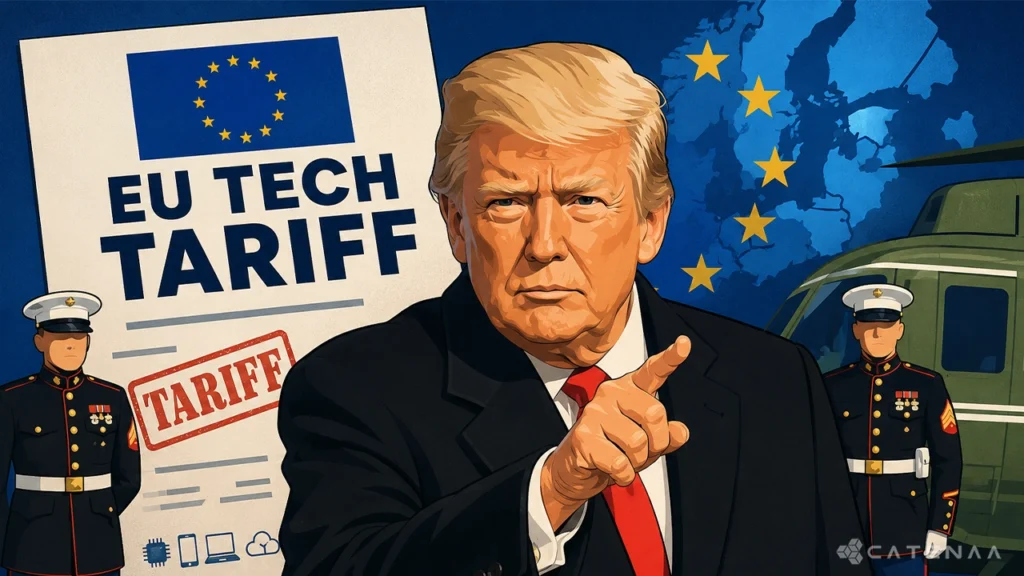


July 25, 2026 – The Trump EU tech tariff threat has pushed digital regulation into the center of transatlantic trade. Washington may now use trade law against Brussels. However, no additional tariff has taken effect yet.
In Summary
Google faces €890 million in penalties across Search and Google Play.
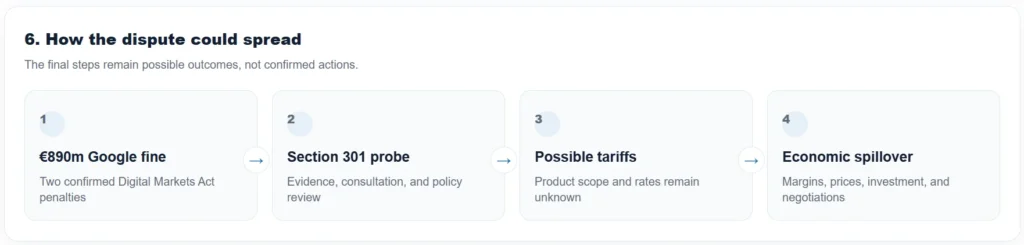
Washington plans a Section 301 investigation before any new tariff action.
EU-US trade reaches €1.7 trillion, creating broad economic exposure.
Apple faces both regulatory costs and potential hardware trade disruption.
Tariff warning follows Google fine
President Donald Trump threatened substantial tariffs after European regulators fined Google for two Digital Markets Act breaches. He also called for a Section 301 investigation into European practices affecting American technology companies.
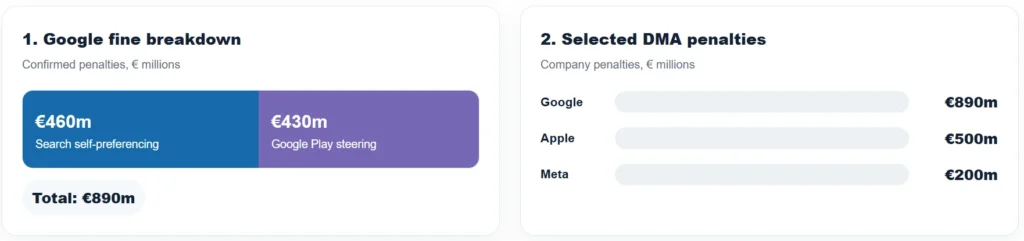
The latest official decision imposed €460 million for self-preferencing in Search. It added €430 million for restrictions on Google Play steering. Regulators ordered Google to end both practices.
Why Apple also matters
The dispute extends beyond one company. In April 2025, regulators fined Apple €500 million for restricting developer steering. Meta received a separate €200 million penalty. Therefore, Washington sees a broader enforcement pattern against leading American platforms.
Yet the tariff threat remains a warning, not an implemented measure. Trade investigations require evidence, consultation, and a final decision. Markets should separate immediate legal costs from possible future trade costs.
Section 301 gives Washington a route to challenge practices it considers discriminatory or burdensome. The process can produce tariffs, negotiated concessions, or no action. That makes timing crucial. An official trade warning can pressure Brussels before duties appear.
A €1.7 trillion relationship
The economic stakes are unusually large. EU-US goods and services trade totals about €1.7 trillion. Roughly €4.6 billion crosses the Atlantic each day.
Goods trade reached €910.6 billion during 2025. Services trade reached €865.2 billion during 2024. The EU recorded a €199.2 billion goods surplus. However, it ran a €178.4 billion services deficit.
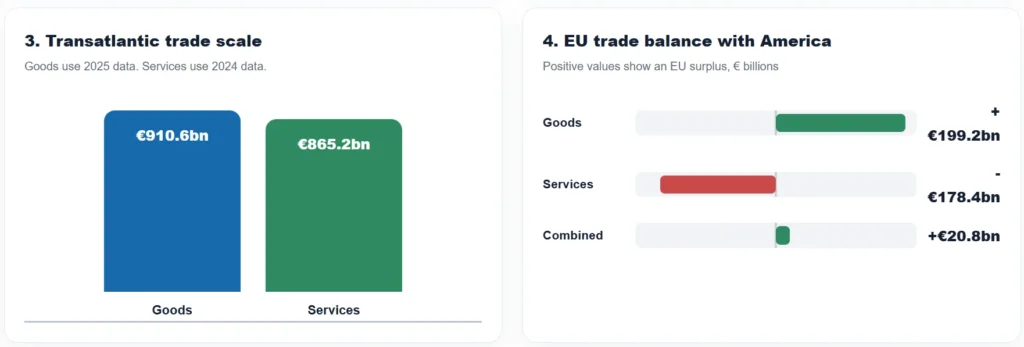
That structure matters for technology companies. Google earns mainly through digital advertising, cloud services, and platform distribution. Direct import tariffs may not hit those revenues first. Still, weaker European exports could reduce advertising demand and business investment.
Apple carries a different exposure. Tariffs could affect hardware supply chains, component costs, and final pricing. Meanwhile, digital rules can reshape App Store economics and product launches.
For Europe, the first impact would likely reach manufacturers selling into America. Higher duties raise landed prices and weaken margins. Companies may absorb costs, raise prices, or redirect shipments. Each response carries a financial penalty.
The trade framework faces a test
The 2025 trade framework was designed to contain these risks. It set a 15% ceiling for many EU goods entering America. Europe also planned $40 billion of American AI-chip purchases. Further commitments covered $750 billion of energy purchases and $600 billion of European investment.
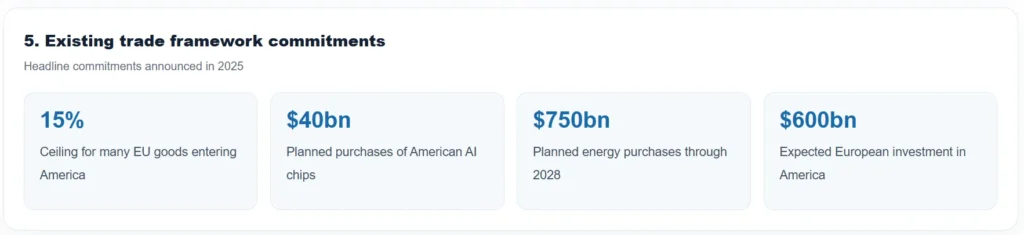
A new technology-linked tariff could test that framework. It may also invite European countermeasures or tougher digital enforcement. Either path would increase uncertainty for exporters, platforms, and consumers.
The agreement also promised cooperation on digital trade barriers. That clause now faces its hardest test. Washington defines the problem as discriminatory treatment. Brussels defines it as neutral enforcement against powerful gatekeepers.
What investors should watch
Investors should watch three signals. First, the investigation’s scope will show whether Washington targets regulation, fines, or both. Second, tariff product lists will reveal whether pressure falls on autos, machinery, luxury goods, or technology inputs. Third, negotiations will show whether both sides preserve the existing trade ceiling.
For Google, the immediate issue is compliance design. Search layouts and Play Store rules may change across Europe. For Apple, the conflict could combine regulatory pressure with supply-chain exposure. Both companies may carry a higher policy-risk discount.
The most likely near-term outcome is prolonged bargaining. However, the Trump EU tech tariff threat now links competition policy with customs policy. That connection raises the cost of every future enforcement decision.