


September 13, 2026 – Three issuers raised Rs 1,025 crore on a depository-run ledger. The digital rupee settled the cash leg at the same moment.

In Summary
SEBI launched Demat 2.0, a pilot for tokenised corporate bonds.
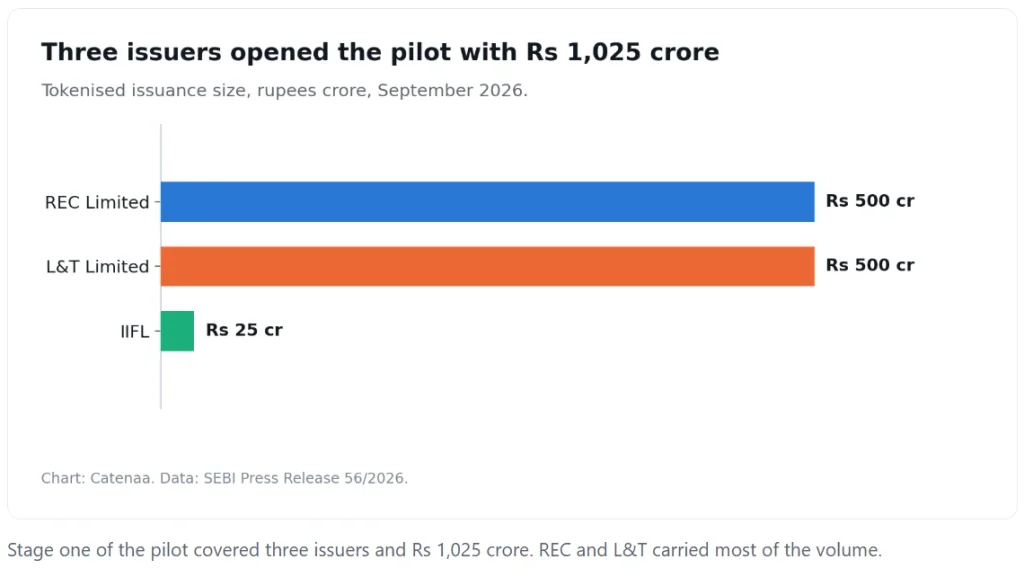
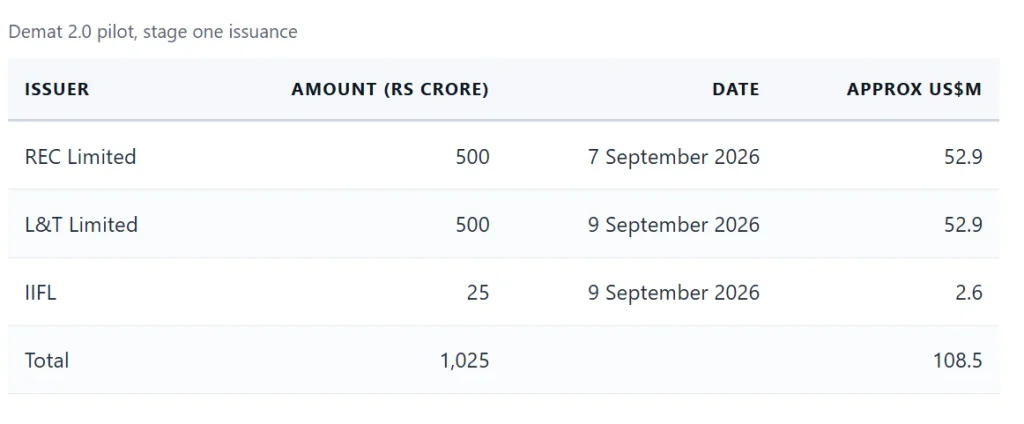
REC and L&T raised Rs 500 crore each, while IIFL raised Rs 25 crore.
A private permissioned ledger owned by the depositories records ownership.
The wholesale digital rupee settles cash and bonds in one linked step.
Secondary trading and retail access arrive in later stages.
India just moved its tokenised bond market from theory into live issuance. The Securities and Exchange Board of India announced the pilot on 10 September. Three issuers raised Rs 1,025 crore on a ledger owned by the depositories. Furthermore, the cash leg settled in central bank money. That combination matters more than the headline size.
REC Limited went first on 7 September with Rs 500 crore. L&T Limited followed on 9 September at the same size. IIFL added Rs 25 crore on the same day. So the total lands near $108m, using the Federal Reserve rate of about 94.5 rupees to the dollar.
How the tokenised bond market pilot works
The design avoids public blockchains. Instead, a closed network owned by the depositories keeps the record. Those depositories also hold the keys for investors. Therefore, no one needs a crypto wallet or a seed phrase. In the FAQ, SEBI says the token is the corporate bond. So the bond keeps its legal shape.
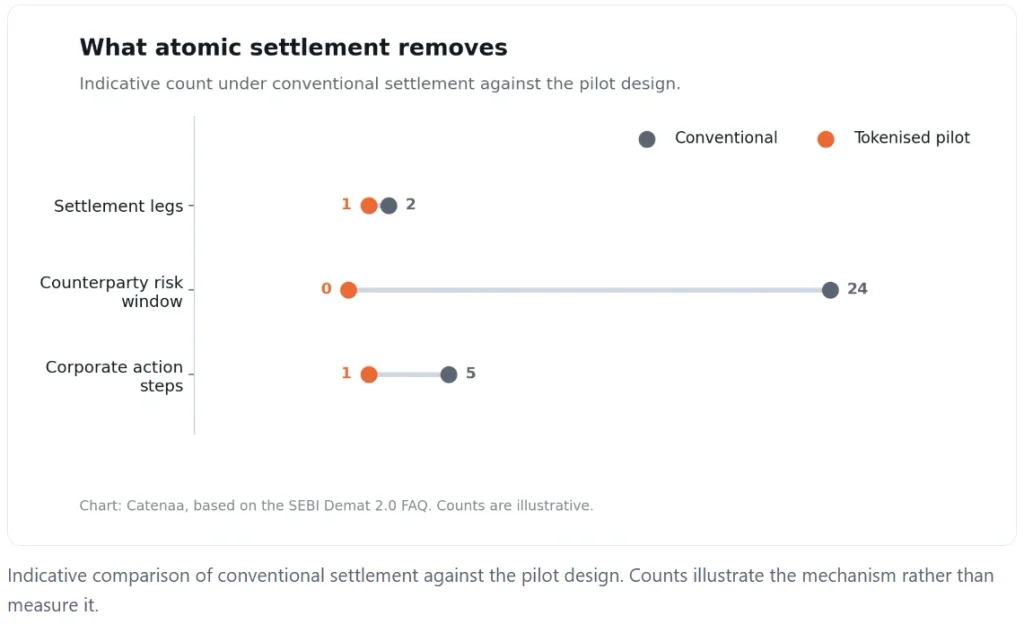
The Reserve Bank of India supplies the money leg. Its wholesale digital rupee moves through a shared market interface. The bond and the cash then change hands in one step. As a result, the gap between delivery and payment closes. That gap is where risk normally sits.
Banks and funds already trade bonds this way in spirit. Yet the cash still lands a day later in most cases. Here, both legs move at once. Hence, a failed trade cannot leave one side short.
Why the size looks small and the signal looks large
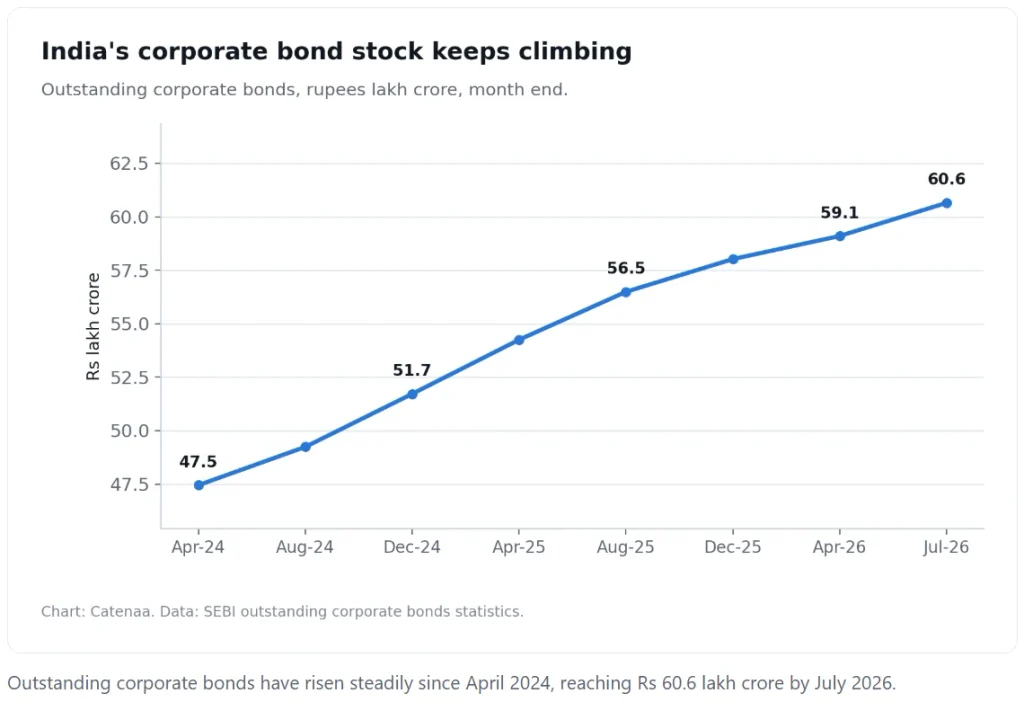
Rs 1,025 crore is a rounding error in this market. India’s outstanding corporate bond stock reached Rs 60.6 lakh crore in July 2026. At current exchange rates, that equals roughly $640bn. So the pilot covers less than 0.02% of the market. Still, plumbing tests rarely start large.
Timing helps the case. India has pushed hard to widen its bond market for years. Bank credit still does most of the heavy lifting. Therefore, any change that lowers issuance friction carries policy weight, not just technical interest.
Ratings, trustees, listing rules, and disclosure duties all continue. Investors keep using the demat accounts they already hold. Moreover, no fresh KYC applies. So the change stays hidden from the end investor. Only the record layer moves.
That choice looks modest, and it is the point. A new asset class would need new law, new rules, and new trust. This pilot needs none of those. Instead, it swaps one database for another under the same rulebook.
What the issuer mix tells us
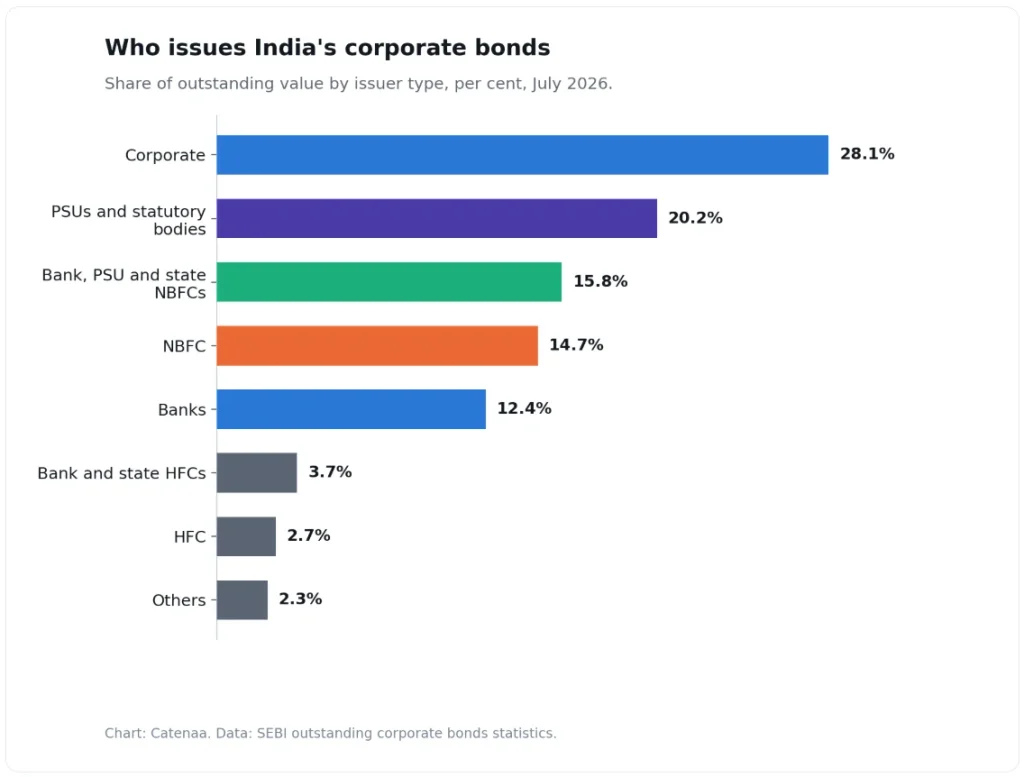
Corporates hold the largest share of outstanding value at 28.11%. Public sector units and statutory bodies follow at 20.23%. Bank- and state-owned NBFCs add 15.85%. Banks themselves sit at 12.36%. Hence, the pilot’s choice of a power lender and a large builder reads as deliberate.
Both names are issued often and in various sizes. They also face steady demand from funds and insurers. So the pilot tested the ledger with paper the market knows well. In contrast, a novel issuer would have mixed two risks at once.
The three stages ahead
Stage one covers new issues through the bidding platform already in use. Secondary trading arrives in stage two, along with retail access. Finally, stage three opens ledger nodes to rating firms and depository members. In addition, SEBI may add other instruments later. The work sits inside its sandbox.
Smart contracts should later handle coupons and redemptions on their own. That step cuts manual work across registrars and trustees. However, code also gathers risk in one place. Testing for cyber strength and scale therefore forms part of the stated purpose.
Cost is the quiet prize here. Bond issues in India still carry heavy paperwork. Each step adds fees, delay, and room for error. Trim those steps, and smaller firms may find the bond route worth taking.
What to watch next
Three markers will show real progress. First, watch whether secondary volumes appear at all. India’s corporate bond secondary market stays thin. Second, check whether mid-sized issuers join the ledger. Third, follow the digital rupee leg, because atomic settlement needs depth in central bank money.
Global peers run similar tests today. Yet few pair a regulated depository ledger with a live wholesale CBDC. India now has both in one pilot. Accordingly, the next two stages will draw close attention abroad.
Scale remains the open question. A pilot of Rs 1,025 crore proves the wiring, not the load. Readers should watch volumes rather than headlines. Until trading grows, this stays a promising test rather than a market shift.