

September 09, 2026 – A jump in Brent lifted energy shares but hurt everything else. One failed drug trial did the rest of the damage.
In Summary
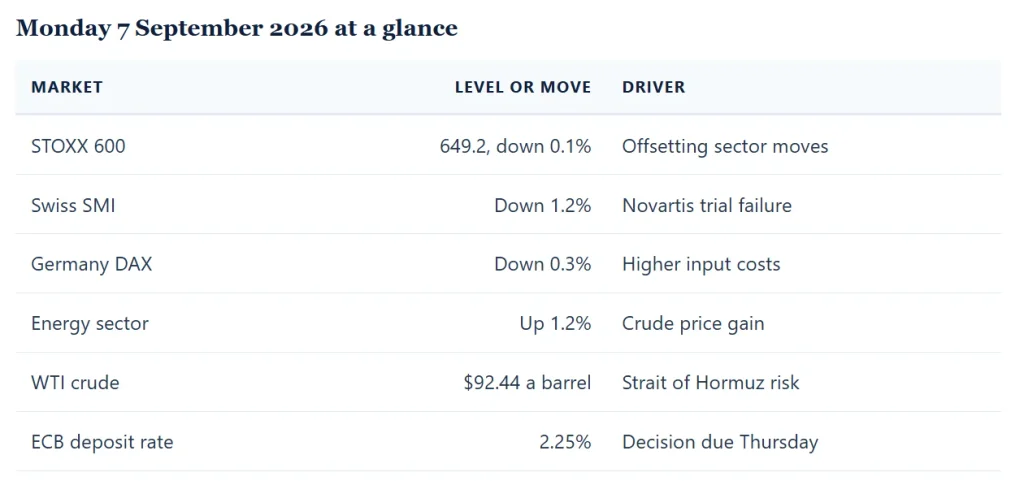
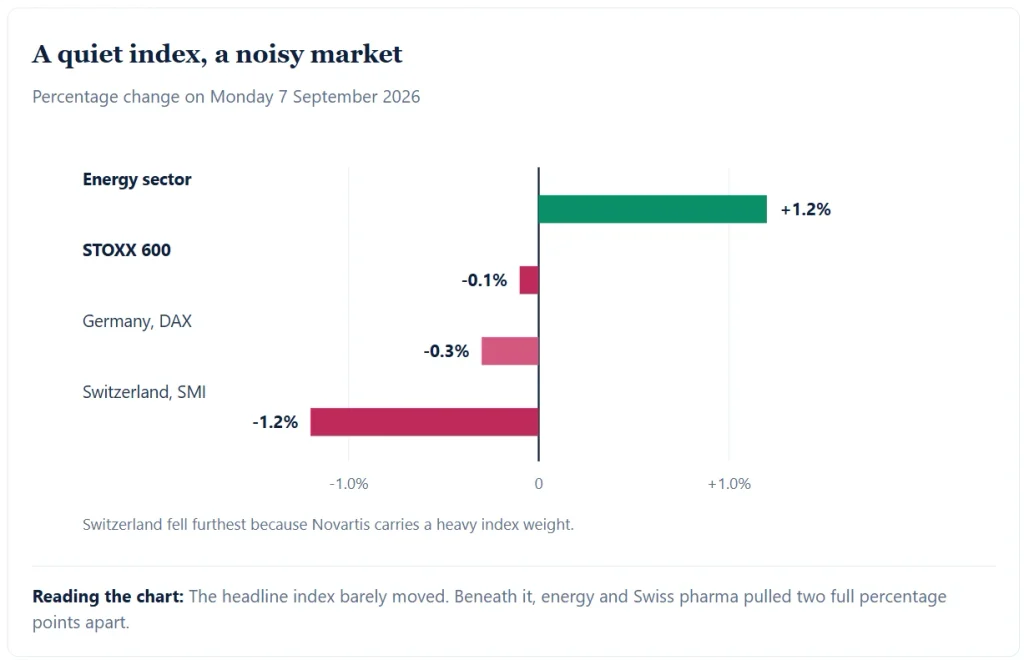
The STOXX 600 closed near 649 points on Monday, down about 0.1 percent.
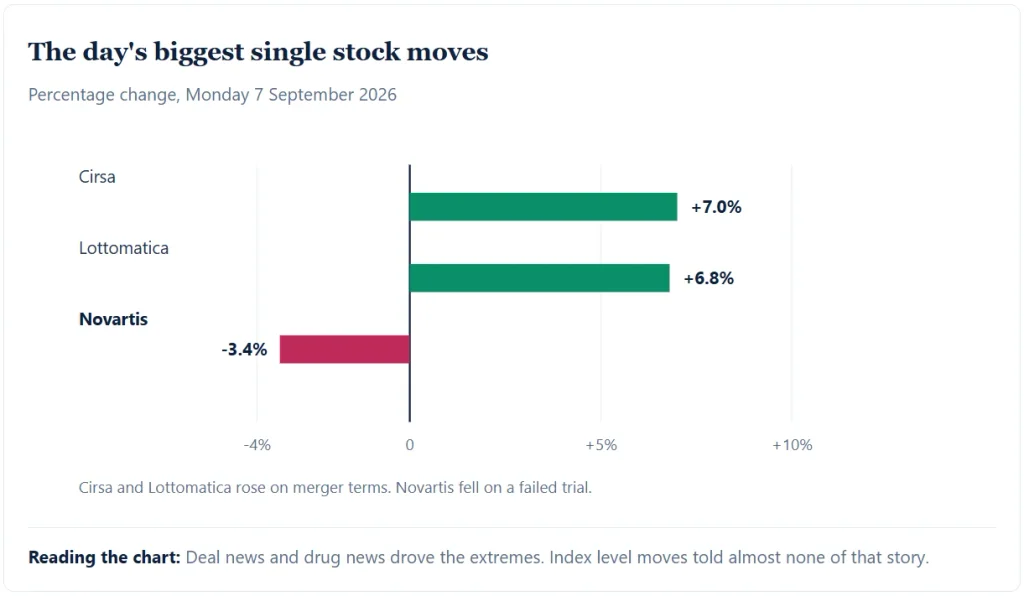
Novartis fell as much as 3.4 percent after its cholesterol drug missed its goal.
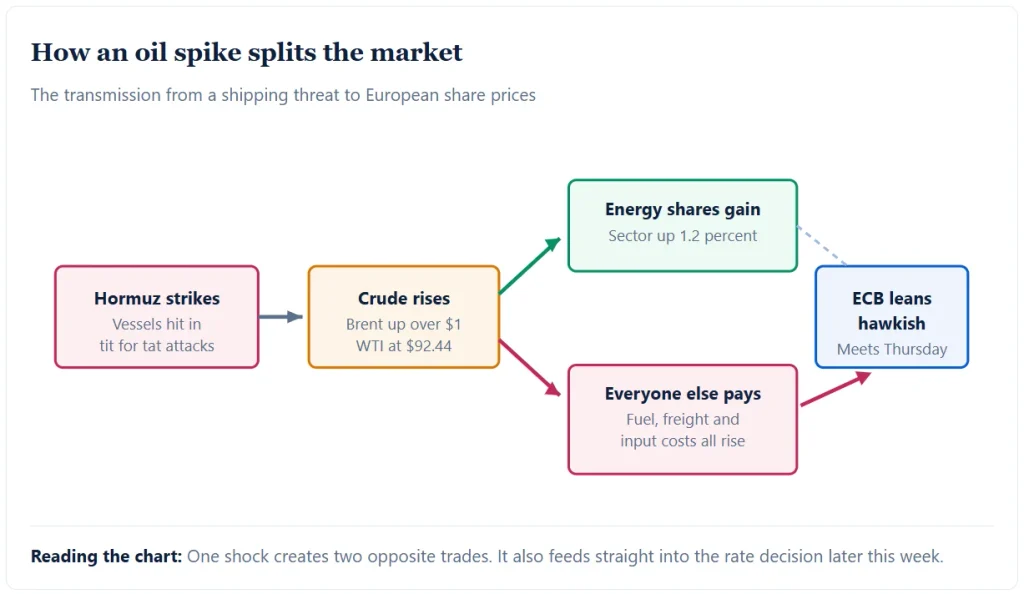
Energy shares rose 1.2 percent as Brent gained more than a dollar a barrel.
Strikes on shipping near the Strait of Hormuz drove the oil move.
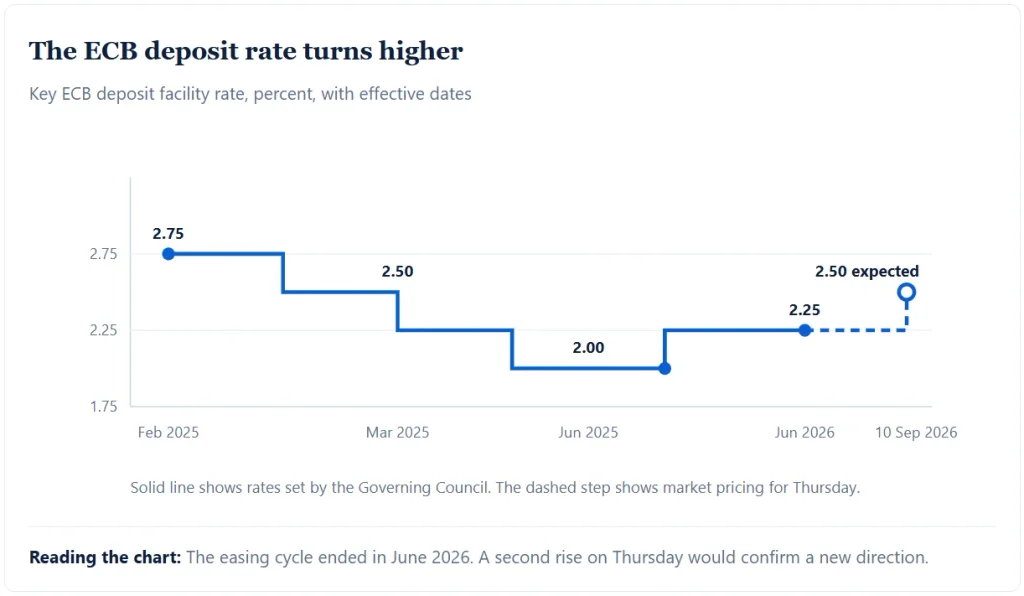
The ECB meets on Thursday with a quarter-point rise widely expected.

European shares slipped on Monday. Two forces pulled in opposite directions.
Neither force was small. Together, they cancelled each other out at the index level.
Oil rose hard, which lifted energy stocks. Meanwhile, a drug trial failure hit the region’s largest pharmaceutical name.
The STOXX 600 ended near 649.2 points. That marked a fall of roughly 0.1 percent. Such a small move hides a widespread issue beneath the surface.
Novartis loses a blockbuster hope
Novartis dropped as much as 3.4 percent in Zurich. Its drug pelacarsen missed the main goal of a late-stage trial.
The therapy targets lipoprotein(a), a blood particle linked to heart disease. It lowered that marker in earlier work. However, it failed to reduce deaths or major cardiac events compared with placebo.
Analysts had modelled peak sales in the billions. Consequently, that revenue line now vanishes from forecasts.
The result also raises pressure on the wider pipeline. Novartis faces patent losses on key products later this decade. So each late-stage readout carries extra weight.
Rivals watched closely as well. Amgen and Eli Lilly run their own lipoprotein(a) programmes. Their outlook now looks harder, not easier.
Swiss index weights explain the wider damage. Novartis alone accounts for a large slice of the local benchmark. Therefore, one stock dragged a whole national market down 1.2 percent.
Investors had waited years for this readout. Lipoprotein(a) affects roughly one in five people worldwide. No approved therapy targets it today, so the prize was large.
Oil does the heavy lifting
Brent crude gained more than a dollar a barrel. West Texas Intermediate traded near $92.44.
The trigger sat in the Gulf. Tit-for-tat strikes hit vessels sailing near the Strait of Hormuz. Traders read that as a longer supply risk, not a one-day scare.
Roughly a fifth of the world’s oil passes through that channel. Therefore, any threat to it moves the whole curve.
Energy shares gained 1.2 percent as a result. Oil majors earn more when crude rises. Everyone else pays more for fuel and freight.
Airlines, chemicals, and carmakers sit on the wrong side of this trade. Fuel and feedstock costs feed straight into their margins. In addition, hedges roll off at worse prices each quarter.
Crude near $92 also changes the inflation maths. Energy carries a large weight in the Euro area price baskets. So a sustained move keeps headline inflation sticky into 2027.
The ECB now faces a harder call
Rate setters meet on Thursday. Markets expect a quarter-point rise in the deposit rate.
That rate has stood at 2.25 percent since 17 June. A move would lift it to 2.50 percent. Deutsche Bank now expects a further quarter point in December.
Energy costs make that job harder. Fuel feeds into headline inflation within weeks. Furthermore, it lifts expectations before it lifts wages.
Growth signals look firmer too. Euro area investor morale reached its best level in over four years this month. In short, the hawks have data on their side.
Banks stand to gain from the shift. Higher policy rates widen deposit margins across the sector. By contrast, utilities and property names carry heavier debt loads.
Credit teams should note the second-order effect. Corporate refinancing costs climb with each move. Weaker borrowers in retail and property feel it first.
Deal news lit up the smaller names
Not every move came from macro forces. Lottomatica rose 6.8 percent on merger terms with Spain’s Cirsa. Cirsa itself climbed 7 percent.
Southern European gaming has consolidated fast. Scale lowers licence and technology costs. Investors clearly liked the terms on offer.
Such moves show a wider pattern. Mid-cap deal flow in Europe has picked up through 2026. Cheap sterling and euro assets keep drawing buyers.
Politics adds a slower risk
Germany delivered a jolt at the weekend. The far-right AfD took 44 percent of the votes in a Saxony-Anhalt state election.
State results do not set federal policy. Yet they shape the debate on migration and European integration. Bond investors watch that debate closely.
For now, the market reaction stayed muted. Still, political risk premia build slowly rather than overnight.
Valuations still look reasonable
Europe trades at a clear discount to Wall Street. That gap has narrowed through 2026 but has not closed.
Two things support the case. Banks earn more as rates rise, and energy earns more as crude climbs. Both sectors carry heavy weights in European benchmarks.
Weak spots remain, of course. Luxury, chemicals, and autos all depend on Chinese demand. So a soft patch there would offset the rate and energy tailwind.
What to watch this week
Three events matter most. First, the ECB decision and press conference on Thursday. Second, any further escalation around Hormuz shipping lanes. Third, the tone of guidance on December.
Energy will remain the swing factor. If crude holds above $90, margin pressure spreads beyond the index. By contrast, a quick de-escalation would hand equities an easy rebound.
Watch the spread between sectors as well. A wide gap signals a market trading theme, not the economy. That pattern often precedes sharper index moves.
For now, Europe looks range-bound but nervous. Of course, one more shipping incident could change that within hours.