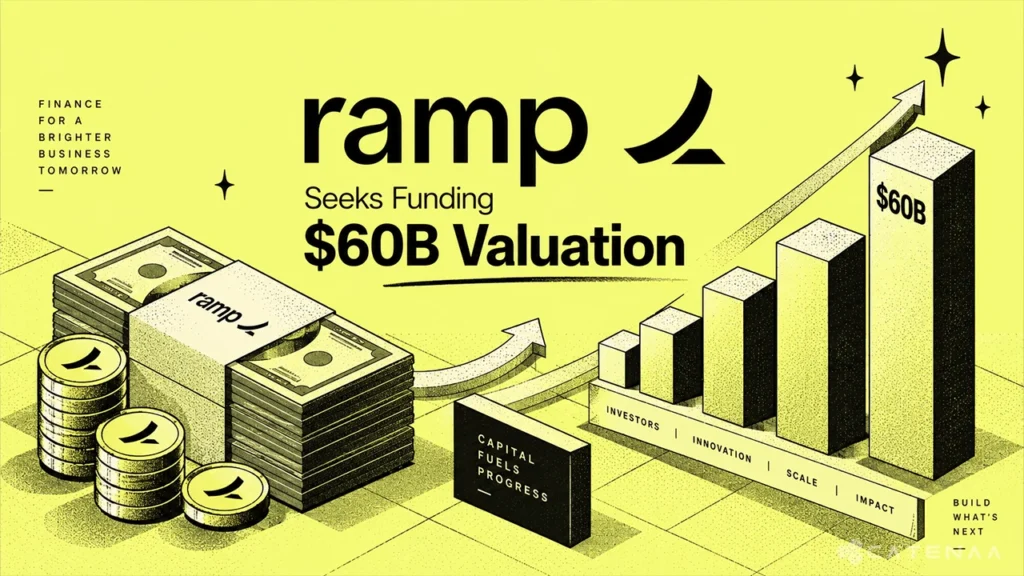


The spend management group is back in the market three months after its Series F, seeking a price that would value it at close to 60 times its last disclosed revenue.
In Summary
Ramp is in early talks to raise about $1 billion at a valuation near $60 billion.
The target sits 36% above the $44 billion price agreed in its Series F round three months ago.
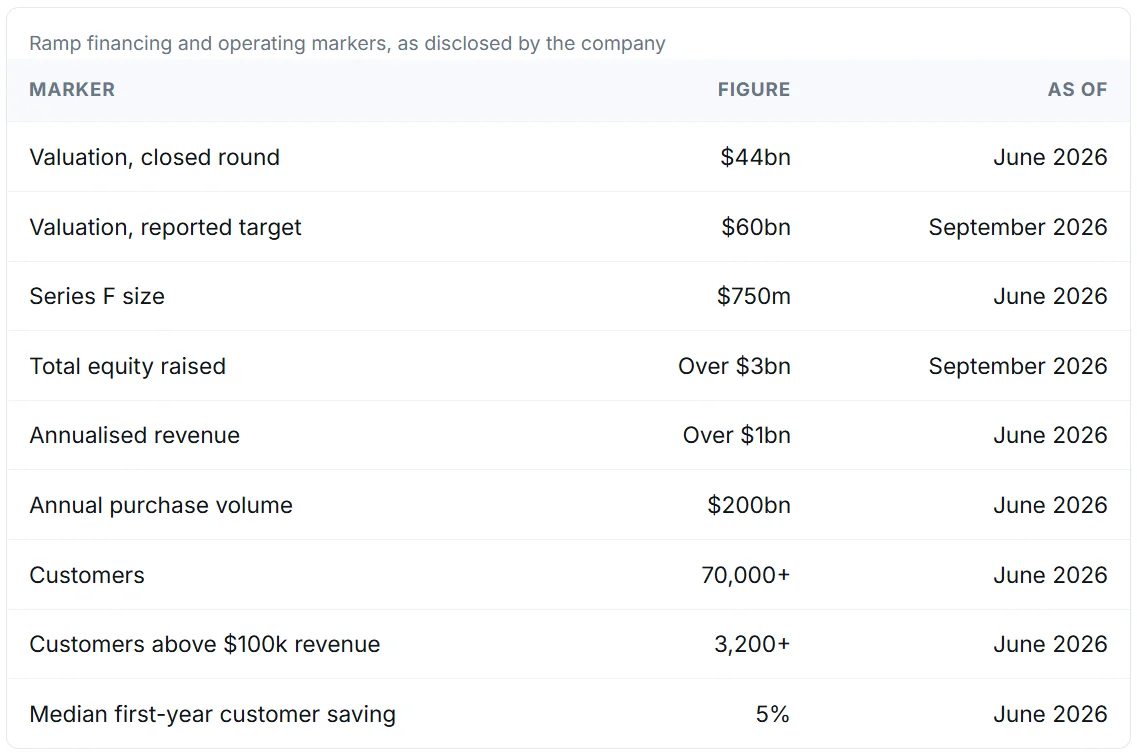
The company reported annualised revenue above $1 billion and positive free cash flow in June.
Ramp serves more than 70,000 businesses and handles roughly $200 billion of annual purchase volume.
A $60 billion mark would imply close to 60 times the revenue figure Ramp last disclosed.

Ramp is back in the market barely three months after its last raise. The finance software group wants roughly $1 billion in fresh primary capital. Moreover, it is targeting a valuation near $60 billion.
Bloomberg first reported the talks on 8 September. Discussions remain early, so terms could still shift. However, the target itself signals how fast private capital is repricing this company.
The valuation ladder keeps climbing
Speed defines this story more than size. Few private firms reprice twice inside a year. Ramp has now done so three times since late 2025.
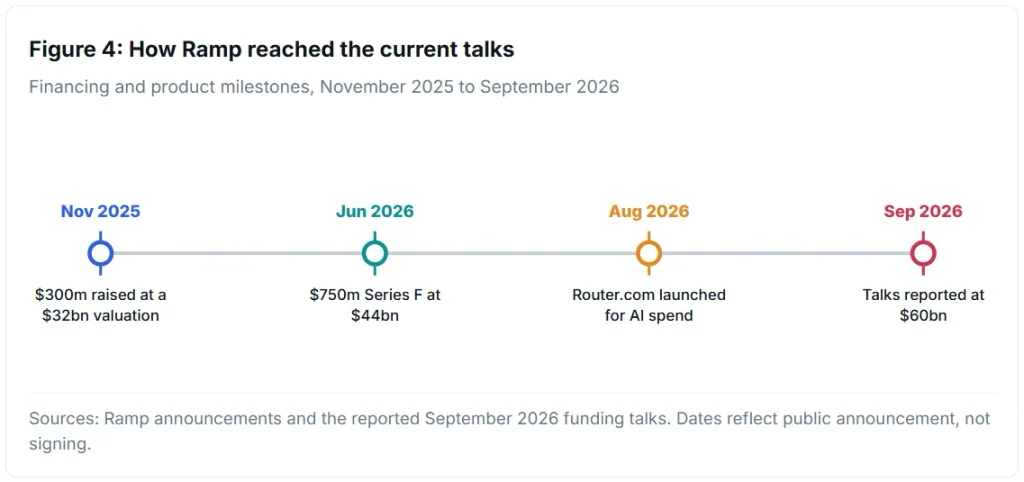
History gives the number context. Ramp closed $300 million at a $32 billion valuation in November 2025. Seven months later it agreed a far larger round.
That Series F brought in $750 million at $44 billion. ICONIQ, GIC and Ontario Teachers’ Pension Plan co-led the deal, Ramp said in its June announcement. Goldman Sachs Alternatives and Morgan Stanley Investment Management joined as new backers.
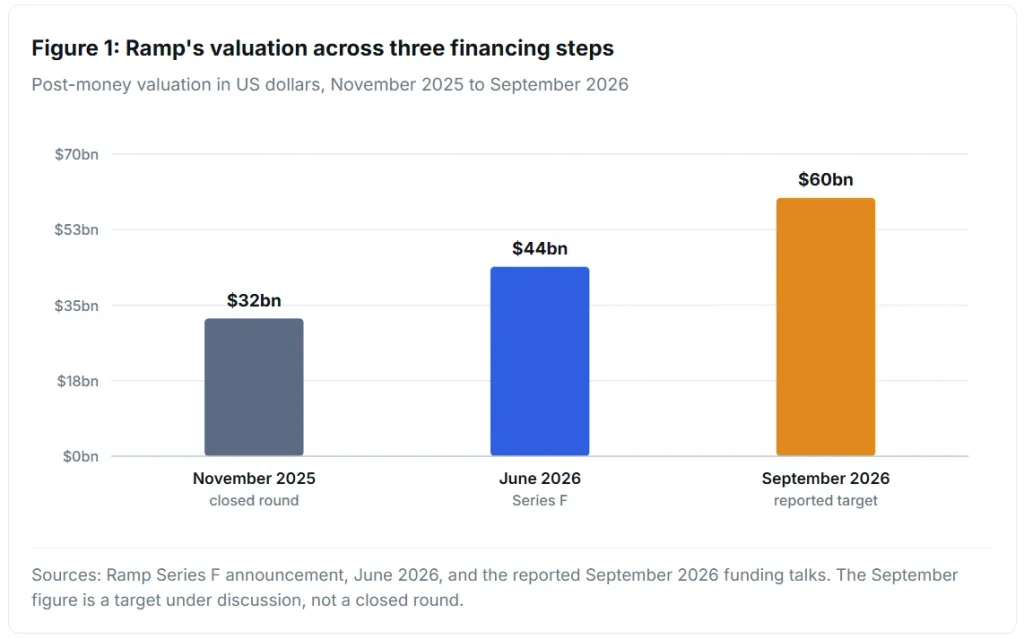
The jump matters for two reasons. First, it lifts the paper value by $16 billion in one quarter. Second, it lands while several fintech peers still trade below their 2021 highs.
Round sizes are growing too
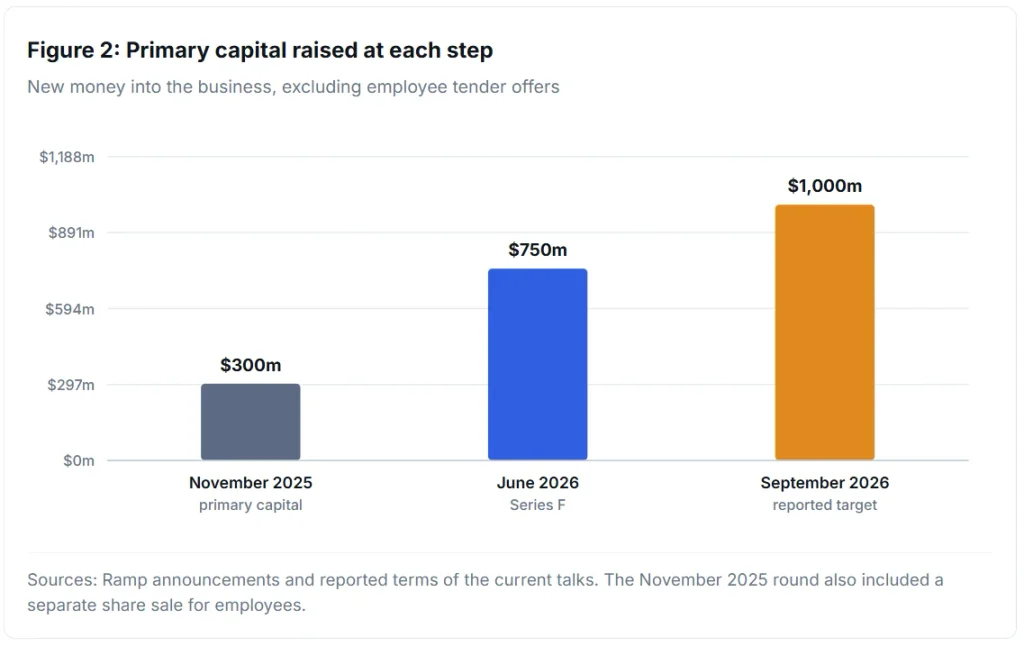
Capital demand rises alongside the price. The November round took $300 million. June brought $750 million. Now the company seeks about $1 billion.
Total equity raised already exceeds $3 billion. Consequently, Ramp holds substantial dry powder for hiring and acquisitions. Furthermore, it says it generates positive free cash flow.
What the business actually earns
Revenue anchors any judgement here. Ramp disclosed annualised revenue above $1 billion in June. It also reported positive free cash flow at that point.
Scale supports that figure. More than 70,000 businesses use the platform. Annual purchase volume runs near $200 billion, and over 3,200 customers each generate above $100,000 of annualised revenue.
Growth looks strong across segments. Enterprise revenue more than doubled year on year. Meanwhile total payment volume rose about 170% in the year to March 2026.
Where the growth is coming from
Card spend built the early business. Ramp then added bill pay, travel and buying tools. Each product raises the share of a client’s outgoings that flows through the platform.
Enterprise clients now drive much of the gain. That group more than doubled its revenue over the year. Furthermore, larger accounts tend to churn less than small ones.
Median customers report real savings too. Ramp says the typical first-year client cuts costs by 5%. It also reports 16% revenue growth for that median customer.
The multiple is the real question
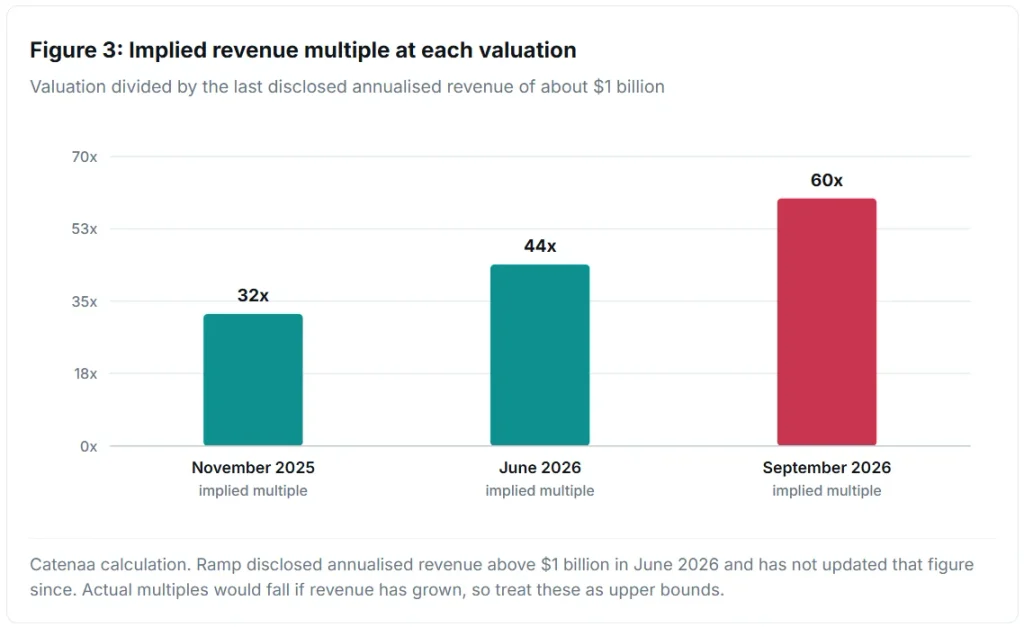
Price discipline deserves scrutiny at this level. A $60 billion valuation implies close to 60 times the last disclosed revenue. The June round implied about 44 times.
Those multiples assume revenue stayed near $1 billion. In practice it has probably grown since June. Therefore the true forward multiple may sit lower than the headline suggests.
Timing adds to the debate. Only three months separate the two prices. Such a gap rarely allows fundamentals to shift much, so sentiment carries part of the move.
Why investors keep paying up
Ramp sells software that watches company spending. Cards, bills, travel and procurement all sit in one system. Hence the platform sees transaction data that banks rarely aggregate.
Artificial intelligence has sharpened that pitch. Ramp argued in June that model costs collapse quickly. GPT-4 level intelligence fell from about $60 per million tokens in 2023 to roughly $0.40 in 2026.
The company then built a product around that shift. Router.com steers workloads to cheaper models. Early customers cut artificial intelligence bills by about 40% on average.
Listing talk follows naturally at this size. Ramp has announced no plan to go public. Nevertheless, its investor mix now resembles a pre-listing register.
Rivals are not standing still
Competition comes from three directions. Banks sell treasury and card products to the same buyers. Software vendors bundle expense tools into wider suites.
Card networks form the third front. They control the rails and set interchange terms. Consequently, margin pressure can arrive without any loss of customers.
Risks sit on both sides
Late-stage marks can move fast in both directions. A cooling in private credit or venture funding would hurt. Additionally, banks and card networks are building rival tools.
Institutional money still looks willing, though. Ontario Teachers’ Pension Plan joined the June round, the fund confirmed on its own site. Such investors usually hold positions for years.
Private marks also track comparable public multiples. A sharp fall in listed software prices would reset the debate. Still, investors have absorbed several such shocks since 2022.
Employee liquidity often rides alongside these rounds. The November deal paired new capital with a staff share sale. Whether the current talks include one remains unclear.
What to watch next
Three signals will show whether $60 billion sticks. First, watch for an updated revenue figure at closing. Second, check whether the round includes an employee share sale.
Third, follow the investor list. Sovereign funds and crossover managers often precede a public listing. In short, the price tells one story, and the register tells another.