

August 31, 2026 – Two multilateral lenders are being drafted at once. Britain has told Parliament it will not join the Canadian-led project, and both target 2027.
In Summary
NATO allies pledged 5% of GDP on defence and resilience by 2035 at The Hague.
Alliance core defence spending is set to reach $1.81 trillion in 2026.
Eight countries joined Canada’s Defence, Security and Resilience Bank in July.
Britain told the Lords it has no plans to join, backing a rival mechanism instead.
The UK allocated £400 million to its Multilateral Defence Mechanism.
Brussels found that 40% of defence SMEs struggle to raise finance.
Europe wants to rearm fast. But paying for it has proved harder than promising it. Two rival lenders are now being drafted at once.
Neither exists yet. Yet both aim to open in 2027. Meanwhile, the states behind them have begun to pick sides.
The pledge that created the problem
Allies raised the bar sharply last year. The Hague Declaration set a goal of 5% of GDP per year by 2035. It splits into 3.5% for core defence and up to 1.5% for resilience. Also, allies agreed to review the path in 2029.
Spending has already jumped. European allies and Canada lifted core outlays by more than 19% in 2025. In cash terms, that is about $139bn.
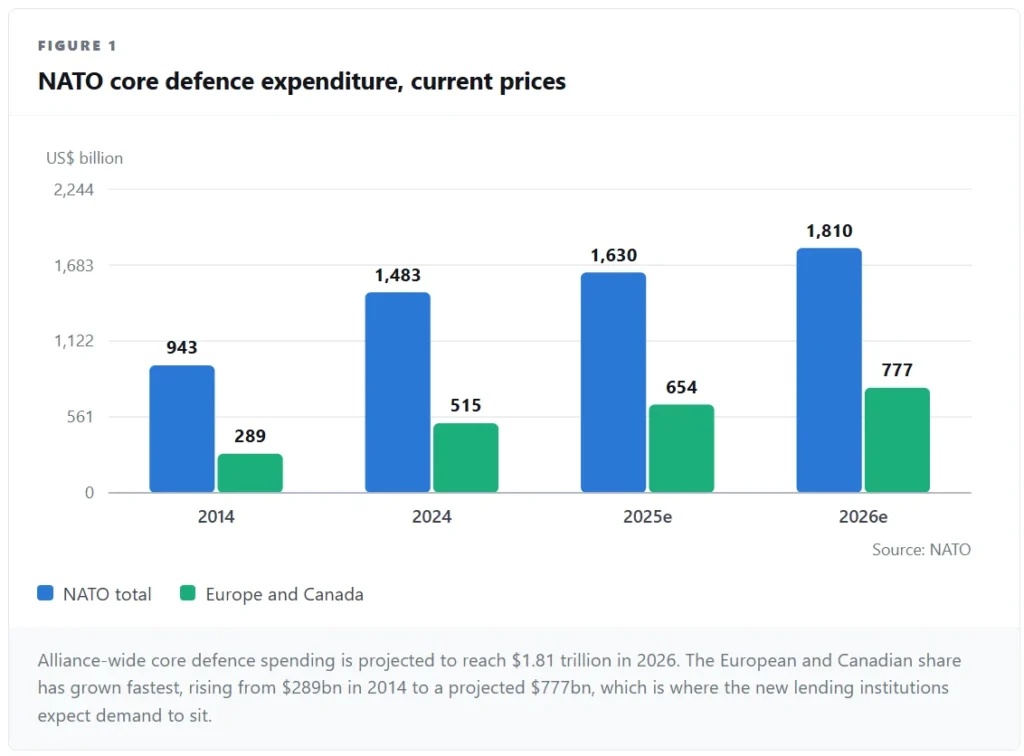
Progress is uneven, though. Only five allies should reach the 3.5% core mark in 2026. They are Lithuania, Estonia, Latvia, Poland, and Greece.
Yet the gap is the point. Budgets cannot rise fast enough on tax alone. So states want to borrow against the pledge instead.
Canada’s candidate
Canada’s plan would be owned by the states alone. Its design copies development banks. Members pay in 20% of capital and pledge the other 80% on call.
Leverage is the aim. Backers want each unit of paid-in capital to support five to eight units of lending. A AAA rating would make that borrowing cheap. However, the bank needs broad membership to earn one.
Momentum came in July. Eight states signed up at the Ankara summit. They are Albania, Belgium, Greece, Latvia, Luxembourg, Romania, Türkiye, and Ukraine. Montreal will host the head office. Officials finalised the articles there in April.
Britain’s alternative
London said no. Instead, it set up the Multilateral Defence Mechanism with the Netherlands, Finland, and Poland. The four announced it on 6 July.
However, the refusal was blunt. A peer asked in the Lords whether Britain would join the rival bank. The Treasury replied that “we have no current plans to join”.
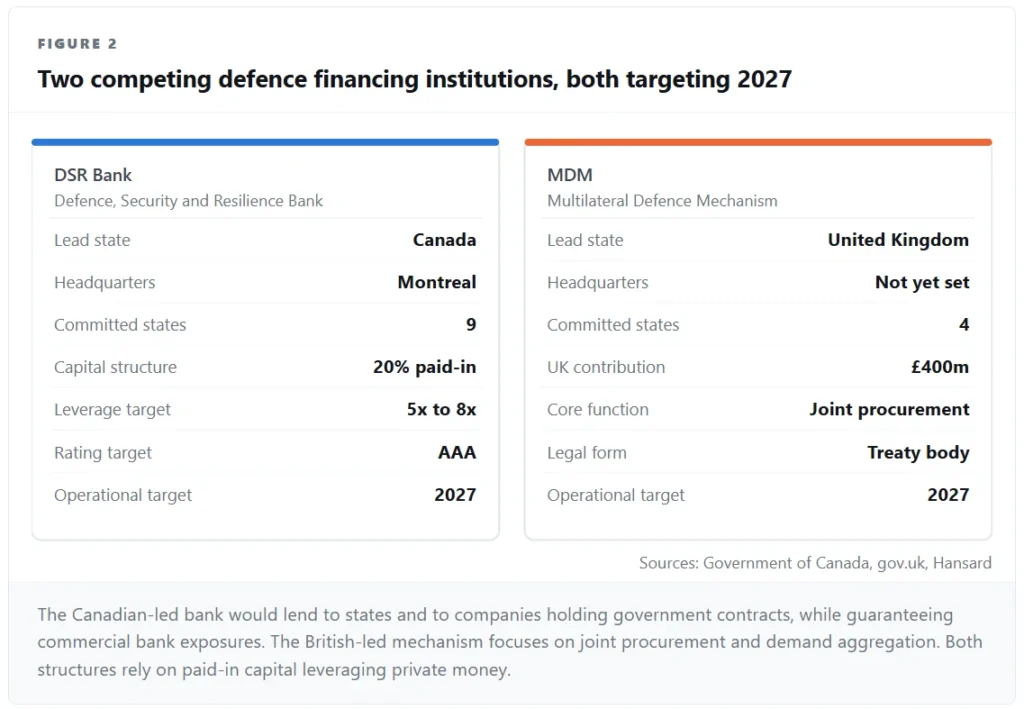
Britain has backed its choice with cash. It put £400 million into the mechanism, inside a wider £15bn uplift. Yet both bodies chase the same pool of state capital.
Also, the two do slightly different jobs. The Canadian bank would lend and guarantee. The British one would pool orders and buy together. So they overlap without matching.
Why banks step back from defence
Notably, the funding gap is measured rather than guessed. A European Commission study drew on more than 160 replies from the sector.
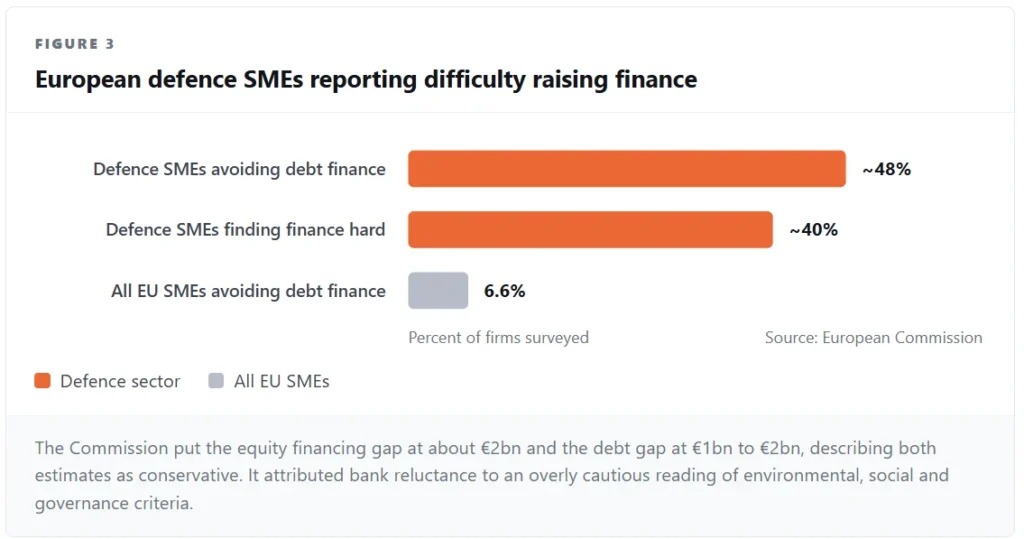
It found that about 40% of defence SMEs called finance hard or very hard to get. Nearly half did not even try for debt. Across all EU small firms, that figure is 6.6%.
Brussels blamed an “overly stringent and cautious interpretation” of ESG rules. British researchers disagree, though. They point to bank compliance policy rather than ESG itself. Either way, the money is hard to find.
Existing tools fall short
Still, the European Union has not sat still. Its SAFE scheme lends €150bn to member states. By April 2026, 18 countries had been approved. Canada won participation rights in June.
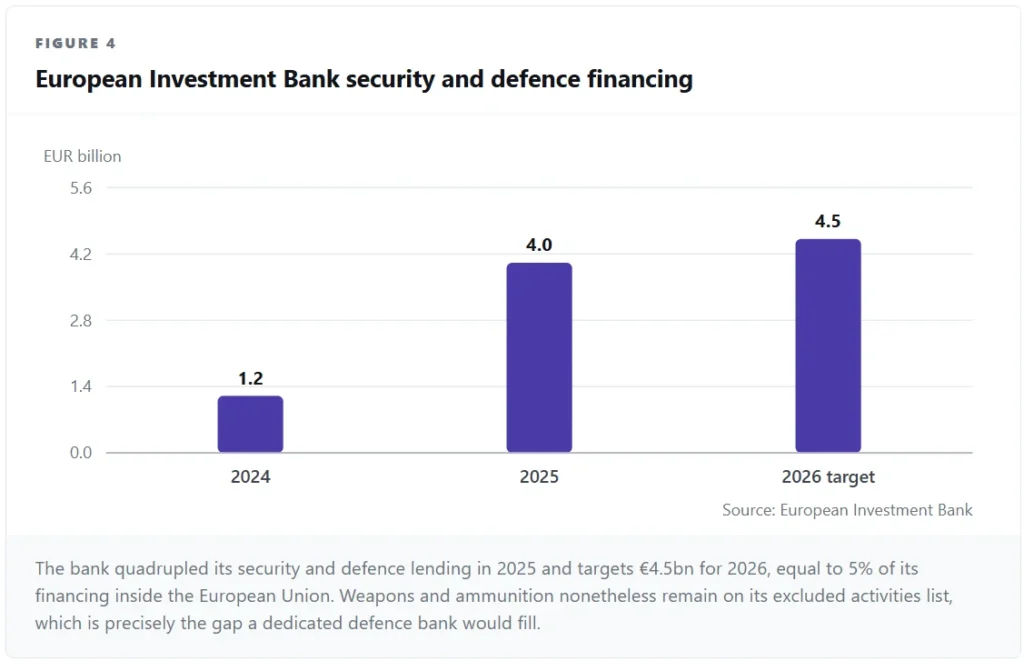
Moreover, the European Investment Bank has moved. It quadrupled security and defence lending to more than €4bn in 2025. Its 2026 target is €4.5bn. That equals 5% of its lending inside the bloc.
One exclusion still stands out. Weapons and ammunition remain on the bank’s banned list. So the very items in short supply cannot be funded there.
That gap explains the appetite for something new. Current lenders back mobility, cyber, and dual-use kit. Yet they stop at the shell and the missile. Therefore, a dedicated lender still has a job to do.
The case for merging
Analysts at the Royal United Services Institute say the two should join forces. Otherwise, they will compete for the same members and money.
Industry is not waiting, meanwhile. Rheinmetall reported an order book of €80.5bn at the end of June, up from €56.0bn. BAE Systems reported £84.0bn. Both figures set records.
Orders are arriving faster than the finance behind them. Therefore, the race matters. Whichever body opens first will set the terms for the rest. Members will be reluctant to fund two.