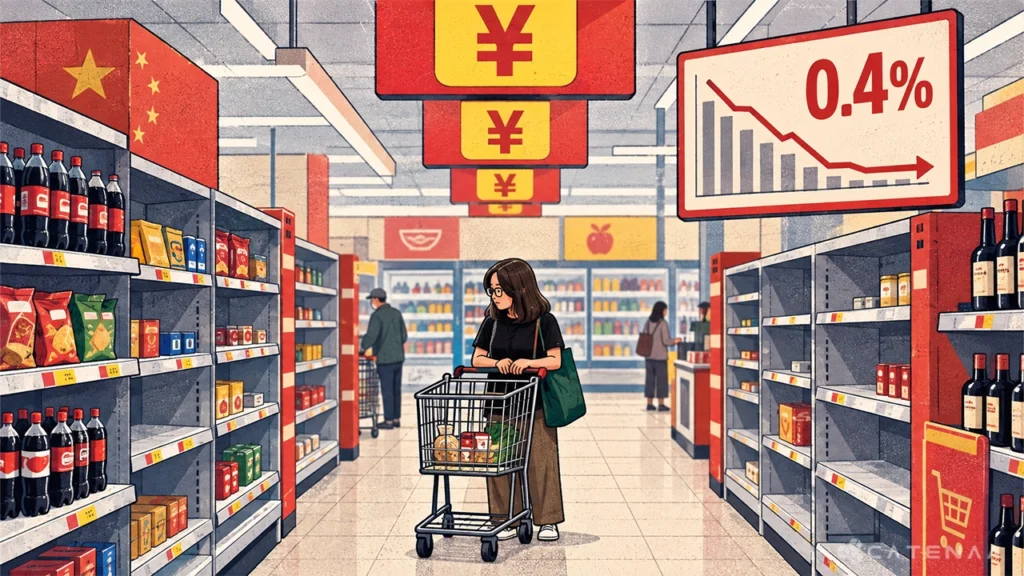


September 17, 2026 – Factory output beat July’s pace and exports jumped almost 19%, but shoppers pulled back and investment fell at its fastest rate this year.

In Summary
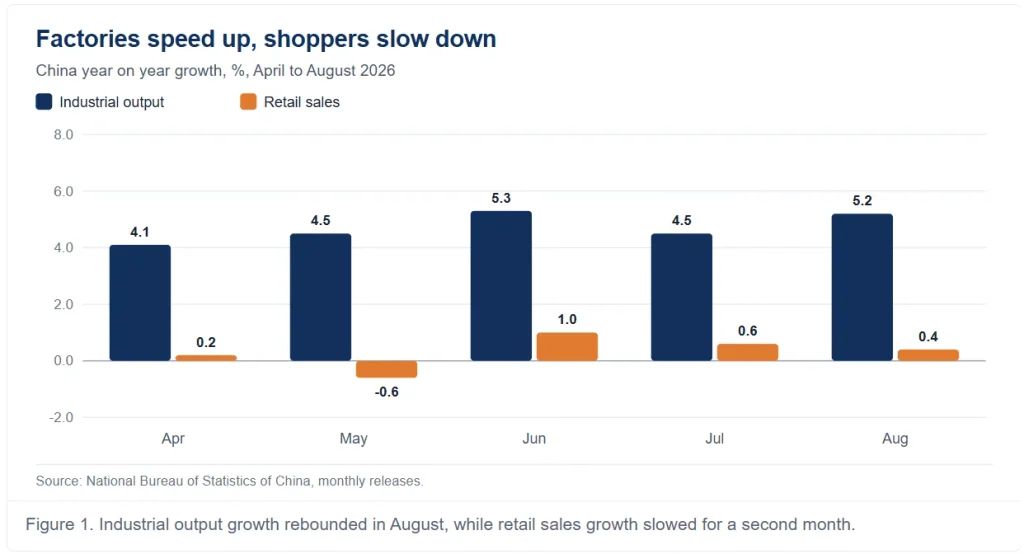
China retail sales grew only 0.4% in August, down from 0.6% in July.
Industrial output accelerated to 5.2%, led by high-tech manufacturing.
Exports rose 18.6% in yuan terms, and imports climbed 21.7%.
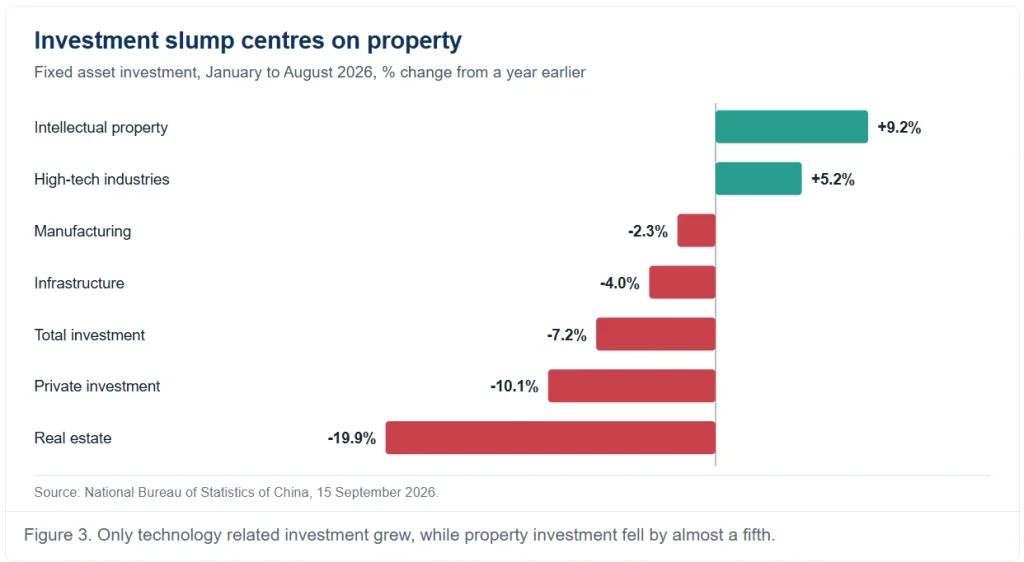
Fixed asset investment fell 7.2% in eight months, with property down 19.9%.
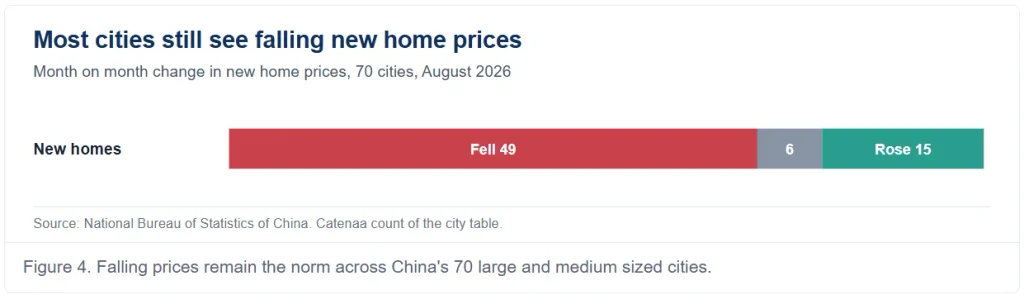
New home prices fell month on month in 49 of 70 cities.
China retail sales grew just 0.4% in August from a year earlier, the weakest pace in three months. At the same time, factory output accelerated, and exports boomed. The split shows an economy that still leans on production while households hold back.
The figures, released on 15 September, also revealed a deeper slump in investment. Property remains the biggest drag, and most cities still report falling new home prices. Even so, the statistics bureau described the economy as steady overall.
China retail sales lose steam
According to the National Bureau of Statistics, retail sales of consumer goods reached 3,982.4 billion yuan in August. That is a gain of only 0.4% on the year. On a monthly basis, sales dipped 0.13%.
The slowdown follows growth of 1.0% in June and 0.6% in July, based on the July release. Urban sales rose only 0.2%, while rural sales grew 1.6%. Meanwhile, catering income rose 1.1%, and goods sales gained 0.3%.
Some categories still grew fast. Sales of communication equipment jumped 27.3%, while beverages rose 4.9%. However, those bright spots could not lift the overall total.
Online spending held up better. Online retail sales of goods and services rose 4.6% over the first eight months. Across the same period, consumer goods sales grew 1.1%.
Factories and exporters carry the load
Industrial value added rose 5.2% from a year earlier, up from 4.5% in July. Manufacturing grew 6.1%, while mining output fell 1.4%. Over the first eight months, industry expanded 5.3%.
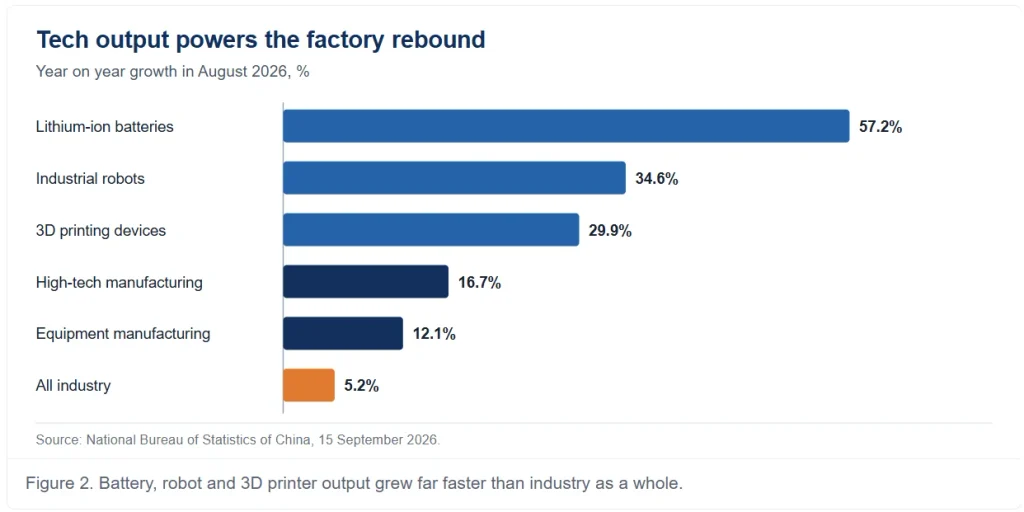
High technology led the gains. Output of lithium-ion batteries surged 57.2%, and industrial robot production climbed 34.6%. Similarly, high-tech manufacturing grew 16.7%, more than three times the industry average.
Services also grew steadily. The services production index rose 4.1% in August. Information technology services grew 9.6%, while leasing and business services rose 9.0%.
Trade added more support. Total goods trade rose 19.8% to 4,645.5 billion yuan in August. Exports climbed 18.6%, while imports jumped 21.7%. Over eight months, exports have risen 14.6%. Therefore, external demand remains a key pillar for growth.
Investment slump deepens
Fixed asset investment fell 7.2% in the first eight months to 29,309.2 billion yuan. That compares with a 5.7% drop over the first half of the year. In other words, the decline keeps getting worse.
Real estate explains much of the damage. Property development investment sank 19.9%, and new home sales fell 13.0% by value. Private investment also dropped 10.1%. Even so, spending on intellectual property products rose 9.2%.
The weakness now reaches beyond housing. Infrastructure investment fell 4.0%, and manufacturing investment slipped 2.3%. Excluding property, total investment still dropped 4.2%.
Home prices keep sliding
The 70 city price survey offers little relief. New home prices fell month on month in 49 cities, based on a Catenaa count of the official table. Six cities held flat, while 15 posted gains.
Shanghai stood out, with prices up 0.4% on the month and 3.0% on the year. By contrast, Beijing prices slipped 0.2% on the month and 2.3% on the year.
Sales volumes point the same way. The floor space of new homes sold fell 12.1% in eight months. However, second-hand home transactions rose 10.6% by floor space, as buyers turned to cheaper existing homes.
Prices and jobs send mixed signals
Consumer prices rose 0.8% in August, while core inflation reached 1.0%. Producer prices climbed 3.8%, the fastest pace this year, as input costs rose. Meanwhile, the urban jobless rate edged up to 5.3% from 5.2%. Over the first eight months, consumer prices rose just 0.9%.
Rising factory prices can lift industrial profits. Yet they also squeeze households whose incomes have not kept pace. That tension helps explain why shoppers remain cautious.
What it means for markets
The data raise pressure on Beijing to support consumers directly. Weak spending and a shrinking property sector limit domestic demand. As a result, analysts may look for new stimulus steps before the year ends.
For global investors, the data send two signals. Strong exports and tech output support Asian supply chains and commodity demand. On the other hand, soft household spending clouds the outlook for consumer brands that sell into China.
Commodity exporters may take some comfort. Imports have grown 22.0% over the first eight months. That points to firm demand for raw materials and components, even as local shoppers stay careful.