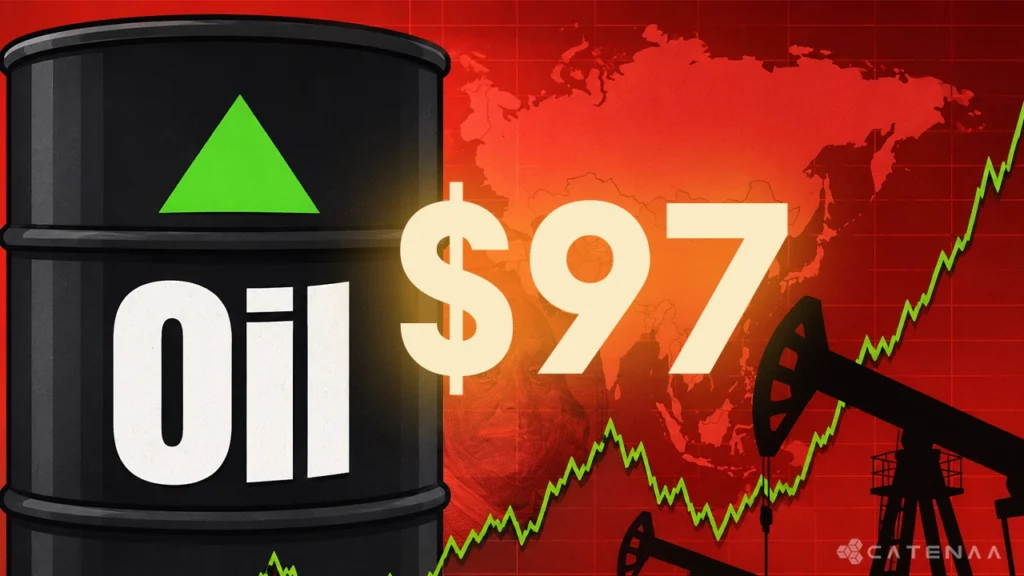


July 25, 2026 – Brent ended July 24 at $96.78 after a volatile week. Asia still has buffers, but importers face sharper inflation and currency pressure.
Oil volatility raises the regional stakes
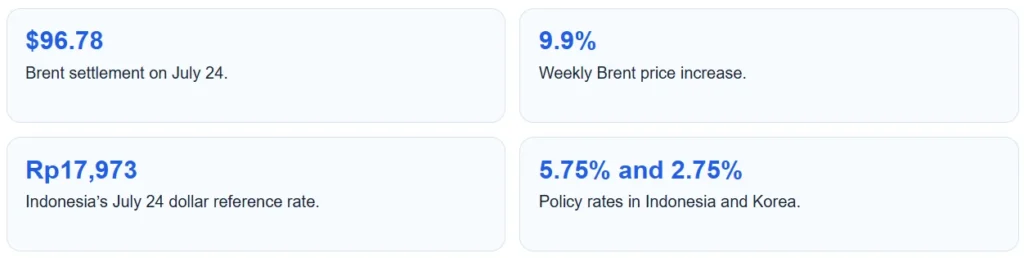
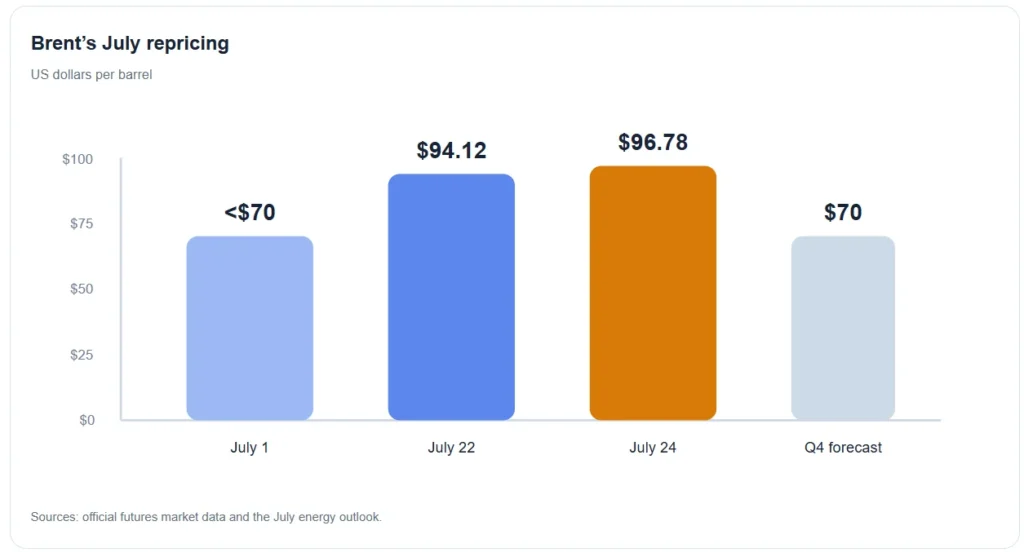
The Asia FX oil shock intensified during the final trading week of July. Front-month Brent settled at $96.78 on July 24.
The contract gained 9.9% during the week. It also traded above $100 before diplomatic signals reduced the risk premium.
That price remains above the energy agency’s fourth quarter forecast of $70. The gap equals $26.78 per barrel, or 38%.
Brent also traded below $70 on July 1. Therefore, Asian importers face a much larger dollar bill within one month.
Refiners must buy more dollars for each shipment.
Governments can absorb part of the increase through subsidies. However, that choice raises fiscal costs and delays price adjustments.
Central banks face another trade-off. Higher rates can support currencies, but they also weaken credit demand and household spending.
Why Asia still looks more resilient
The region enters this shock with stronger external buffers than during earlier currency crises.
The latest regional outlook expects Asia to grow 4.3% in 2026. However, it warns that energy costs will widen trade gaps.
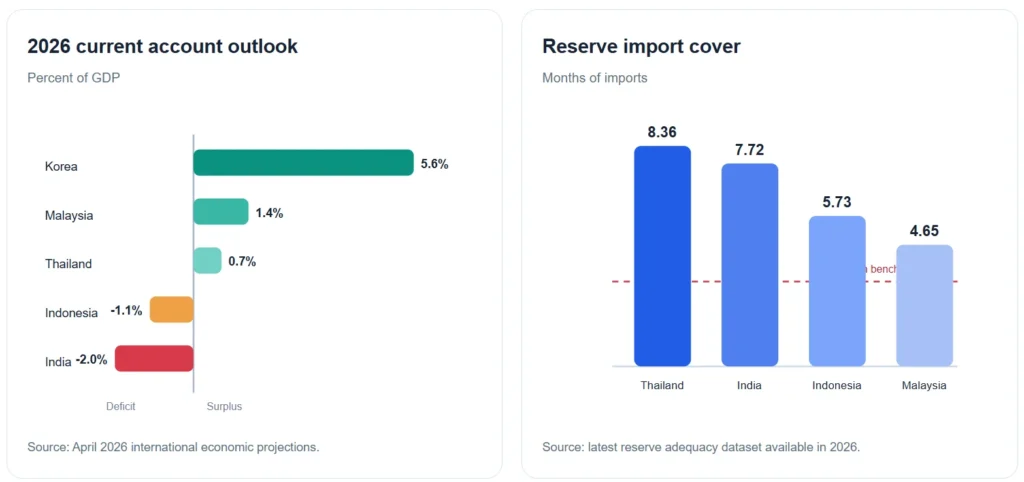
Current account positions show why the impact will differ. Korea is projected to record a 5.6% surplus during 2026.
Malaysia’s projected surplus equals 1.4%, while Thailand records 0.7%. Indonesia posts a 1.1% deficit, and India posts 2.0%.
Surplus economies can finance larger oil bills through export income. Deficit economies depend more heavily on capital inflows and reserves.
Reserve coverage also remains meaningful. Thailand holds 8.36 months of imports, while India holds 7.72 months.
Indonesia holds 5.73 months, while Malaysia holds 4.65 months. Each figure exceeds the common three-month benchmark.
These reserves give central banks time to smooth disorderly trading. Still, persistent intervention can reduce confidence when reserves fall quickly.
Indonesia provides the clearest live test
Indonesia combines a current account deficit with high energy sensitivity. Yet recent data still point to controlled pressure.
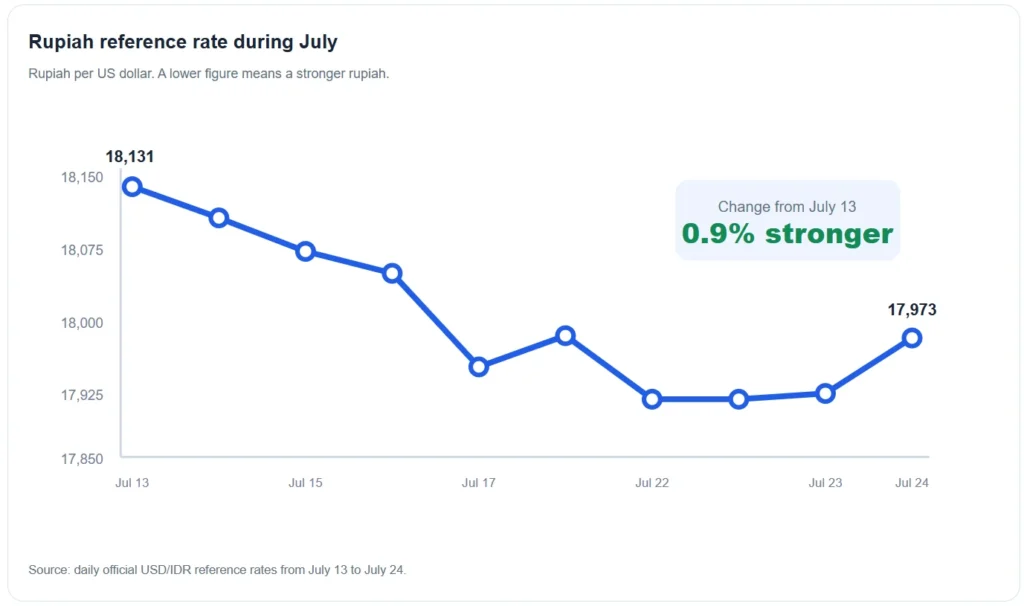
The official reference rate closed at Rp17,973 per dollar on July 24. It stood at Rp18,131 on July 13.
Therefore, the rupiah strengthened by about 0.9% across those dates. Daily moves remained volatile, but selling stayed orderly.
Bank Indonesia held its policy rate at 5.75% on July 22.
Those reserves covered about 5.4 months of imports and government debt payments. Consumer inflation reached 3.34% in June.
The inflation target remains 2.5%, with a one percentage point tolerance band. Current inflation sits near the upper limit.
Another fuel adjustment could push inflation beyond that range. Subsidies could prevent the move, but fiscal costs would rise.
Korea chooses a firmer response
Korea’s central bank raised its base rate by 25 basis points on July 16. The new rate stands at 2.75%.
Officials cited stronger exports, persistent inflation, and financial stability risks. They also highlighted elevated exchange rate volatility.
Korea has more protection than many importers. Its surplus and semiconductor exports support foreign currency earnings.
However, policy tightening shows that strong buffers do not make oil inflation harmless. Central banks must still protect price expectations.
What investors should monitor next
First, watch Brent’s duration above $95. A brief spike hurts margins, but a quarterly average would change policy paths.
Second, monitor reserve depletion. Stable reserves support the manageable shock argument, while rapid losses would weaken it.
Third, track fuel subsidies and administered prices. These policies decide whether the shock hits budgets or consumers first.
Finally, watch local bond flows. Foreign selling can create dollar demand beyond the direct cost of energy imports.
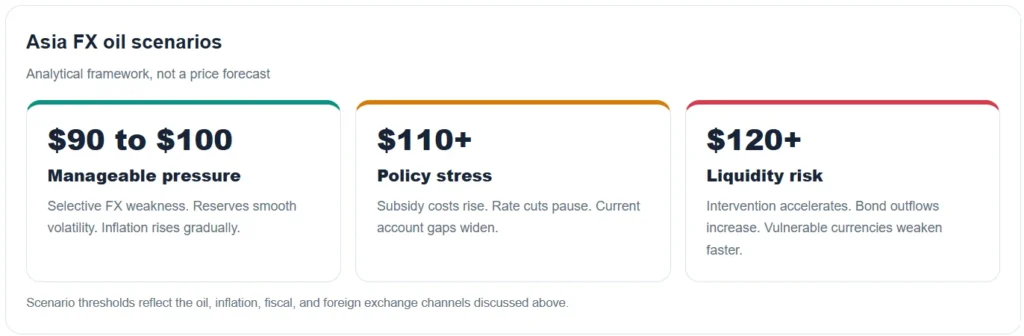
The base case remains selective currency weakness, not a regional crisis. Exporters and current account surplus economies should perform better.
However, oil above $110 for a full quarter would create a tougher scenario. Inflation, deficits, and hedging demand would rise together.
Asia has stronger defences than before. The margin for policy error is narrowing.