

August 02, 2026 – Power deals quietly outweighed the AI headline last week. Once the unconfirmed $5 billion is set aside, electricity takes most of the money.

In Summary
Three power rounds pulled in $1.92 billion across a single week.
Nvidia never confirmed the reported $5 billion figure for Safe Superintelligence.
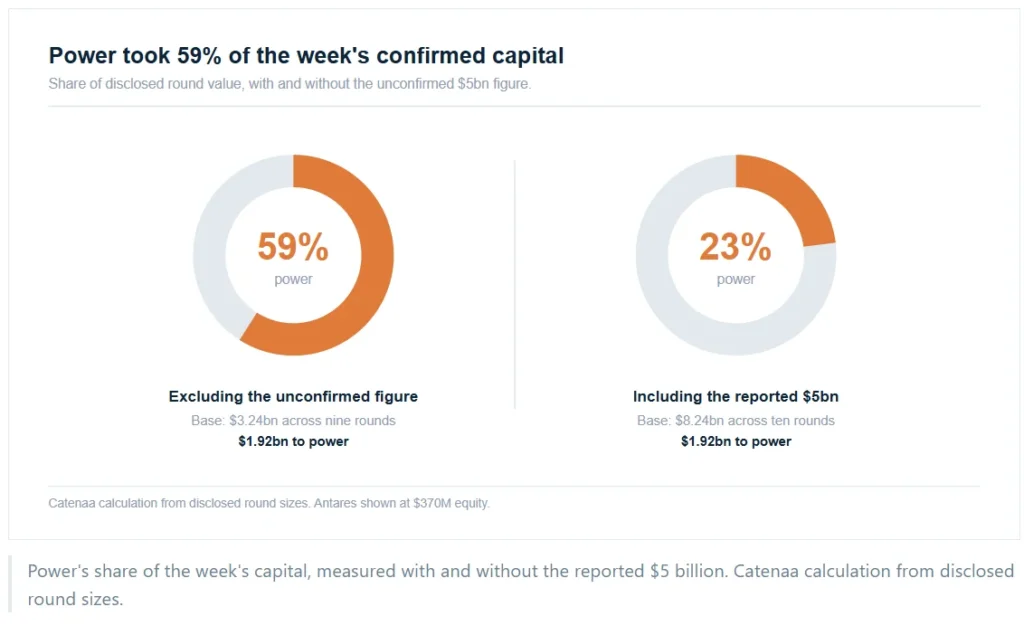
Strip that number out, and power took about 59% of confirmed capital.
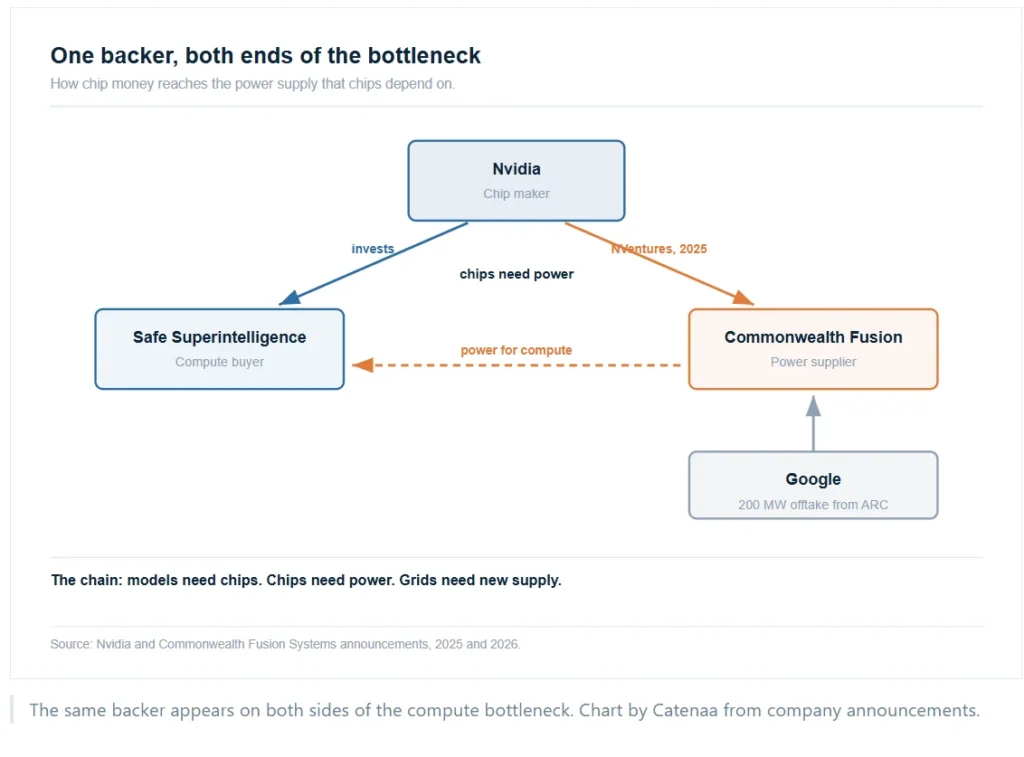
Nvidia backs both the AI lab and, through NVentures, a fusion developer.
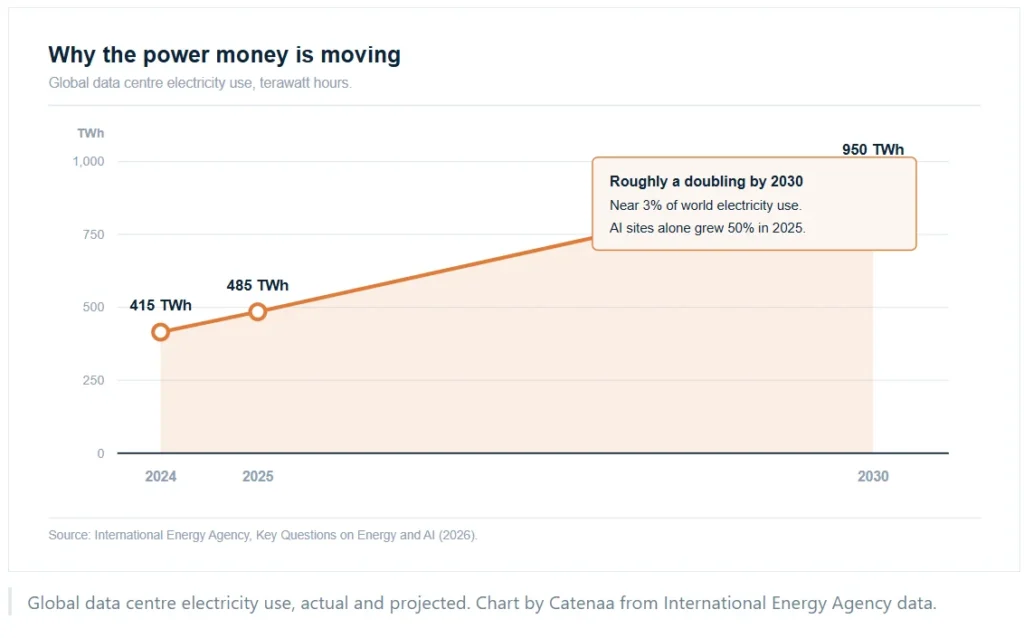
The IEA projects data centre power use to reach nearly 950 TWh by 2030.
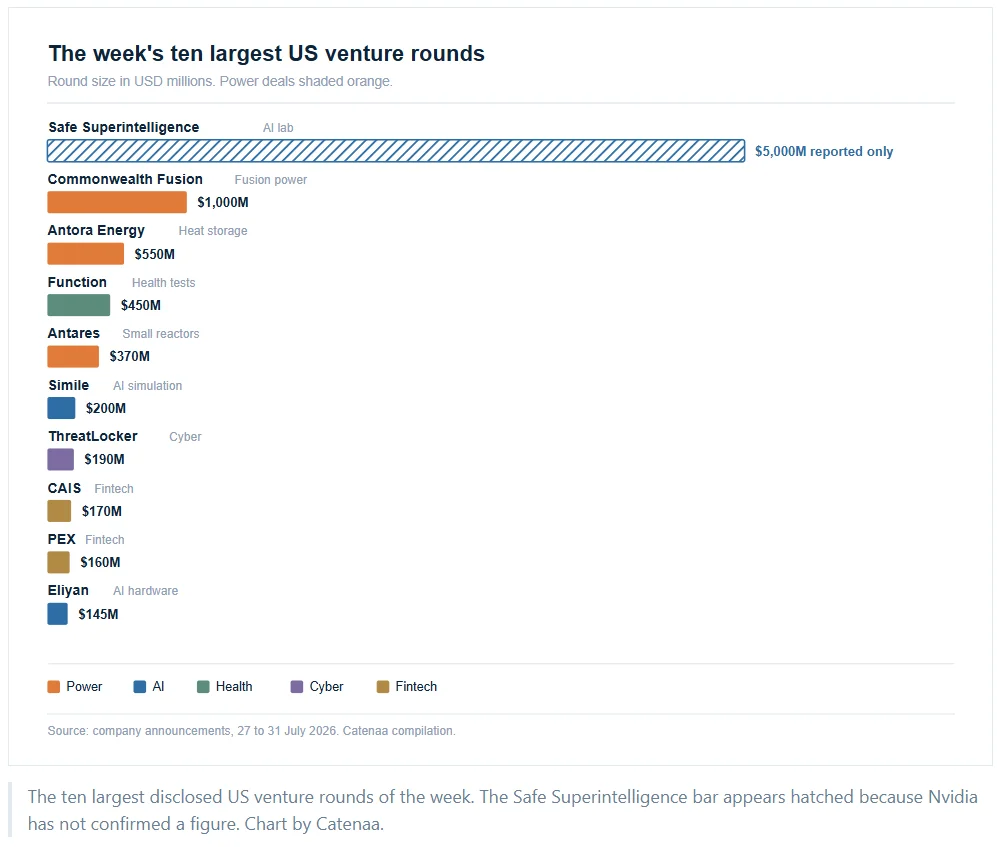
AI energy funding took over the latest week of United States venture deals. Three power deals pulled in $1.92 billion. Yet the loudest headline went to an AI lab. Safe Superintelligence, or SSI, was said to land $5 billion from Nvidia. But Nvidia never confirmed that number. Its own release names no dollar figure at all. So the only proven capital last week went mostly into power. That one gap reframes the whole deal table.
Why AI Energy Funding Now Leads
Strip out the $5 billion. Then the ranking looks very different. The other nine rounds add up to $3.24 billion. Also, power names took $1.92 billion of that sum. In short, they won about 59% of the proven money. Catenaa worked out that share from the round sizes.
Commonwealth Fusion Systems led with $1 billion. Indeed, the firm confirmed its raise on 30 July. Now its total funding stands at $4 billion. Staff put that at about 30% of all fusion money raised. Backers here include pension funds, state funds and factory groups. Yet the firm named no price tag.
Antora Energy came next with a $550 million Series C. G2 Venture Partners and Eclipse co-led the round. Antora stores cheap power as heat in solid carbon blocks. Its units then give back heat, or power, all day. Ribbit Capital, Salesforce Ventures and John Doerr also joined.
Antares closed $470 million for small nuclear reactors. Of that, $370 million came as equity and $100 million as debt. In turn, Paradigm and Caffeinated Capital co-led the deal. Weeks before, its Mark-0 reactor went critical at Idaho National Laboratory. No private non-light-water reactor had done so in four decades.
Nvidia Sits At Both Ends
Nvidia backs the AI lab. Equally, Nvidia backs the power supply. NVentures, its venture arm, joined Commonwealth Fusion in August 2025. That round raised $863 million. So one chip maker now sits on both sides of one bottleneck.
The logic runs simply. Models need chips. Chips need power. Grids need new supply. Thus capital chases each link in the chain.
Google walks a similar path. It agreed to take 200 MW from the first ARC plant. That plant aims for 400 MW in all. In other words, one buyer took half the output before the build ended.
The Power Math Behind The Deals
Numbers from the International Energy Agency explain the rush. Data centre power use hit 485 TWh in 2025. Also, the IEA sees about 950 TWh by 2030. Such a jump would be near 3% of world power use.
Growth already shows up. Data centre demand rose 17% in 2025. Meanwhile, AI sites surged 50% that same year. Further, server power density rose elevenfold from 2020 to 2025.
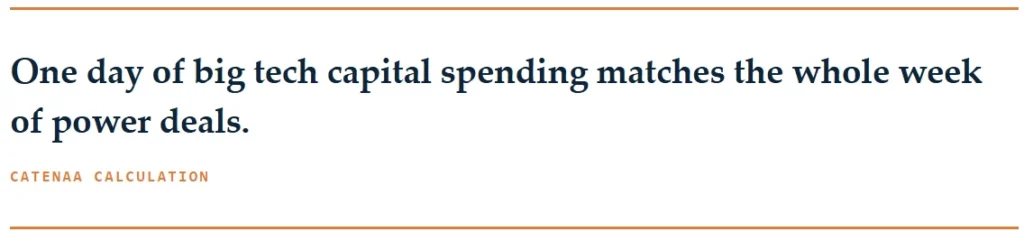
Spending tells the same story. Big tech capex passed $400 billion in 2025. Plus, the IEA sees a further 75% jump this year. That points to about $700 billion in 2026. Five tech firms now outspend the world on oil and gas supply.
Here the scale turns stark. Split $700 billion across 365 days. The daily figure lands near $1.92 billion. So one day of big tech capex matches the whole week of power deals. Catenaa drew that link from the IEA data.
Bottlenecks Now Set The Pace
Hard limits shape where the cash lands. AI racks swing load by half within one second. Thus storage turns into a must, not a nice extra. The IEA sees 20 to 25 GW of data centre batteries by 2030. Gas turbine orders also leapt 70% in 2025.
Supply still lags demand, however. The IEA says AI factory space more than tripled in 18 months. A squeeze on fast memory began six months ago. That crunch may run through 2027. So chips alone will not set the pace.
Demand keeps climbing all the same. Top model firms report triple the active users this year. Also, their revenue rose fivefold in the same span. Onsite gas may power 15 to 27 GW of sites by 2030.
Where The Risk Sits
Milestones now matter more than price tags. Commonwealth Fusion aims for net energy gain from SPARC in 2027. Antares plans power from a new reactor that same year. It also aims to reach army bases by 2028.
Risk stays high, though. Fusion has never sold grid power. Likewise, small private reactors stay unproven at scale. Antora looks nearer term, since heat storage uses known parts.
Funding speed also merits a look. Antares passed $600 million in three years. By contrast, Commonwealth took about a decade to reach $4 billion. Neither firm gave a value this time.
Other fields still drew real cash. For example, Function raised $450 million for home health tests. Simile took $200 million at a $2 billion value. ThreatLocker added $190 million in a cyber Series F. CAIS and PEX won $330 million between them in fintech.
Site choice matters as well. Antora runs a large heat store at a plant in South Dakota. Similarly, Antares works from bases in California, Idaho and South Carolina. Commonwealth builds SPARC at Devens in Massachusetts. Its ARC plant will rise in Chesterfield County, Virginia. Each site sits near power, land or a buyer.
What To Watch Next
The wider read is clear. Chips gave the AI trade its first act. Power now writes the second. Watch grid links, turbines and fuel, not just model news.
Finally, weigh every soft number with care. Reported sums often shift before filings land. Nvidia stayed quiet on the $5 billion, and that gap matters. Until papers confirm it, treat the headline with care.