

August 27, 2026 – Traders expect a 5.4% move after results. That is the calmest setup in three years of AI earnings.
In Summary
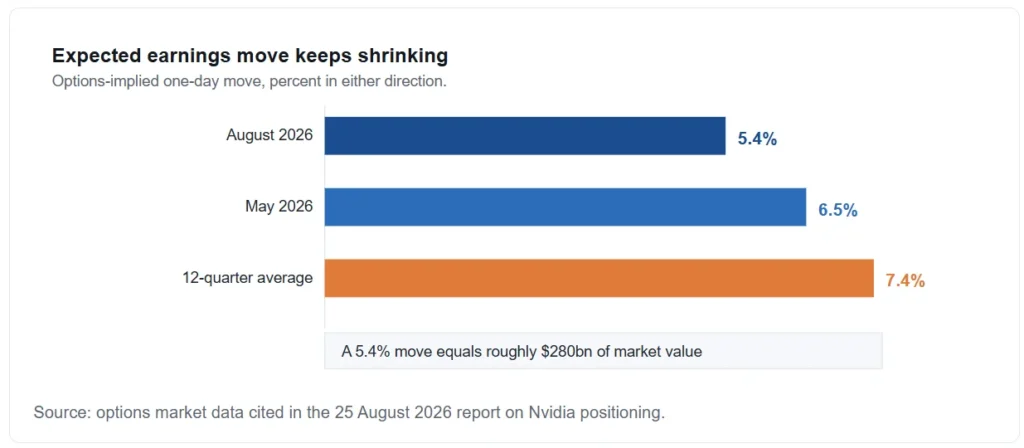
Options imply a 5.4% move in either direction following Nvidia’s report.
That translates into roughly $280 billion in market value.
The implied move sits below the 7.4% average of the past 12 quarters.
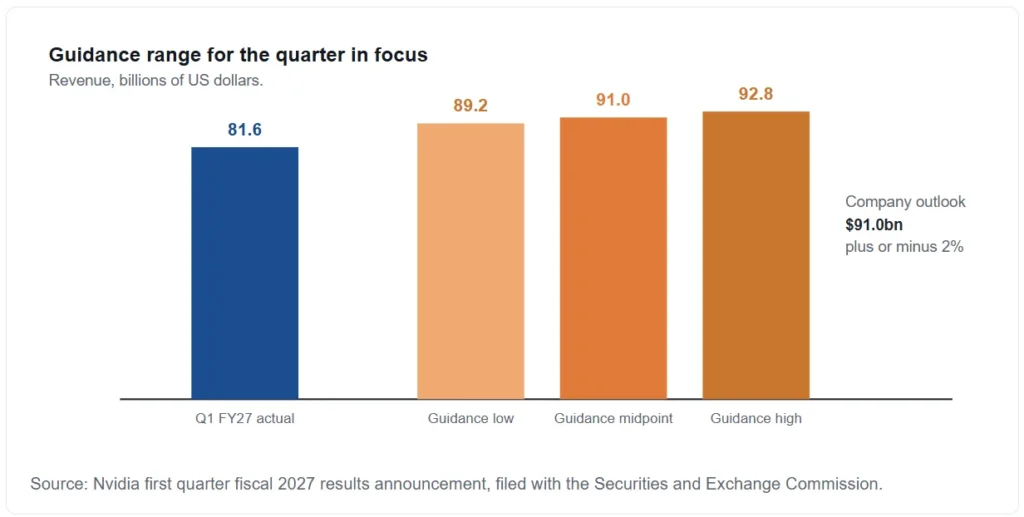
Management guided second-quarter revenue to $91.0 billion, plus or minus 2%.
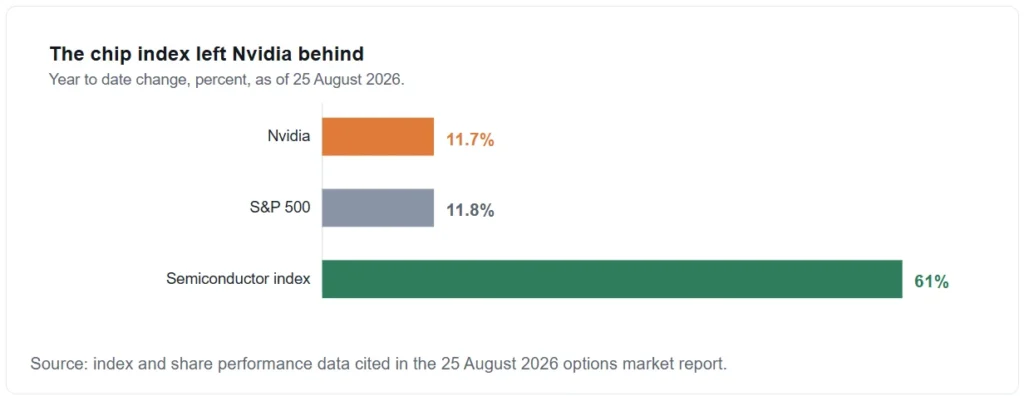
Nvidia shares have gained 11.7% this year, lagging the chip index badly.
A smaller swing on a bigger base
Nvidia reports second-quarter results for fiscal 2027 on 26 August 2026. Options traders expect a 5.4% move in the share price afterwards. On the current valuation, that puts about $280 billion in play. The swing alone would top the whole value of most S&P 500 members.
Yet the number looks tame by Nvidia standards. Before the May report, options priced a 6.5% move. Across the past 12 quarters, the average hit 7.4%. Traders have therefore calmed down even as the dollar stakes grew.
Why traders have grown relaxed
Predictability now drives the pricing. Matt Amberson, who founded options research firm ORATS, put it plainly.

Chris Murphy of Susquehanna made a similar point about the cycle. He argued that the age of constant upside shocks has closed. So demand for hedges has softened in this print.
The numbers investors will judge
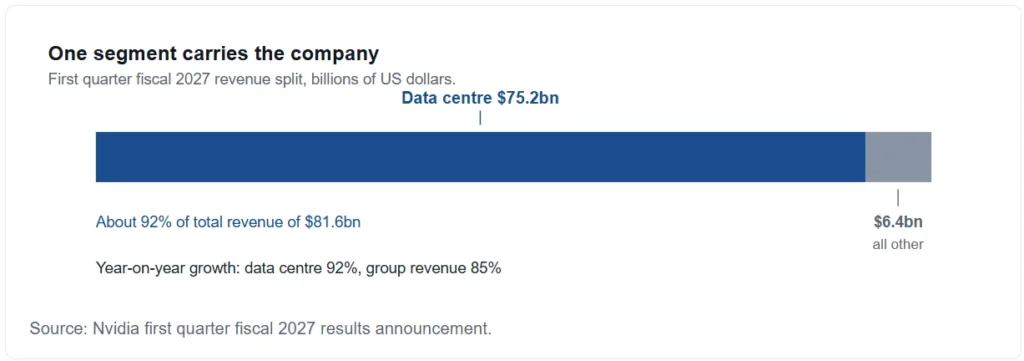
Nvidia set a high bar last quarter. Revenue hit $81.6 billion, up 85% on the year, per the company results filing. Data centre sales alone hit $75.2 billion, up 92%. GAAP earnings came in at $2.39 per diluted share. Gross margin printed at 74.9% on that basis.
Executives then guided second-quarter revenue to $91.0 billion, plus or minus 2%. That range spans $89.2 billion to $92.8 billion. Adjusted gross margin guidance stayed at 75.0%, within 50 basis points.
Concentration cuts both ways
Data centre sales made up about 92% of group sales last quarter. That mix delivers huge growth in an upswing. However, it ties the whole story to a few cloud budgets. Will Sterling of TritonPoint Wealth said returns at those cloud firms matter most.
The share price has lagged its own sector
Nvidia stock has gained 11.7% so far in 2026. Over the same stretch, the S&P 500 has advanced 11.8%. Meanwhile, the Philadelphia Semiconductor Index has surged 61%. In short, the sector rallied while its biggest name stalled.
The stock also fell for seven straight sessions into the print. That drift suggests investors cut risk rather than chase gains.
Positioning tells a quieter story
Volatility sellers have grown bolder around these results. Each in-line quarter lowers the premium buyers will pay. In the past, implied moves ranged between 7.6% and 7.9%. Today’s 5.4% therefore marks a clear shift.
Calm, however, carries its own risk. A real shock would hit an unhedged market. Options that look cheap can suddenly look prescient.
The capital expenditure question
Cloud budgets remain the single biggest swing factor. Investors want proof that AI spending turns into revenue. Otherwise, the order book weakens within a year. Analysts will therefore read every comment on customer deals.
Supply is no longer the hard limit it once was. Demand quality now matters more than shipment counts. So margin comments carry unusual weight this quarter.
Two paths from here
A beat with strong guidance would lift the whole sector. Chip suppliers in Asia would rally in step. A miss would do the reverse. In that case, the 5.4% band could prove far too narrow.
What to watch after the bell
Finally, three variables will decide the reaction. First, the revenue beat against the $91.0 billion midpoint matters. Second, margin guidance signals pricing power and input costs. Third, comments on customer financing will draw scrutiny.
The group has helped anchor more than $500 billion of AI build-out deals. Critics call that circular demand. Backers call it ecosystem building. Either way, the quarterly disclosure will shape sentiment across global chip stocks.
Asian suppliers and European tool makers trade on the same story. A soft outlook would hit them within hours. Even so, options pricing suggests few traders expect drama. That combination has produced sharp surprises before.




