

August 31, 2026 – The Fed chair’s inflation-focused debut sent the dollar higher, stocks lower, and rate hike odds soaring within minutes.
In Summary
Warsh called price stability the Fed’s “predominant focus” during his Jackson Hole debut.
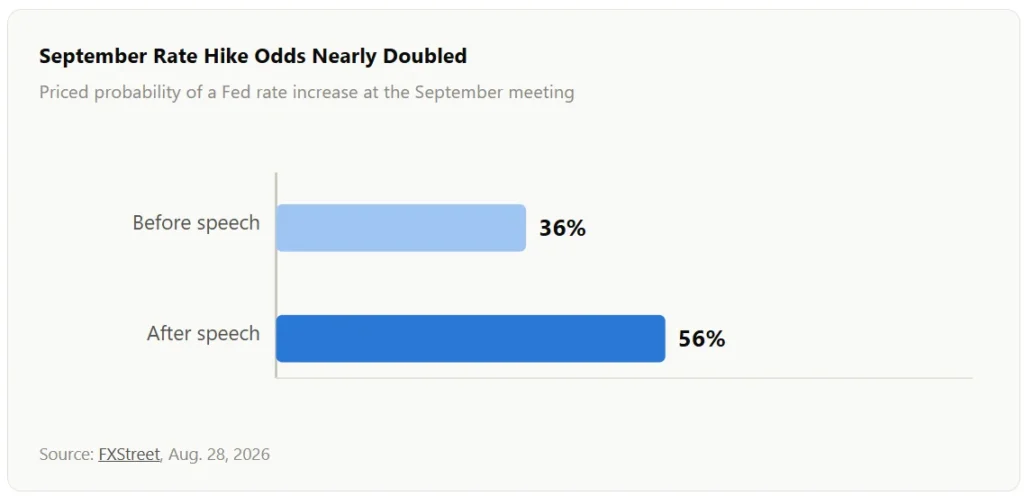
September rate hike odds jumped from about 36% to 56% right after the speech.
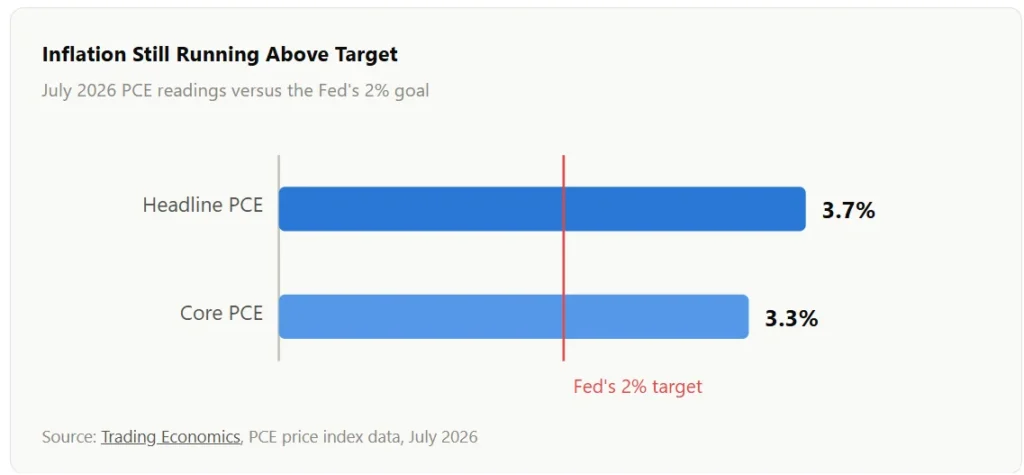
Headline PCE inflation sits at 3.7%, and core PCE stands at 3.3%, both above the Fed’s 2% goal.
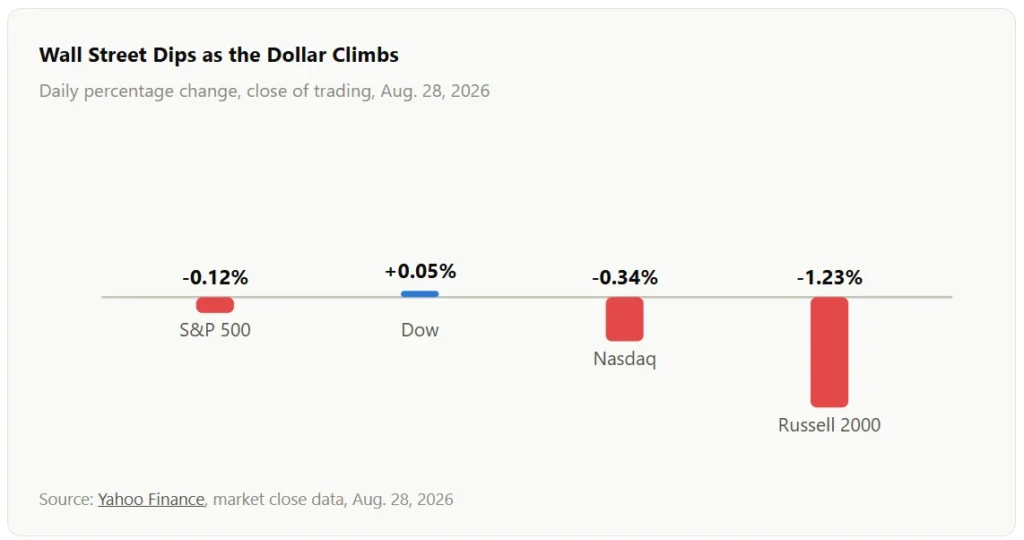
The S&P 500 slipped 0.12% while the Dollar Index gained 0.36% the same day.
Kansas City’s Jeffrey Schmid and Cleveland’s Beth Hammack both back further tightening.
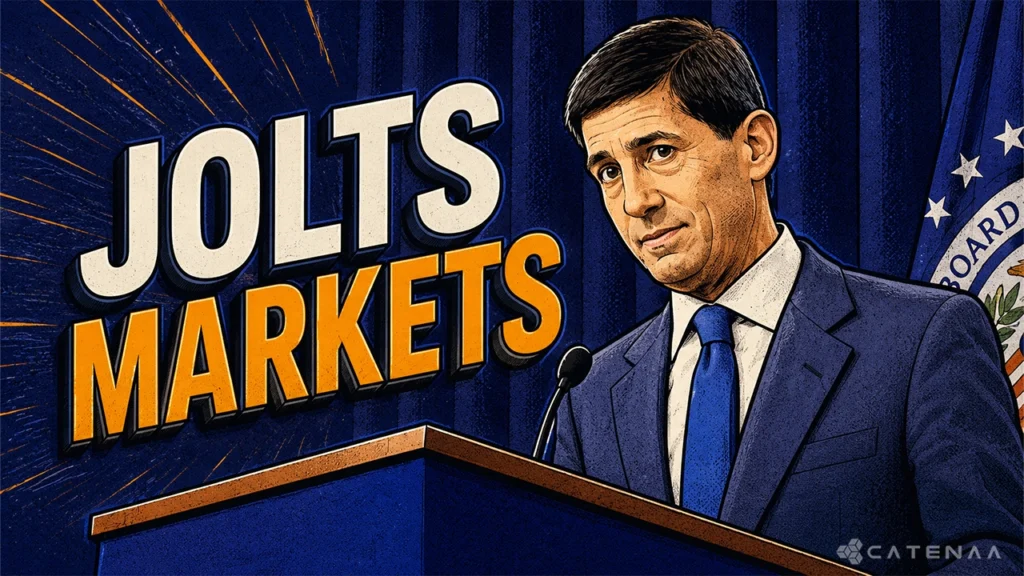
Federal Reserve Chairman Kevin Warsh delivered his first Jackson Hole address on Friday. Investors had waited months for this moment. Warsh signaled that inflation remains his top priority, not employment. The Dollar Index jumped roughly 0.36% within minutes of his remarks. Traders quickly raised the odds of a September rate hike. However, Wall Street’s early reaction stayed cautious rather than celebratory.
What Warsh Actually Told the Room
Warsh avoided a dramatic policy shift. Instead, he leaned on data. He told the audience that price stability “should remain the central bank’s predominant focus.” Yet he added an important caveat. Summer inflation readings, he said, “are not sufficient to demonstrate a meaningful shift in underlying price dynamics.” That single line moved markets. Traders quickly read it as hawkish.

Still, Warsh balanced his tone carefully. He noted that economic activity “appears to have strengthened.” Consumer spending looks “healthy,” he said. The labor market remains “stable” too. Overall, Warsh painted resilience alongside unfinished inflation work. This tone contrasts with his earlier “less is better” communication style. He is now three months into his tenure, according to Reuters.
A Divided Fed Heading Into September
Regional Fed presidents are not aligned. Kansas City’s Jeffrey Schmid pushed hardest for action. “I don’t know what we’re restricting currently with the rate policy,” he said. Cleveland’s Beth Hammack echoed that urgency. “Now is the time to act,” she argued. Meanwhile, Boston’s Susan Collins struck a more cautious note. She cited “mixed” inflation data alongside some “more promising signs.” Adam Posen of the Peterson Institute urged Warsh toward clarity, suggesting he state plainly that “inflation is job one.” This divide matters for markets. It suggests September could bring real debate, not a rubber stamp.
Markets React: Dollar Climbs, Stocks Wobble
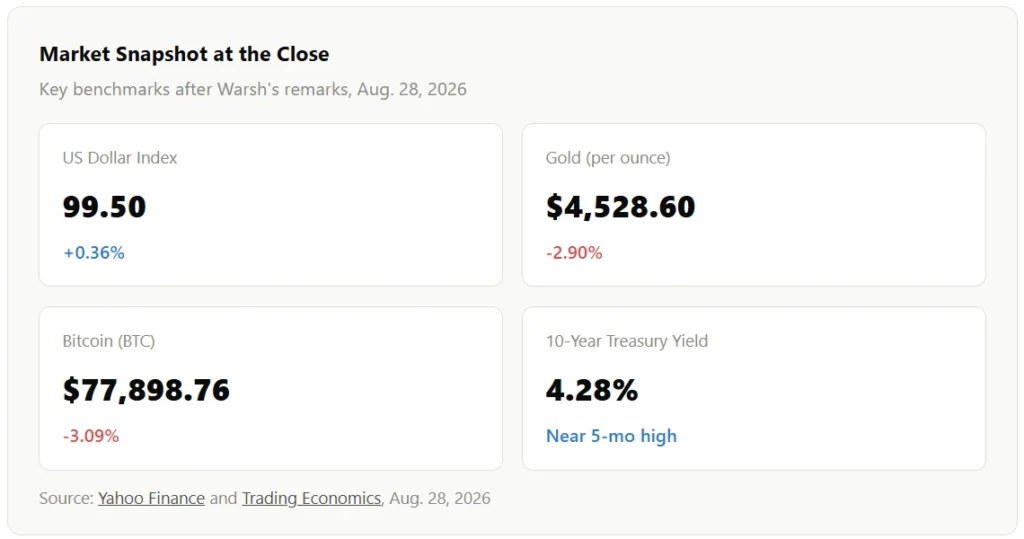
Currency traders moved first and fastest. The Dollar Index rose to roughly 99.50, up 0.36% on the day. Equity markets told a different story, though. The S&P 500 closed at 7,722.06, down 0.12%. The Nasdaq Composite fell 0.34% to 26,450.59. Small-cap stocks suffered even more damage. The Russell 2000 dropped 1.23% by the close. Meanwhile, gold slid sharply, losing 2.90% to settle near $4,528.60 an ounce. Bitcoin also retreated, falling 3.09% to about $77,898.76. Clearly, rate-sensitive assets felt the hawkish tilt first.
Inflation Remains the Sticking Point
The Fed’s preferred gauge still runs hot. July’s PCE index came in at 3.7% year over year. Core PCE, which strips out food and energy, sits at 3.3%. Both figures sit well above the Fed’s 2% target. Meanwhile, the 10-year Treasury yield climbed to about 4.28%. That level nears a five-month high for the benchmark note. This move reflects growing bets on tighter policy ahead. With $40 trillion in outstanding U.S. public debt, higher yields carry real fiscal weight too.
What Comes Next for the Fed
September now looks live again for policymakers. Markets priced roughly 56% odds of a hike, up from 36% before the speech. That swing reflects a meaningful shift in sentiment. Consumer sentiment also firmed up a little. The University of Michigan’s August reading rose to 51.7. One-year inflation expectations eased too, slipping to 4.0% from 4.3%. Together, these signals suggest households feel slightly less anxious about prices. Still, Warsh’s own words leave the door open either way. His Jackson Hole debut reads less like a correction and more like a pause for more evidence.
Global investors are watching closely too. A stronger dollar makes imports cheaper for American consumers. However, it also pressures emerging market currencies and dollar-denominated debt abroad. Corporate borrowers now face steeper financing costs as yields rise. Meanwhile, gold’s slide shows how quickly safe-haven flows can reverse course. Crypto markets, still sensitive to rate expectations, mirrored that same retreat on Friday. Analysts note that upcoming inflation reports will matter more than any single speech.
For now, investors face a Fed chair who prizes patience over promises. The next real test arrives at the September meeting. Until then, every inflation print will carry outsized weight for rates, currencies, and risk assets alike.