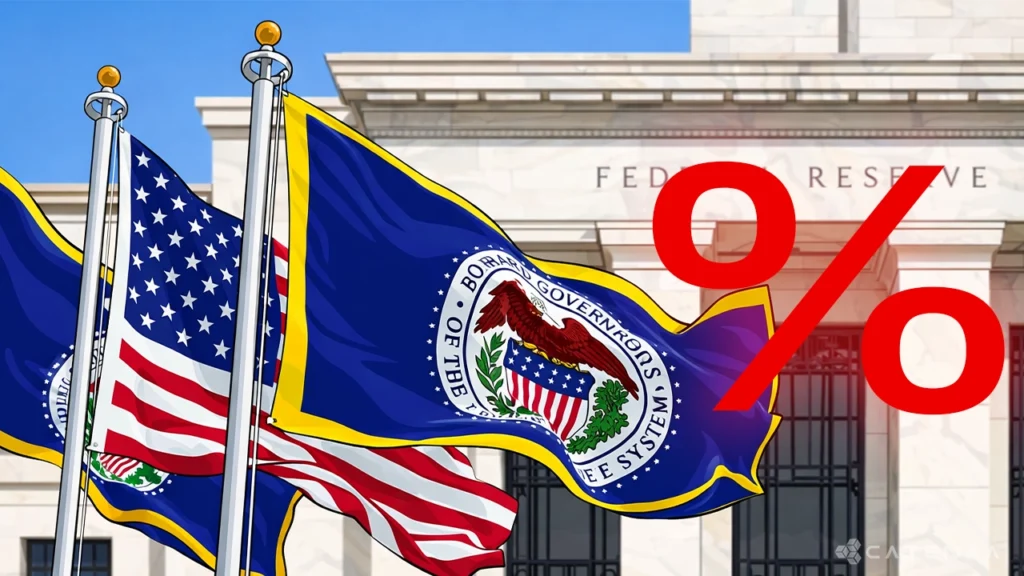


Catenaa, Sunday, September 13, 2026- Investors head into next week’s Federal Reserve meeting bracing for the central bank to raise interest rates.
For years, inflation has persistently run above the Fed’s 2% annual target, and interest rate increases are the primary tool the central bank has historically deployed to try to tamp down prices.
After last month’s speech by new Fed Chair Kevin Warsh that was widely perceived as hawkish, bets have grown that the Fed will hike rates on Wednesday, at the end of its two-day meeting.
Some investors remain dubious that the central bank, which has held rates steady in 2026, will take that step.
On Friday, bets increased that the Fed will hike by a quarter percentage point after data showed consumer inflation picked up in August.
The core measure of the Consumer Price Index, which excludes the volatile food and energy components, rose by a hotter-than-expected 0.3%.
Higher interest rates could undercut stock performance in several ways, including by raising borrowing costs for consumers and companies.
Rate hikes that translate into higher Treasury yields could create more investment competition from bonds and pressure equity valuations.
The benchmark S&P 500 is up nearly 12% so far in 2026, lifted by robust corporate earnings growth boosted by massive spending on AI infrastructure.
The index has pulled back recently and was about 2% below its mid-August all-time high.
A selloff in the bond market has pushed US Treasury yields to multiyear highs, with the benchmark 10-year yield closing in on a 5% level that could cause more trouble for stocks.
Investors are also grappling with spiking tensions between the US and Iran that this week pushed oil prices over $100 a barrel.
Following the CPI data, Fed funds futures suggested late on Friday an over 80% chance the central bank will raise its rate of 3.5%-3.75% by a quarter-percentage point, according to LSEG data.
Those odds have shifted up and down in recent weeks, as traders reacted to economic data and comments from Fed officials.
The latest employment report showed surprisingly strong monthly job gains, bolstering chances of a rate hike.
The latest reading of the core Personal Consumption Expenditures Price Index, which Fed officials use as a guidepost for inflation’s underlying run rate, came in last month at 3.3% on an annual basis.
If the Fed does hike on Wednesday, investors said they will look for signs about whether it is likely to be an isolated move or the start of a series.
Some investors said Wednesday’s Fed decision could be a test of Warsh’s inflation-fighting credibility, which came under scrutiny following his press conference at the last Fed meeting in July.
Rate hikes could filter through to bond yields, which have climbed steadily in recent weeks, pressuring equities.
The 10-year Treasury yield rose to 4.99% early on Friday, its highest in nearly three years, and was at 4.97% late in the session.
Rate hikes and higher yields could have ripples below the market’s surface, investors said.
Rate-sensitive areas could struggle more, such as shares of smaller companies that tend to rely more on debt financing.