

July 20, 2026 – The June FOMC minutes reveal a firmer central bank: a unanimous hold, a scrapped easing bias, and a dot plot that now leans toward a hike.

In Summary
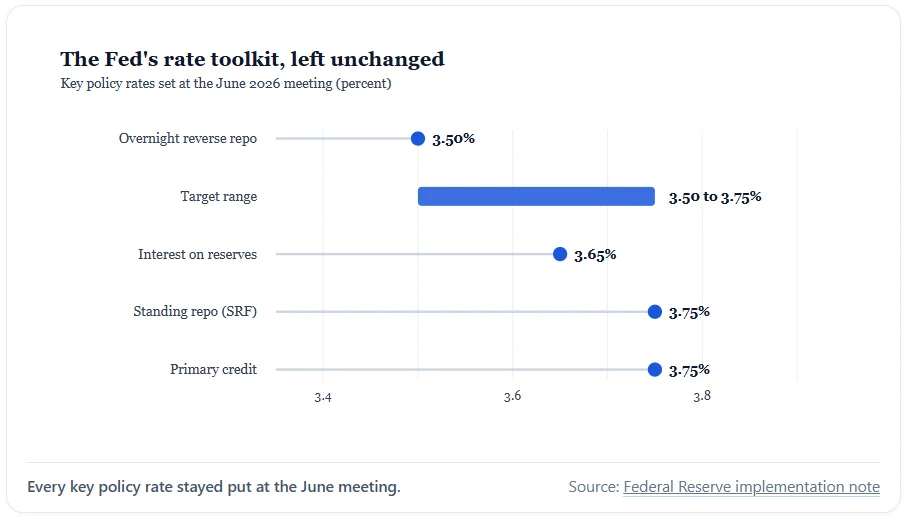
The Fed held its rate at 3.50% to 3.75% and removed its easing bias.
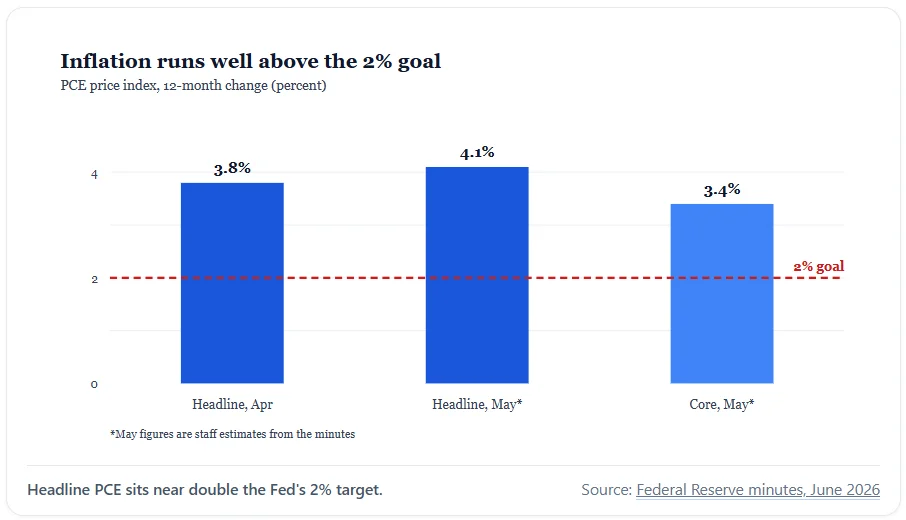
Staff pegged May PCE inflation near 4.1%, far above the 2% goal.
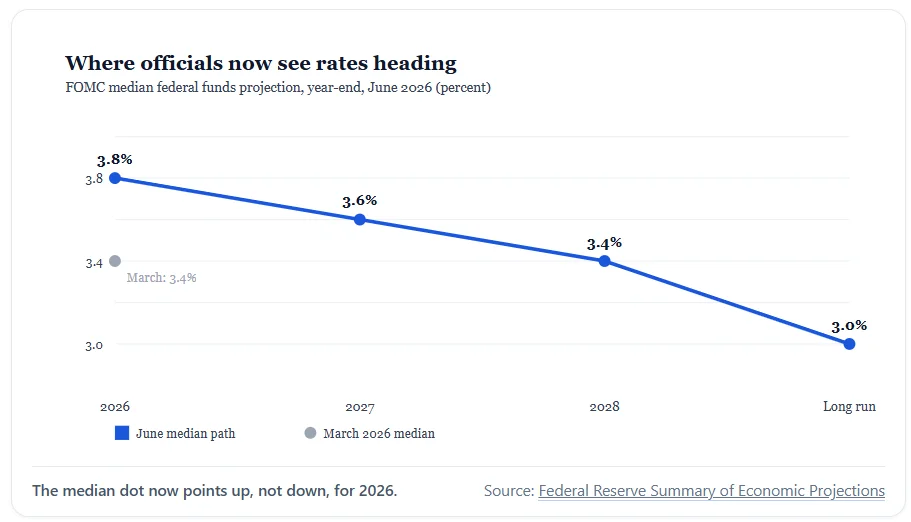
The median dot for year-end 2026 jumped to 3.8%, implying a hike.
Solid growth and a 4.3% jobless rate give the Fed room to wait.
Traders now price one hike by October and no near-term cuts.
The Fed holds rates steady at 3.50%-3.75% and drops its easing bias. New Chair Kevin Warsh backed the pause, yet the tone turned notably firmer. Officials now worry more about rising prices than about a soft labor market.
A new chair sets a firmer tone
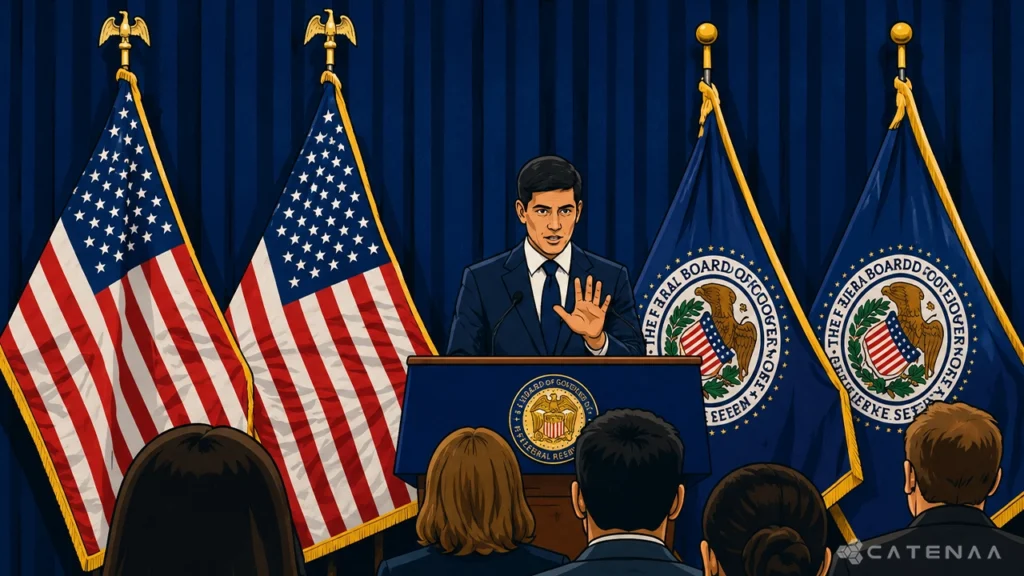
Warsh led his first policy meeting as head of the central bank. The committee kept its benchmark rate unchanged for a fourth straight meeting. Every voting member backed the decision, so the tally read 12 to 0. Yet the real signal sat in the wording. Policymakers deleted the phrase that once hinted at coming rate cuts. The fresh statement ran barely 130 words, a stripped-down format. Warsh told reporters the wording simply states the facts. The vote showed rare unity behind the firmer path. In short, the door to near-term easing just closed.
Inflation climbs back toward 4%
Rising prices drove the shift in stance. Consumer prices on the PCE gauge rose 3.8% in the year to April. Staff then estimated May inflation near 4.1%, far above the 2% target. Several forces lifted costs at once. Energy spiked after fighting shut the Strait of Hormuz. Meanwhile, tariffs and heavy AI demand piled on more pressure. Core prices, which strip out food and fuel, also stayed sticky. Housing costs cooled slowly, which offered one small relief. Producer surveys flagged sharp jumps in input costs, too. Airfares, transport, and farm inputs all climbed noticeably. As a result, officials now see inflation risks tilted firmly upward.
The dot plot turns hawkish
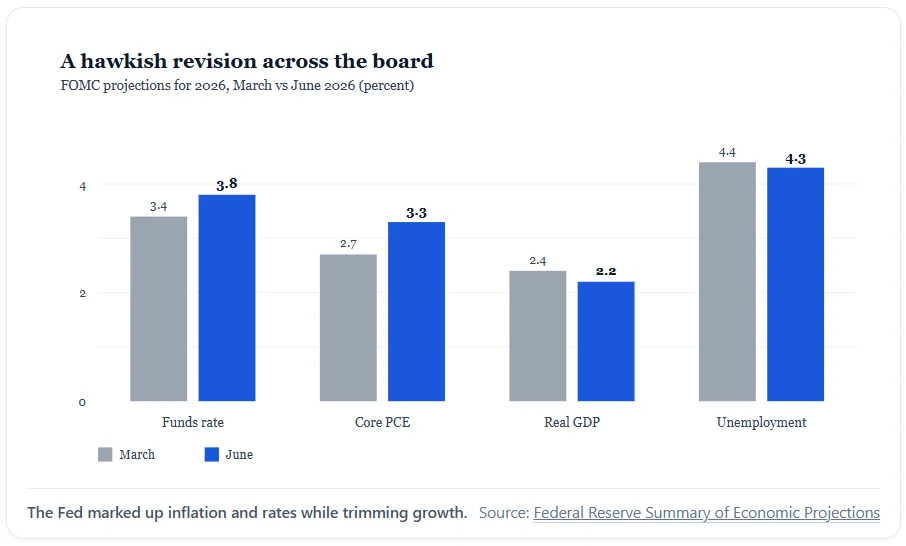
Fresh projections from the central bank confirmed the harder line. The median official now expects the funds rate at 3.8% by year end. That level marks a clear jump from March’s 3.4% path. Notably, the new median implies one hike this year rather than a cut. A few members even pushed to raise rates at this meeting. Still, they all supported the hold for now. Views spread widely, so some saw a cut while others penciled a hike. Officials also lifted their core inflation call to 3.3% for 2026. They see it easing to just 2.5% by 2027. Meanwhile, they slightly trimmed their expected growth to 2.2%. In the long run, officials still see rates drifting back near 3%. Together, the numbers lean toward firming rather than relief.
Growth and jobs give the Fed room
A resilient economy lets policymakers wait and watch. Output continued to expand at a solid pace throughout the spring. Firms poured cash into AI data centers, chips, and software. Consequently, business investment stayed unusually strong. Real spending on high-tech gear led the broader gains. Consumer outlays also stayed solid across the quarter. Meanwhile, the jobless rate held at 4.3% in May. Hiring roughly matched workforce growth. Wage growth also eased to 3.4% over the past year. So the labor market looks balanced rather than fragile. Lower-income families, however, leaned more on credit to keep spending.
Markets brace for higher for longer
Investors had already prepared for a tougher Fed. The S&P 500 climbed nearly 6% between the two meetings. Ten-year Treasury yields rose about 20 basis points. Furthermore, the dollar strengthened as U.S. rates outpaced peers abroad. Tech earnings powered much of the equity rally. New listings also picked up, helping fund the AI push. Foreign shares gained on the same AI optimism, too. Traders now price one hike by October, then a long pause. For risk assets, that math points to steady pressure ahead. A firmer dollar and richer yields often cool demand for speculative bets. Still, corporate bond spreads narrowed, and volatility eased over the period. Overall, sentiment stayed calm despite the hawkish turn.
What to watch next
The next policy meeting is on July 28 and 29. Warsh also plans five task forces to review how the Fed works. Private credit inflows slowed, a subtle crack to track. Business development funds saw redemptions pick up, too. Foreign central banks, including the ECB, leaned toward hikes. Money markets stayed calm, so short-term funding held steady. In fact, the Fed kept its reserve rate at 3.65% through the period. Until then, the message stays refreshingly simple. The committee will hold firm and defend price stability. In short, rate cuts look distant while inflation runs hot.