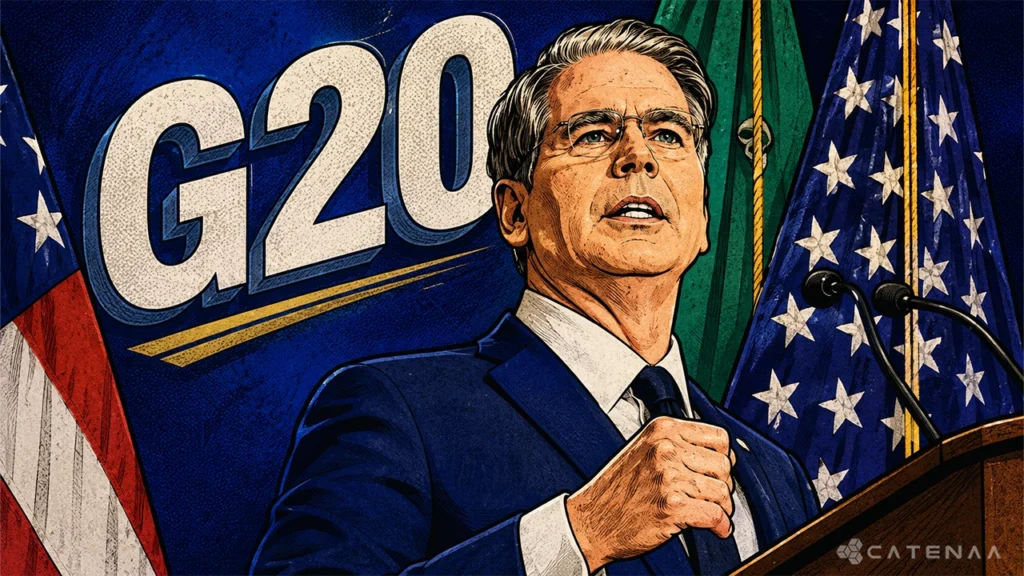


August 31, 2026 – Scott Bessent chairs the meeting rather than merely attending it. That role turns every contentious file, from tariffs to sanctions, into his problem to manage.
In Summary
The United States holds the 2026 G20 presidency and hosts ministers in Asheville, North Carolina.
US Section 301 tariffs now cover 60 economies at rates of 10% or 12.5%.
The 30-year Treasury yield reached 5.30% in mid-August, its highest in years.
A $25bn 30-year auction cleared at 5.216%, the highest since 2001.
Total US public debt passed $40 trillion for the first time on 18 August.
The IMF cut its 2026 global growth forecast to 3.0%, citing war rather than tariffs.
Finance chiefs gather in Asheville, North Carolina, on Monday. The venue is unusual. So is the balance of power in the room.
Washington holds the G20 chair for 2026. So Scott Bessent runs the meeting rather than working the floor. That gap matters because the files that vex his guests were written in his own capital.
An agenda he set himself
Treasury published its priorities for the year in February. Seven themes appear. They include lighter bank rules, debt clarity, and a “vibrant digital assets ecosystem”.
One item now looks awkward, though. Bessent listed excessive global imbalances as a core theme. Yet trade is the very thing his guests want to fight about.
Deputies met over the weekend. Also, Sherpas held side talks on debt relief. Ministers and central bank chiefs then meet from Monday to Tuesday. Then a leaders’ summit in Miami follows in December.
Tariffs sit at the centre
The trade file changed shape this year. In February, the Supreme Court struck down the emergency tariffs. So the White House rebuilt the wall on a new legal basis.
Since 28 July, Section 301 duties have covered 60 economies. That is 99.4% of all US imports. Two tiers apply. States that pledged a forced-labour import ban pay 10%. The rest pay 12.5%.
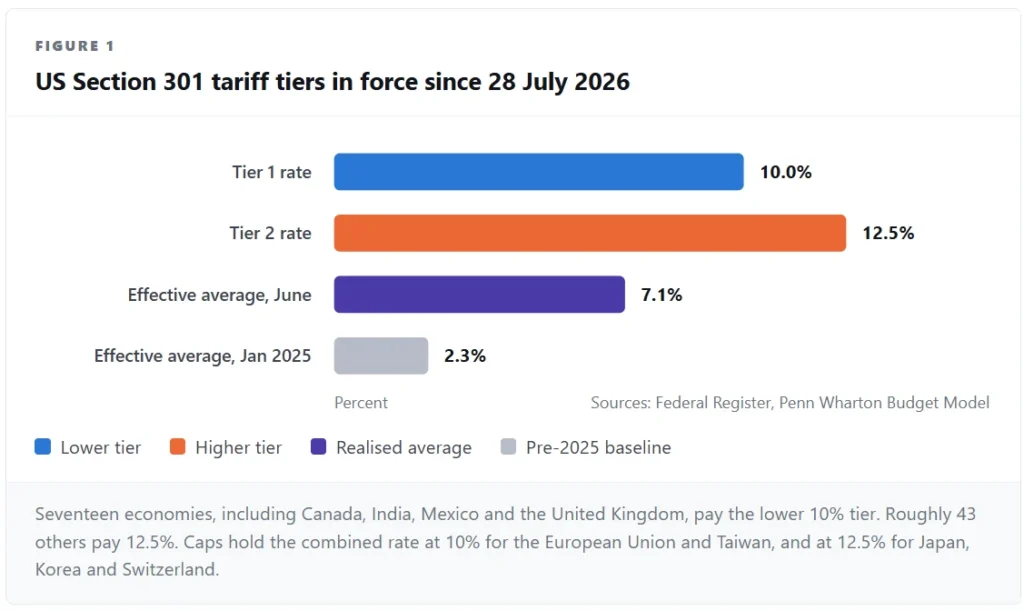
However, caps soften the blow for some. The European Union and Taiwan are held at 10% in total. Japan, Korea and Switzerland are held at 12.5%.
Several guests arrive across. Because the duties bite, the mood is tense. Canada retaliates dollar for dollar from 8 September. Washington had hit about $28bn of Canadian goods with a 50% duty in August.
The bond market is the louder problem
Long-dated debt has repriced across the rich world. US 30-year yields peaked at 5.30% on 17 August. They then eased to 5.22%.
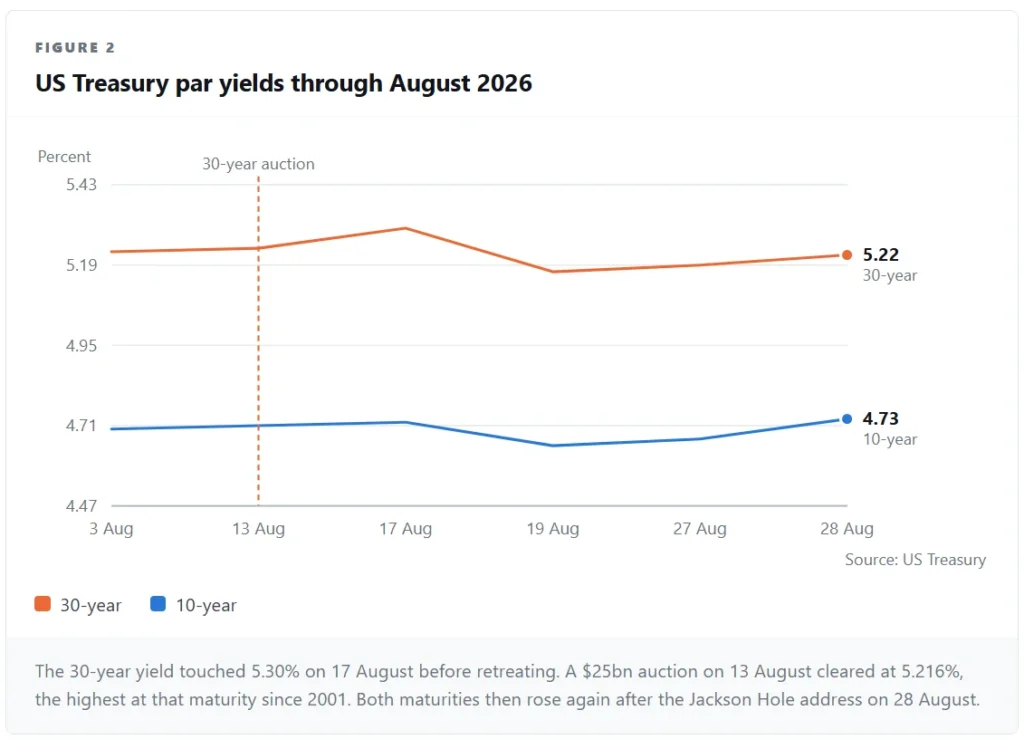
Auctions tell the same story. A $25bn 30-year sale on 13 August cleared at 5.216%. That was the highest yield at that tenor since 2001. Bid-to-cover came in at 2.39. Still, the sale got away.
Dealers had to step up too. They took 11.5% of the issue, above their recent average. When dealers absorb more paper, end demand is usually thin.
Treasury acted within days. On 19 August, it doubled long-end buybacks to at least $4bn per operation. Those run from September to early November. Yet buybacks treat symptoms, not causes. They smooth trading, but they do not cut supply.
Debt maths tightens the squeeze
Total public debt passed $40 trillion for the first time on 18 August. It stood at $40.08 trillion nine days later. So interest costs have climbed with it.
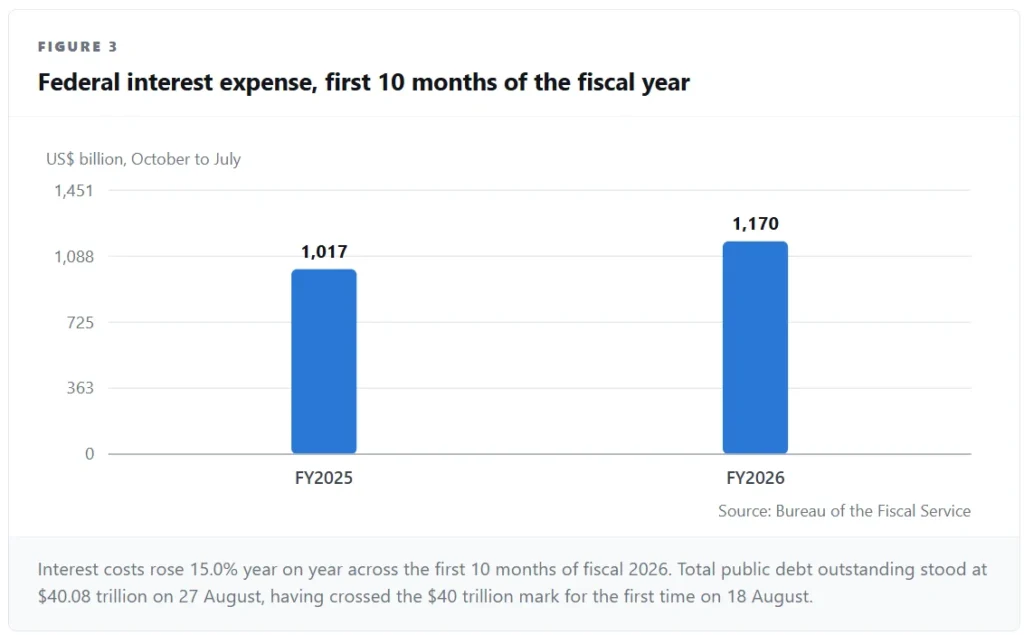
Across the first 10 months of fiscal 2026, interest cost $1.17 trillion. That is 15% more than a year earlier. So each rise in yields feeds straight into a bigger federal bill.
Other states face the same bind. Japan’s 30-year yield touched 4.10% in August. European long yields also hit multi-year highs. Therefore, the topic will not stay off the table.
War, oil, and growth
The Iran conflict has lasted for six months. A ceasefire memorandum lapsed in mid-August. Shipping through the Strait of Hormuz remains disrupted.
Meanwhile, oil has swung with the news. Brent traded near $89 in early August. It then spiked to $96.92 on 21 August, before falling back below $89.
Bessent has raised the pressure too. On 24 August, he named close to 60 Iran-linked firms, people, and vessels. He called it an “economic onslaught”.
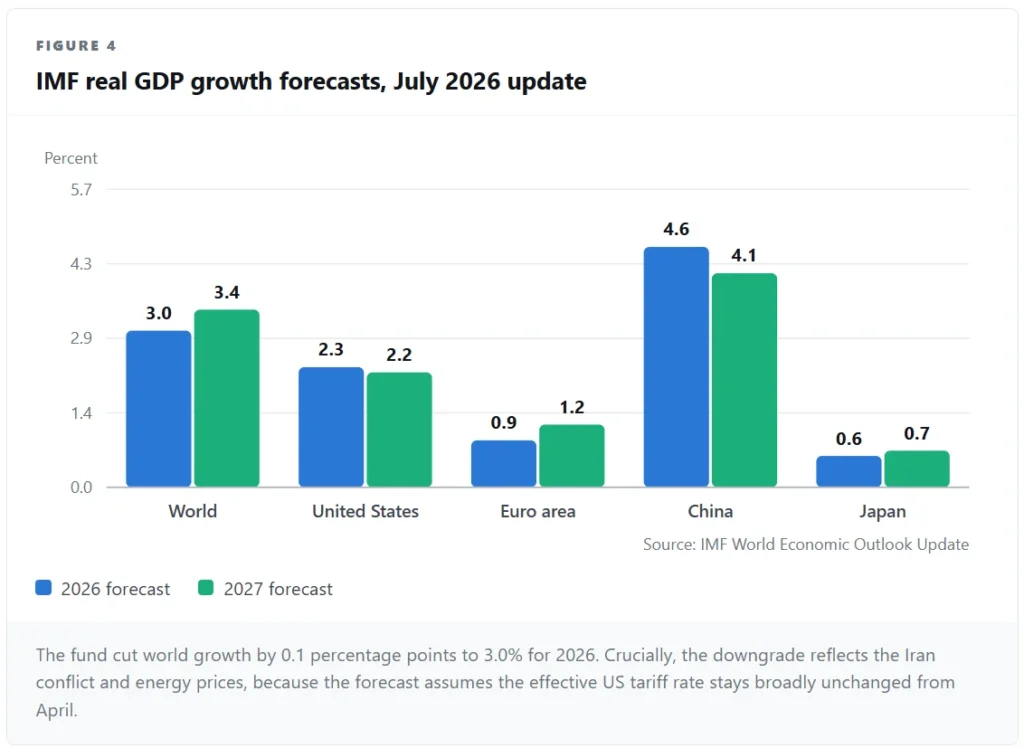
Growth forecasts have slipped. The IMF cut 2026 world growth to 3.0% in July. Yet the fund blamed war and energy, not trade. Its forecast assumes tariffs stay put.
What success would look like
Chairs are judged on results. April’s meeting produced only a chair’s statement. A full communique proved out of reach, which shows how far views differ.
Three tests stand out this week. First, whether ministers agree on any joint text. Second, whether the tariff tiers survive the autumn. Third, whether long yields settle.
Bessent wants a leaner G20 focused on growth. But the ministers flying in care most about duties, sanctions, and yields. So closing that gap is the job at hand. A chair cannot duck the files he wrote.