

Catenaa, Tuesday, July 21, 2026-Web3 wallets are rapidly transforming from simple cryptocurrency storage applications into comprehensive financial gateways as tokenized stocks, exchange-traded funds and other real-world assets increasingly migrate onto blockchain networks.
The shift gained further momentum this week after KuCoin Web3 Wallet announced support for Robinhood Chain, enabling users to access assets and decentralized applications built on the emerging blockchain through a self-custodial wallet. While the integration represents a technical update for one platform, it also reflects a broader industry transition toward wallets that function as primary interfaces for digital finance rather than passive repositories for crypto assets.
For years, cryptocurrency wallets primarily served to hold digital tokens and interact with decentralized applications. Today, their role is expanding as financial products traditionally associated with stock exchanges and investment firms become available through blockchain infrastructure.
The latest integration allows users to connect to Robinhood Chain, manage compatible digital assets and explore applications linked to tokenized real-world assets and blockchain-based financial services. Early support also positions KuCoin among the first wallet providers participating in Robinhood’s developing onchain ecosystem.
The move follows a wave of developments across the digital asset industry as exchanges, brokerages and infrastructure providers accelerate efforts to tokenize conventional financial instruments. Tokenized equities, exchange-traded funds, government bonds and other regulated assets are increasingly viewed as one of blockchain’s next major growth segments.
Unlike custodial trading platforms, self-custodial wallets give users direct control over their private keys and digital assets. That model is becoming more relevant as investors seek seamless access to multiple blockchain ecosystems without relying on centralized intermediaries.
Industry observers increasingly view wallets as the equivalent of internet browsers during the early web era. Rather than merely storing assets, they are becoming the software layer through which users discover financial products, authenticate transactions, manage digital identities and interact with decentralized services.
The integration also highlights another emerging trend: reducing fragmentation across blockchain ecosystems. As tokenized finance expands, users are expected to interact with multiple networks hosting different categories of financial assets. Wallet providers are therefore competing to aggregate access across chains instead of limiting users to a single blockchain environment.
Robinhood Chain has attracted attention because it is designed to support tokenized financial assets alongside broader decentralized finance applications. Early community activity includes experimentation with tokenized securities, decentralized applications and blockchain-native financial services.
For traditional investors entering digital assets, these developments could simplify the transition between conventional markets and decentralized finance. Rather than opening separate brokerage, exchange and wallet accounts, users may increasingly manage cryptocurrencies, tokenized stocks, ETFs and other blockchain-based investments from a unified interface.
Competition among wallet developers is also intensifying. Beyond secure storage, providers are racing to integrate cross-chain trading, decentralized exchanges, staking services, tokenized securities, prediction markets and identity management into single applications.
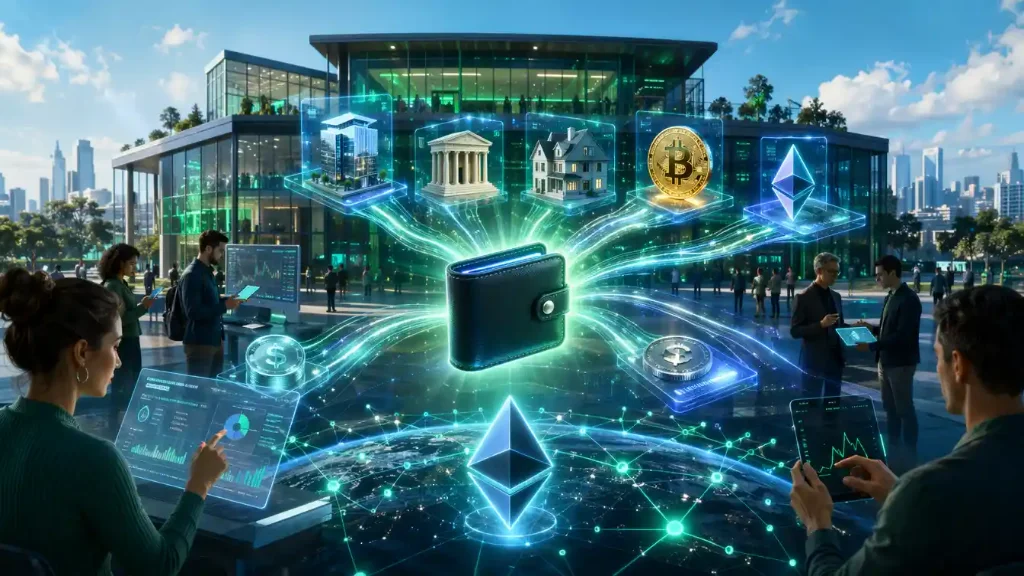
The result is a gradual redefinition of what a cryptocurrency wallet represents. Instead of serving only as digital vaults, wallets are evolving into financial operating systems that connect users with an expanding ecosystem of blockchain-based assets and services.
As tokenization continues gaining institutional backing, wallet providers capable of combining security, interoperability and access to regulated financial products are likely to play a central role in bringing traditional finance onto blockchain networks.
Tokenization has emerged as one of the fastest-growing sectors within digital finance, allowing conventional assets such as equities, bonds, funds and real estate to be represented on blockchain networks. Financial institutions, brokerages and cryptocurrency companies are investing heavily in infrastructure supporting these assets as regulators gradually establish legal frameworks for digital securities. At the same time, self-custodial Web3 wallets are evolving beyond cryptocurrency management to become unified access points for decentralized finance, tokenized investments and multi-chain ecosystems. The convergence is reshaping wallets into core infrastructure for the next generation of digital financial services.