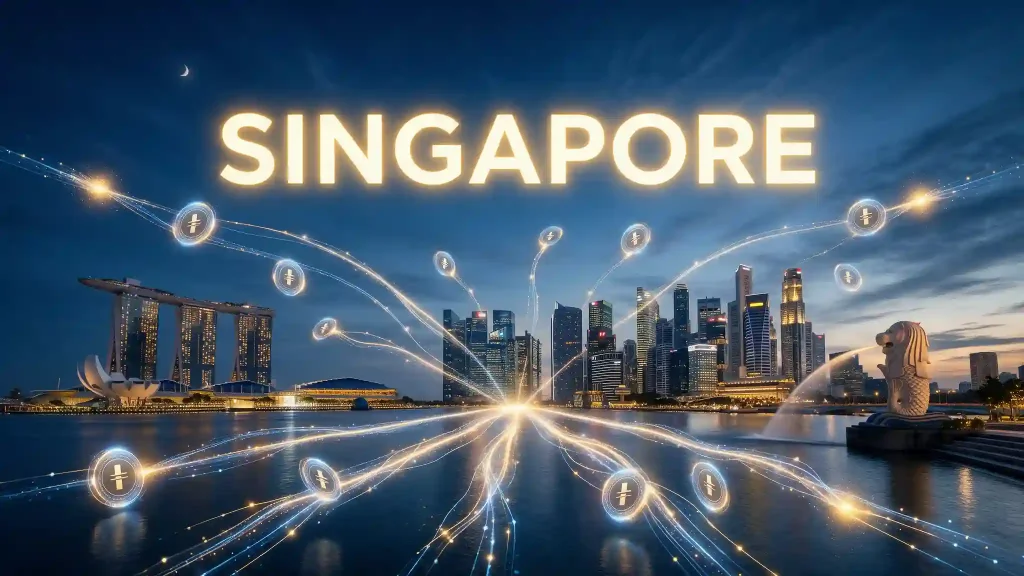


Catenaa, Thursday, September 17, 2026- Singapore is moving to implement its stablecoin regulatory framework through legislation while opening a limited route for foreign-issued stablecoins to gain regulatory recognition.
The Monetary Authority of Singapore, or MAS, has proposed amendments to the Payment Services Act that would create a separate license for issuers of qualifying single-currency stablecoins.
Only licensed issuers would be permitted to describe their tokens as MAS-regulated stablecoins.
The framework requires reserve assets equal to at least 100% of the value of stablecoins in circulation, held separately from the issuer’s operating assets.
That requirement was established when MAS finalized its stablecoin policy in 2023 and is now being incorporated into legislation.
The latest consultation adds several requirements.
MAS proposes prohibiting issuers from paying interest, returns or other benefits directly or indirectly linked to holding an MAS-regulated stablecoin.
The regulator said the restriction is intended to preserve the role of stablecoins as payment instruments rather than savings or investment products.
Issuers would also face regular stress testing and requirements for recovery and orderly wind-down plans.
MAS is additionally considering safeguards for customer money received before stablecoins are issued and funds awaiting payment during redemptions.
One of the largest changes involves overseas issuers.
The 2023 framework generally limited MAS-regulated stablecoins to issuance from Singapore.
MAS now proposes allowing some multi-jurisdictional issuance arrangements and recognizing a limited number of stablecoins issued overseas.
Foreign recognition would be considered case by case and would require the issuer to be supervised under a regulatory regime MAS considers broadly equivalent to Singapore’s.
MAS has linked that proposal particularly to cross-border wholesale uses.
Recognition could allow regulated foreign stablecoins to interact more easily with Singapore-based financial institutions and tokenized financial markets without treating every overseas token as locally issued.
However, foreign recognition would not be automatic, and MAS has not identified which issuers or jurisdictions would qualify.
Stablecoins that do not receive the MAS-regulated or MAS-recognized designation could still circulate in Singapore as digital payment tokens, subject to existing rules governing those services.
Singapore first finalized its single-currency stablecoin framework in August 2023 after consultation began the previous year.
The latest proposals come as the US, European Union, UK and Hong Kong have developed their own stablecoin regimes.
MAS said well-regulated stablecoins could serve as settlement assets as tokenized financial markets expand.
The consultation remains open until October 16, meaning the proposals are not yet final rules and could change before legislation is enacted.