

July 31, 2026 – A concentrated burn week revived scarcity hopes. However, the supply impact remains too small to support a true shock.
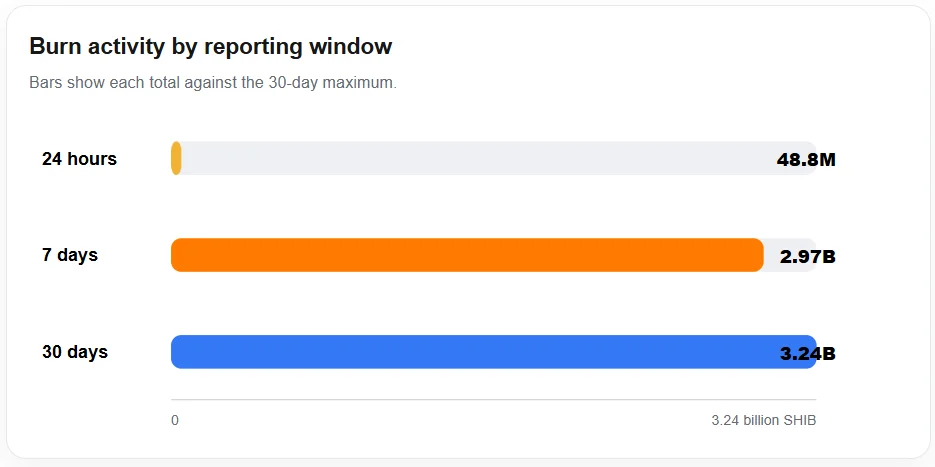
SHIB burn activity surged this week, renewing debate about whether token destruction can reshape the asset’s supply story. The seven-day total reached 2.97 billion tokens, its strongest weekly reading of 2026. However, the headline looks far larger than its actual impact on circulating supply.
In Summary
SHIB holders burnt 2.97 billion tokens during the latest seven-day period.
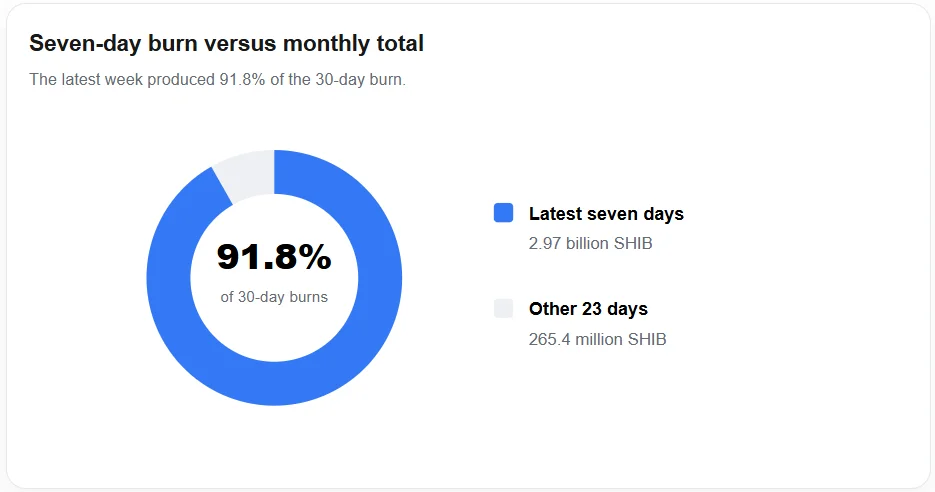
That amount represented 91.8% of all SHIB destroyed during the past 30 days.
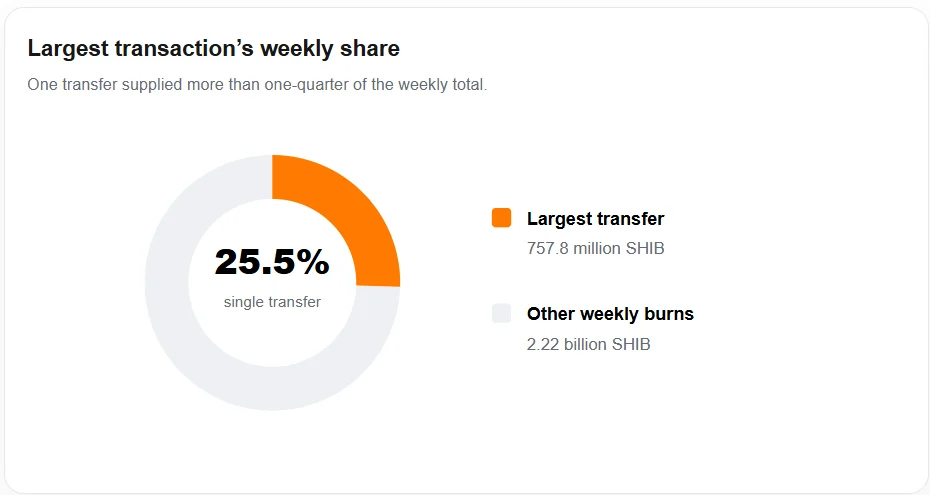
One transfer removed 757.8 million tokens, accounting for 25.5% of the weekly total.
Despite the surge, the weekly burn equalled only 0.0005% of the remaining supply.
A concentrated weekly surge
The live on-chain tracker recorded 2,973,009,610 SHIB removed during the latest seven-day window. Meanwhile, the 30-day total stood at 3,238,386,836 tokens. Therefore, almost every token burned this month disappeared during one unusually active week.
The latest 24-hour reading was much smaller, at 48.8 million SHIB. That gap highlights the volatility of burn data. A few large transfers can rapidly change weekly percentages without creating a durable trend.
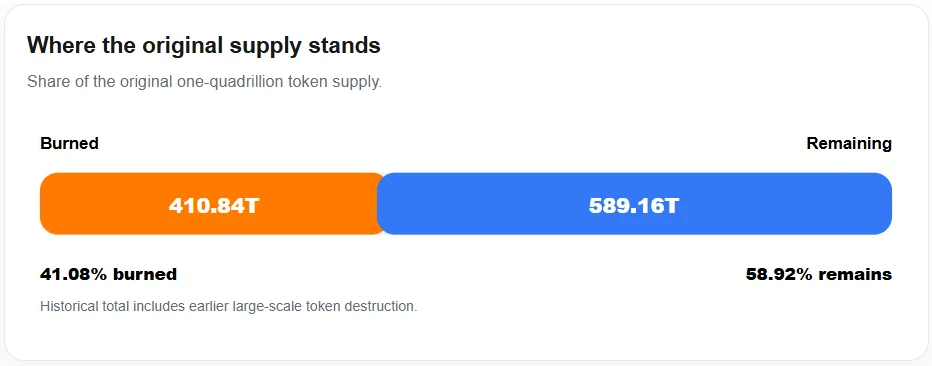
The burn tracker also reports 410.84 trillion SHIB destroyed since the token’s launch. That equals 41.08% of the original one-quadrillion supply. However, recent community burns represent only a small addition to that historical total.
One transaction drove a quarter
A verified transaction notice recorded 757,803,141 SHIB in one transfer on July 26. The tokens were worth about $4,016 when the transaction occurred. That single movement produced 25.5% of the entire seven-day burn.
The remaining weekly burns totalled roughly 2.22 billion SHIB. Therefore, the weekly record involved broader activity, although concentration remained meaningful.
Investors should track both total burns and the number of contributing wallets. However, a healthier deflationary pattern would involve repeated activity across many weeks. It would also require dependable funding from ecosystem usage.
The supply effect remains very small
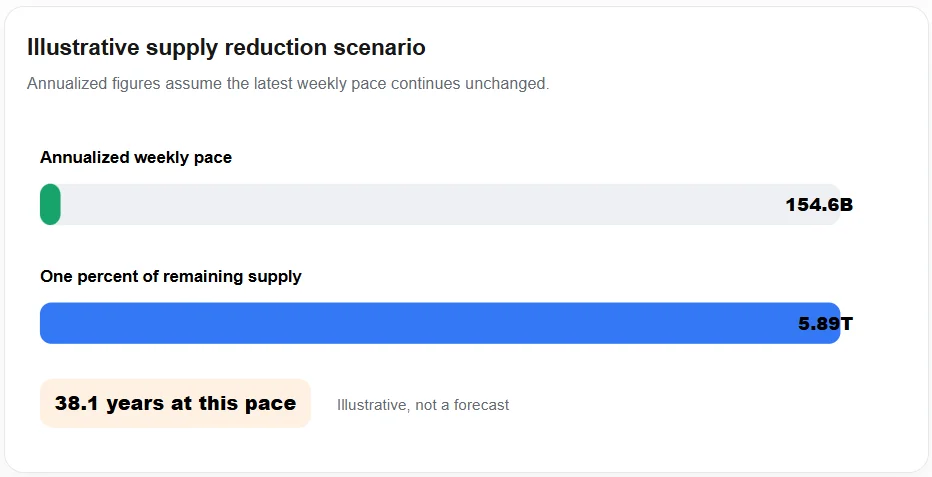
SHIB’s remaining supply stands near 589.16 trillion tokens, according to the burn tracker. Against that base, the latest weekly reduction removed about 0.0005%. This ratio matters more than the percentage increase in weekly burn activity.
Assuming the same weekly pace continued, annual burns would reach roughly 154.6 billion SHIB. Yet it would reduce remaining supply by only about 0.026% each year.
At that constant pace, removing another 1% of supply would take roughly 38 years. This estimate is only illustrative because burn activity changes sharply. Still, it shows why sustainable transaction growth matters more than isolated burn spikes.
How the burn mechanism works
SHIB burns permanently send tokens to inaccessible blockchain addresses. Those tokens cannot return to active circulation. The Ethereum contract record allows investors to verify token movements publicly.
Shibarium also supports an ecosystem-linked burn process. Base fees can accumulate in BONE before conversion into SHIB. The converted SHIB then moves to an inaccessible address through the official burn portal.
This design links network usage with token destruction. Therefore, stronger application activity could support more regular burns. However, the mechanism needs meaningful transaction value to influence SHIB’s enormous supply.
The project’s official ecosystem documentation identifies token burning as a core Shibarium application.
What the surge means for investors
The latest increase signals active community participation. It may also strengthen short-term attention around SHIB’s scarcity narrative. Nevertheless, burns do not automatically create higher prices.
Price performance still depends on liquidity, demand, market sentiment, and broader cryptocurrency conditions. A burn only changes supply after tokens leave circulation permanently. Its economic effect depends on size relative to tradable supply and market demand.
Investors should also separate absolute burns from burn-rate percentages. A dramatic percentage increase can follow an unusually weak comparison period. Absolute token totals provide a clearer view of economic significance.
What comes next
The next four weekly readings will show whether July’s surge becomes a pattern. A sustained average above two billion SHIB would confirm stronger burn momentum.
Falling totals would suggest a one-off concentration of large transfers. More independent contributors would reduce reliance on single transactions.
Furthermore, rising Shibarium usage could create a stronger link between utility and burns. It does not yet represent a material supply shock. The strongest bullish case requires sustained demand, growing utility, and recurring burns at much larger scale.