


An accelerated approval rewrites listing standards for commodity-based trust shares, adds a digital commodity definition and drops the passive management requirement.
In Summary
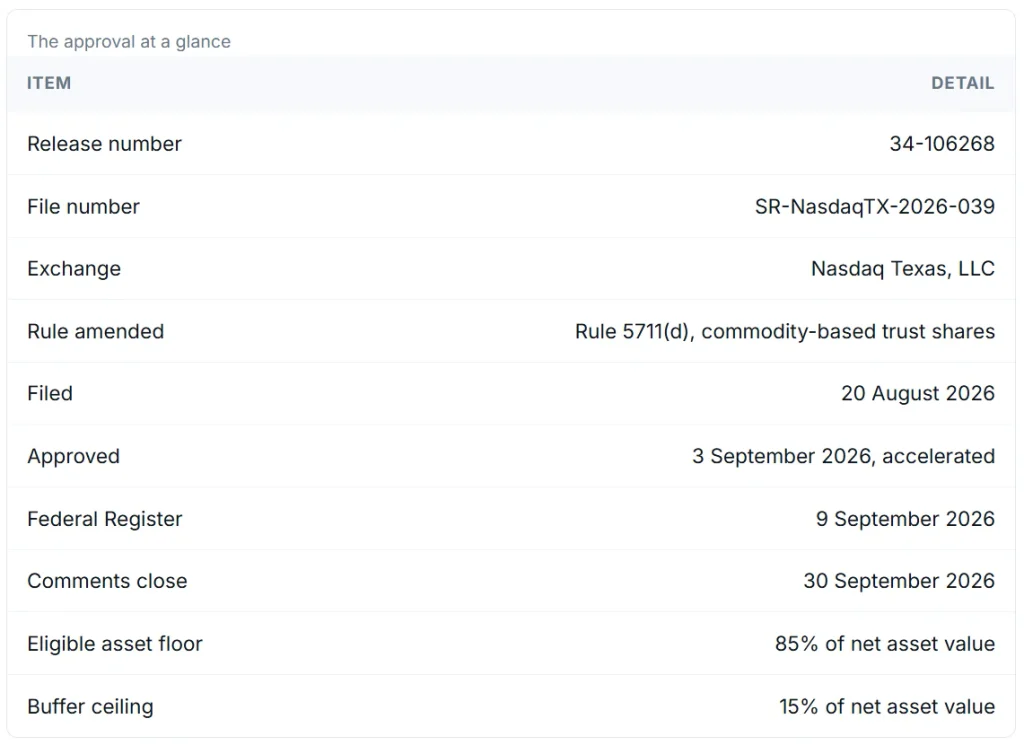
The SEC approved a Nasdaq Texas rule change covering commodity-based trust shares on 3 September.
Trusts must hold at least 85% of net asset value in assets meeting existing eligibility criteria.
A buffer of up to 15% may sit in digital commodities or other assets outside that test.
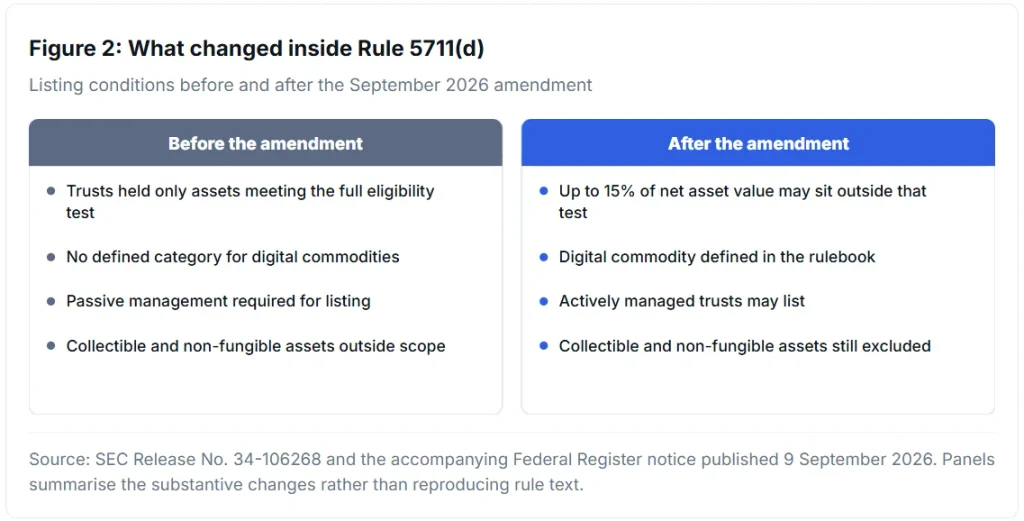
The rulebook now defines a digital commodity, and it permits actively managed trusts.
The order changes listing standards only, so it does not rewrite federal law on token status.

American exchange rules for crypto trusts have moved again. The Securities and Exchange Commission approved a Nasdaq Texas filing on 3 September. Moreover, the order took effect on an accelerated basis.
The change touches Rule 5711(d), which governs commodity-based trust shares. Release No. 34-106268 sets out the order. It creates room for digital commodities inside listed funds.
What a commodity trust actually is
Start with the wrapper itself. A trust holds an asset and issues shares against it. Instead of the asset, investors buy those shares on an exchange.
Gold funds made the model famous. The same shell now holds tokens. Hence the rulebook must say which of them may go in.
The 85 and 15 split
Two numbers sit at the heart of the rule. A fund must keep at least 85% of its net asset value in assets that already qualify. Those cover commodities, qualifying shares, cash and near cash.
A buffer covers the rest. Up to 15% of net asset value may hold assets that fail the standard test. Digital commodities and certain other securities can fill that space, the Federal Register notice explains.
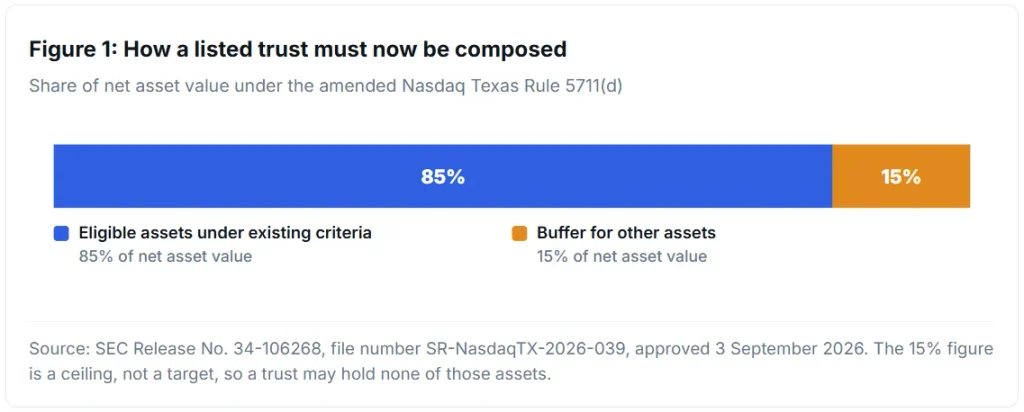
The buffer is where the news sits. A hard floor of 85% keeps the core of the fund simple. That smaller slice does the interesting work.
Baskets become possible as a result. A fund could pair one large token with a spread of smaller ones. Still, the buffer caps that spread by design.
A definition enters the rulebook
Language matters as much as the numbers. The rule now defines a digital commodity. Its value must stem from the coded workings of a live crypto system.
Market forces must set the price. Supply and demand drive it, not hopes of profit from the work of a manager. Therefore tokens that behave like investment contracts fall outside.
Meanwhile two categories stay excluded. Non-fungible assets and collectibles do not qualify. Furthermore, the definition draws on joint agency guidance from earlier this year.
Named tokens sit at the front of that debate. Traders point to bitcoin, ether, solana and XRP. Yet the rule sets a test, and it names no coin.
Active management becomes possible
One clause carries outsized weight. The amendment removes the strict passive management requirement. Sponsors may therefore run strategies that trade within the trust.
Passive funds simply track one asset. Active ones can rotate, hedge or hold cash. As a result, design opens up well beyond a single token wrapper.
The Commission tied its case to investor protection. It found the change fits Section 6(b)(5) of the Exchange Act. In its view, the 85% floor keeps watch over the fund intact.
The path that led here
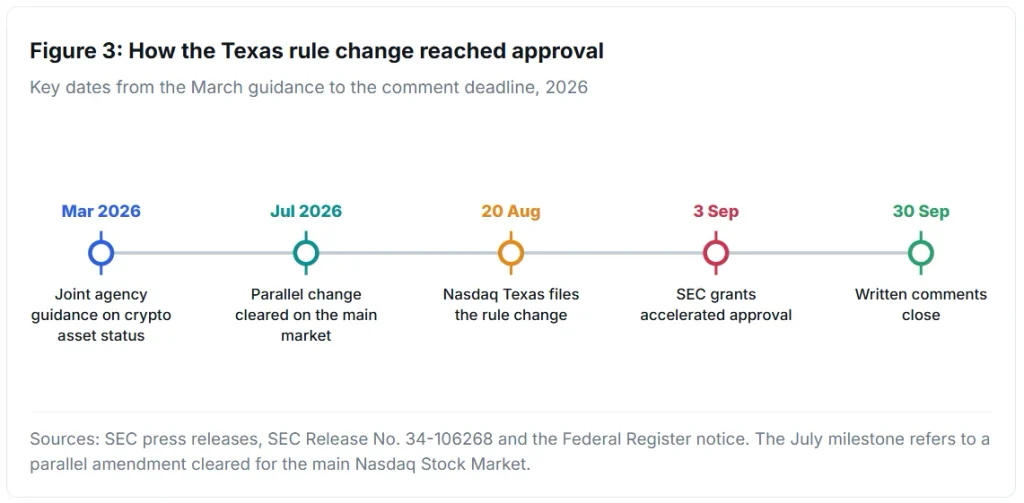
This order did not arrive in isolation. Indeed, the SEC and the CFTC set out a shared view on crypto asset status in March. That guidance split digital commodities from digital securities.
Chairman Paul Atkins framed it as the end of a long wait. The Commission published that interpretation on 17 March. Its taxonomy covers commodities, collectibles, tools and stablecoins.
Formal cooperation followed. Both agencies signed a memorandum of understanding, as the SEC announced separately. Hence exchange filings now rest on firmer ground.
Costs enter the picture too. Active funds usually charge more than passive ones. Whether buyers pay up remains an open question.
Congress has its own track running. Lawmakers keep working on a market structure bill. Therefore the rulebook may shift again within a year.
What the order does not do
Scope deserves a careful read here. Furthermore, the approval changes exchange listing standards alone. It does not rewrite federal commodity law.
Nor does it bless any single product. Each fund still needs its own filing and review. Custody, pricing and disclosure all remain live questions for sponsors.
The full interpretive framework sits elsewhere. Release 33-11412 carries the detailed reasoning. Readers who want the legal test should start there.
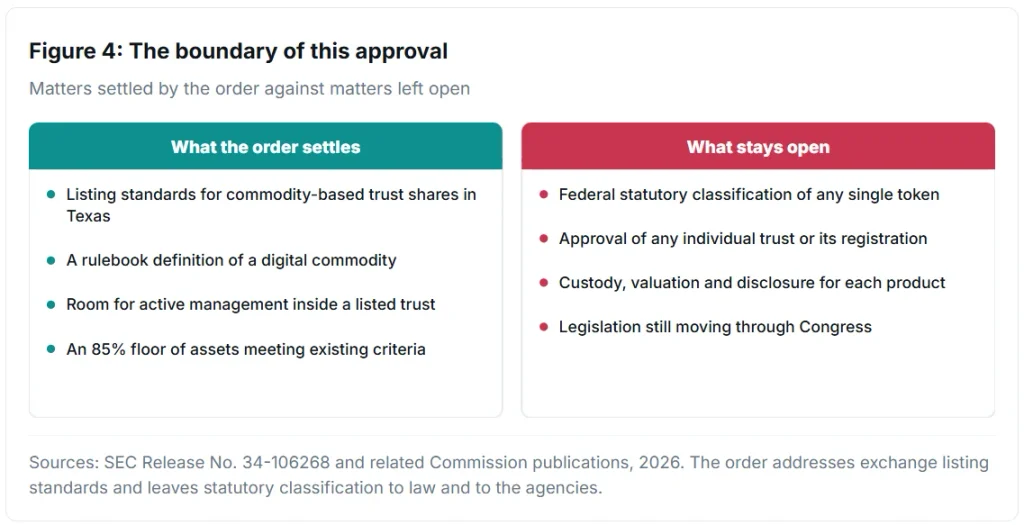
Demand will decide the rest. Sponsors build what buyers ask for. However, no filing yet proves that appetite exists.
Why a Texas venue matters
Venue choice looks small, yet it signals intent. Nasdaq Texas runs as a separate exchange with its own rulebook. Therefore approval there gives issuers a second route.
Rivalry between venues usually helps issuers. Standards tend to converge as one exchange copies another. Indeed, the main Nasdaq market cleared a similar change in July.
State identity plays a part as well. Texas has courted finance firms for years. Yet the exchange still answers to federal rules.
Issuers gain speed from all this. A generic standard removes the need for a bespoke filing each time. As a result, launch timelines can shorten.
What to watch next
Three signals will show the real effect. First, watch how many sponsors file trusts using the 15% buffer. Second, see whether any launch with an active mandate.
Third, read the comment letters after 30 September. Objections could still shape follow-up filings. In short, the plumbing changed first, and products come next.