


September 01, 2026 – Russia’s regulated crypto market opens on 1 September 2026. Sberbank analysts expect up to 4 trillion rubles of exchange turnover in the first year.
In Summary
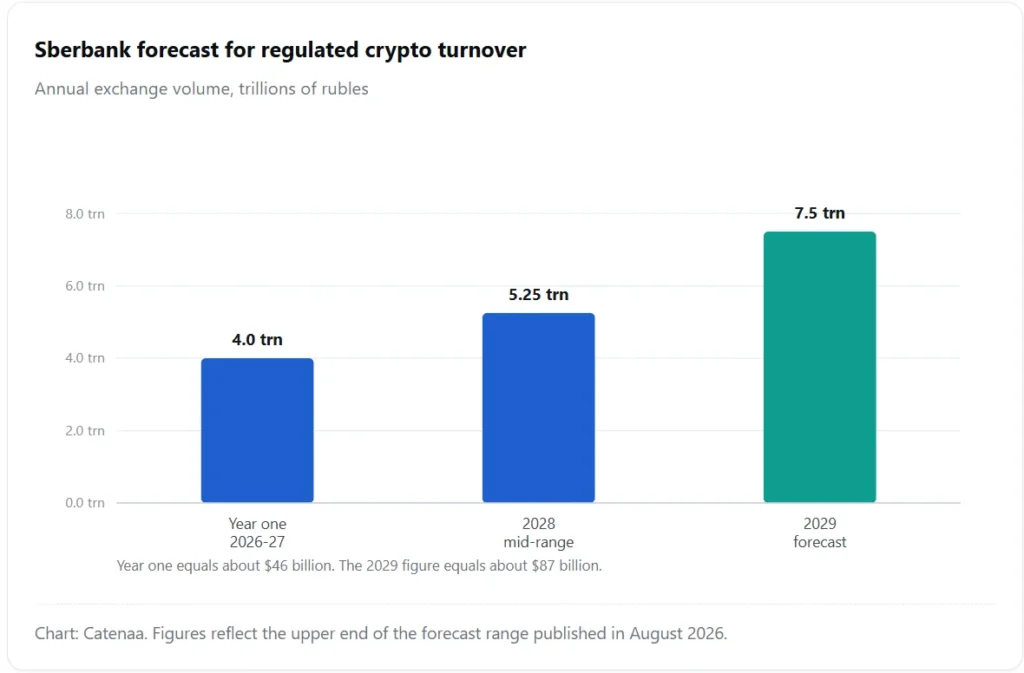
Sberbank analysts forecast 3.5 trillion to 4 trillion rubles of regulated trading in year one, near $46 billion.
The forecast rises to roughly 7.5 trillion rubles, or about $87 billion, by 2029.
Russia’s crypto law takes effect on 1 September 2026 under Bank of Russia supervision.
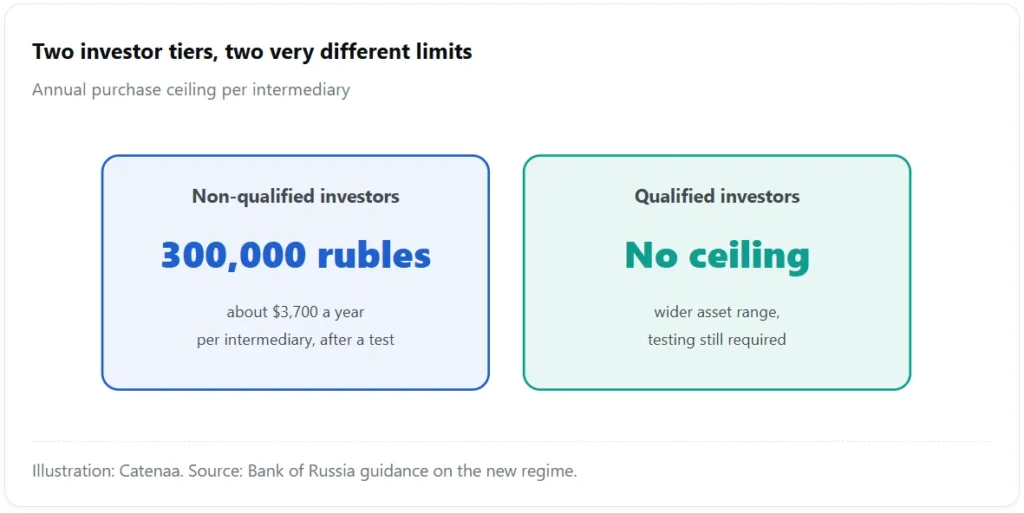
Retail investors face a 300,000-ruble annual cap for each intermediary.
Domestic payments in cryptocurrency remain prohibited, while cross-border trade settlement is allowed.
Russia will switch on a supervised crypto market this week. Analysts at Sberbank expect regulated exchange turnover of 3.5 trillion to 4 trillion rubles during the first year. That upper figure equals roughly $46 billion.
The bank’s team projects further growth after the launch phase. Volumes could reach about 7.5 trillion rubles, or nearly $87 billion, by 2029. Anatoly Popov, deputy chairman of Sberbank, set out those numbers to Russian media.
The rules that start this week
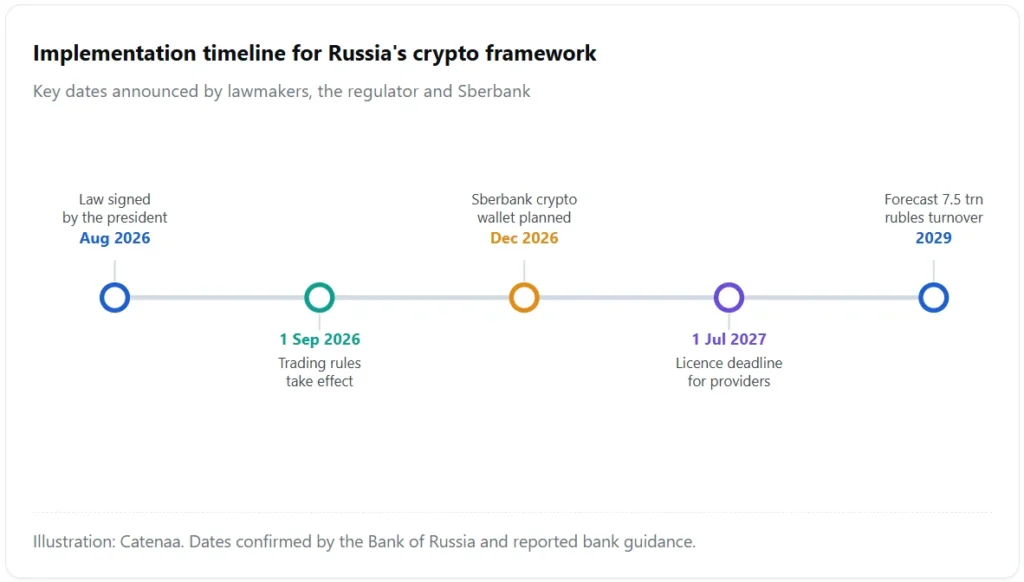
President Vladimir Putin signed the framework in early August 2026. The main provisions apply from 1 September 2026. Investors may buy and sell cryptocurrency through licensed intermediaries, the Bank of Russia confirmed.
Non-qualified investors must pass a knowledge test first. They may then buy up to 300,000 rubles of approved assets a year through each intermediary. Qualified investors also sit a test, yet they face no volume ceiling.
Furthermore, the regulator has approved a short first list of tradable assets. It covers Bitcoin, Ether, and Tether, according to TASS. The central bank selected them using capitalisation, turnover, and price history.
Where the volume will come from
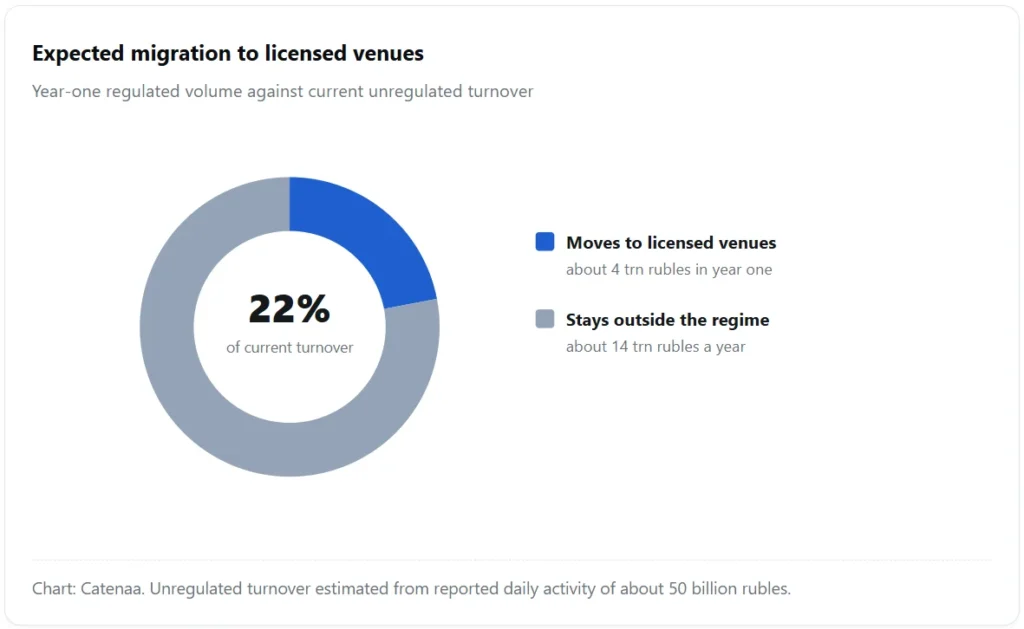
Russians already trade digital assets in large quantities. Daily turnover across unregulated venues sits near 50 billion rubles. That pace implies roughly 18 trillion rubles a year.
Sberbank therefore assumes partial migration rather than fresh demand. Around one fifth of existing activity may move onto licensed platforms in year one. Trust, tax clarity, and custody quality will decide the pace.
Banks prepare products for the new regime
Sberbank plans to launch a crypto wallet in early December 2026. The lender also wants to offer loans secured against Bitcoin, Ether, and Tether. Any such product needs central bank approval before launch.
“We prepared for this in advance, and we already have practical experience working with digital assets,” Popov said. State-linked banks hold a structural advantage here because distribution decides retail adoption.
Meanwhile, existing service providers face a compliance clock. Market participants must obtain licences and meet the new requirements by 1 July 2027. Digital repositories will record ownership rights alongside the exchanges.
What stays off limits
The regime remains narrow by design. Cryptocurrency payments for goods and services inside Russia stay banned. However, exporters and importers may settle cross-border trade in digital assets without limits on wallet type.
Residents must also report foreign-held crypto to the tax authorities. That reporting duty gives the state visibility over offshore balances. Consequently, compliance costs will rise for active traders.
Why the numbers deserve scrutiny
Forecasts from a market participant carry an obvious interest. Sberbank expects to capture a share of the volumes it projects. Readers should therefore treat the range as a commercial estimate rather than an official target.
Two variables matter most. First, sanctions complicate custody, banking rails, and liquidity sourcing for Russian venues. Second, the 300,000-ruble retail cap limits the depth of domestic order books. Success will depend on qualified investors and corporate flows.