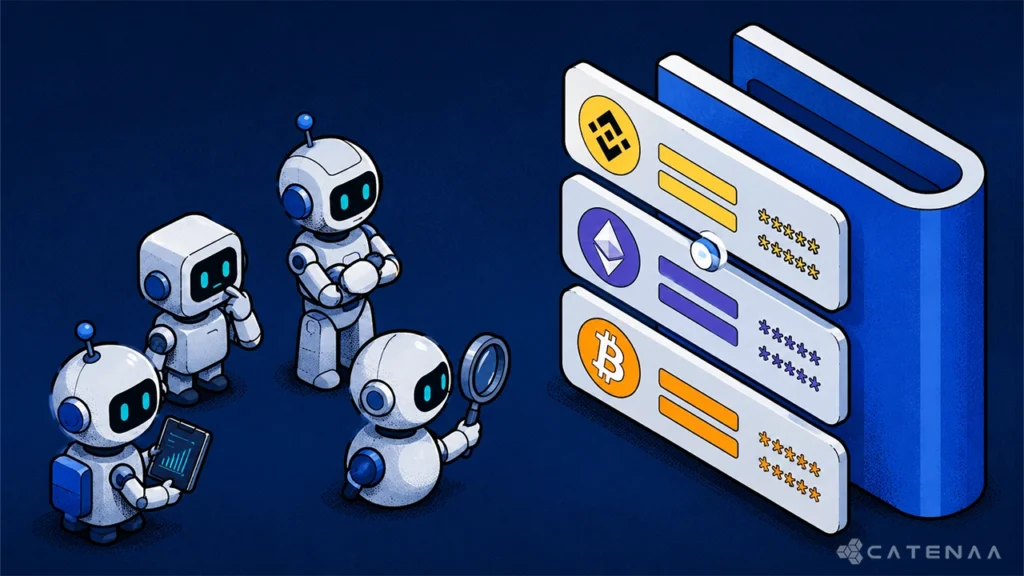


Catenaa, Tuesday, September 01, 2026-human.tech has launched its Wallet Protocol on the Ika decentralized network, offering developers a multichain wallet system designed for decentralized applications and autonomous AI agents.
The protocol currently supports Ethereum Virtual Machine-compatible networks, Sui and Solana, with additional blockchain support planned, according to a company announcement published through Chainwire.
human.tech said the architecture allows applications to use a single account and security policy across supported networks without requiring users to manage separate native gas tokens for every chain.
The system is built by Holonym Foundation and uses Ika’s decentralized multiparty computation network to divide transaction-signing authority rather than placing complete control of a private key with one service provider.
The launch is particularly aimed at applications where software can initiate transactions on behalf of users.
AI agents are increasingly being developed to make payments, trade assets and interact automatically with blockchain applications. That creates a security problem because autonomous software requires enough authority to perform tasks without receiving unrestricted control over a user’s assets.
human.tech said its system addresses that problem through programmable transaction policies.
Developers can define what an application or AI agent is permitted to do, including conditions that must be met before a transaction can be signed.
Those controls can be applied across multiple blockchains through the same policy engine.
Ika co-founder Omer Sadika said the central problem for agent-based finance is defining authority rather than simply increasing transaction speed.
The architecture is designed so that neither the application provider nor Ika can independently authorize a transaction, according to the companies.
The wallet uses a form of two-party multiparty computation, or MPC, for transaction signing.
Instead of storing a complete private key in one location, cryptographic control is divided between different components.
One side of the process operates through a secure computing enclave, while the second involves Ika’s decentralized MPC network.
human.tech said Ika can distribute its portion of the signing process across more than 100 nodes.
The company describes the approach as “protected self-custody,” although that term represents human.tech’s characterization of its product.
The goal is to reduce dependence on a single wallet infrastructure provider while preserving automated transaction capabilities.
The Ika-powered system, called “Squid Mode,” is now live, according to human.tech.
Developers can access it through human.tech’s Wallet-as-a-Protocol software development kit and command-line tools.
The software allows developers to set customized transaction policies and connect external security systems through webhooks.
Applications can also sponsor blockchain transaction fees.
That means users may be able to interact with applications without first obtaining the native gas token required by each supported blockchain.
Removing that requirement could simplify applications designed to operate across several networks.
A user moving between Ethereum-compatible networks, Solana and Sui would otherwise need separate assets to pay transaction fees on each ecosystem.
human.tech also said its architecture allows the same wallet authority to extend across supported chains without requiring users to bridge assets simply to establish control on another network.
Cross-chain applications have traditionally relied heavily on bridges or wrapped assets when moving value between blockchains.
Ika takes a different approach by extending programmable signing authority across networks.
That does not mean assets themselves automatically move between chains.
Instead, the same decentralized wallet-control infrastructure can authorize transactions involving native assets on different networks.
The distinction could be useful for trading, treasury management and applications that operate simultaneously across several blockchains.
human.tech is entering a competitive market for embedded wallet infrastructure.
Services such as Privy and Fireblocks allow businesses to add wallet and custody capabilities without requiring users to manage traditional seed phrases or complex blockchain interfaces.
human.tech argues its decentralized signing structure reduces dependence on a single service provider.
The company also said its standard Wallet Protocol is currently available without usage-based charges and includes migration tools for developers moving from other providers.
Those pricing and competitive claims were contained in the company announcement and were not independently verified.
The longer-term test will be whether developers consider decentralization, multichain support and programmable controls sufficiently valuable to switch from established wallet infrastructure.
AI agents could make wallet security increasingly important.
An individual traditionally reviews and approves a cryptocurrency transaction manually.
An autonomous agent may instead perform hundreds or thousands of actions according to predefined instructions.
Giving such software unrestricted access to a private key could create severe risks if the agent is compromised or manipulated.
Prompt injection is one concern.
An attacker may attempt to manipulate an AI system into performing an action outside the user’s original intent.
human.tech said its wallet architecture was designed to address risks including prompt injection, data leakage, malware, infrastructure failures and human error.
Policy controls could, for example, limit which assets an agent can transfer, how much it can spend or which applications it can interact with.
The effectiveness of those protections will depend on how developers configure and enforce them.
The company is positioning the protocol for more than AI payments.
Potential applications include decentralized finance, stablecoins, tokenized real-world assets, prediction markets, trading and social applications.
A single multichain policy system could be useful for institutional products that need consistent security controls across several blockchain environments.
The same architecture could also support consumer applications seeking to hide blockchain complexity.
Developers increasingly want users to interact with digital assets without managing network selection, gas payments and private-key infrastructure directly.
Wallet abstraction is becoming one way to achieve that.
human.tech said more than 51 million credentials have been issued through its wider technology stack to 2.1 million accounts and that its systems have protected more than $512 million in value from bot and duplicate-account activity.
Those figures were provided by the company and were not independently verified in the Chainwire release.
The Wallet Protocol will now face a different test: whether decentralized applications and AI developers adopt it for real financial activity.
The launch comes as blockchain infrastructure increasingly shifts toward software that can act autonomously rather than waiting for a person to approve every transaction.
That development creates an unusual requirement.
Wallets must become easier for software to use while becoming harder for software to abuse.
human.tech and Ika are betting that programmable, distributed signing authority can provide that balance.