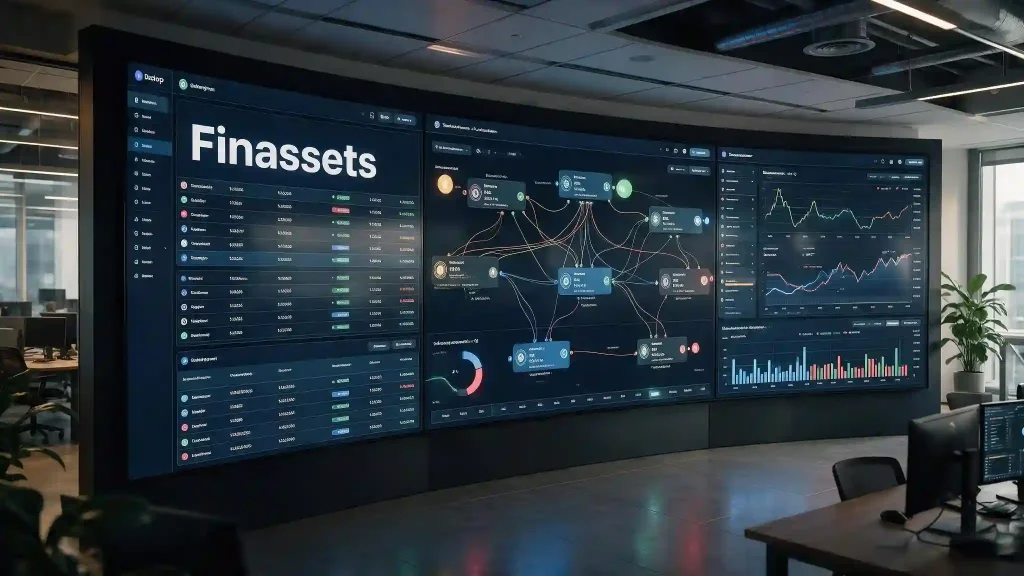


Catenaa, Tuesday, September 15, 2026- Finassets has launched an updated Back Office Dashboard that gives businesses real-time visibility into cryptocurrency transaction flows, network costs and payment activity across multiple blockchains.
The Panama-registered crypto payment infrastructure company said the dashboard brings major payment metrics into a single interface for finance and payments teams.
Users can select a reporting period and view activity without first exporting transaction data into external spreadsheets.
The dashboard is already live for existing Finassets Back Office customers and requires no separate setup.
The company said the system is designed to help merchants identify changes in network costs and transaction patterns on the same day they occur.
That includes monitoring whether withdrawal volumes are rising faster than deposits or whether payment activity is becoming concentrated on one blockchain.
Merchants can also compare network costs against payment volumes and reconcile those figures with internal records.
Finassets said such visibility can be especially useful for businesses that process stablecoins across several networks.
USDT, for example, can move across blockchains including Tron and BNB Smart Chain, with transaction fees differing sharply between networks.
Finassets Chief Executive Vitalijs F. said the company found large differences when comparing USDT network costs for some of its larger customers.
According to Finassets, TRC20 transfers were consistently more expensive in those comparisons even when Tron was not processing the highest transaction volume.
The company said the network fee on TRC20 was more than 300 times higher than an equivalent transfer using BEP20 in the example it analyzed.
Finassets did not disclose the transaction sizes, timing or broader methodology behind that comparison.
The dashboard allows merchants to see similar differences directly rather than comparing blockchain networks manually.
That could help payment teams decide how to route transactions when several networks support the same token.
Network fees can fluctuate according to blockchain activity, transaction demand and other conditions.
A payment rail that is inexpensive during one period may become more costly later, particularly during periods of heavy network usage.
For businesses handling high transaction volumes, even small differences in per-transfer costs can accumulate into larger operational expenses.
Finassets said the dashboard is intended to make those shifts visible before they appear in month-end financial reports.
The company cited Deloitte research showing 58% of finance leaders rank cash visibility and financial-risk visibility among their main priorities.
Crypto payments add another layer to that challenge because companies may be moving assets across different tokens, blockchains and settlement systems at the same time.
Traditional payment reconciliation can often rely on banking statements tied to established accounts and payment processors.
Crypto transactions may instead involve blockchain addresses, network fees and multiple versions of the same stablecoin operating across different chains.
Finassets is attempting to bring those data points into one operating view.
The system can help finance teams compare incoming and outgoing transaction activity while tracking how much each network is costing.
That could also help companies detect operational changes that might otherwise remain hidden inside aggregate monthly data.
A sudden rise in withdrawals, for example, could become visible before the end of an accounting period.
Similarly, increasing dependence on one blockchain could alert a merchant to concentration risk.
The same tools could help businesses compare blockchain transaction records against their internal accounting systems.
Finassets said this can reduce the need to manually match payment volumes and fees after transactions have already been processed.
The company described the release as the first version of the dashboard and said additional metrics are planned.
No timetable was disclosed for those future additions.
The dashboard operates alongside Finassets’ existing payment infrastructure.
The company supports cryptocurrency checkout services, payment buttons, invoicing, mass payouts and B2B crypto exchange functions.
It also offers API integration for businesses that want to add cryptocurrency payment processing directly to their platforms.
Finassets said merchants can process more than 70 cryptocurrencies through its infrastructure.
Supported assets include bitcoin, ether and stablecoins such as USDT and USDC across multiple blockchain networks.
The company says transaction fees begin at 0.4% and can fall to 0.2% as processing volume increases.
Finassets has operated since 2021 and serves sectors including e-commerce, forex, iGaming and other eligible online businesses.
The new monitoring system reflects a broader shift in crypto payments from simply accepting digital assets toward managing them with tools more familiar to traditional finance teams.
As businesses process larger volumes of stablecoins and other digital assets, monitoring network costs can become as important as tracking the value of the payments themselves.
The growth of multichain stablecoins has increased that complexity.
A merchant receiving USDT may need to manage balances across several networks, each with different fees, confirmation times and liquidity conditions.
Real-time monitoring can therefore influence both treasury management and payment routing decisions.
Finassets’ dashboard does not change the underlying blockchain transaction costs.
Instead, it gives businesses more visibility into those costs and how they relate to actual payment activity.
The company is betting that better monitoring will help merchants make faster routing and reconciliation decisions as crypto payment operations become more complex.