


May 29, 2026 – Jefferies sees a wave of blockchain public listings ahead. Tokenized assets already exceed $29 billion. The shift from speculation to infrastructure is accelerating fast.
In Summary
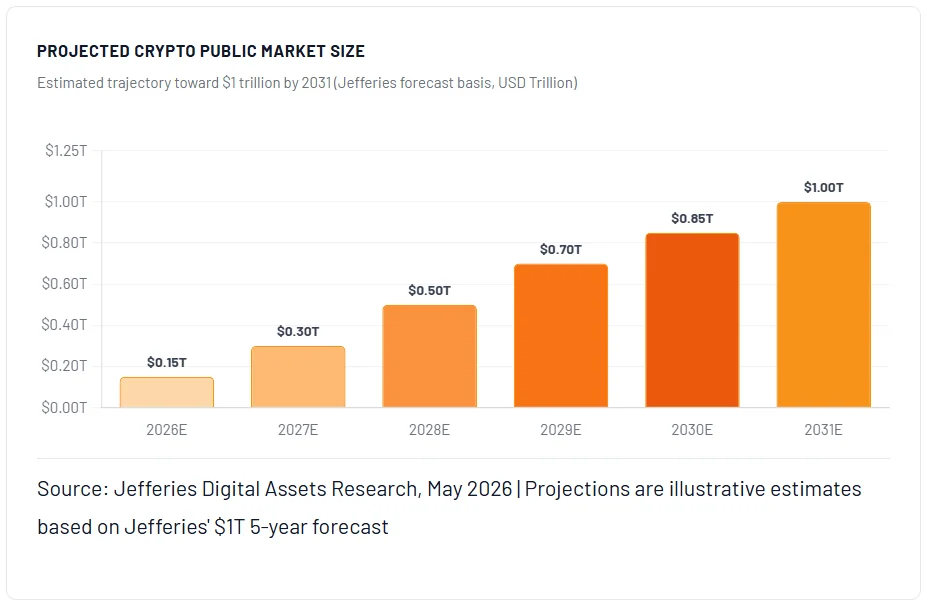
Jefferies forecasts that crypto and blockchain IPOs could form a $1 trillion public market within five years.
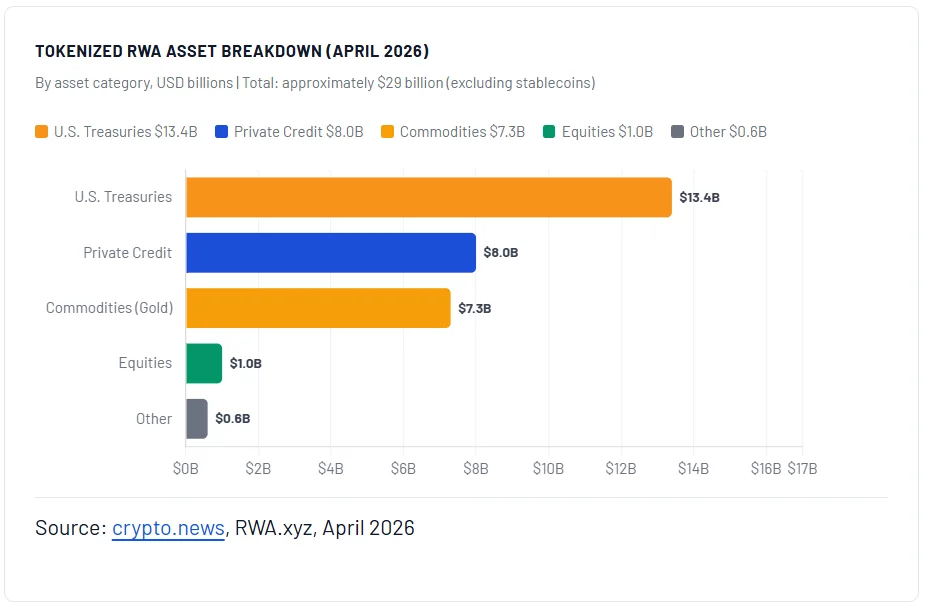
Tokenized real-world assets (RWAs) crossed $29 billion by April 2026, up from $1.5 billion in early 2023.
Major firms, including Payward (Kraken) and Securitize, are finalizing IPO plans in 2026.
The proposed CLARITY Act has an 85% probability of passage in 2026, according to prediction markets.
JPMorgan, BlackRock, and Goldman Sachs are actively deploying tokenized financial products.
Wall Street has a bold new prediction. Investment bank Jefferies expects crypto and blockchain IPOs to form a $1 trillion public market within five years. The forecast follows the bank’s inaugural Digital Assets Investor Conference in New York. It signals that digital assets are moving from the fringes of finance to the mainstream.
The $1 Trillion Forecast
Executives from 35 digital asset companies attended the New York conference. Additionally, roughly 150 institutional investors participated. Together, they signaled a clear shift in how Wall Street views digital assets.
Discussions at the conference focused less on bitcoin prices. Instead, participants explored how blockchain is becoming core financial infrastructure. Client interest is growing fast, Jefferies noted in its post-conference report. Banks, exchanges, asset managers, and payments firms are all integrating blockchain tools.
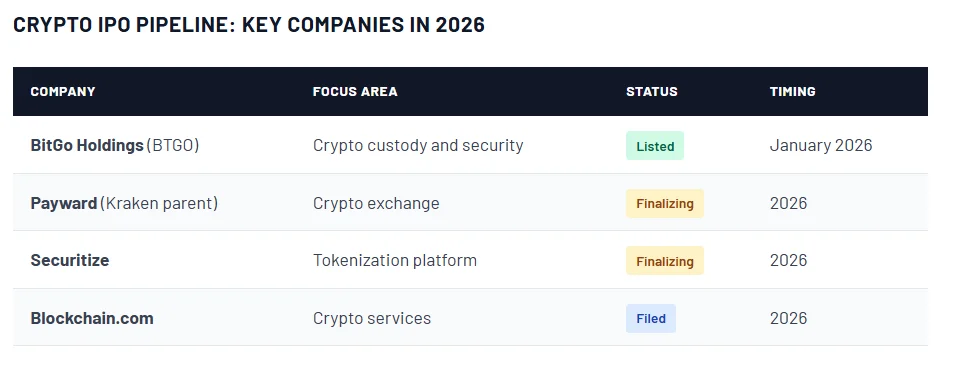
Furthermore, Jefferies expects a steady pipeline of new crypto listings over the next two years. Several companies are already moving forward. Kraken’s parent company, Payward, is finalizing its IPO. Tokenization firm Securitize is doing the same. BitGo Holdings already debuted publicly in January 2026. Blockchain.com has also recently filed to go public.
The crypto IPO market had a strong 2025. Rising bitcoin prices and renewed investor appetite drove several digital asset firms public. Activity slowed in early 2026 due to macroeconomic uncertainty. However, Jefferies and other analysts expect the pace to pick up significantly later this year.

Tokenization Is the Engine
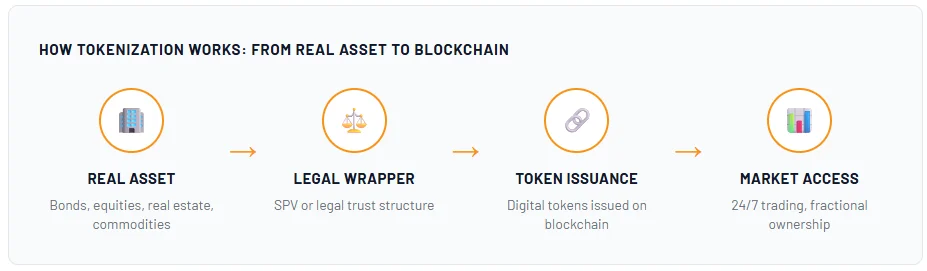
Tokenization is the process of representing real-world assets on blockchain networks. It enables fractional ownership, faster settlement, and round-the-clock trading. Moreover, it is moving rapidly from experimentation to mainstream deployment.
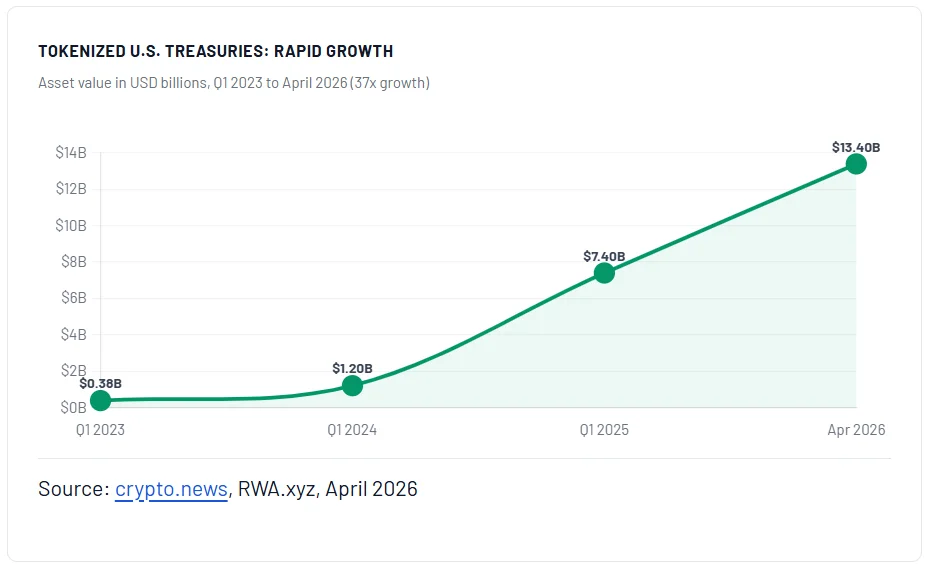
The numbers are compelling. Tokenized real-world assets crossed $29 billion in value by April 2026. That compares to just $1.5 billion in early 2023. Therefore, the market has grown nearly twentyfold in just three years.
Tokenized U.S. Treasuries led the surge. They rose from $380 million in Q1 2023 to $13.4 billion by April 2026. That is a 37-fold increase. Tokenized commodities, mostly gold, added $7.3 billion. Private credit tokenization contributed approximately $8 billion more.
Private credit is the largest single tokenized asset category today. Analysts expect it to account for 45 to 50 percent of the total tokenized asset market in 2026. Furthermore, tokenized equities are projected to see 200 to 300 percent growth. Mid-2026 regulatory clarity should drive that expansion.
Mordor Intelligence projects the broader asset tokenization market will reach $18.74 trillion by 2031. That implies a compound annual growth rate of 44.25 percent. Boston Consulting Group forecasts $16 trillion in tokenized assets by 2030.
Wall Street Has Already Moved In
Major financial institutions are actively leading this transformation. JPMorgan’s Kinexys network processed $1.5 trillion in tokenized transactions by the end of 2024. Goldman Sachs is developing three new tokenized products for launch. BlackRock’s BUIDL fund holds over $2.4 billion in tokenized treasury assets.
Two major deals further highlight the sector’s ambitions. First, Securitize partnered with transfer agent Computershare. Together, they aim to enable public companies to issue tokenized shares. This could eventually open access to approximately $70 trillion in U.S. equity assets.
Second, crypto platform Bullish agreed to acquire Equiniti for $4.25 billion. Bullish is building a blockchain-based settlement infrastructure through this acquisition. The deal signals that crypto-native firms are moving deep into traditional finance territory.
Stablecoins are also gaining significant momentum. Payment companies use them to cut cross-border transfer costs. They also allow settlement around the clock. Total stablecoin transaction value reached approximately $26 trillion in 2024, according to the World Economic Forum.
The Regulatory Catalyst
Regulatory clarity could unlock even faster growth. The proposed CLARITY Act aims to establish a full framework for U.S. digital asset markets. Jefferies described it as potentially the missing piece for institutional adoption.
The U.S. Senate Banking Committee released an updated bill draft in May 2026. It covers trading, custody, and token classification. Prediction markets on Polymarket assigned an 85 percent probability to its passage in 2026.
Furthermore, JPMorgan analysts linked the CLARITY Act to key growth catalysts. Analysts expect regulatory certainty, institutional scaling, and tokenization to all benefit from passage. The World Economic Forum has noted that policy clarity enables responsible innovation. It gives businesses the confidence they need to scale.
“We are moving into a world where essentially the entire economy is going to be tokenized.”
-Joseph Lubin, CEO of Consensys, at Consensus Miami 2026
The Road Ahead
The crypto IPO market slowed in early 2026. That slowdown reflected macroeconomic uncertainty rather than structural weakness. However, Jefferies and other analysts expect a clear rebound in listings later this year.
The investor mindset has also shifted fundamentally. Institutional players are no longer chasing meme coins or short-term price gains. Instead, they are targeting companies generating real revenue. Payments, trading, lending, and tokenized financial products are now the focus. This is a structural change, not a cyclical one.
Jefferies noted that investors often misjudge tech disruption. They tend to overestimate short-term impact. Meanwhile, they underestimate long-term reach. Therefore, a $1 trillion crypto public market may look modest when viewed in hindsight.
Wall Street is rebuilding the financial system on blockchain rails. The IPO wave ahead will reflect that transformation. Investors who understand the shift early are likely to benefit most.