


September 03, 2026 – Fiscal worries pushed money into scarce assets last month. Gold and bitcoin funds took in record sums.
In Summary
Bitcoin rose about 24 percent in August, its strongest month in 21 months.
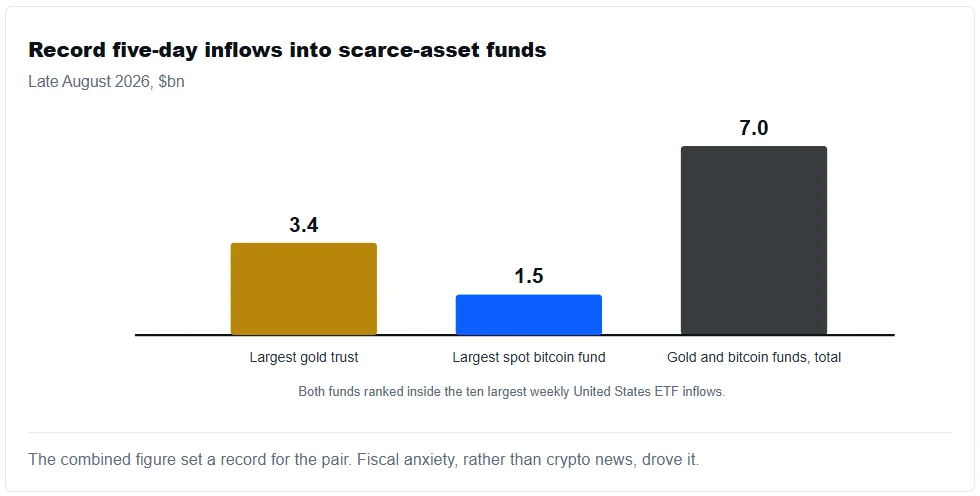
Gold and bitcoin exchange traded funds drew a record $7bn across five sessions.
Treasury buyback plans revived the debasement trade among allocators.
Futures pricing put September rate-rise odds near 60 percent before the meeting.
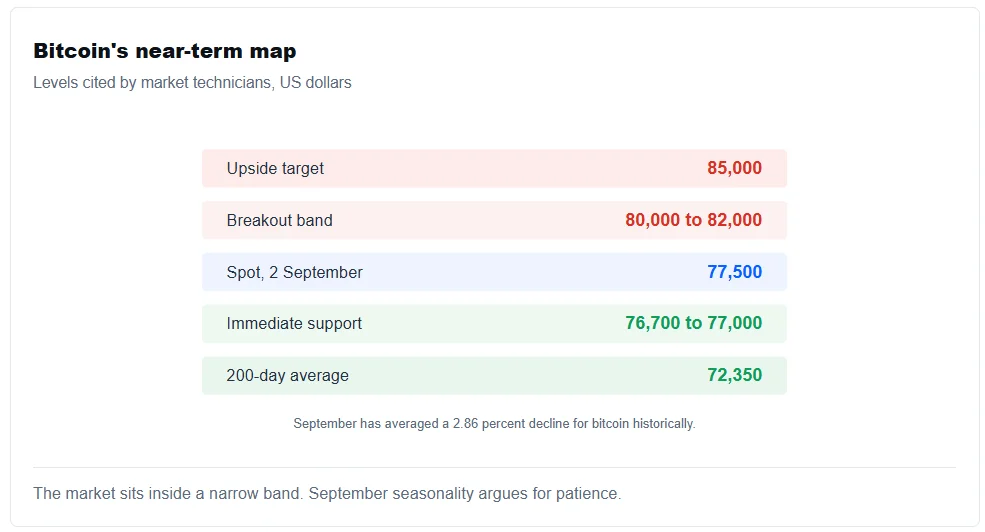
Traders now watch $80,000 above and the 200-day average near $72,350 below.
Two hedges, bought together
Investors treated gold and bitcoin as partners last month, not rivals. Funds tracking the two assets attracted roughly $7bn over five trading sessions in late August. That figure set a record for the pair. A large gold trust took about $3.4bn of it. The biggest spot bitcoin fund took roughly $1.5bn.
Both products ranked among the ten largest weekly inflows in the American exchange traded fund market. Only a broad equity index fund gathered more money. Allocators, therefore, were not rotating between the two hedges. They were buying both at once.
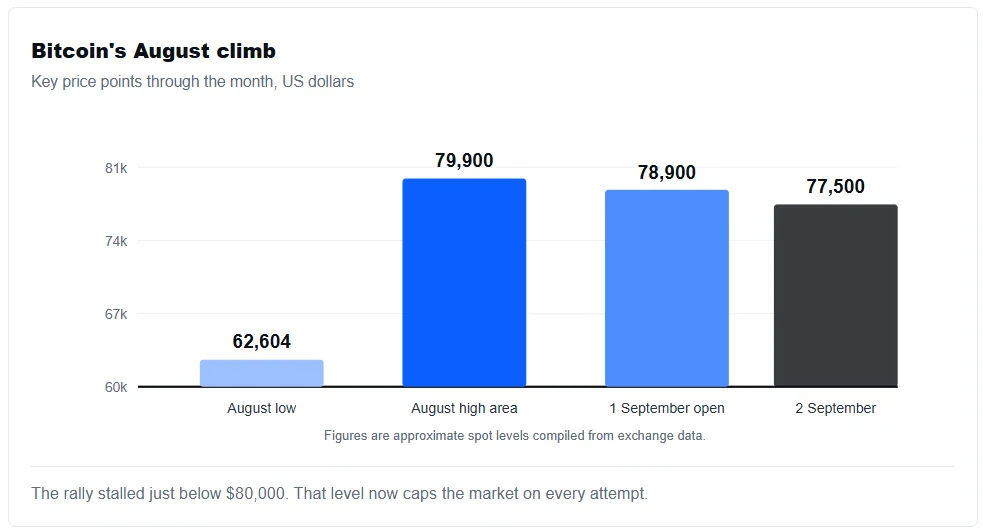
Bitcoin finished August up about 24 percent. That marked its strongest monthly gain in 21 months. Prices climbed from roughly $62,600 to just under $80,000 before easing. On Wednesday the token traded near $77,500.
Why the debasement trade returned
Fiscal policy supplied the spark. The Treasury announced a plan to double long-dated buybacks in late August. Investors read that decision as a signal about debt management pressure. Concerns about deficits and issuance duly resurfaced.
The quarterly refunding process sets those borrowing plans. Any shift toward heavier buyback activity draws close scrutiny. Scarce assets tend to benefit when that scrutiny intensifies.
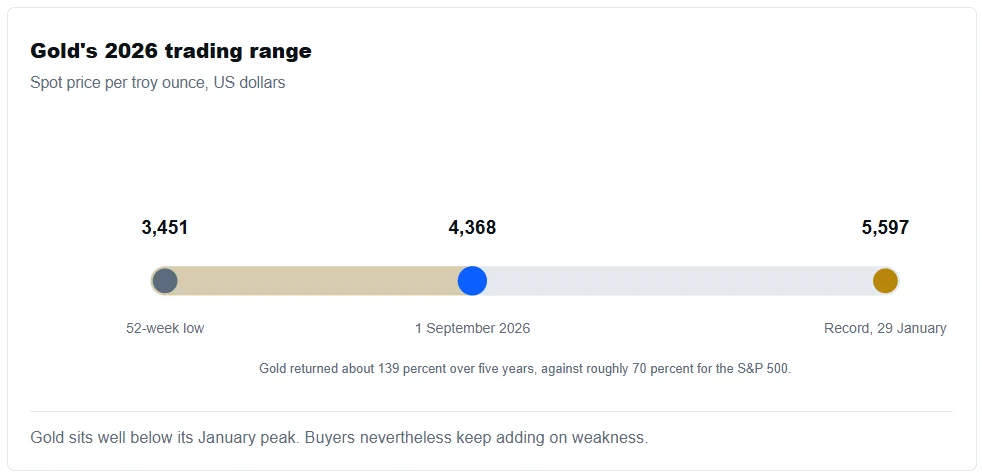
Gold has led that trade for two years. The metal traded near $4,368 an ounce on 1 September. It reached a record $5,597 on 29 January 2026 before correcting. Central bank purchases and fund inflows still support the market, as World Gold Council flow data shows.
The Federal Reserve complicates the story
Monetary policy pulls in the opposite direction. Kevin Warsh used his Jackson Hole keynote on 28 August to warn about persistent inflation. His remarks lifted expectations of tighter policy immediately.
Futures repriced within minutes. The CME FedWatch Tool showed rate-rise odds for the 15 and 16 September meeting climbing above 60 percent. Some readings reached the high sixties by early September.
Bond yields responded accordingly. Ten-year Treasury yields hovered near 4.8 percent, based on daily par yield data. Crude above $91 a barrel added another inflation worry. Higher real yields usually hurt assets that pay no income.

Flows came from a wider set of buyers
Retail traders drove earlier bitcoin cycles. This one looks different. Registered advisers, family offices and pension consultants now allocate through listed funds. Consequently, flows respond to macro data rather than to crypto headlines.
Corporate treasuries added to the bid as well. One large holder bought a further 4,603 bitcoin during the month. Spot funds also took in about $216.7m on the last Monday of August. Steady daily creations, therefore, matter more than any single large purchase.
Correlation patterns support the diversification case. Gold and bitcoin often move apart over short windows. Both nevertheless respond to the same fiscal signals. Holding the pair, therefore, smooths the ride for a portfolio built around scarcity.
Positioning looks warm, not reckless
Leverage metrics stayed contained through the rally. Perpetual funding sat near 0.007 percent per eight-hour period. That level implies mild long bias rather than crowding. Long liquidations of about $41m on Tuesday accounted for 85 percent of the daily total.
Sentiment gauges reflect optimism without euphoria. The fear and greed reading held near 70. Relative strength on the daily chart hovered around 71. Both signals suggest momentum is cooling gently.
Levels that matter now
Resistance begins at $78,150 and thickens between $80,000 and $82,000. A daily close above that band would open a path toward $85,000. Support starts at $76,700 and runs to $77,000. Below that, the 200-day average near $72,350 becomes the line to defend.
The bear case has not gone away
Higher policy rates raise the cost of holding non-yielding assets. A September increase would test that logic immediately. Moreover, oil above $91 a barrel keeps headline inflation sticky.
Some strategists also doubt the debasement story itself. They argue that equities hedge inflation more reliably over long horizons. Others point to September weakness as a recurring seasonal drag. Bitcoin has averaged a decline of about 2.86 percent in that month.
What to watch
Bitcoin now trades as a macro asset. Its next move depends on rates, deficits and the dollar. Crypto-specific news matters less than it once did.
Three events shape the next fortnight. August payrolls land on 4 September. Consumer price data follows on 11 September. The rate decision arrives on 16 September.
Fund flows offer the cleanest real-time signal. Sustained creations across gold and bitcoin products would confirm the diversification thesis. Persistent redemptions would suggest the August surge was mostly momentum. Either way, macro policy now sets the tone for crypto prices.