


July 20, 2026 – Strategy’s Michael Saylor rejects Bitcoin BIP-110, warning that its data caps and lower activation bar could fracture the network and dent its appeal.

In Summary
Saylor calls Bitcoin BIP-110 a threat to the network’s neutral rules.
The plan adds seven data caps for one year and lowers the miner bar to 55%.
He warns a lower bar could spark a chain split and unsettle large holders.
Saylor prefers the relay policy and market fees to a change to the consensus code.
Michael Saylor has hit out at Bitcoin BIP-110, a plan to curb on-chain data. The chair of Strategy calls it a real threat. Moreover, he says it could change how the network works.
Saylor made his case in a long essay on X. He called it “110 reasons BIP-110 is a bad idea.” As a result, his view has fired up a fierce fight.
Saylor is not the first big name in this fight. Other builders and execs have picked sides for weeks. Now his loud voice raises the stakes for both camps.
A cure worse than the condition
Saylor’s main fear is about a neural network. In short, he says the code cannot judge what data means. So a ban on spam would turn opinion into law.
“The proposed cure is more dangerous than the condition,” Saylor wrote. In his view, the rules should stay neutral. Also, he warns that this move sets a lasting trap.
Bitcoin cannot read intent, he adds. Therefore, the code cannot tell an image from a deal or a payment. Thus, a data ban would place human choice above the code.
How BIP-110 would work
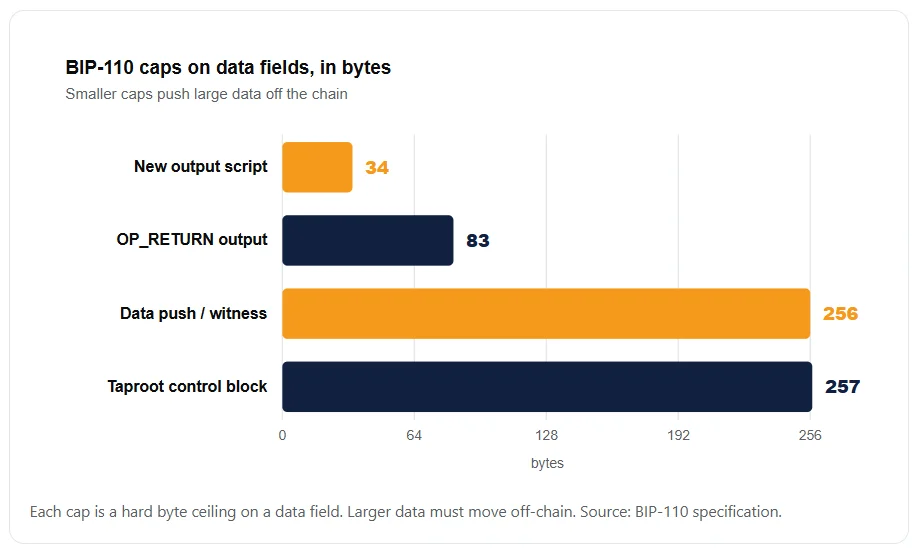
The plan adds seven new rules for a short one-year window. These rules cap data fields in many kinds of deals. For instance, most new outputs would shrink to 34 bytes.
The rules also trim other data paths on the chain. For example, they hold most data pushes to 256 bytes. In turn, they push large image and file dumps off Bitcoin.
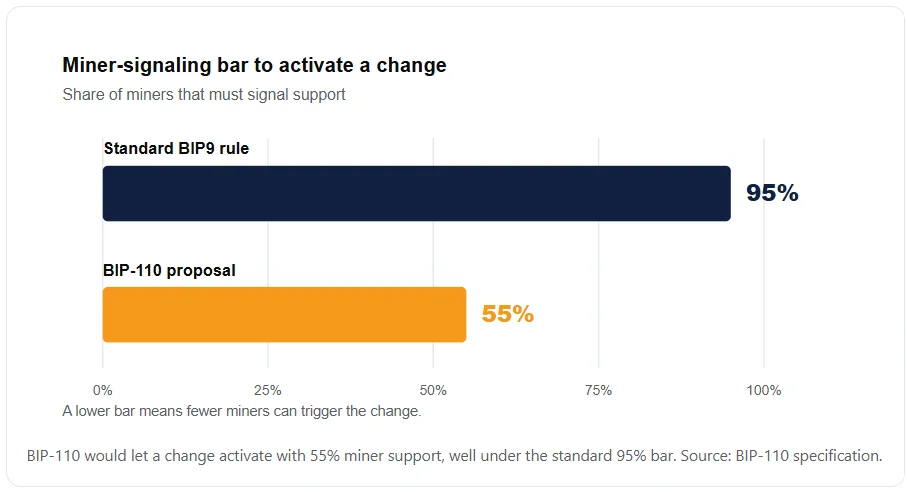
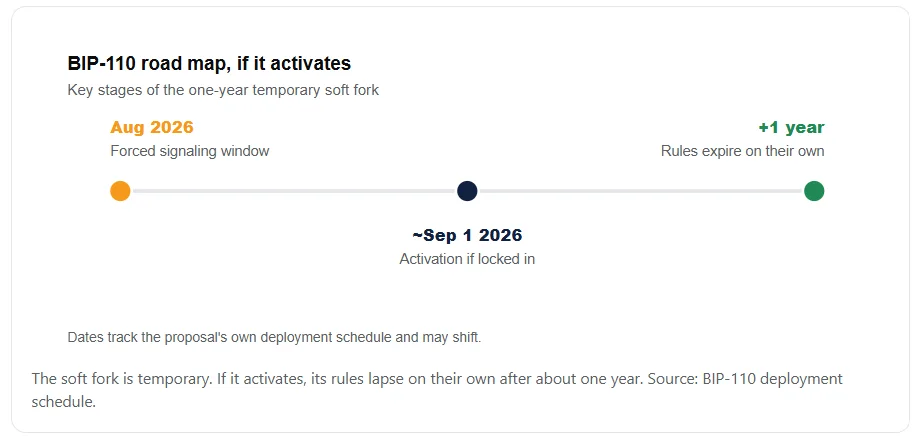
Notably, BIP-110 also significantly lowers the miner vote bar. Backers would need just 55% support, not the usual 95%. Because of that, the switch could land in early September 2026.
The authors say old coins stay safe under the plan. Any coin made before the switch keeps its full spend path. Still, a few rare setups could feel some strain.
Who gets to decide
Fans frame the plan as a return to sound money. However, critics call it a way to block valid, paid deals. Thus, the divide in views runs deep.
At heart, the row asks who gets to shape Bitcoin. Saylor wants no gatekeepers over valid, paid use. By contrast, backers want a firm line on data abuse.
Saylor also flags a chill on new ideas. If data is the target today, he asks, what falls next? Privacy tools or custody apps could be at risk, he warns.
The security question
Saylor calls the lower bar “too aggressive” for this kind of change. Since a vote gets easier, he fears a chain split. Also, rival chains could spook big funds that want calm.
His firm holds 843,775 BTC, the top corporate stash by far. Naturally, that heft gives his words real weight. Meanwhile, funds and desks track the fight with care.
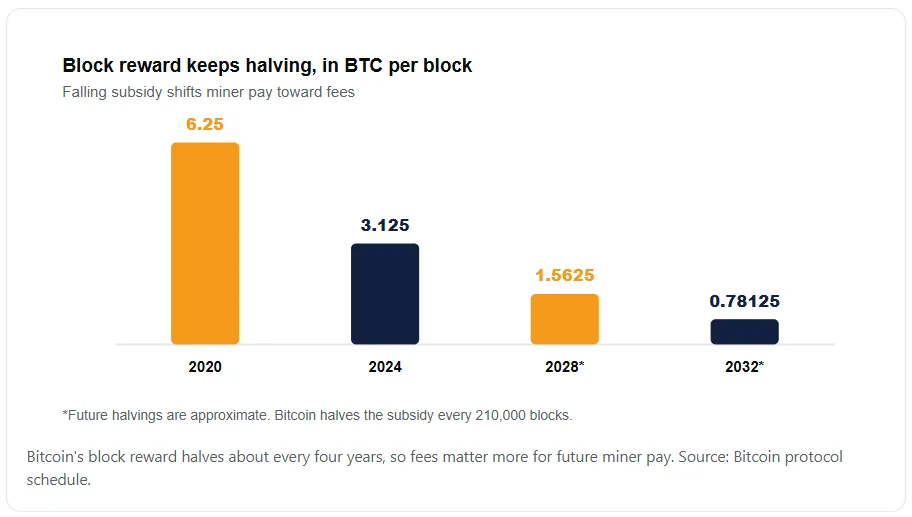
The math worries him too. If some users die, then the total fee demand may drop. Meanwhile, the block reward keeps halving every four years or so. Lower fees could then sap miner drive and, in time, chain safety.
A market-based fix
Rather than touch the code, Saylor points to tools that already work. Node runners can set their own rules to drop junk data. Or plain market forces can price spammers out over time.
“Bitcoin does not need guardians of purity. It needs guardians of neutrality.”
-Michael Saylor, executive chairman, Strategy
His close sums up the whole clash in sharp terms. “Bitcoin does not need guardians of purity,” he wrote. Instead, he says, “it needs guardians of neutrality.”
For now, miner and node backing stays very thin. Recent counts put node support at just 2%. Even so, a forced vote window in August will push the issue.