

Catenaa, Monday, August 31, 2026-Digital finance company Aconomy said its crypto-funded payment card has completed two years in operation, highlighting growing efforts to make digital assets usable for routine purchases through existing card networks.
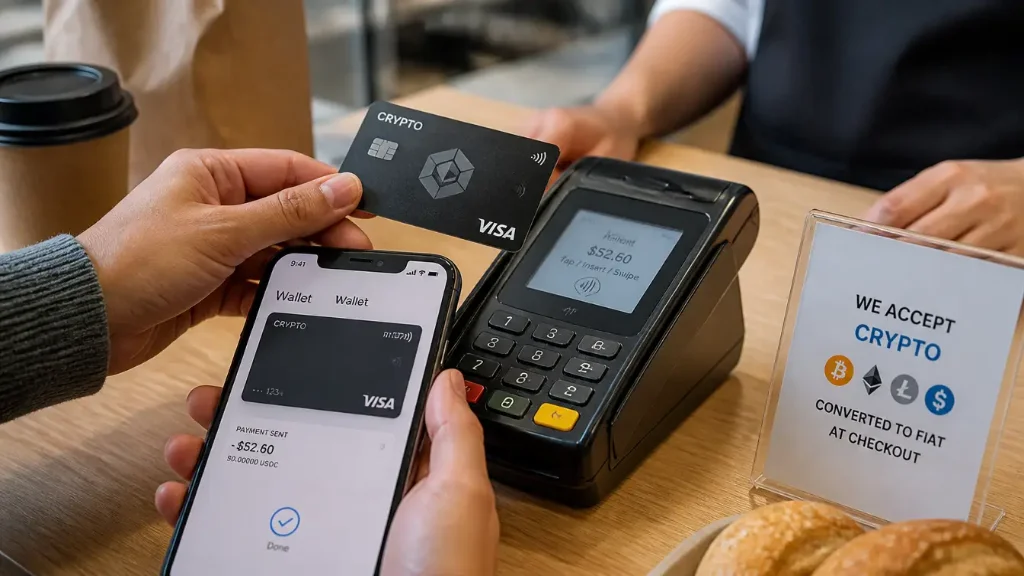
The Dubai-based company said Tuesday that the Aconomy Card allows users to load supported cryptocurrencies and have them converted automatically into local currency when a purchase is made.
The process means merchants do not need to accept cryptocurrency directly.
Instead, users spend digital assets through familiar card infrastructure while conversion takes place behind the scenes.
Aconomy said the card supports major cryptocurrencies including bitcoin, ether, USDT and USDC.
The structure reflects a wider shift in cryptocurrency payments.
Digital assets were once used primarily for trading, investment or transfers between crypto platforms.
Payment companies are increasingly trying to make them function as ordinary spending balances.
The Aconomy Card follows a model already used by several crypto card providers.
A user funds the card with digital assets, and the required amount is converted into conventional currency when a transaction occurs.
The merchant receives fiat currency through the card-payment system.
For the customer, the experience is designed to resemble an ordinary debit or prepaid card purchase.
That removes the need to manually sell cryptocurrency through an exchange before spending the proceeds.
Aconomy said its card can be used where supported Visa or Mastercard transactions are accepted.
It also integrates with Apple Pay, Google Wallet and Samsung Wallet, according to the company.
That approach allows crypto spending to use payment infrastructure already familiar to consumers and merchants.
It also avoids one of the biggest barriers to direct cryptocurrency payments.
Retailers do not need to install dedicated blockchain payment systems or price goods in digital assets.
The cryptocurrency component remains largely on the funding side of the transaction.
Aconomy says one feature distinguishing its card is the absence of daily or monthly spending limits imposed by the company.
Cardholders determine how much cryptocurrency to load and spend, according to the announcement.
The company described that structure as giving users greater control over their assets.
The claim should be viewed in the context of the card’s applicable terms, compliance requirements and any limits imposed by payment partners or local regulations.
Aconomy did not provide independently verified transaction volumes or the number of active cardholders in its announcement.
Stablecoins could be particularly important to products of this type.
USDT and USDC are designed to maintain values close to the U.S. dollar, making them more practical for day-to-day payments than highly volatile cryptocurrencies.
Recent industry data has shown stablecoins accounting for a large share of crypto card transactions.
That suggests many users see crypto-funded cards less as a way to spend speculative assets and more as a bridge between digital dollars and conventional merchant networks.
Bitcoin and ether can also be used as funding assets, but their changing market prices create different considerations for consumers spending them.
The broader payments industry increasingly focuses on hiding blockchain complexity from end users.
Consumers may want the speed or portability associated with digital assets without managing the technical details of wallets, networks and conversions.
Aconomy said its system handles the exchange into local currency automatically.
Its mobile application provides balances and transaction histories, while the company says customer support is available around the clock.
The company also said its card uses security protections designed for standard payment-card environments.
Those claims were contained in the Chainwire announcement and were not independently verified.
Aconomy’s anniversary comes as cryptocurrency payment cards show stronger usage across the industry.
Paymentscan data recently showed tracked crypto card spending exceeding $1 billion during July, with dollar-backed stablecoins accounting for about 70% of transactions.
That broader trend suggests the appeal of crypto payments may increasingly depend on integration with existing financial systems rather than replacing them.
Visa, Mastercard, mobile wallets and local currency settlement remain central to the customer experience.
Cryptocurrency instead becomes another way to fund those payments.
For consumers, that can make digital assets easier to use.
For payment providers, it creates another point of competition around conversion costs, supported assets, compliance and geographic availability.
The significance of crypto cards lies less in whether they replace bank cards and more in whether they make digital balances easier to spend.
Direct cryptocurrency acceptance by merchants remains limited compared with conventional card acceptance.
Linking digital assets to existing payment networks avoids that problem.
It also shifts the technical burden away from retailers.
A supermarket, airline or hotel can receive ordinary fiat currency while the customer funds the transaction from a crypto balance.
That architecture is becoming one of the more practical methods of bringing digital assets into everyday commerce.
Aconomy’s two-year milestone does not by itself establish the scale of adoption of its product.
The company did not disclose transaction values, card issuance figures or geographic usage in the announcement.
Still, the product reflects a wider payments trend already visible across the industry.
Crypto spending is increasingly being built to look less like a cryptocurrency transaction and more like an ordinary card payment.




