

July 25, 2026 – World Foundation has secured $52.5 million to expand its human verification network. The raise arrives as artificial intelligence weakens trust across digital platforms.
In Summary
The $52.5 million raise targets enterprise, consumer, and AI-agent integrations.
World now reports 39 million users and 18 million Orb-verified humans.
Network growth is strong, although verification conversion has softened slightly.
The token lockup limits immediate selling pressure but does not remove future dilution risk.
Privacy compliance remains the main obstacle to global adoption.
Funding shifts from expansion to utility
The new capital marks a strategic change. World spent earlier funding on network expansion and Orb distribution. It now wants wider usage inside everyday digital services.
The World ID funding came through a strategic WLD token sale. Every token sold carries a 12-month lockup. Pantera Capital led the first close. Bain Capital Crypto, Eightco Holdings, Selini Capital, and Susquehanna Crypto also participated.
World raised $135 million through another WLD sale in May 2025. Therefore, the latest round equals 38.9% of that earlier raise. Together, both disclosed sales generated $187.5 million.
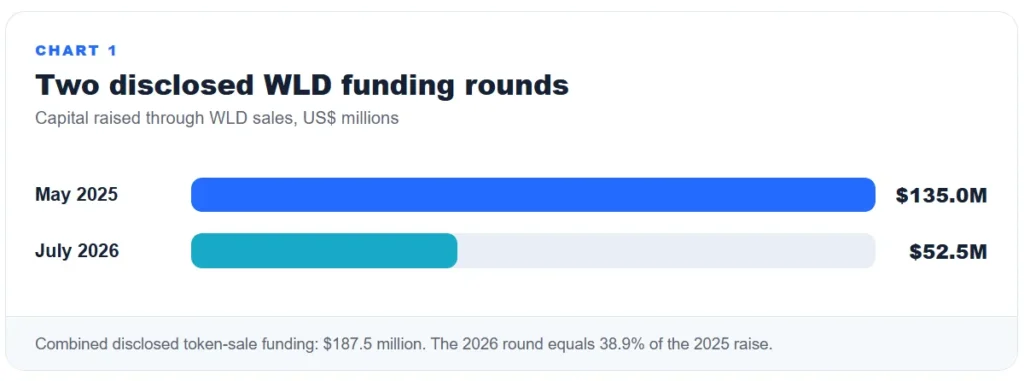
That comparison matters because the latest amount is smaller. However, the targeted use may create greater commercial leverage. Integrations can turn identity infrastructure into recurring digital activity.
The foundation named Zoom, DocuSign, Okta, Vercel, and Tinder among current integrations. These platforms cover meetings, contracts, authentication, software deployment, and dating.
Network scale changes the economics
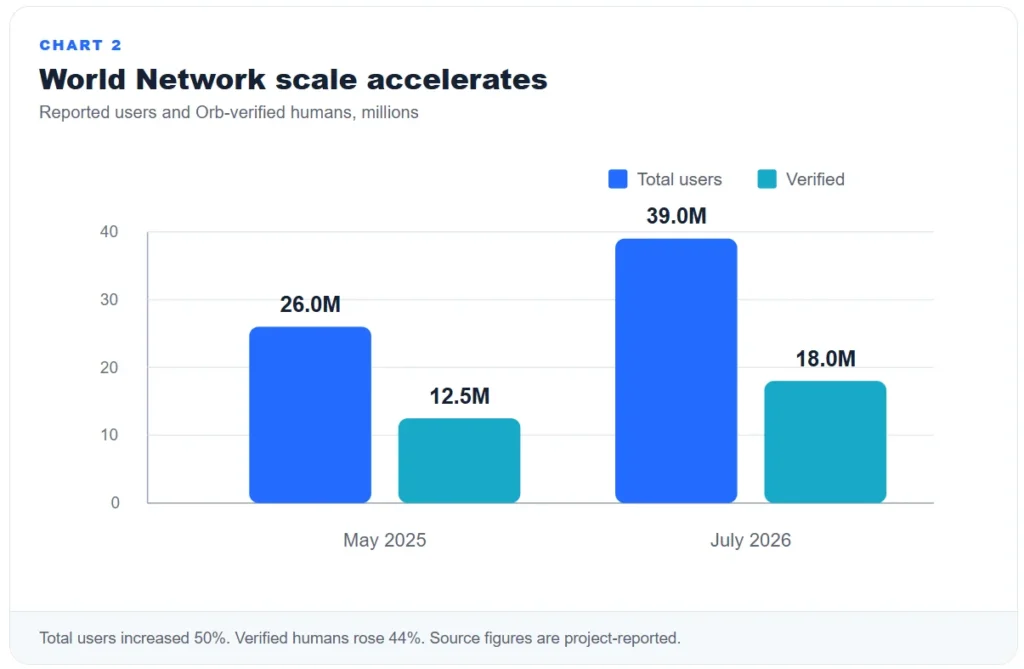
World reported more than 26 million users in May 2025. It also counted 12.5 million verified people then.
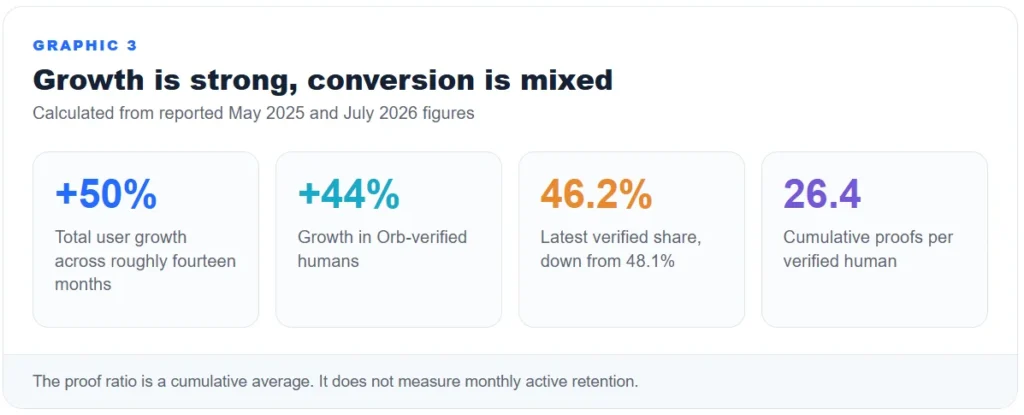
The latest Year 3 network update shows 39 million users and 18 million verified humans. Consequently, total users grew 50% across roughly fourteen months. Verified users increased 44% during the same period.
However, the verified share fell from 48.1% to 46.2%. User acquisition therefore outpaced Orb verification. This gap could limit network quality if unverified accounts remain inactive.
World also reports more than 475 million identity proofs since launch. That equals about 26.4 cumulative proofs per verified human. The ratio suggests repeat usage, although it does not reveal active-user retention.
Why AI creates demand
Deepfakes create a trust problem, but World ID is not a deepfake detector. Instead, it offers proof that a unique human controls an account.
That distinction is important. Detection tools inspect media for manipulation. Proof-of-human systems verify the participant behind an interaction.
This model could strengthen sensitive workflows. Examples include contract approval, account recovery, online voting, ticket sales, and high-value payments.
World ID 4.0 targets large integrations and independent credentials. Therefore, developers can build verification layers without exposing a user’s legal identity.
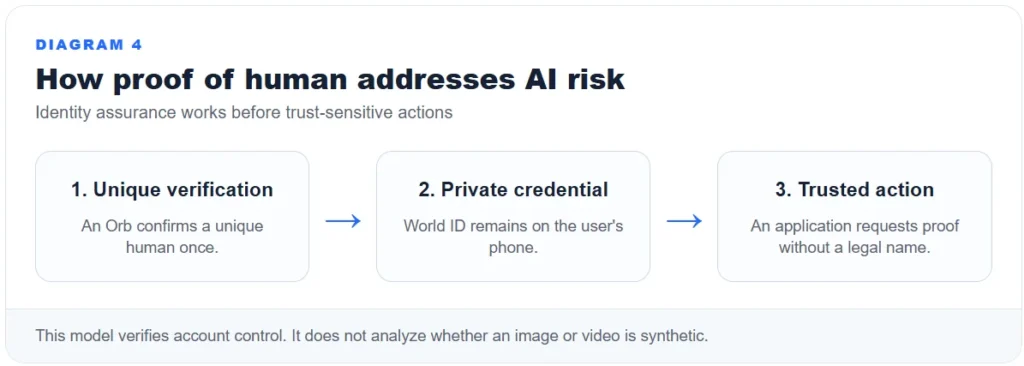
The commercial opportunity depends on network effects. More verified people attract more applications. More applications then increase proof usage and protocol value.
Token structure supports patience, not certainty
A 12-month lockup reduces immediate market supply from the new sale. It also signals that strategic investors accepted delayed liquidity.
Still, lockups only postpone potential selling. Future market effects will depend on token quantities, release terms, demand, and broader WLD circulation.
World’s official whitepaper assigns 75% of the initial 10 billion WLD supply to the community. Investors hold 13.6%, while the team controls 11.1%. A further 0.3% sits in reserve.
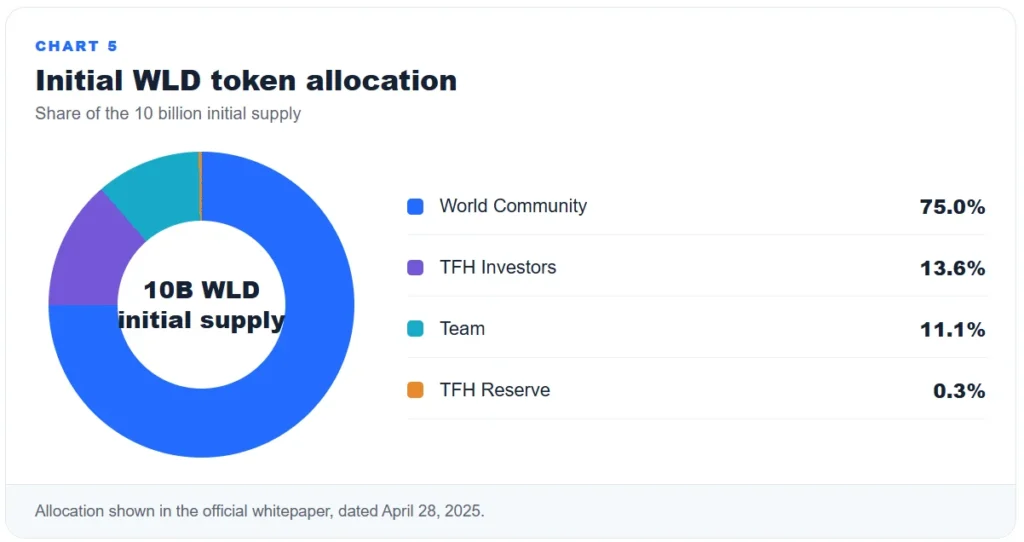
This allocation supports broad participation. Yet governance decisions still influence community-token releases. Investors should therefore watch circulating supply alongside user growth.
Privacy remains the decisive test
Biometric identity can create strong uniqueness guarantees. However, it also creates regulatory and reputational exposure.
Hong Kong’s privacy regulator investigated earlier Worldcoin operations in 2024. It found breaches involving collection, retention, transparency, and access rights. The authority ordered local iris and face scanning to stop.
The regulatory finding covered 8,302 scanned individuals. It shows why technical privacy claims must match local consent rules and operational practices.
The world now emphasises anonymised cryptography and phone-based credential storage. Even so, global expansion requires country-specific compliance, clear consent, and credible deletion controls.
What investors should watch
The strongest near-term indicator is verified usage, not headline registrations. Quarterly proof activity would show whether integrations create sustained demand.
Next, investors should track enterprise launches beyond pilot announcements. They should also monitor WLD circulation after the lockup expires.
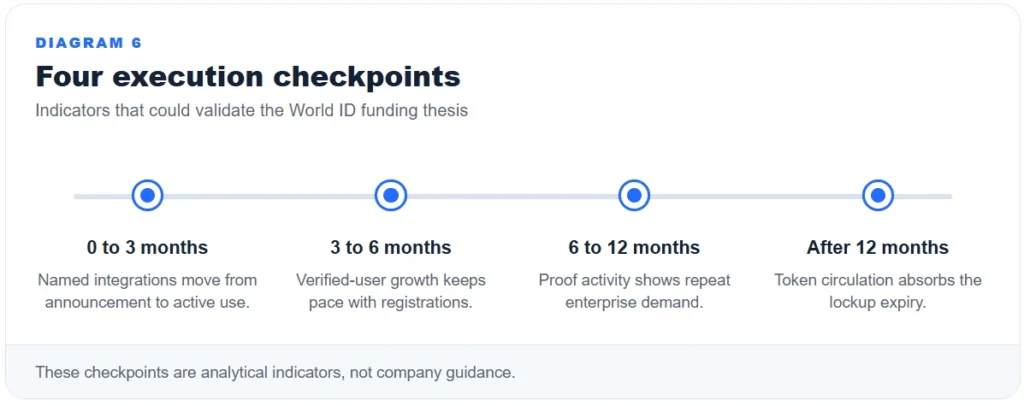
Finally, privacy outcomes will determine geographic reach. Strong compliance could turn World ID funding into durable infrastructure. Weak execution could leave it as a costly identity experiment.