

Theory explains how tokenization works. Real numbers show why it matters. This companion piece walks through one verified case study per asset class, with step-by-step calculations and visual breakdowns so investors and students can see the mechanics in action.
Case Study 01 · Real Estate
RealT: Tokenized Residential Property, Detroit, Michigan
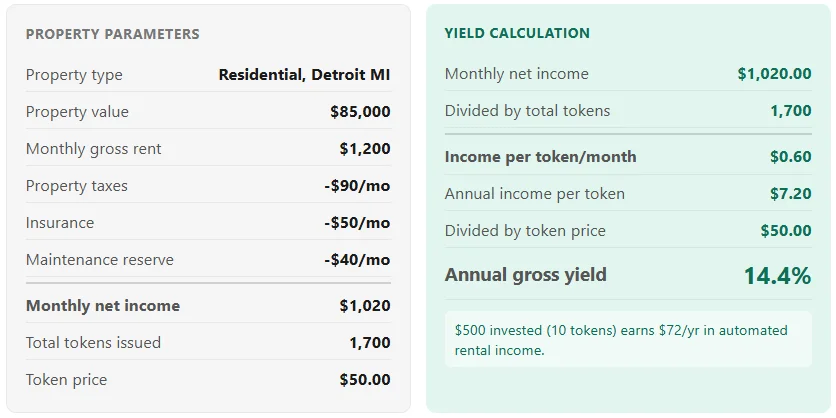
RealT places each property inside a legal LLC. The platform issues ERC-20 tokens representing fractional ownership. Token holders receive rental income in USDC automatically via smart contracts, distributed weekly.
Investor Insight
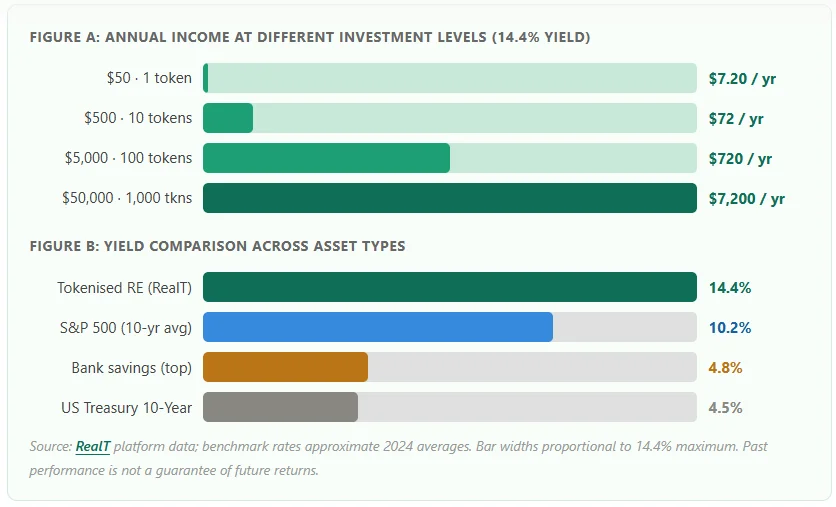
At 14.4%, tokenised real estate via RealT yields more than three times the U.S. Treasury rate. The minimum entry is just $50 per token. This opens a market that was once reserved for institutional players to anyone with a smartphone and a verified account.
Case Study 02 · Gold
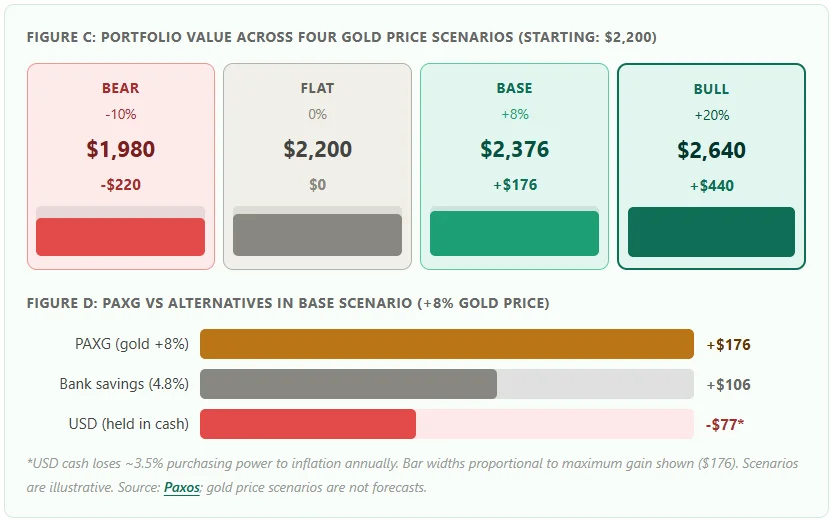
Paxos Gold (PAXG): Scenario Analysis on One Token
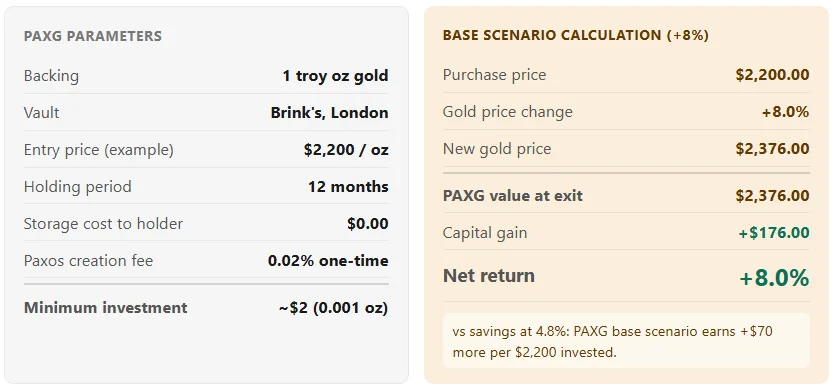
PAXG pegs each token to one troy ounce of gold held at Brink’s vault, London. Monthly independent attestation reports verify the reserves. The token price moves in exact lockstep with the spot price of gold. No storage or insurance costs are passed to the holder.
Investor Insight
PAXG mirrors the spot gold price with full transparency through monthly audits. In the base scenario, it outperforms savings accounts by 3.2 percentage points. Furthermore, because PAXG is divisible to 18 decimal places, an investor can start with as little as $2. This makes gold accessible to any budget.
Case Study 03 · Oil
Tokenised Oil Well: Revenue-Sharing Model
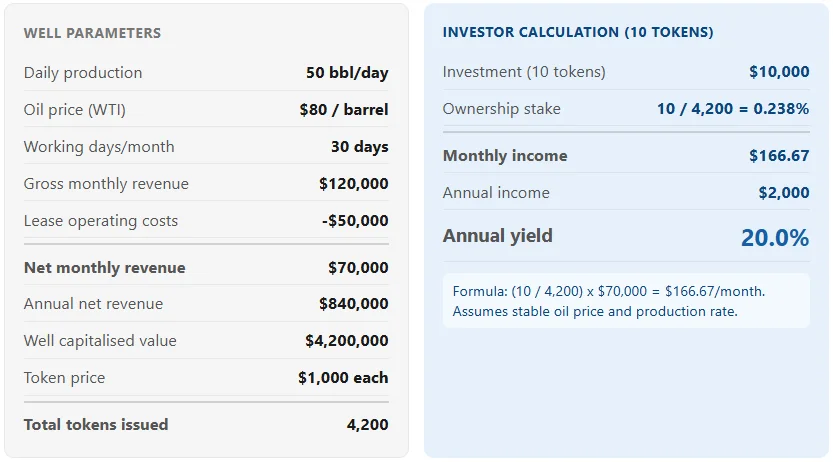
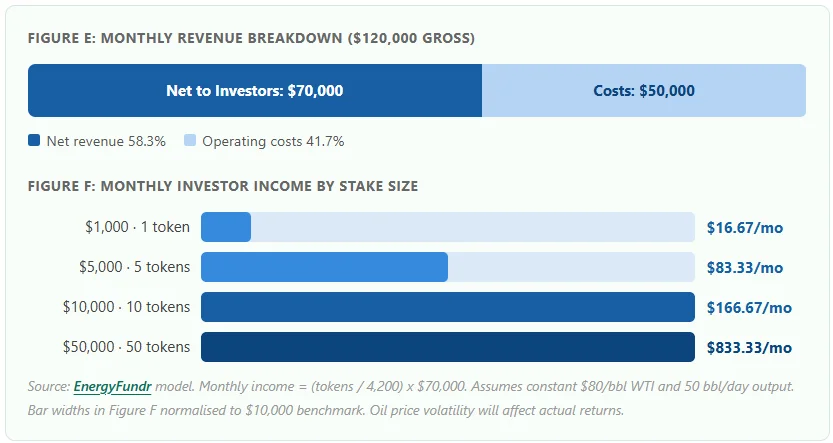
Platforms such as EnergyFundr tokenise producing oil and gas wells. Each token represents a revenue right, not ownership of physical oil. Investors receive a monthly share of net oil sale proceeds, distributed automatically via smart contract.
Investor Insight
A $10,000 investment generates $166.67 per month at a 20% annual yield. However, this return is directly tied to the oil price. A fall from $80 to $60 per barrel reduces net revenue by 25%, cutting monthly income to approximately $125. Oil revenue tokens suit investors with a considered view on energy markets and a higher risk tolerance.
Case Study 04 · Agricultural Commodities
Agrotoken (WHEA): Farmer Liquidity and Investor Returns
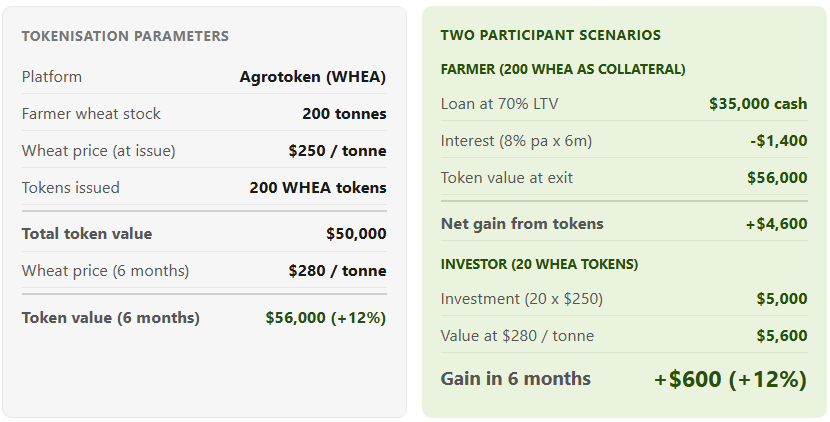
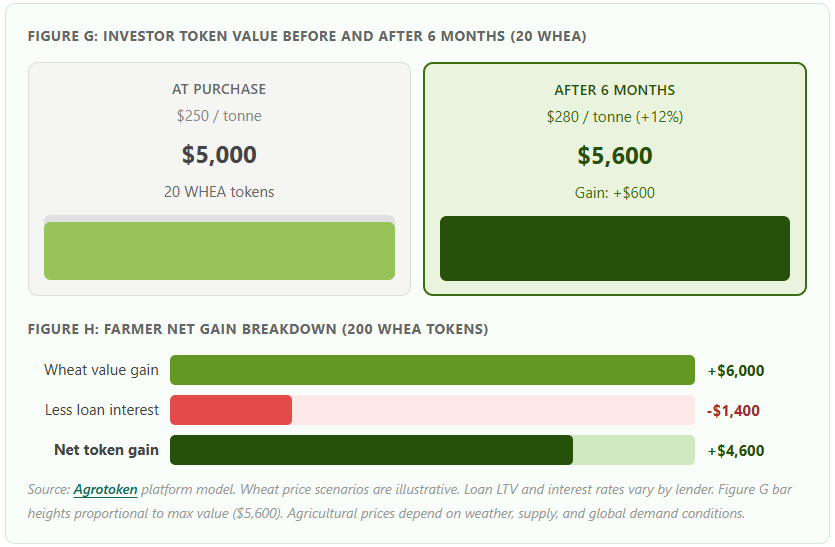
Agrotoken issues tokens backed by physical grain stored in certified Argentine silos. One WHEA token equals one metric ton of wheat at the prevailing market price. This case study shows the same token serving two participants: a farmer seeking liquidity and an investor seeking commodity exposure.
Investor Insight
A 12% gain in six months equals a 24% annualised return in this scenario. However, the reverse is also true. A 12% fall in wheat prices produces a $600 loss on a $5,000 investment. Agricultural tokens suit investors who understand seasonal supply dynamics, global demand cycles, and the influence of weather events on commodity prices.
All Four Case Studies at a Glance
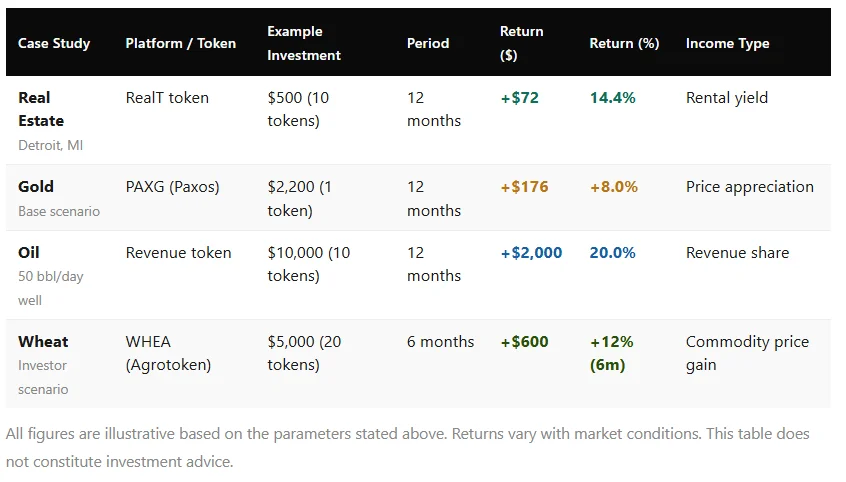
The table below compares all case studies using a consistent set of investor metrics.